How To Get To (and From) A Treestand Without Spooking Deer
Posted 2026-08-25 by
A smart entry and exit plan can help you avoid bumping your target buck
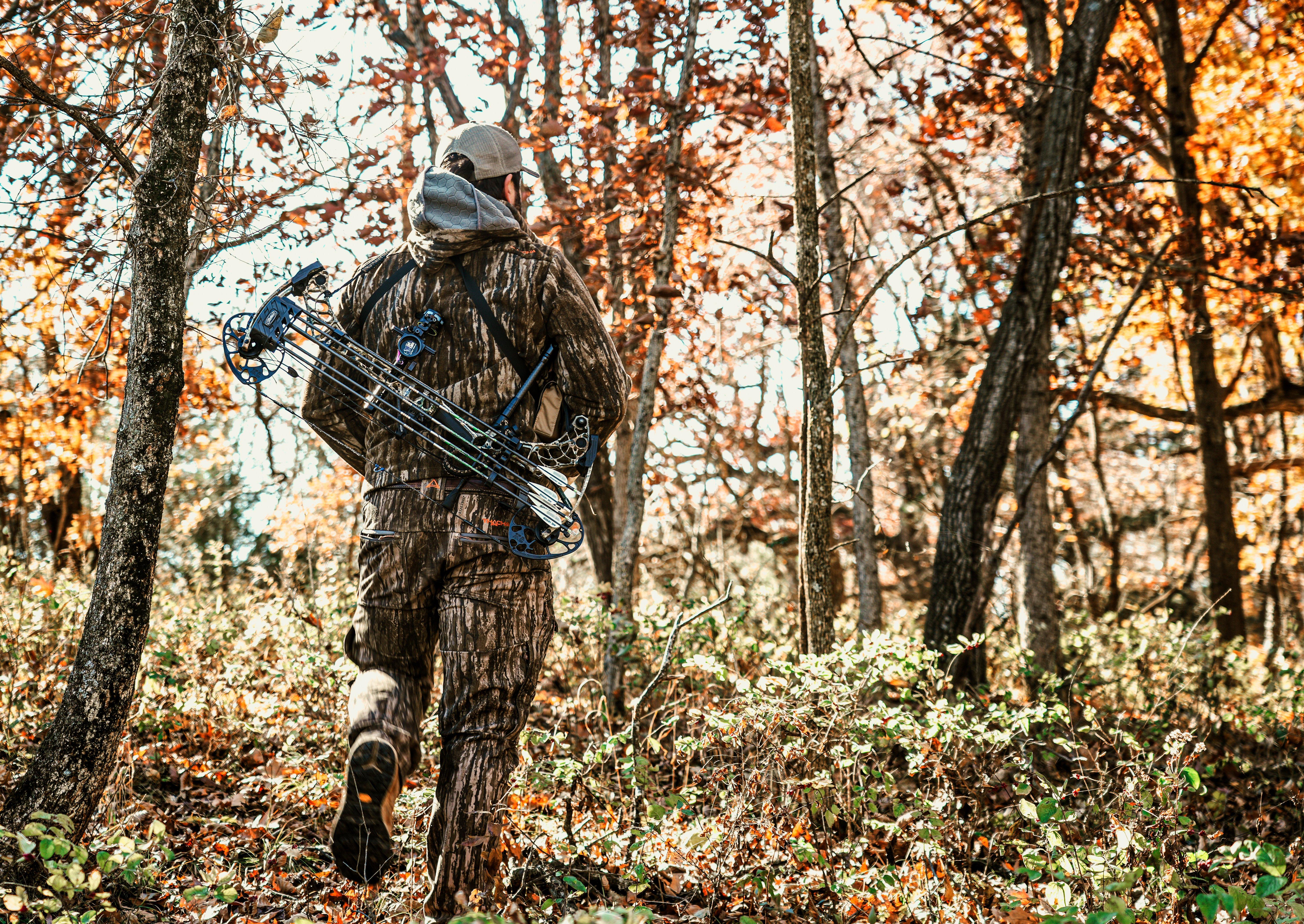
It’s wise to have several entry and exit routes for various wind directions. Photo by Realtree.
You do a solid job of scouting a field or ridge with sign of heavy deer traffic. You move in and hang a stand in the perfect tree with good cover and visibility. You’re all set to whack a buck during opening week, right? Well, not if you haven’t planned smart and sneaky access to that spot. How you enter and exit a ladder or lock-on is a critical — if often overlooked — part of the game, especially when hunting with a bow.
NO SHORTCUTS
Our tendency is to walk the shortest and straightest line from Point A (truck) to Point B (treestand). But sometimes, you can’t do that without messing up. Say, for example, a logging road leads straight from a parking area to your ladder in a grove of white oaks fixing to drop acorns. It’s easy walking, but what if deer routinely bed in a large thicket off the road 100 yards from your stand? The animals might see or hear you and bust. Even if you sneak by unnoticed, they might catch your scent and really blow up, white flags flying in all directions. Such intrusion will cause a mature buck to change his pattern and skirt that spot.
Don’t Miss: The Best Days to Deer Hunt in 2026
Study aerials and maps on a phone app, and check terrain features and cover thickets between your truck and spots where you have set a stand or intend to hang one. Factor in trails, rubs and other sign you find in the area, and predict as best you can where deer will bed and travel to and from a nearby crop field or mast flat. Then plan a sneaky hike in that avoids high-activity spots and takes you through dead zones where you shouldn’t bump deer. You might have to circle and walk a half-mile farther than normal, but it’s worth it.
TWO WIND ROUTES
Plan a couple of paths into a stand that you can use during different winds. Many days this fall, a west or northwest wind will predominate where many of you hunt. Approach your post from somewhere to the east or south. But have a contingency route. On warm days when the wind turns out of the south, circle around and angle in from somewhere north or east.
ENTRY TIPS
In timber, I don’t like a lot of rough-and-tumble walking through the woods, especially when leaves are down and crunchy. Set stands as close as possible to old roads or power-line cuts where you can walk more quietly.
Don’t Miss: Bowhunting Gear to Absolutely Never Leave Behind
In farm country, I try to sneak toward a stand along edge of a pasture or fallow field that few deer use. Plan a route where your wind will blow harmlessly out over the pasture and away from a nearby crop field or bedding thicket where a buck might be.
Anytime you can creep quietly up or down a creek or shallow river, do it. It’s especially great strategy for the Midwest, where steep creek banks can hide a hunter perfectly.
Generally, you should approach an afternoon stand from somewhere on the food-source side. Get the wind right, and sneak along the edge of a crop field or food plot early in the afternoon.
When hunting a stand near a bedding area, I sneak in from downwind at least an hour before dawn. Move slowly but purposely, with your headlamp pointed down to the ground. Climb the tree and get set quietly as you can. Some deer in or near the sanctuary might hear you, but they’ll usually settle back down before first light. By getting there extra early, you might beat a target buck back to his bed. If big boy comes skulking along at sunrise, you’re perfectly set up in a tree and waiting on him.
Don’t Miss: How to Identify a Mature Whitetail Buck
EXIT STRATEGY
When a hunt is finished for the day, many hunters lose their edge, get in a hurry and bumble back toward their trucks. Mistake. Busting deer on the hike out of a stand is almost as bad as spooking them on the way in. Plan your exit routes beforehand. At midmorning, sneak out through woods and pastures where there’s minimal risk of deer seeing or smelling you. After dark, try to back out of a stand and circle back to your truck without busting dozens of feeding deer and clearing out a corn or bean field. Get out without a buck ever knowing you were there. You might kill him when you sneak smartly back into that stand tomorrow.