Rack Report | Ohio Hunter Nails 231-Inch Whitetail During Special Early Season Hunt
Posted 2026-10-16 by
David Hostetler’s work to build the perfect hunting oasis amid hundreds of acres of standing corn paid off
| Rack Report Details | |
|---|---|
| Buck: | 231 4/8” BTR |
| Time of Year: | Sept. 12, 2026 |
| Place: | Marion County, Ohio |
| Weapon: | Elite ERA compound bow |
Because he’s a farmer, David Hostetler rarely has free time to hunt. Even so, he manages to get out occasionally. This year, a giant buck in the area caused him to put in a little more time than usual and invest some work to up his odds.
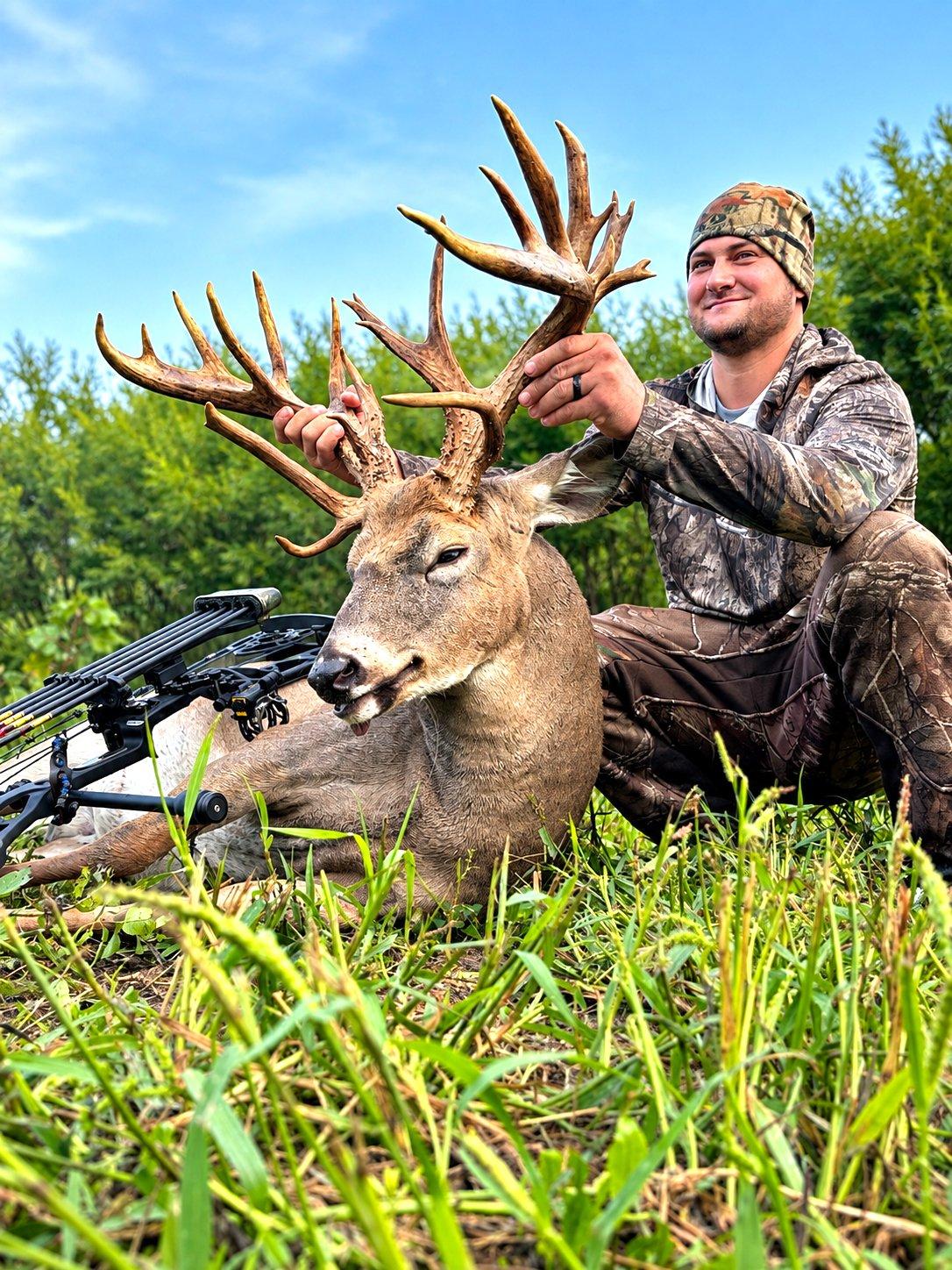
Sightings of a familiar buck, which had become a definite shooter, prompted Ohio’s David Hostetler to put in additional early season time in the stand. Images courtesy of David Hostetler.
Hostetler first saw the buck two years ago. It was smaller then but still pretty impressive. That first encounter didn’t go as planned, but it turned out to be a blessing in disguise. “I rarely gun hunt, but a group of friends wanted to do a little drive one afternoon,” he said. “We were pushing a small chunk of timber when a nice buck jumped up. I got a shot, but it was a clean miss, and the buck soon disappeared.” It was the group’s only encounter with the buck in 2024.
Hostetler actually missed the buck during a rare gun hunt in 2024.
This past year, the buck was a little more visible. They named it “Flyer” because of the long extra point on its right main beam. Hostetler wanted a co-worker at the farm to get a chance to hunt the animal. Although they got a few trail camera photos, no one ever saw the buck while hunting.
Don’t Miss: AGITATED CROWS CAUSE BIG TENNESSEE BUCK TO TURN BROADSIDE
Fast-forward to this past July. The buck was now a regular on the farm and considerably larger than in 2025. Meanwhile, Hostetler knew the only good water source was a nearby creek. The creek made a 90-degree turn, forming a small pond between two massive corn fields. Even better, a stand of ancient cottonwoods stood at the bend. The creek banks were overgrown, offering plenty of cover. Knowing that was his best bet for taking the buck, Hostetler planted a small Antler King food plot in the middle of the thick brush. He then hung a stand on one of the trees.
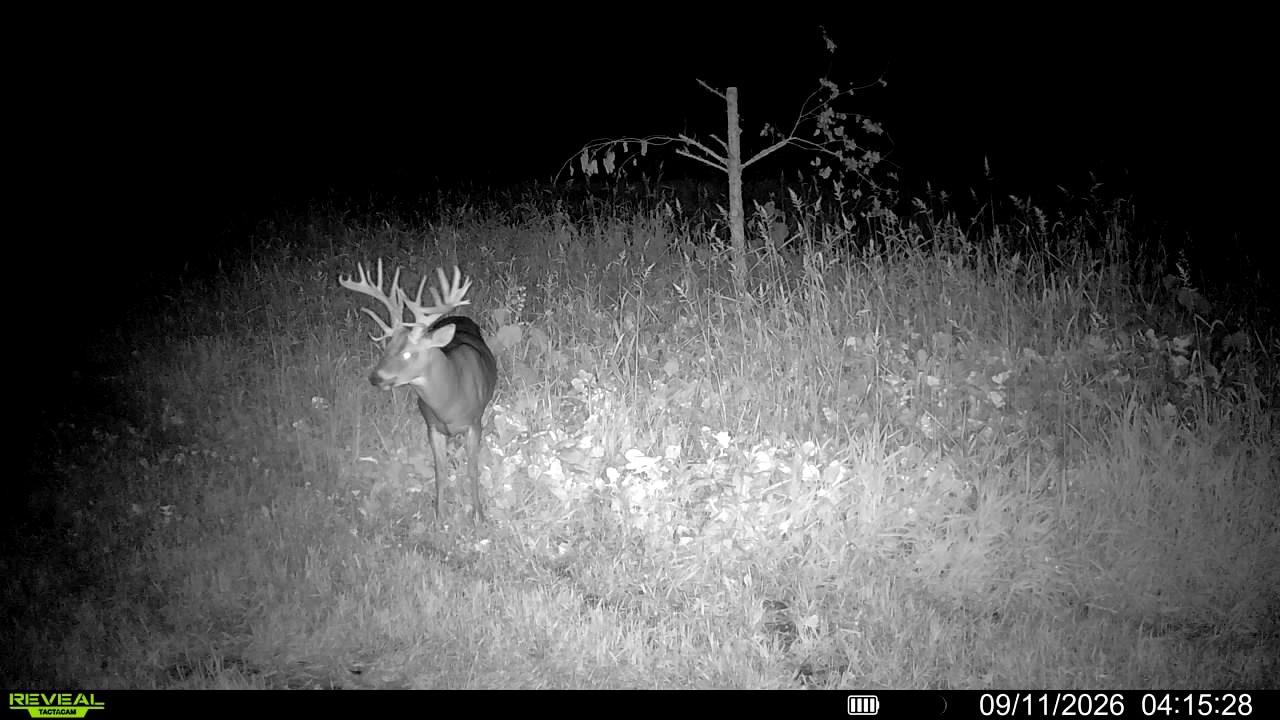
The buck was a regular evening visitor to nearby crop fields in late summer.
As summer progressed, Hostetler watched the buck, often spotting him feeding in the late evenings in a nearby bean field. As the food plot filled in, the buck began to visit it regularly.
Marion County is in one of Ohio's Disease Surveillance Areas for chronic wasting disease. As such, the season opened there almost two weeks earlier than in the rest of the state, giving Hostetler a solid chance at the giant buck.
A special early CWD surveillance season allowed Hostetler to get an early jump on the season.
Trail cameras told Hostetler that his best chance to kill the big buck would be on an evening hunt, but after seeing the buck on camera several hours before daylight on opening morning, he decided to slip in and try a morning hunt. It was uneventful, and he climbed down and returned around 3:30 p.m.
The warm conditions minimized deer movement. Finally, around 7 p.m., a smaller buck popped out of the creekside cover and began drinking. Hostetler was watching the young buck when some movement caught his attention. He turned his head to see the giant buck about 70 yards away.
“He was in thick cover that came all the way down to the water’s edge,” he said. “All I could see were his nose and the tips of his antlers as he drank from the creek.”
The big buck soon melted back into the cover. Occasionally, Hostetler caught glimpses of the buck moving through the thick brush. That continued for at least 20 minutes. “I had to keep telling myself to take deep breaths and to try to stay calm,” he said.
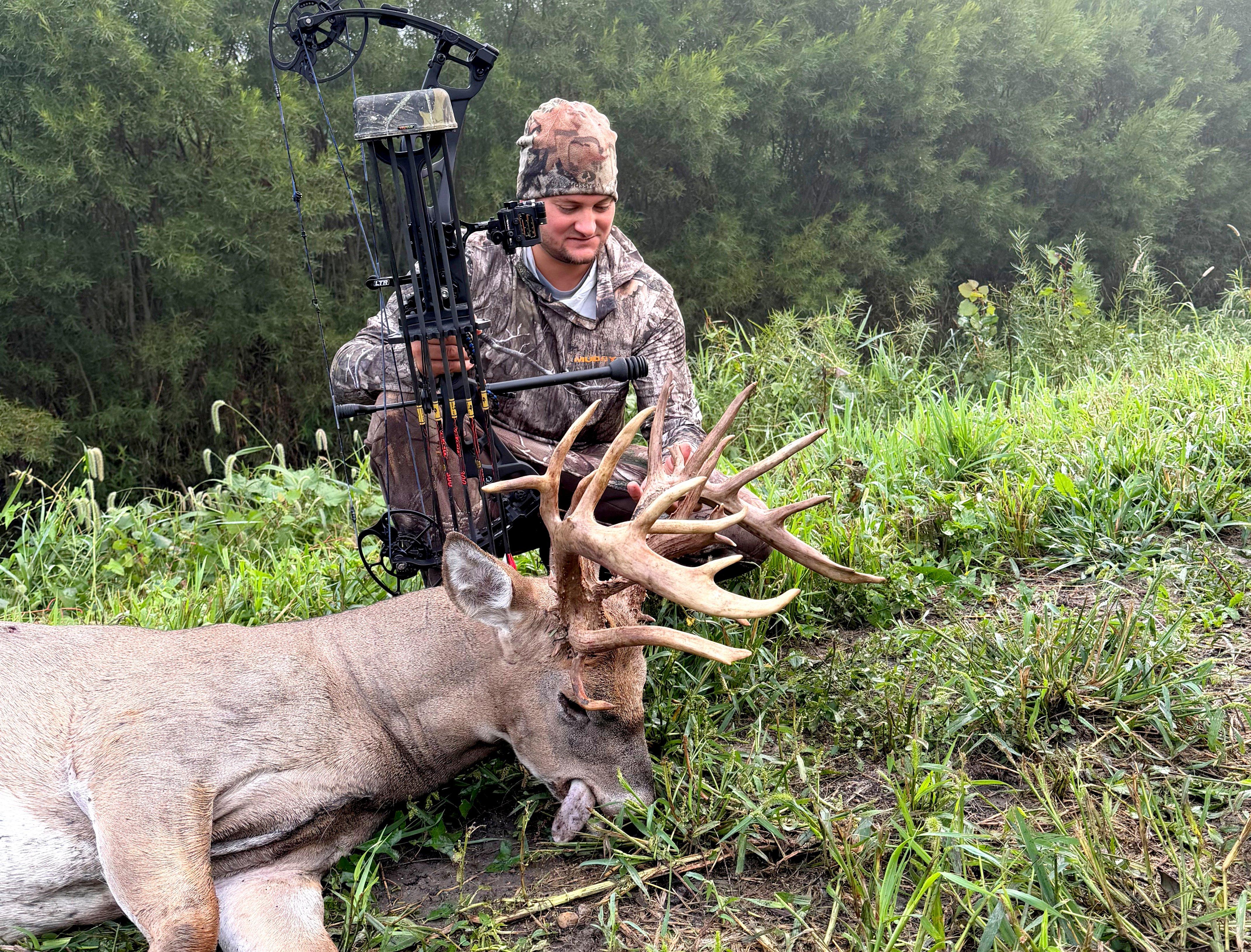
Hostetler had to endure almost a half-hour of watching the buck before getting a shot opportunity.
The buck finally reached bow range, but there was a problem. The creek was also the property line, and Hostetler needed the deer to cross to the food plot before he could shoot. The big buck continued to follow the opposite side of the creek, and he worried the deer wouldn’t cross at all.
Don’t Miss: A NODAK MONSTER WITH DOUBLE DROP TINES
Luckily, the buck eventually turned and moseyed into the plot. It came in facing head-on, offering no shot. Hostetler readied his bow. He said, “At that point, I was shaking hard and just trying to maintain some composure.”
The buck finally turned, and Hostetler came to full draw. The buck lifted its head and turned a little more, but it was still quartering toward the hunter. Hostetler knew that was likely his only chance. He settled his pin and shot.
The shot looked good, but it was slightly back. The quartering-toward angle and the arrow’s entrance were causes for concern. The buck lurched forward about 15 yards, and then slowed to a walk, head down. Hostetler watched, willing the buck to fall. It didn’t, but instead continued walking steadily. After covering another 50 or so yards, the buck finally bedded. Hostetler watched until darkness fell, and the buck’s head was still up.
After it got dark, Hostetler texted his brother and nephew and quietly climbed down to return to the farm shop to await their arrival.
Check Out Our Latest Camo Pattern: Realtree APX
One of his friends has a thermal drone for his deer-recovery business, so Hostetler called him. By the time his buddy arrived with the drone, it was almost midnight. They flew the drone over to find the buck still in the same spot, unfortunately still alive.
They decided to back out and give the buck the rest of the night to expire. “Let’s just say I didn’t get much sleep that night,” Hostetler said.
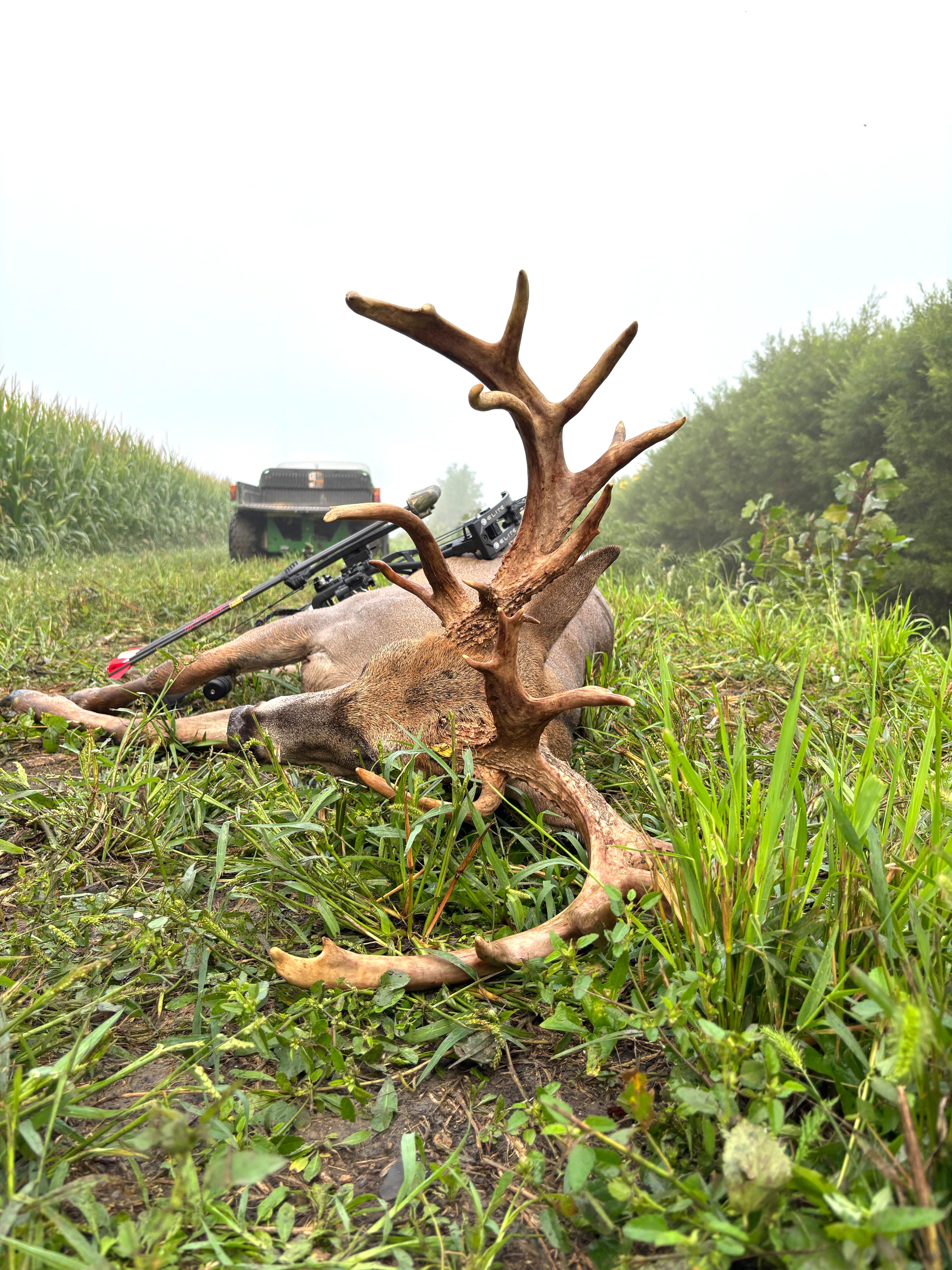
After a sleepless night, Hostetler and friends restarted the search where they had last spotted the buck the evening before.
Early the next morning, the team reconvened at the farm. Again, the drone was sent up. The buck was no longer in the same location. “My heart just dropped when we saw that he wasn’t there,” Hostetler said.
Don’t Miss: 9 MUZZLELOADER DEER HUNTING TIPS
They began to follow the creek with the drone. Finally, after another 80 yards, they located the buck at the water’s edge, now dead. Hostetler was beyond relieved.
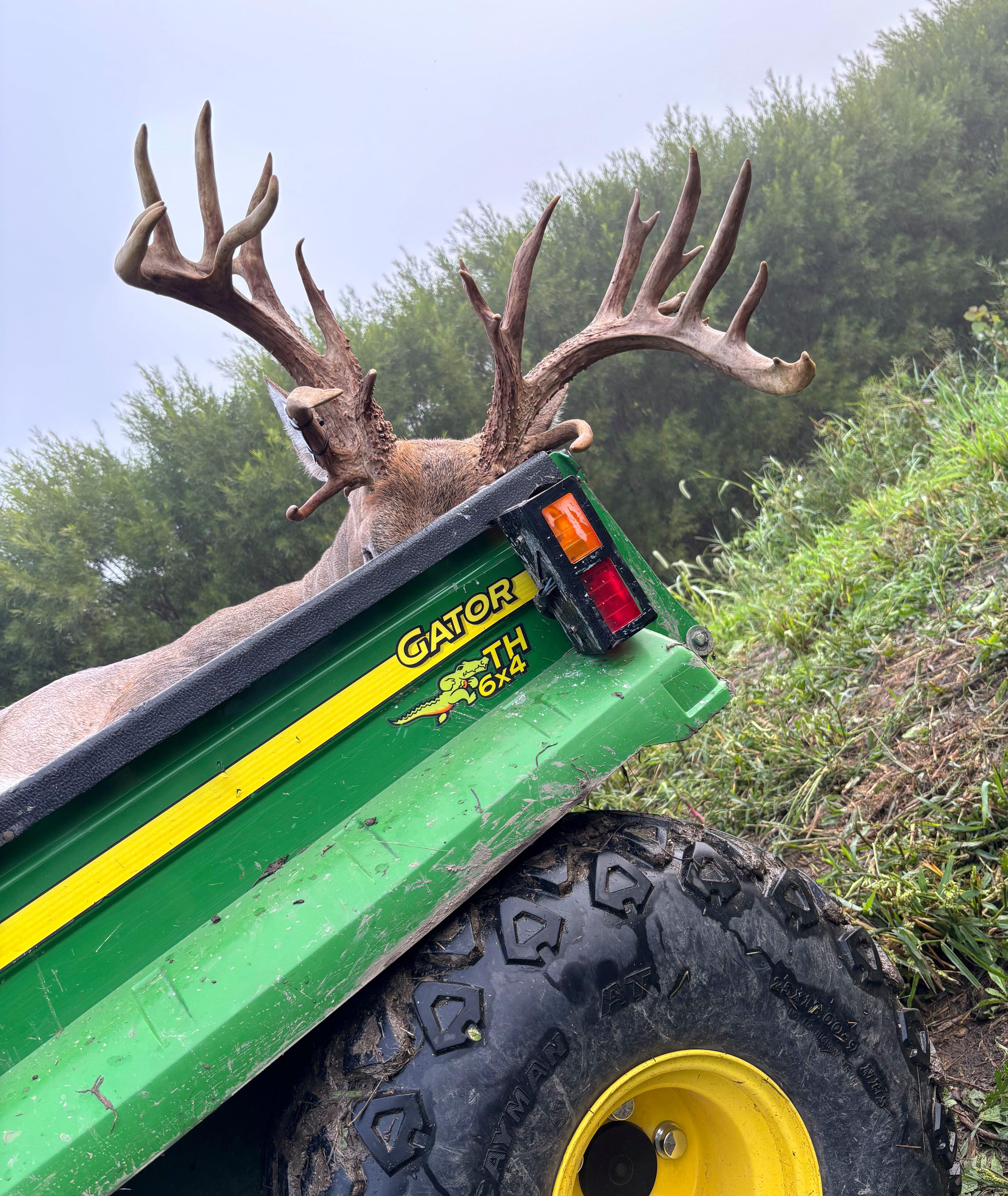
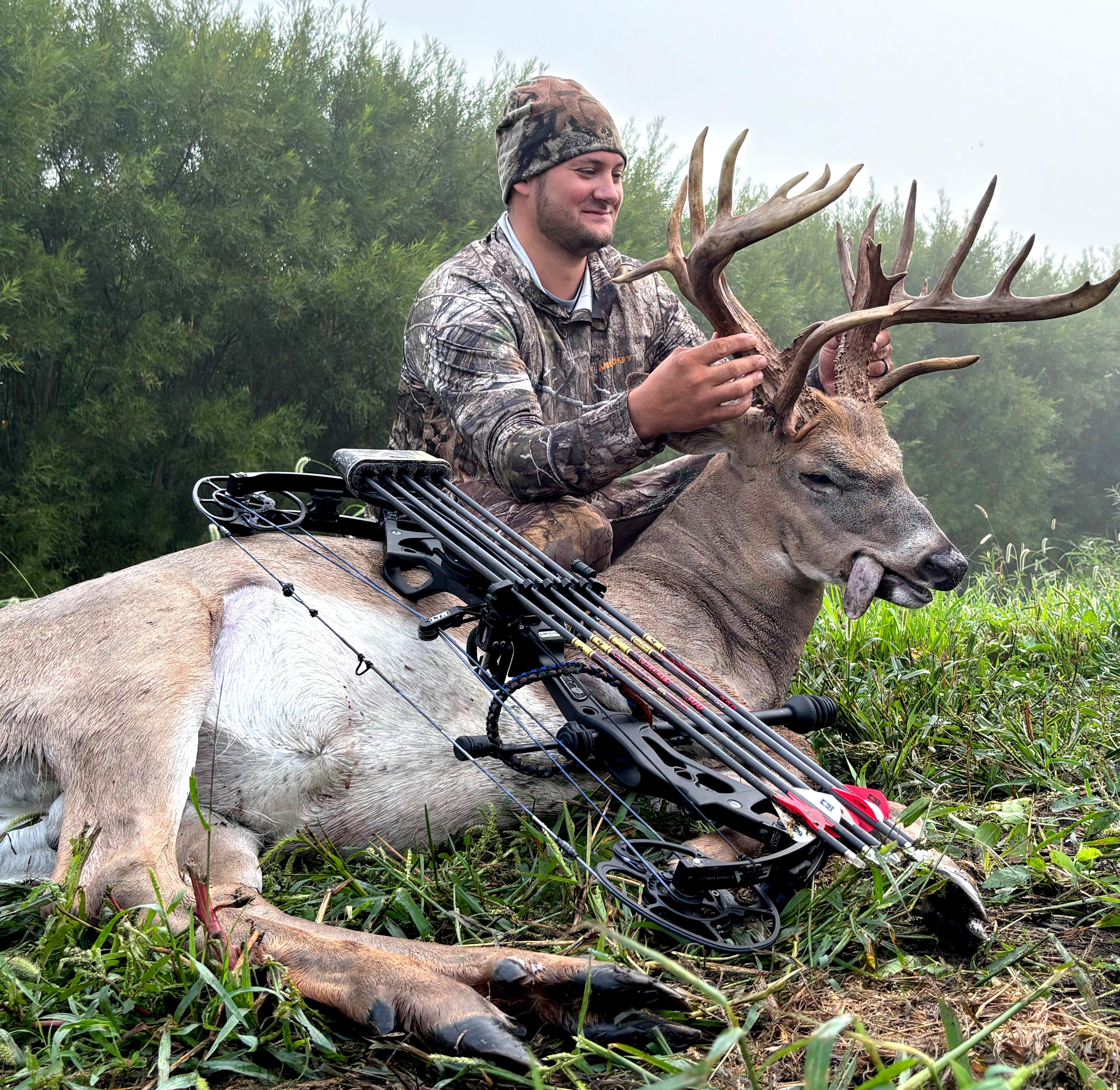
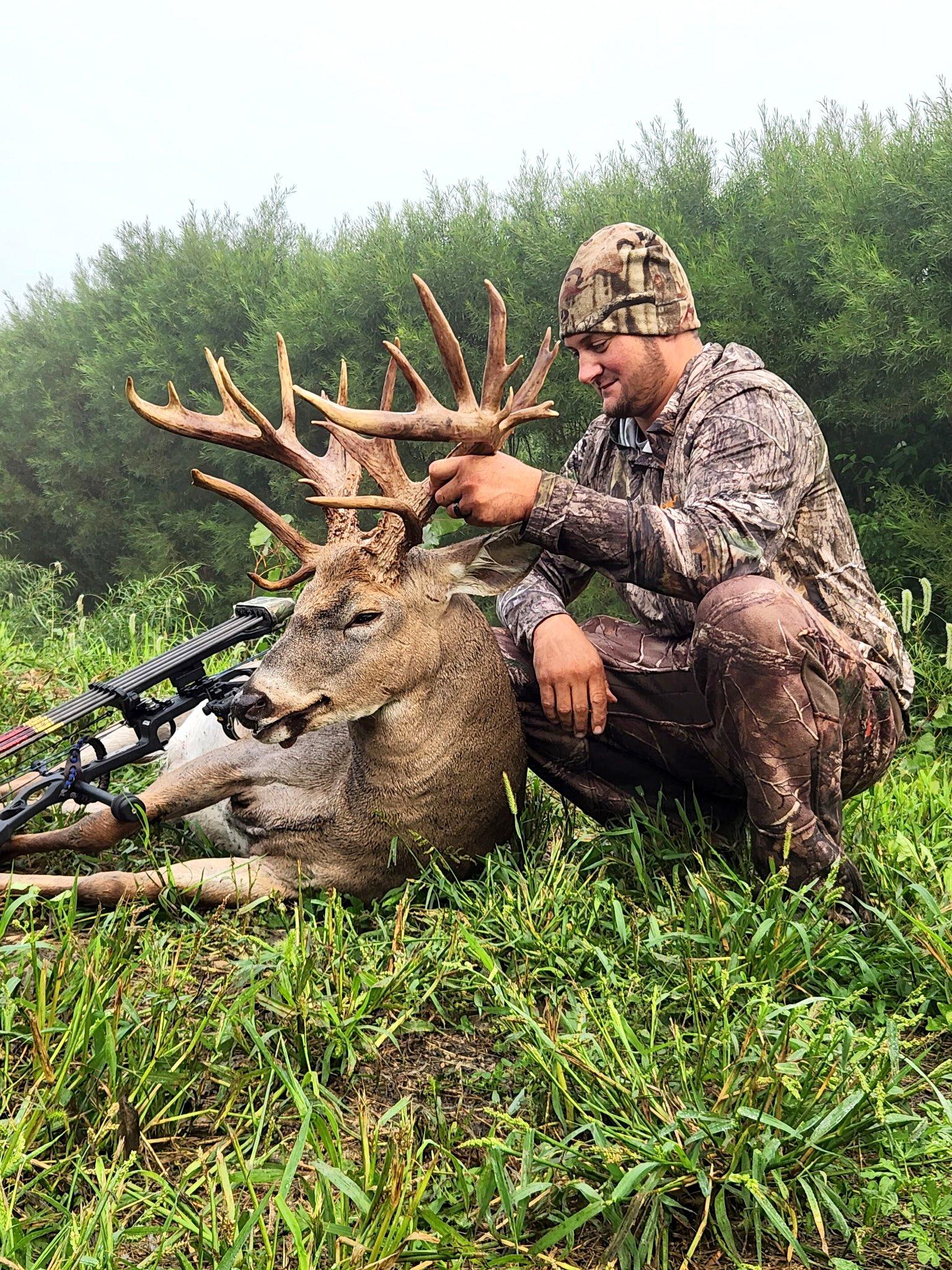
After relocating the buck another 80 yards down the creek from where they had last seen him, Hostetler was relieved to finally lay his hands on the giant rack.
Toby Hughes, Buckmasters of Ohio official scorer, met them at the farm for the initial scoring. “I had kind of figured it out in my head back when the buck was in velvet,” Hostetler said. “I had around 200 inches in mind. When Toby said 231, I couldn’t believe it!”
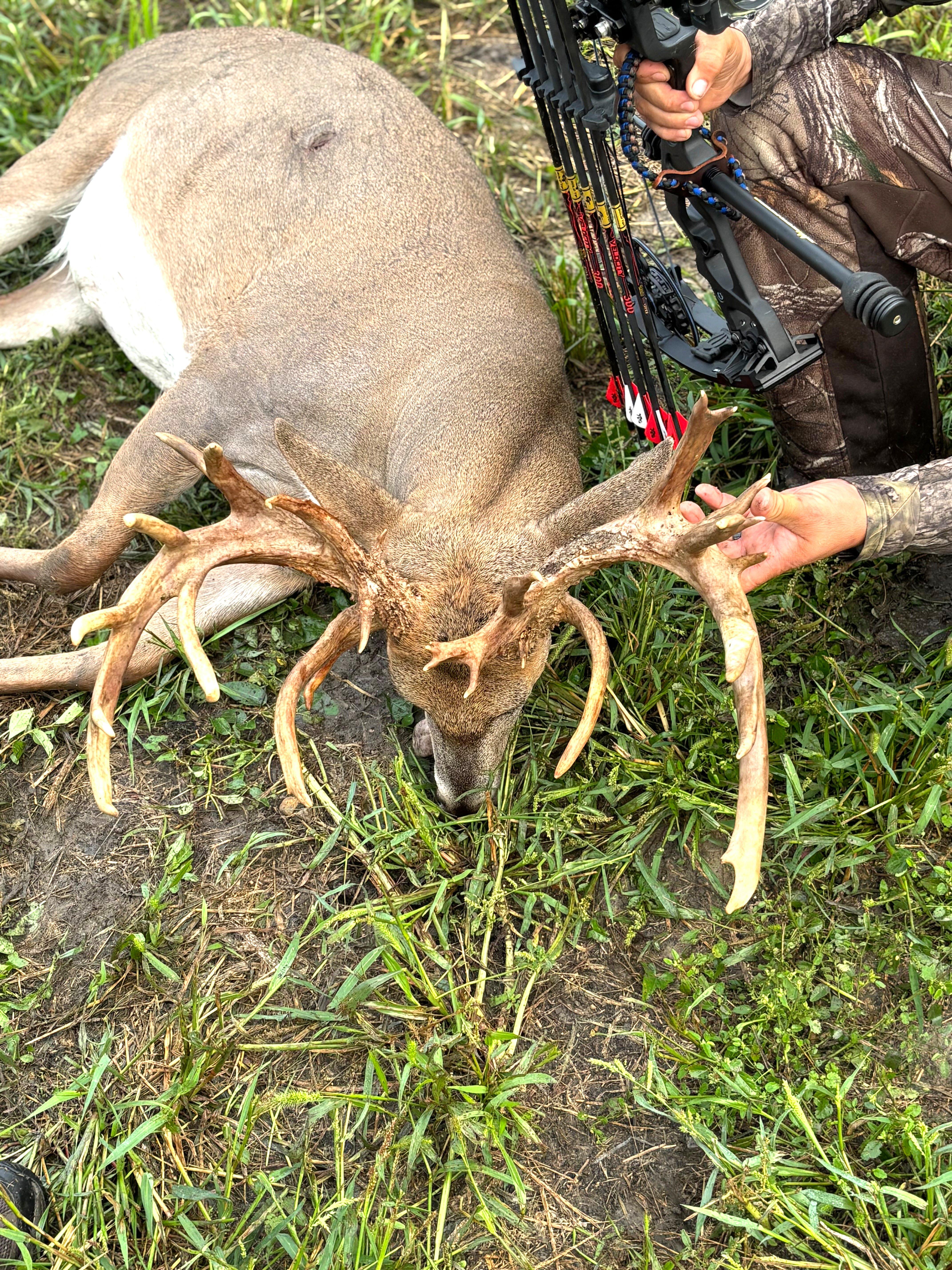
The rack featured a 5-by-5 main frame loaded with kickers for a total of 27 scorable points.
The giant buck had a 5-by-5 main frame, but several stickers and nontypical points totaled 27 scorable points. With an inside spread of 21-2/8 inches, main beams of 24 and 25 inches, respectively, more than 58 inches of abnormal points and more than 40 inches of mass, it’s no wonder the score exceeded Hostetler’s expectations.
Don’t Miss: 5 STAND-ACCESS MISTAKES THAT'LL GET YOU BUSTED EVERY TIME