How to Pick the Right Shotgun and Ammo Combo for Multispecies Hunts
Posted 2026-10-22 by
An Alberta adventure proved to be the ultimate testing ground for dry-field shoots
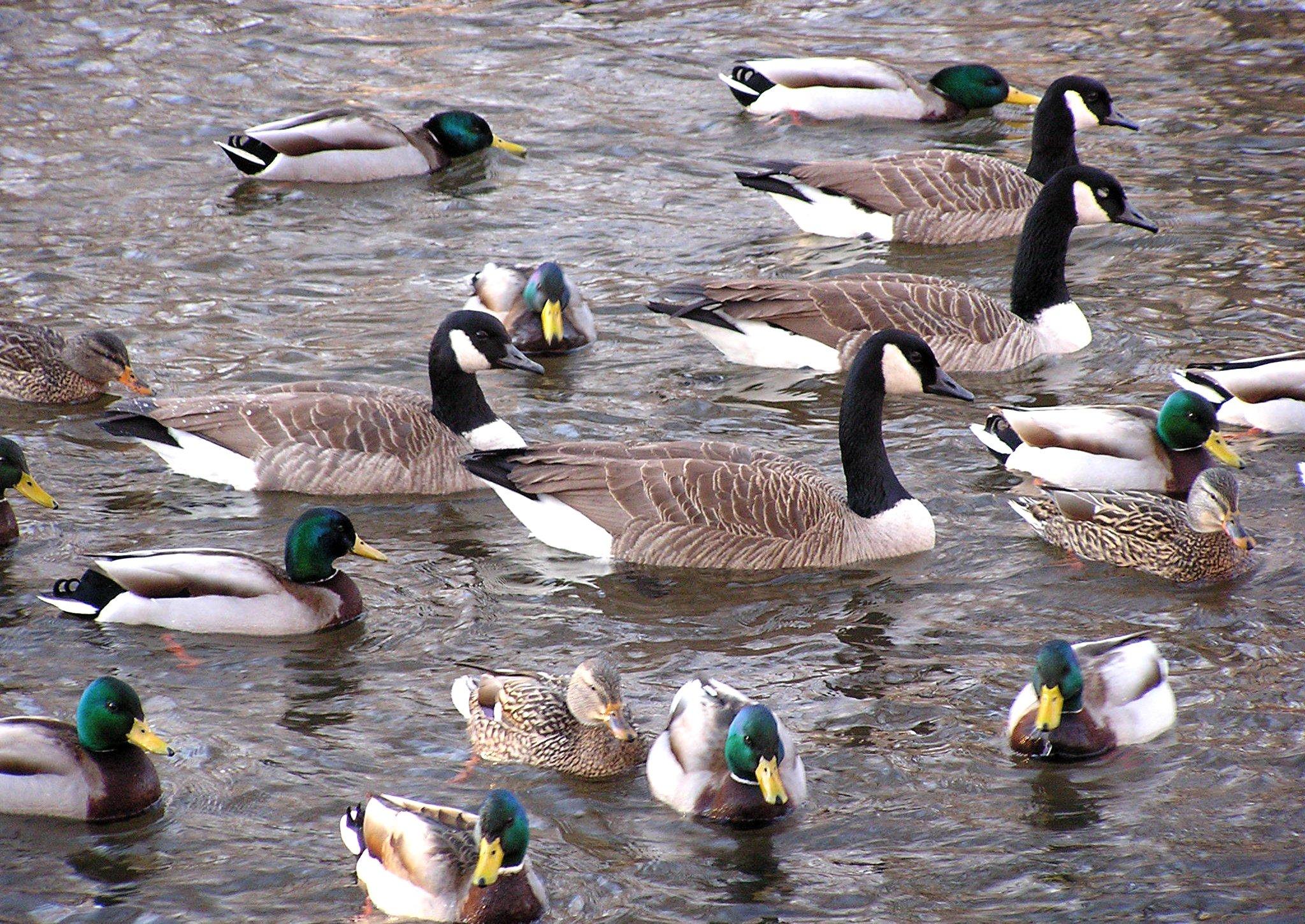
Big Canada geese and lots of ducks during the same shoot prompt some careful ammo choices. Photo by Nicholas D. Cacchione.
When the guides are all smiles, you can bet that the morning hunt will be good. And that posed a happy problem.
Several friends and I had journeyed to central Alberta in early October to hunt ducks and geese, and during our drive to camp, we immediately noticed impressive numbers of birds feeding in fields and loafing in flooded areas. Sure enough, after arriving at Dog ’N Duck Outfitting near Viking, Alberta, local sources reported that despite recent warm weather, the migration was in full swing, with excellent numbers of mallards and pintails, along with white-fronted geese, increasing numbers of snow geese and all sizes of Canada geese. Every day promised to be a mixed bag, but that prompted a question: If we loaded up for ducks but heard geese approaching — or vice versa — would we have to frantically switch out loads? Or should we stick with one choice and adjust our shots accordingly? We wouldn’t have much time to decide the first morning.
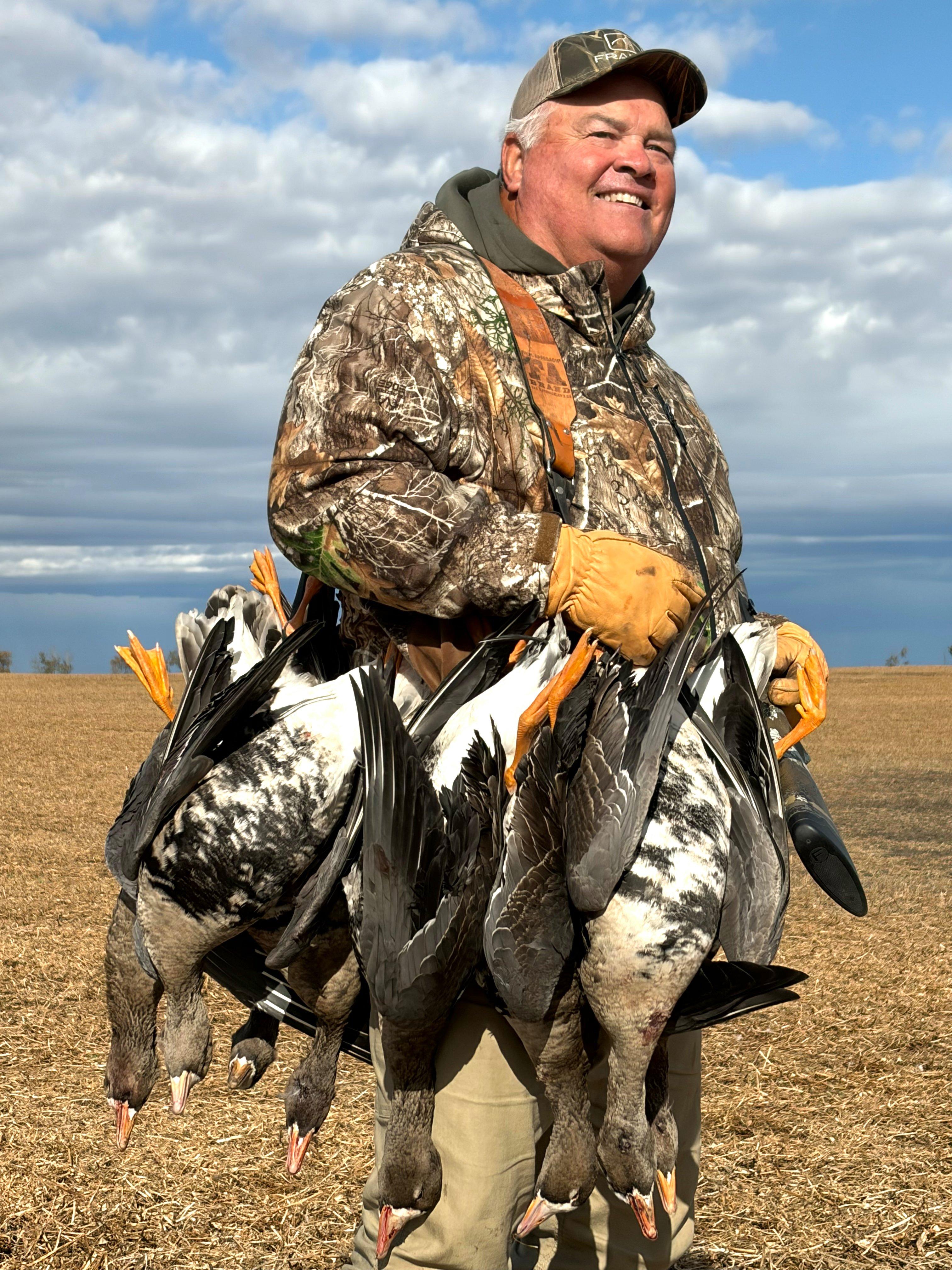
Specks, lessers and snows were on the menu, often arriving between clouds of ducks. Photo by Brian Lovett.
EITHER, OR
For Day 1, guides had located a pile of mallards and pintails in a rolling barley field surrounded by several sloughs. It promised to be a crackerjack duck shoot with the chance of a few geese mixed in. That eased our shot selection conundrum a bit, so most of the shooters loaded up Franchi Affinity 3 Waterfowl Elite shotguns with Fiocchi Flyway Series 1-1/5-ounce loads of No. 3 shot. If geese arrived later, we had some boxes of No. 2 shot at the ready.
Don’t Miss: 6 Essential Skills for Duck Hunters
As the guides mentioned, the ducks arrived surprisingly late. When the faucet turned on, however, it didn’t stop. Wave after wave of pintails circled and poured in, and at times, it was difficult to track one flock and not get surprised by a closer group. Most of the opportunities were excellent in-the-pocket finishing shots, so the 3s did great work. They also performed well on four geese that wandered in — including a sky-high snow. Toward the hunt’s end, we were only a few ducks short, so we took turns finishing out on colorful drake mallards.
That afternoon, dark geese were on the menu. Again, that made shot selection easier, as most guys switched to No. 2 shot, or at least a No. 3 in the pipe and two No. 2s as a backup. The afternoon was warm, and the birds — specks and lessers — arrived in a final-hour fury, but it worked out fine. We quit early, with three-fourths of a goose limit, to pick up before an approaching storm hit.
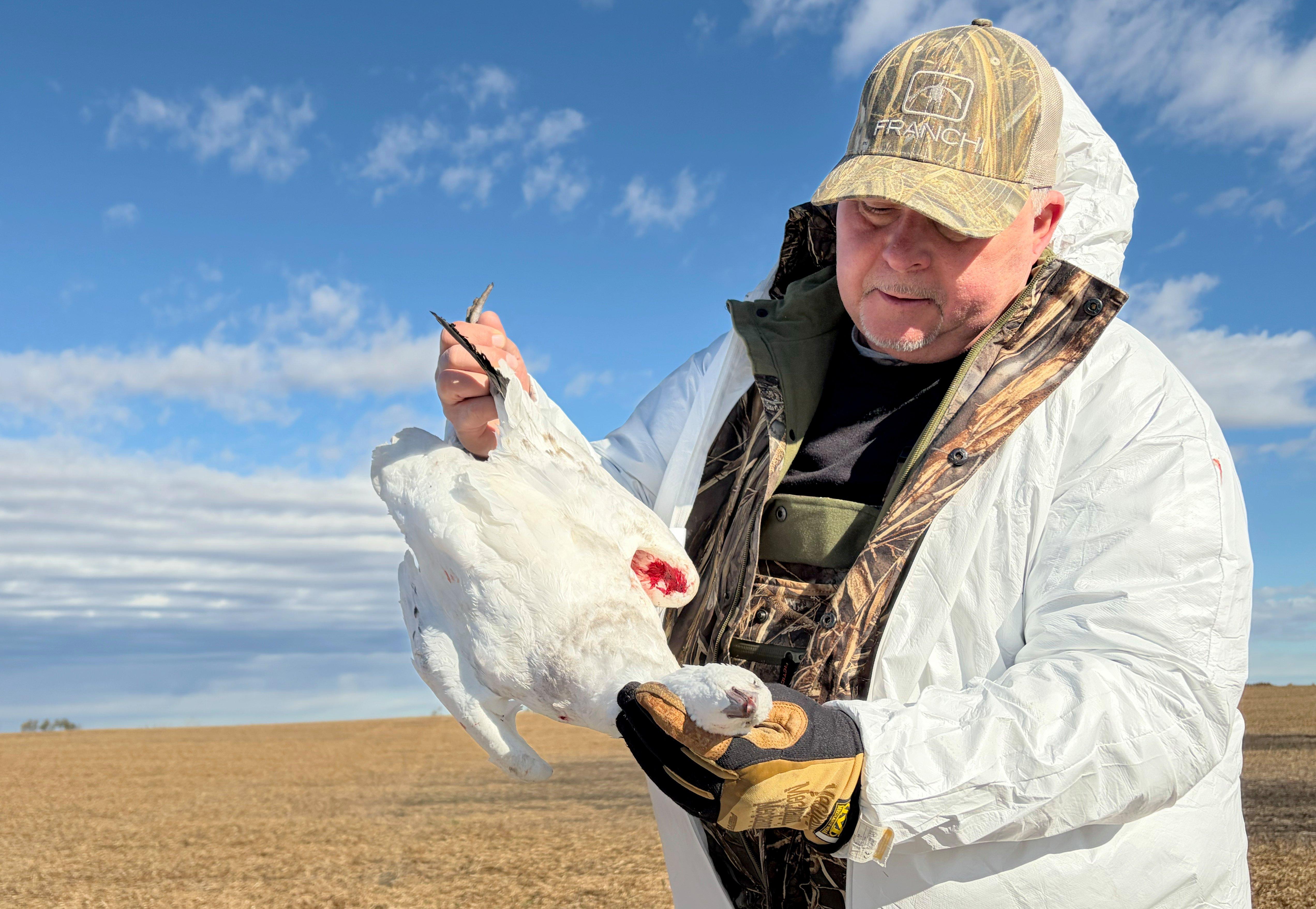
One Ross’s goose visited the field spread, offering even more variety. Photo by Brian Lovett.
STRAIGHT MIXES
Day 2 resurrected the shot-size debate in full force, as we set out a large snow goose spread and donned white Tyvek suits to hide under the decoys. The guides said to expect everything, including snows, lesser, ducks, specks and big honkers. As a compromise, I loaded a No. 3 round first and backed it up with No. 2s. Other folks went with 3s; some amped up to 2s. The first few flocks would tell the story.
Specks arrived first, and it seemed like the 3s-then-2s compromise worked well, making good on the initial decoying shots and then adding oomph to follow-up volleys as the flock flared. Ducks arrived next in waves, which prompted me to switch to straight 3s for a bit. When we were finished with our mallards and pintails, I added 2s back into the mix. Maybe that mixing and matching made a difference, or perhaps our shot opportunities had been consistently good.
Don’t Miss: 8 Great Days to Duck Hunt This Season
Whatever the reason, we soon had a big enough pile to call a halt, and the dogs had chased down very few cripples. That alone seemed to affirm our shot choices.
RESULTS
Day 3 brought more mixed-bag action, and after we ceased fire, folks in our group agreed that our gun-and-ammo combo had done the trick. It had been a pleasant “problem,” for sure; one that probably only manifests in a target-rich situation. Still, it’s a question to which most duck hunters can relate. And considering all the challenges that go into pulling off any successful hunt, it was nice to have peace of mind about one of the most critical aspects.