It’s Opening Day of Dove Season. Don’t Suck it Up.
Posted 2025-08-19 by
You’ve been waiting all year for the dove season opener, but bad shooting risks ruining the day. Here’s how to have your best opening day ever instead

Following a few simple shooting tips can help you enjoy the best opening day ever. (Photo by Brad Fitzpatrick)
It’s the first of September and you’re settling down on an upturned bucket in a fencerow between two cut corn fields. It’s still hot, but the days are getting shorter and fall is fast approaching. You shift the autoloading shotgun from your left to right hand and there, against the afternoon sky, you see birds coming. It’s the unmistakable high-speed beat of mourning dove wings, and the birds are making a beeline for your location. You’ve waited months for this moment, and as the birds pass by you stand up and deliver the shots — one, two, three! And then you stand in hollow disbelief as all three birds wing their way to parts unknown.
Welcome to dove season.
Dove season is the equivalent of a holiday to most hunters, always starting out with a bang but frequently followed by ringing disappointment. It’s rather unfair that the very first season to open each fall is dove season because nothing can frustrate and humiliate a hunter more thoroughly than these darting, dodging aerial acrobats. If you’re off your shotgun game even a little bit you’ll quickly be wondering if you brought enough shells to bag your limit.
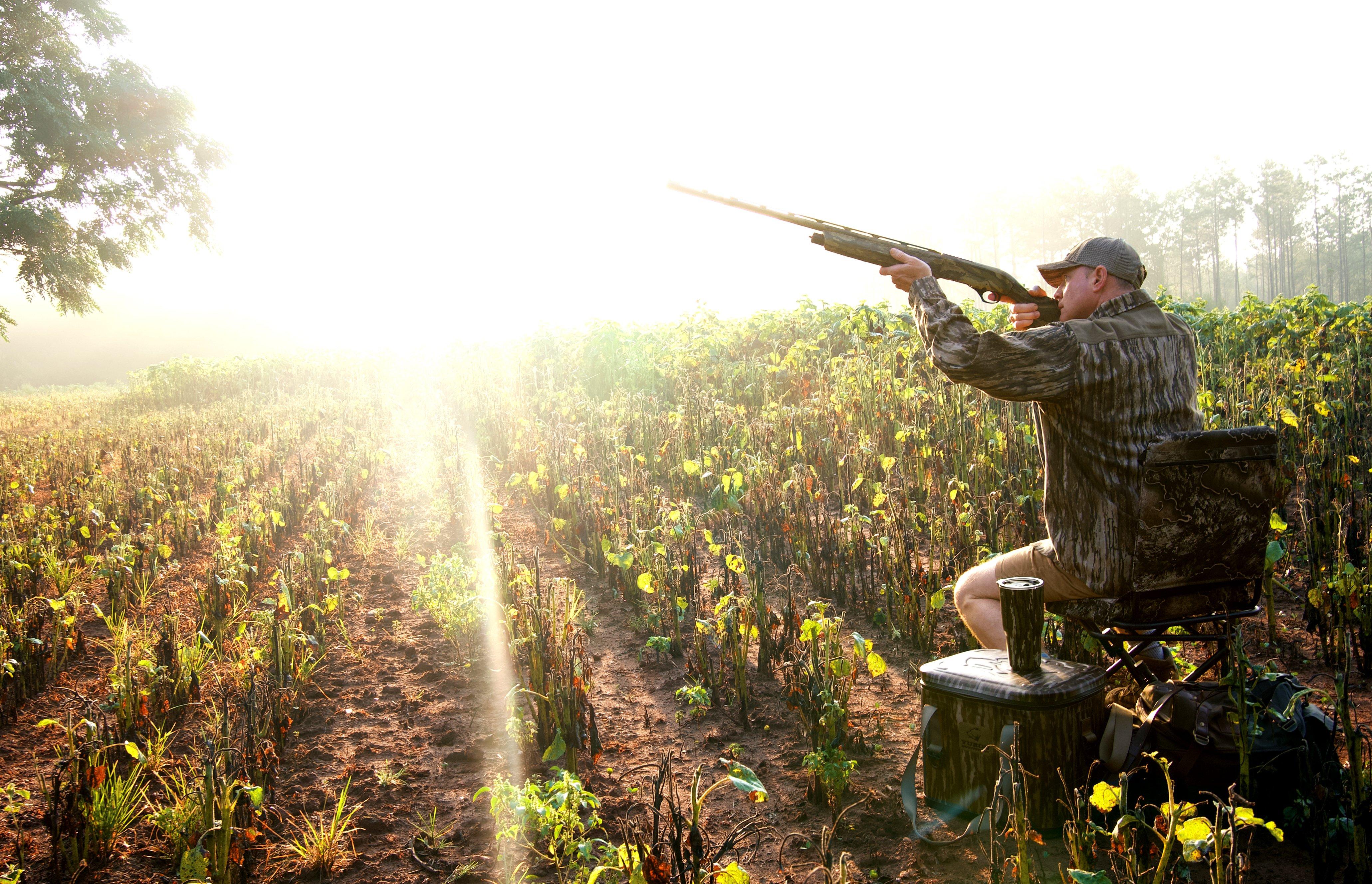
Many misses in the dove field are a result of the hunter stopping the swing and not following through. (Photo by Realtree)
Let’s make a resolution that this dove season opener will not be an exercise in frustration and humiliation, shall we? I can’t slow the birds down for you or promise easy shot presentations, but I can offer you a bit of advice. Five bits of advice, actually, all of which will help you kill more doves with fewer shells on opening day.
1. KNOW YOUR GUN, CHOKE, AND LOAD
I just returned from a trip to Colorado where I had a chance to watch a fascinating demonstration on shotshell effectiveness. Winchester Ammunition Product Manager Jimmy Wilson fired a variety of loads at reactive targets from 35 yards to determine pattern density and penetration depth, and I was shocked to see that the 12-gauge gun with inexpensive steel pellets did not pattern nearly as well as the .410 gun with TSS ammo. There were so many holes in the 12-gauge pattern that a dove could have easily flown through the patten without catching a single pellet, but the cluster of .410 #9s was so dense and even that there’s no way that a bird could have escaped.
Don’t Miss: Grilled Dove Poppers
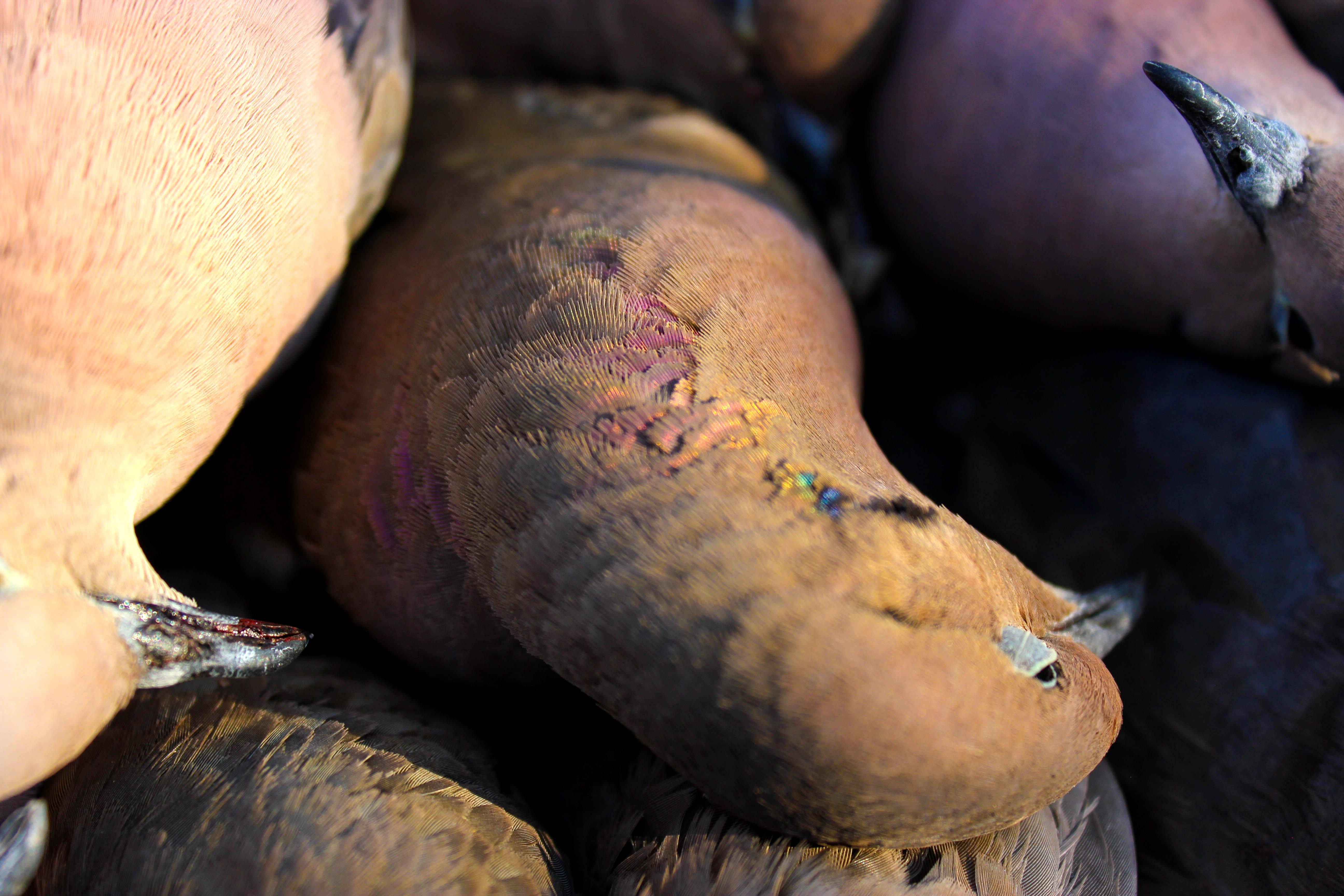
Knowing exactly which shotshell and choke combination patterns best in your gun will help you knock down more birds. (Photo by Brad Fitzpatrick)
The moral of this story is not to go and buy a new gun when you aren’t hitting with the one you already own, but instead to spend a little time at the range shooting patterning boards with different chokes and loads. Most hunters will tell you that they know their effective range with a shotgun, but very few have ever patterned their guns to determine how their load/choke/shotgun combo performs at that distance. You’ll be amazed how many more birds you kill by selecting a choke and load combination that patterns well in your gun.
2. PRACTICE PROPERLY
Shotgun practice used to mean packing up your gear and heading to the local trap and skeet club, but that’s not necessary. If you have some property you can set up a clays course for minimal cost at home. You’ll be more inclined to practice if you don’t have to travel far to shoot, and today’s clay target throwers are almost as much fun for the person operating the thrower and the one behind the gun. Caldwell offers their new Pullpup ($65) and ClayCopter ($220) throwers, which are affordable and lots of fun, and my friends and I enjoy trying to frustrate the guy with the gun by creating shot presentations that are deliberately challenging.
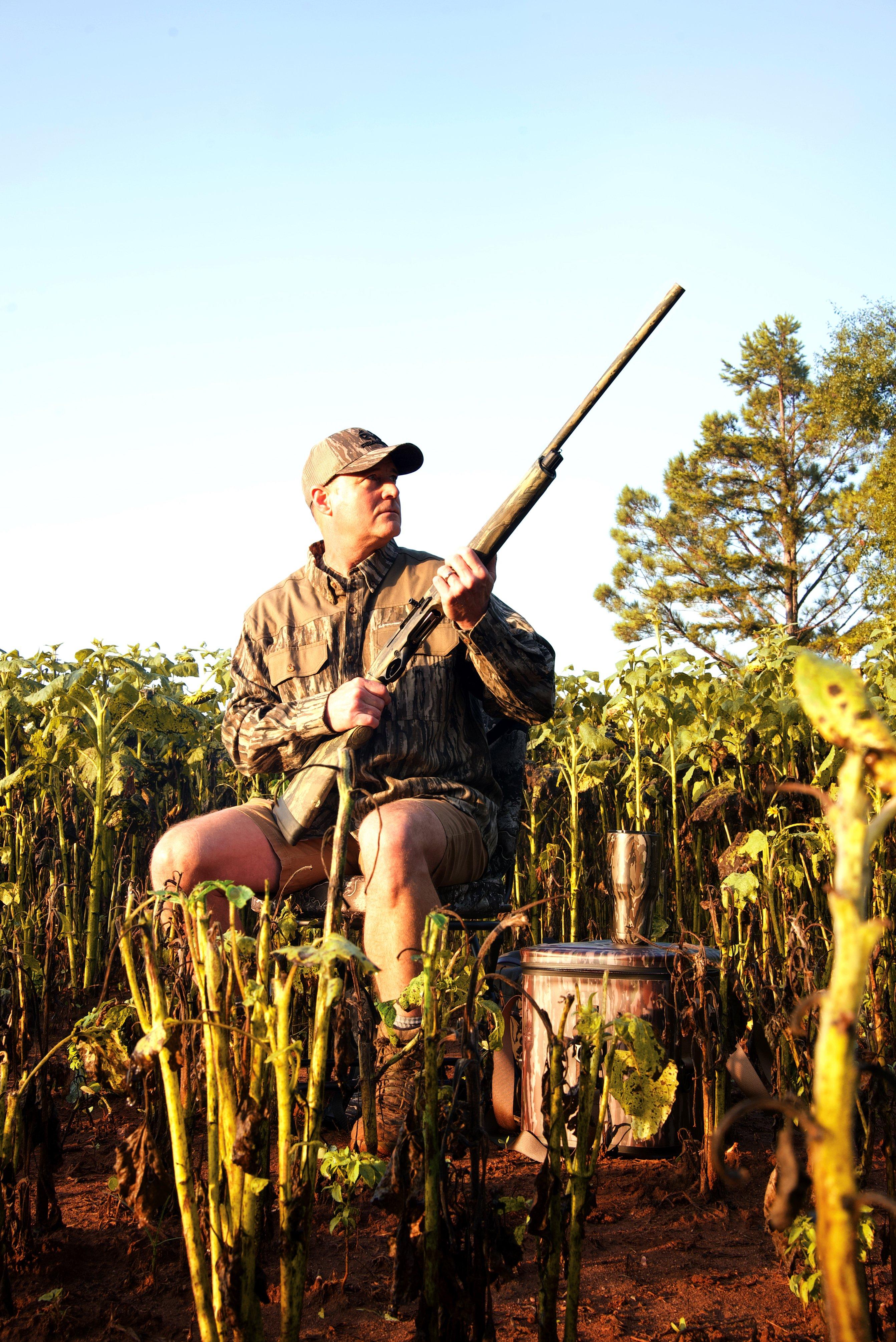
A little practice before season will have you prepared for the shots you’re likely to encounter on the dove field. (Photo by Realtree)
Whether you’re practicing at home or at the range be certain to practice the fundamentals of good shooting and challenge yourself with shots that mimic real-life hunting scenarios. Doves move fast and pass by at a variety of odd angles, so a standard going away shot presentation (as in trap) won’t effectively prepare you for all the shots you’ll see in the field. Skeet is more effective because you’ll be shooting crossers and incoming and outgoing shots each round, but my favorite preparation is five stand or sporting clays where shots vary and presentations can be quite tough. The guy who designed our local sporting clays range was a real sadist who seemed to love tossing targets between trees where the shooter had to adjust immediately if they wanted to make the shot, but that course helps make me a better dove shooter, despite the missing and frustration it causes.
3. DON’T QUIT ON YOUR SHOT
We all assume that we miss birds because we need to change our lead, but the reality is many shots are doomed because the hunter doesn’t finish the shot properly by keeping their head on the gun and following through the bird. It’s imperative that you stay low on the comb and swing all the way through the target, and I suspect that more than half of all dove hunters let their swing die when the trigger breaks. For consistent shooting it’s imperative that you continue swinging through the shot. Also, keep your head down even after you’ve pulled the trigger. Many hunters have a tendency to move off the gun to see if the bird goes down, and doing so ruins that shot and reduces the odds of hitting any follow-ups. When you’re practicing, work on following every target to the ground and pay attention to your cheek position.
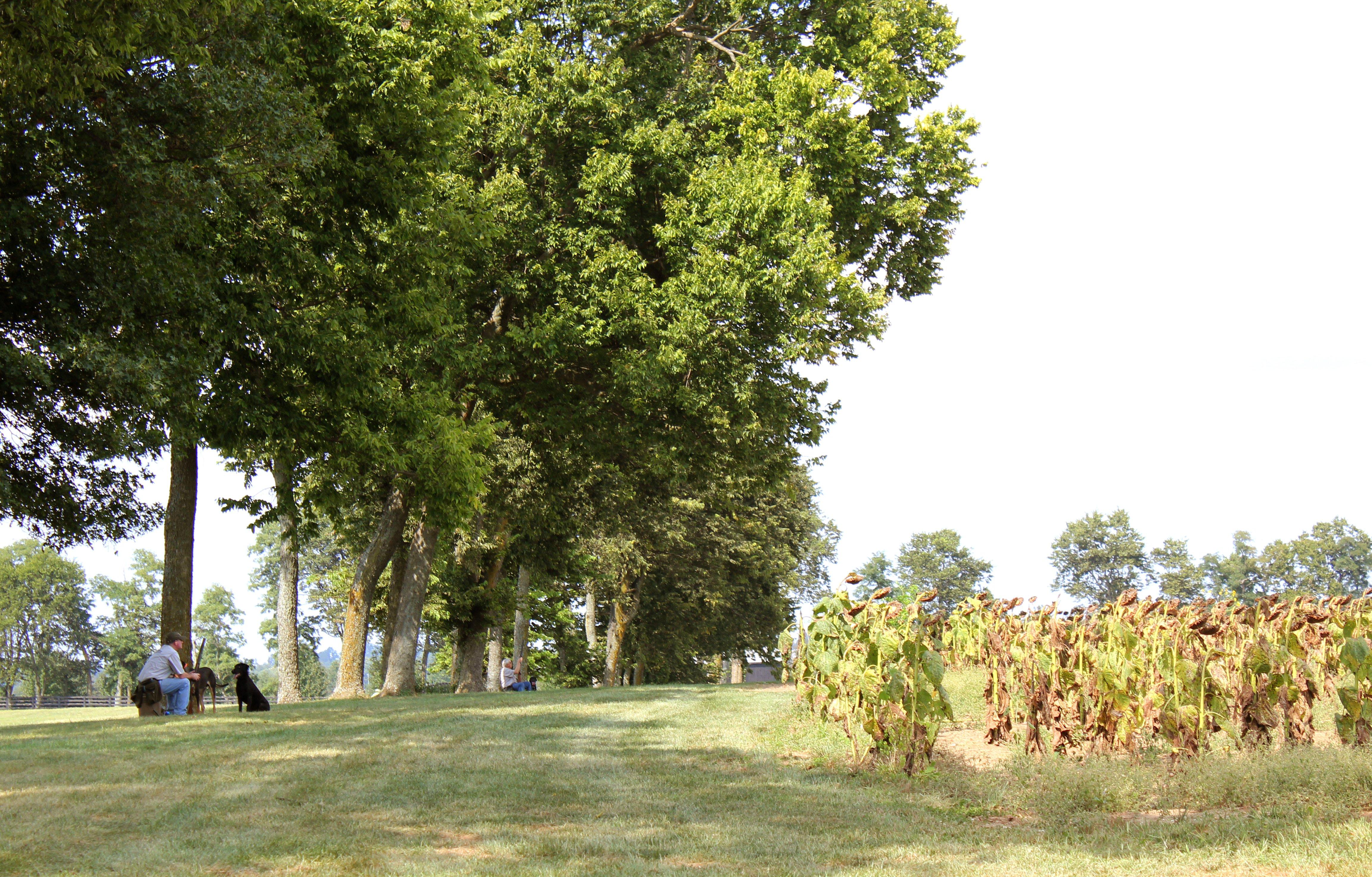
Do your homework and spend time at the range for your best chance at success each time you hit the dove field. (Photo by Brad Fitzpatrick)
Following through and staying on the gun requires lots of practice, but you don’t always have to burn powder to make this work. So long as it’s legal where you live you can take your unloaded shotgun into the backyard and track passing birds for hours. I learned that tip from a Texas sporting clays champion who killed a limit of 15 doves with a single box of shells while we hunted together. He swears the time spent in his backyard tracking passing birds is the key to his success as a hunter and shooter, and since he was packing up his shooting stool and heading home before I was halfway through my limit, I’m inclined to believe him.
4. ADDRESS THE ELEPHANT IN THE ROOM
There are certain things that we don’t want to admit. I hate to confess that my jump shot and 5K time will never again be as good as they once were, and I have to stop blaming my washing machine for shrinking the shirts and pants into which I no longer comfortably fit. There are problems that we simply do not want to address or even admit they exist. One of them is flinching.
Yes, you flinch. On every shot, if your nervous system is working properly. It might be imperceptible and you may not notice your flinch, but it’s there. Ignore it and it’ll get worse. The only solution, then, is to address the problem. The easiest way to do so is to have someone else load your gun while you shoot clays and to leave the chamber empty every few shots. Your flinch will bear its ugly head when you tense up and yank the trigger without a shell in the chamber, and there will be no more hiding your shame.
Don’t Miss: 5 Shots to Practice for Teal Season
There’s no better feeling than watching doves making a beeline for your location and no worse feeling than watching them fly on after you miss them. (Photo by Brad Fitzpatrick)
The best way to address a flinch is head-on. Start by taking a look at the gun and load that you are shooting. Everyone assumes that a smaller gauge shotgun recoils less, but that’s simply not true. While on a hunt in Argentina I was swapping 12- and 20-gauge guns with other writers and by day three of the hunt it was universally agreed that the 5.5-pound 20-gauge was far more unpleasant to shoot than the 6.5-pound 12-gauge.
I tend to stick with my sporting clays gun while I’m hunting doves. It’s a 12-gauge, it weighs 8 pounds, but it has a good recoil pad and the added weight reduces setback — especially with light field loads. However, even with that gun I have to know my limit, and when I’ve shot all my shoulder wants to handle, I take a break. You should, too. Don’t let pride convince you to keep pounding away with your shotgun and address the flinching issue head-on.
5. STAY OUT OF YOUR OWN WAY
Shotgunning is a mental game. Trust me, I know. At the collegiate shoot in San Antonio many years ago I shot a 49 out of 50 on international trap, but when we broke for lunch and I realized I was tied for the lead in a discipline I didn’t normally shoot, I panicked. I shot 17 out of 25 the next round and finished with a 23 out of 25 in the last round. I think I placed 117th overall.
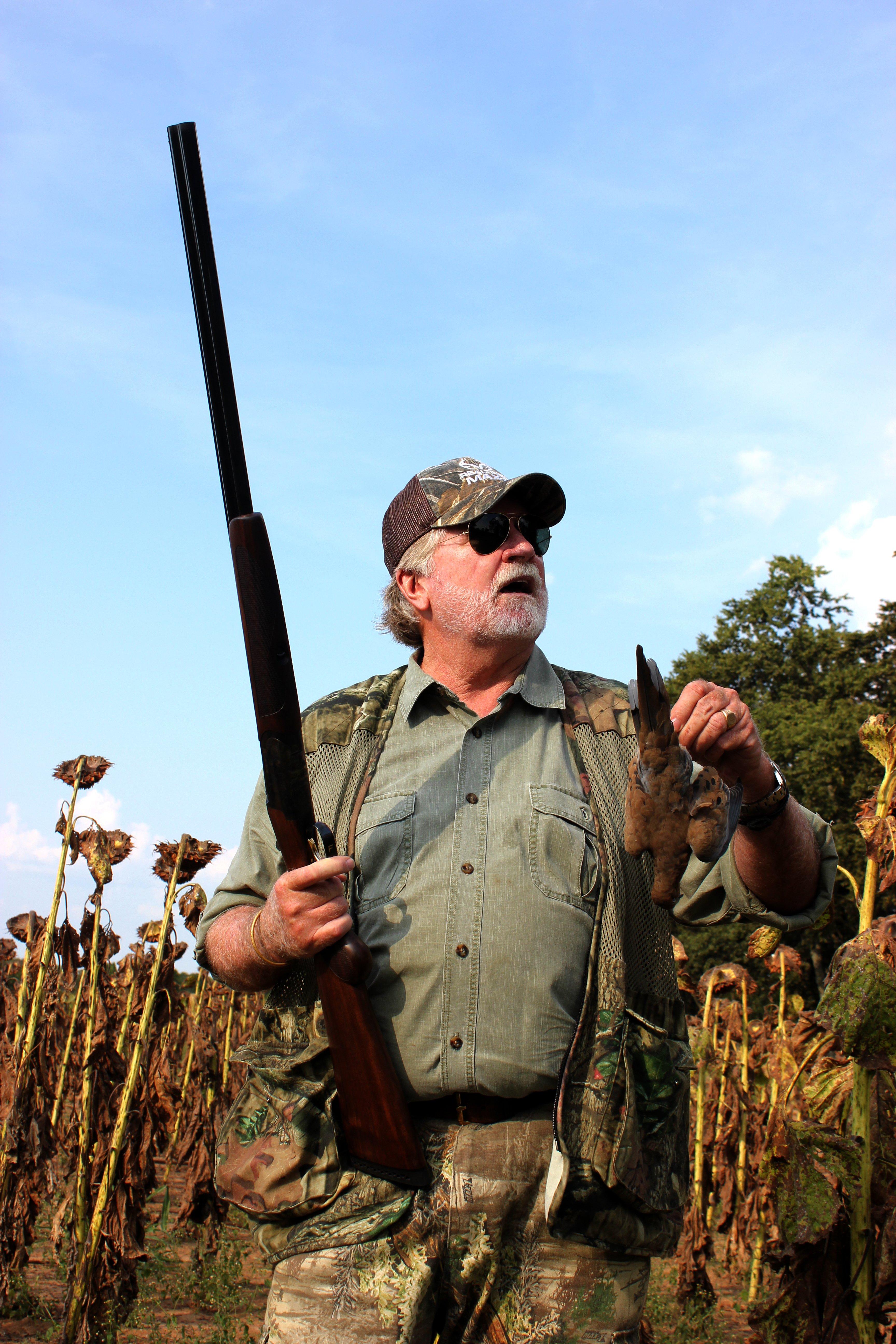
When nerves get in the way of your shot, focus on fundamentals. Stop counting the birds in your bag or comparing your pile of doves to that of the guy next to you. (Photo by Brad Fitzpatrick)
We don’t think of dove hunting as a high-pressure pastime, but when you miss that first bird and watch your buddies dropping doves to your left and right, it affects your psyche. Just like a pitcher who watched his last fast ball being driven over the fence in left-center field, a bad showing in the dove field can deflate you and leave you in a bad headspace.
When this happens, focus on fundamentals. Go back to the basics of shooting and stop counting the birds in your bag or comparing your pile of doves to that of the guy next to you. I’m not suggesting some new-age, getting-back-to-center routine but rather a mental slowdown and a refocusing on the task at hand. Smooth out your swing, press the trigger, ride the gun through the shot. If you’ve done your homework and spent time at the range, you have some inclination where the gun and load you’re using are hitting, so focus on the task at hand. You’d be amazed how effectively you can talk yourself out of missing — I know because I’ve watched good shooters do it time and again. Refocus, pay attention to the basics, and don’t forget to have fun.