4 Ways to Manage Food Plot Weeds Without Chemicals
Posted 2025-07-31 by
Not into spreading herbicides? Try these steps to knock back pesky weeds
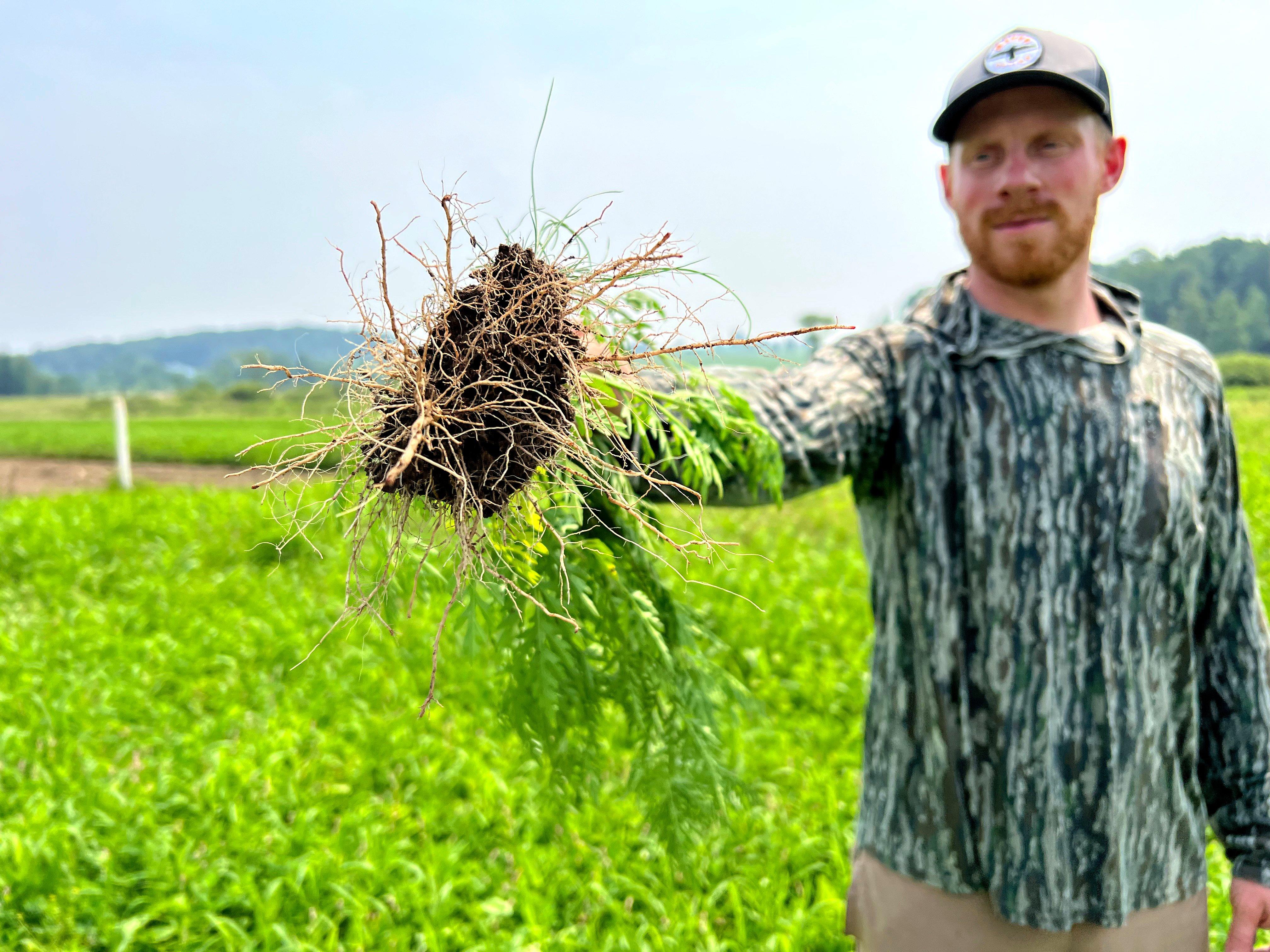
Weeds taking over your plot? Roll up your sleeves and get a handle on them. Photo by Darron McDougal.
Nothing satisfies like planting food plots before a series of rainy days, followed by a mixture of hot sun and more rain, and then watching the soil come alive with luscious green deer food. But weeds also come with the deer forage. And if left unchecked, you’ll have a battle as the weeds take over and squelch the planting you toiled so hard to cultivate.
Many food plotters use herbicidal sprays, which are very effective at controlling unwanted weed competition. Other people eschew the use of chemicals, and some practice regenerative farming with cover crops and no-till drilling. If you are new to food-plotting and have a few small plots where weeds are starting to take over, here are some ways you can manage them without using toxic herbicides.
DON’T MISS: Crossbow or Compound Bow: How Do You Choose?
MOWING
Perennial plots such as clover, alfalfa and chicory grow pretty rapidly, and if deer aren’t munching the growth fast enough, a plot can grow quite tall. Weeds and unwanted grasses will spring up along with the perennial planting. Clover, alfalfa and chicory do well when mowed, often regrowing thicker and lusher than before. Mowing also lets you chop off the weeds, preferably before they seed out. The key is to mow only the top few inches of the perennial crop and avoid mowing during prolonged dry conditions.
PULL THE WEEDS
In smaller plots, especially annual plots that cannot be mowed, you might have to take a more primitive approach. Just like gardening, go around and pull out the weeds, making sure to remove the entire root system. Shake the soil off the roots and then discard the weeds a distance away from the plot. It sounds like a big job, and it can be, but a few sets of hands and positive attitudes go a long way. Also, note that it will not be feasible to pull out all of the grasses. You’ll have to focus on larger weeds. Be sure to wear protective gloves and sleeves in case you come into contact with something such as poison ivy or poison oak. Also, avoid rubbing your eyes or skin with the protective gear.
DON’T MISS: Plan a DIY Pronghorn Hunt
TORCH THEM
If pulling weeds isn’t for you, try torching the large weeds. Get a propane torch with a long shaft so you don’t have to crouch down to hit every weed. Hold the flame on the weed until it is shriveled and charred. Again, focus on the larger weeds you can hit without torching your food plot.
ORGANIC HERBICIDE
If you prefer to spray but aren’t on board with the chemicals, an organic herbicide could be a good option. If your plot is already growing, choose a selective herbicide that won’t kill your food plot. If you’re prepping to plant a fall annual plot and want to clear an entire area, a non-selective organic herbicide is the best bet.
CONCLUSION
There are other homemade remedies for weeds — salt, vinegar, alcohol, dish soap and more — but you’d have to spray each individual weed and not the entire plot, or you might destroy all the plants you want to leave. Further, some of those substances can be harmful to the soil through time.
Check Out Our Latest Camo Pattern: Realtree APX
If you want to put together a long-term weed-control plan that doesn’t include chemically laden herbicides, regenerative farming with the use of cover crops and no-till drilling is likely the best approach. In the meantime, the other tips outlined here might not eliminate the weeds, but they will help you to manage them so they don’t exploit your food plot.