No End in Sight for Deadly EHD Outbreaks
Posted 2025-09-25 by
As warm weather continues across the country, so does the toll of this devastating deer disease
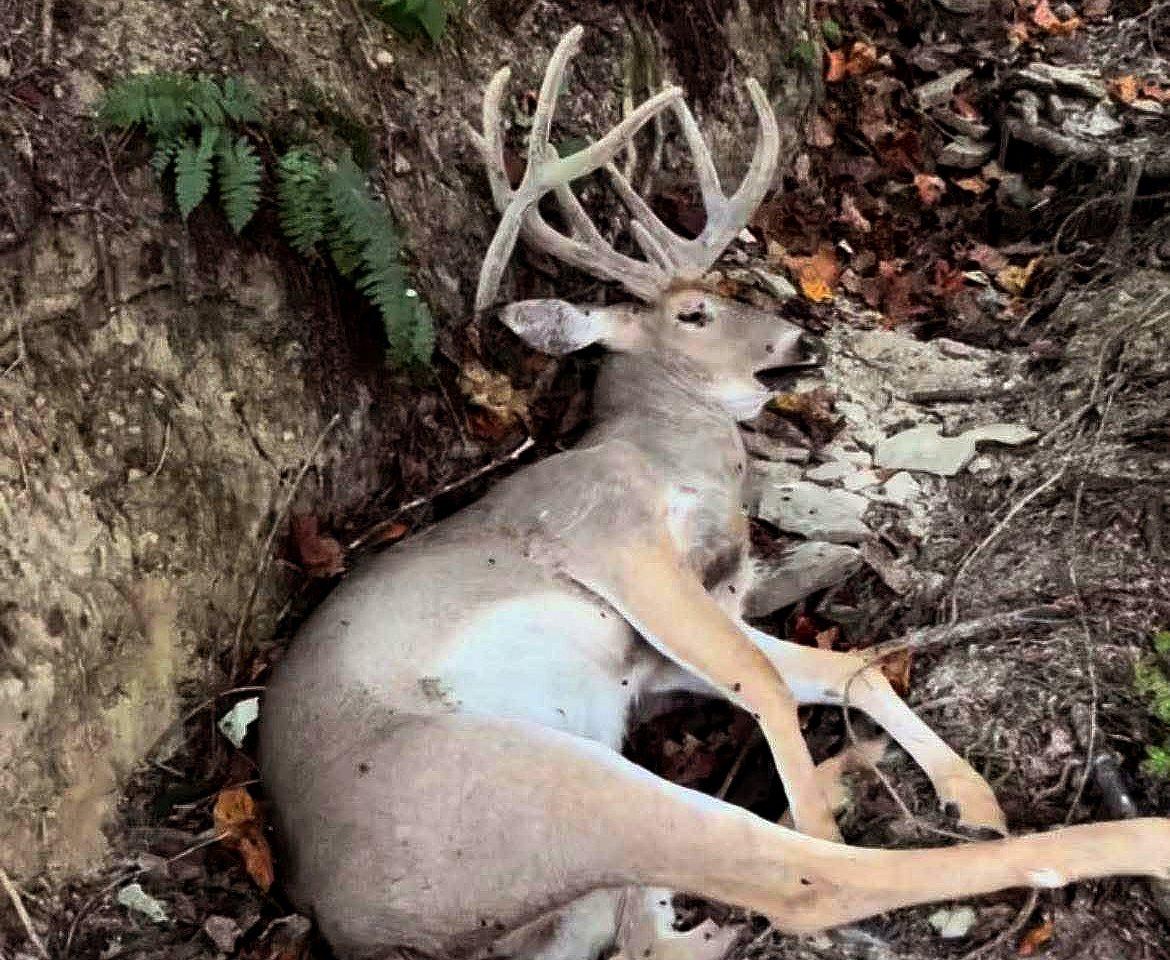
EHD has been mild in some regions but extreme in others this summer and early fall. Image by The Hunting Report.
This past week, we discussed Ohio’s record-setting epizootic hemorrhagic disease outbreak, which has hunters, outfitters and DNR personnel so concerned that regulation changes for this deer season are on the table. The impact on Ohio’s southeastern counties is so severe that it could take the area years to rebound.
Although the disease continues hammering the Buckeye State, it’s also slapping nearby states to some extent, including Indiana, Kentucky, Michigan, and Pennsylvania. Fortunately, the death toll in those states is considerably lower.
DON’T MISS: Teenager Bags First Bow Buck With a Recurve
In Kentucky, almost 20 counties have confirmed EHD mortality, and several other counties have tested dead deer for the disease, with the results pending. The disease will not trigger any changes to hunting regulations or bag limits for the 2025 deer hunting season, per the Kentucky Department of Fish and Wildlife Resources website.
Hilary Hirtle, the wildlife health communication specialist with the department, shared this data regarding EHD in Kentucky as of Sept. 22.
553 reports statewide (most in Green River and Bluegrass regions)
1,074 deer reported sick or dead
32 diagnostic cases sent to the Southeastern Cooperative Wildlife Disease Study (19 positive, two negative, 11 pending)
Positive counties: Gallatin, Henry, Jefferson, Scott, Spencer, Todd, Warren, Boyd, Greenup, Crittenden, Livingston, Lyon, McCracken, Trigg, Cumberland, Knott, Laurel, Rockcastle, Wayne
Received reports of suspected cases from 94 of 120 counties (about 78%)
In Michigan, counties currently affected include Eaton, Jackson, Van Buren, and Washtenaw. In a Sept. 2 press release, Brent Rudolph, the deer, elk, and moose management specialist for the Michigan DNR, said this year’s EHD kill is not as trivial or as severe as previous outbreaks.
“In past years when we’ve confirmed EHD, it has typically affected only one or a few counties,” he said. “Occasionally, localized outbreaks have been detected in a dozen or more counties, including as many as 30 in 2012.”
DON’T MISS: EHD Ravaging Southeastern Ohio Deer
In a recent email, Rudolph continued, “I suspect we’ll have more counties added to the current list, though I don't know that we’ll reach 15 confirmed counties as we did last year. The 2012 outbreak continues to be the most significant and widespread in Michigan. Outside of local areas that have experienced pronounced impacts from EHD, deer numbers remain high throughout much of the region.”
Things aren’t looking too bad in Pennsylvania, according to the Pennsylvania Game Commission’s Joshua Zimmerman. He said that in the Northwest Region, Erie, Mercer, Lawrence, and Butler counties have confirmed EHD. In the Southwest Region, it’s Greene, Westmoreland, and Armstrong counties. And in the Southeast Region, only Chester County has reported the disease.
“The number of deer affected in those counties varies from just a few cases to numerous,” Zimmerman said. “Regardless, these EHD outbreaks can cause localized impacts, but there is no indication that they affect statewide deer populations. For example, if you’re hunting a small parcel that experienced localized mortalities, you could encounter fewer deer come hunting season, but on a larger scale, such as the wildlife management unit level, those impacts may not be realized. If WMU-level impacts are detected, deer management recommendations will be adjusted as needed for next year.”
Deer contract EHD through biting midges, and the disease causes them to exhibit several telltale symptoms. Infected deer are attracted to water because of a high fever, and they often die in the water or at the edge of a water source as they attempt to cool down. Deer often show facial swelling, a dangling tongue, signs of exhaustion, and a lack of fear toward humans.
Check Out Our Latest Camo Pattern: Realtree APX
With warm weather continuing for the foreseeable future, be on the lookout for dead deer or deer exhibiting those symptoms, and report them to your state’s wildlife officials. Reporting helps biologists and other wildlife personnel track the disease’s impact, which can inform future hunting regulations and deer management.
As alarming as these EHD bouts can be, they are natural phenomena that we can’t stop. It will take a good, hard frost to kill the insects that transmit the disease. Hopefully, freezing temperatures will occur sooner rather than later in the states affected by this silent killer.