Ladder to the Sky | A Hunts The Healing Story
Posted 2025-10-12 by
Country music star Drake White has endured his share of hardship, including a brain injury that nearly killed him during a 2019 performance. He credits his faith, his family, and deer hunting for keeping him on the right path
Ladder to the Sky | A Hunts the Healing Story
A Rev White Pictures In Association with Hatchee Productions
Produced by Drake White, Holt Ingalls and Zack Knudsen
Directed by Holt Ingalls
Still Images by Zack Knudsen and Craig Godwin
Drake White’s grandfather wore faded overalls and kept a pouch of Beechnut chew in his pocket. He was a hunter, a trapper, and an Alabama preacher who taught Drake to pay attention to the things around him. Which way is North, he’d ask, and, Where’s the wind blowing from? How do you get home from here? The preacher taught his grandson to notice the redbirds and the hawks, the predators and the prey, and that if you paid attention, God always gave subtle hints that he was around.
Drake began understanding those lessons while playing in the creek behind his house, which was a little trickle that eventually flowed into the Coosa River. He carried a Red Ryder BB gun with him when he was a boy, but soon graduated to a pump-up pellet rifle and eventually a .22 and a .410. Drake would leave for the creek shortly after daybreak and sometimes not come home until nightfall, except for a quick lunch break. “My mom would put an old Coleman cooler on the back porch with some Kool-Aid in it, and some hotdogs split down the middle with some cheese. That was lunch,” he says. “Back at that creek, I was MacGyver. I was Daniel Boone. I was Huckleberry Finn.”
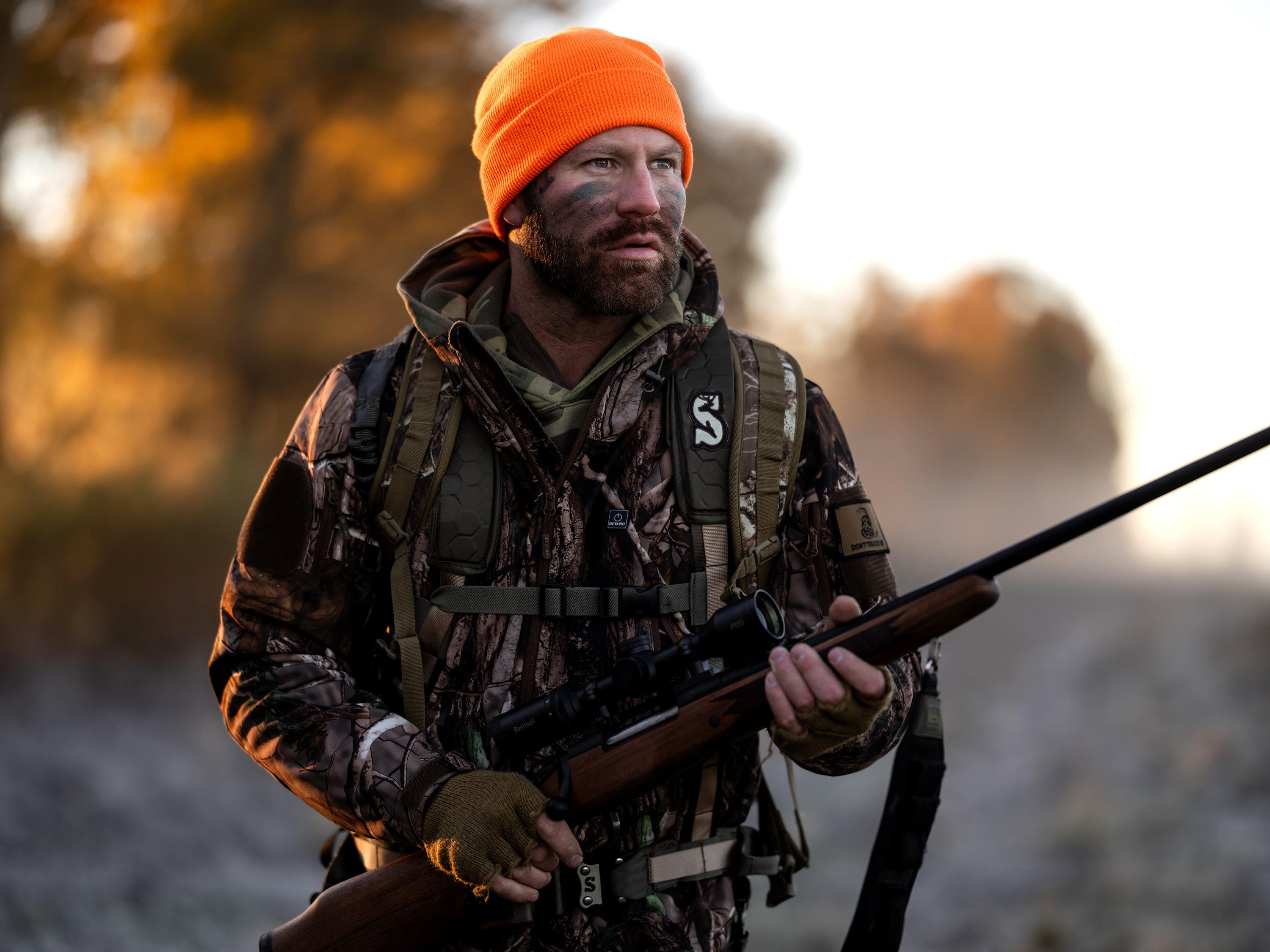
Country music star Drake White is known for his energetic live performances, but his roots are in the quiet woods and waters of rural Alabama, where he grew up hunting and fishing.
As a teenager, Drake says he was, “the one who’d wake up at 2 a.m. to be there first at the WMA, or who’d crawl through 2 miles of shit to get one wood duck.” But deer hunting was his favorite. Though his family lived in Hokes Bluff, up in northeastern Alabama, Drake and his grandfather often took long-weekend trips to an 88-acre property that was two hours south, down around the Black Belt. His grandfather had hunted the place for years. “He drove a ’74 model Holiday Rambler, and we’d fill coolers with frozen milk jugs for ice to last us the weekend,” Drake says. “We shot a lot of deer down there, too. We’d bow hunt, plant food plots, hang stands. It was an awesome childhood.”
Drake played organized sports, too; football and baseball especially. He was pretty good at both of them, but says he had to hit batting practice until sundown to keep up with the best players on the team. Same with football.
That’s partly why learning that he could sing confidently in front of a crowd — without much practice at all — came as such a surprise. Drake was 16 at the time, and a local beauty pageant created the circumstances. “My buddy Tyler Elliot was supposed to sing at the contest that night,” Drake says. “I saw him at a fruit sale that day, and he was sitting on a stack of oranges, rehearsing. I was hard-nosed and tough in those days. Or I thought I was. I walked up to him and I said, ‘Tyler, what are you doing?’ And he said, ‘They want me to sing at this damn beauty pageant.’ And I said, ‘Man, that sucks.’”
But Drake had always liked music and he had been a member of his church choir when he was younger. The song that Tyler was supposed to sing was “I’ll Be” by Edwin McCain, a major hit of the late-’90s, and one that Drake liked. “I told Tyler to play it through, and I just started singing it,” Drake says. “He said, ‘Dude, you need to be the one singing this tonight, not me.’ And so, I told him I would. We rehearsed it three times.”
That night, Drake and Tyler prepared to perform on stage in front of the prettiest girls in town, plus dozens of other spectators — including Drake’s mom. But then the music began, and Drake froze. He’d forgotten the words. “I was like, ‘Oh, shit, what have I done?’” Drake says. “All the girls are looking at me. My mom’s out in the crowd looking at me. I leaned over to Tyler and I said, ‘Man, what are the first words to that song?’ And he said, ‘It’s the strands in your eyes, dude.’ And it clicked. I remembered the words, and I just let it eat. And I got a standing ovation when it was over. The moment was life-changing. When something like that happens, when something comes so easy like that, it’s God-given talent. I decided that singing was something to chase.”
***
Although Drake graduated from Auburn with a building science degree, he pursued a career in music. His band, Drake White & The Big Fire, rose quickly in the country music world during the late twenty-teens. They were noted for energetic performances that were sometimes described as a blend of “Baptist-tent revival and amped-up southern rock festival.” Drake’s band opened for the likes of Eric Church, Luke Bryan, Lynyrd Skynyrd, the Zac Brown Band and many other artists. His album “Spark,” released in 2016, peaked at No. 4 in the Top Country Music Albums chart. During that time, Drake married his wife, Alex, who he’d known in high school but hadn’t started dating until later. He felt on top of the world.
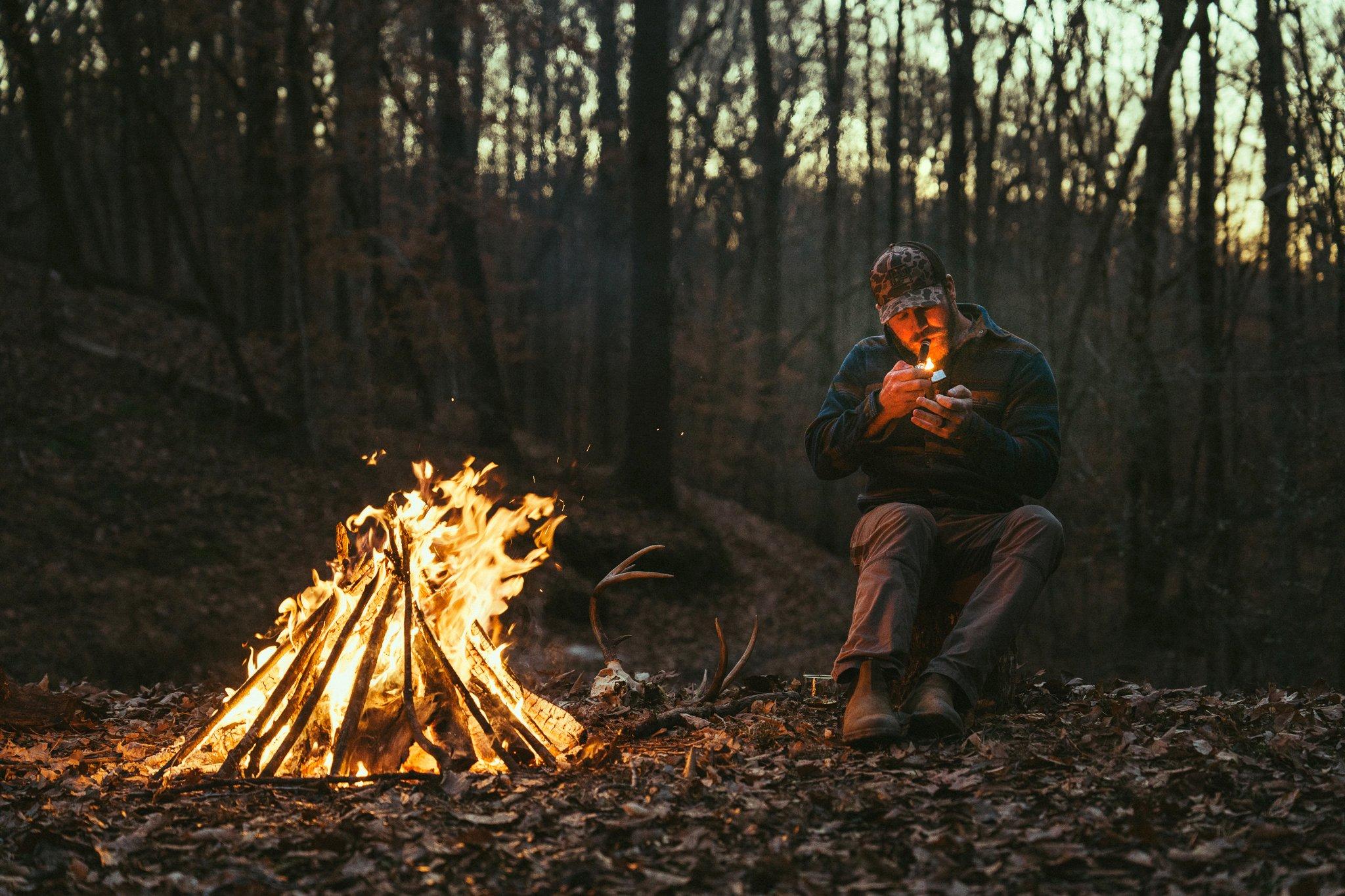
Drake White describes himself as an extrovert who loves people, but who prefers to unwind in the solitude of a deer stand or hunting camp.
In 2018, Drake signed to go on tour with the Zac Brown Band, to include stops in Australia, which he was especially excited about. He decided to lean into a workout routine and get into peak physical shape. “I started running 5 miles a day, eating right, working out. I wanted to just get shredded,” he says. “But in January of 2019, I got this headache. And it wasn’t something minor, like when you’ve had a couple too many beers. I wasn’t drinking anything at that time. I was in clean, fighting shape. But this headache was so severe I couldn’t see, and I couldn’t shake it. So we went to the doctor, and they immediately had me get an MRI.”
The results showed a mass of arteries in Drake’s brain, and the condition was diagnosed as an arteriovenous malformation, or AVM. It was serious, but Drake and Alex were optimistic. He continued touring and performing, and then, during his off days, underwent embolization treatments, which involved running a catheter up his leg, through his femoral artery, to inject what Drake described as a glue to repair the AVM.
He had eight embolization treatments scheduled, and it seemed that progress was being made during each successive one. “Every time I went in, the chances of the (AVM) rupturing were getting lower,” Drake says. “I was getting better. And I was still in great shape. It was August, we were going to play in Roanoke, it was a beautiful day, and I felt unstoppable. We’d done 50 or 60 shows, and I’d had four embolization treatments already. The only thing was, they had me on blood pressure medicine, and I hated the side effects from that. It made me dizzy, and made my hearing and eyesight weird. I asked the doctor if I could slack off, and he told me that I could, as long as I was feeling OK.”
Drake believes that his stage career is ultimately what led to his blood pressure spiking and the AVM bursting. “When you’re a singer up there, pushing it as hard as you can, with 2,500 people screaming your name, your blood pressure is going to go up,” he says. “It’s tweaking, tweaking, and those arteries were like a hose with a bunch of little pinholes. When it burst, it was equivalent to a hemorrhagic stroke.”
Drake suddenly collapsed on stage during the performance with a piercing headache that rendered him paralyzed on his left side. Fortunately, Alex and his tour managers had taken precautions and prepared information about his AVM so that doctors would know exactly what to do in an emergency. They were only minutes from a trauma ward in Roanoke, and Drake’s life was saved, though just barely.
“I saw angels, Jesus, and God,” he says. “I was in that bed, realizing how fragile it all was.”
***
Rehabilitation didn’t happen quickly or easily. “Here we were supposed to go on tour with Zac Brown in Australia, and instead I’m in a wheelchair,” Drake recalls. “Alex is having to help me use the bathroom. I’m at Vanderbilt, rehabbing next to elderly folks who’ve had strokes, and I’m thinking, ‘I’m 35 years old. I’m an athlete. Why is this happening?’”
To compound matters, this was in early 2020, at the beginning of the Covid pandemic. “I’m not making money, medical bills are stacking up, insurance is a mess. When you’re in your 30s and suddenly the spigot turns off, the money dries up fast,” he says.
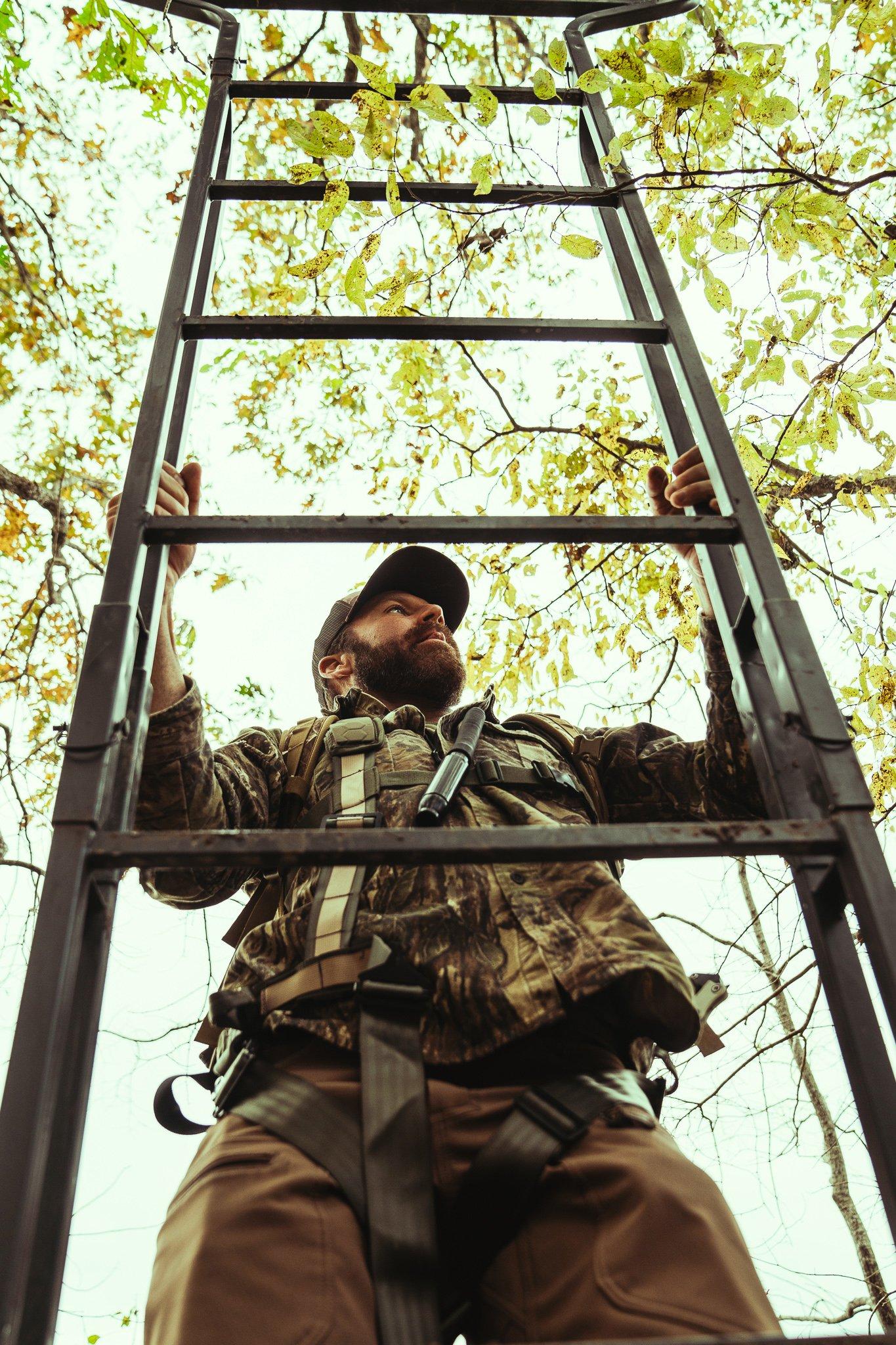
In 2019, an MRI revealed an arteriovenous malformation (AVM) in Drake White’s brain. The AVM burst while White was performing in Roanoke, Virginia, causing him to collapse and leaving him temporarily paralyzed on his left side. Doctors weren’t sure that he’d walk again, much less climb back into a deer stand or perform on stage.
That top-of-the-world feeling had become one of hopelessness and anger. “That Huckleberry Finn thing, that sense of adventure, was being stripped out,” he says. “The Devil was really attacking me at this time in my life. My prayer life was good, but volatile. I was asking God a lot of questions.”
Drake says that after extensive prayer, he learned of a sports medicine clinic in Brentwood, Tennessee, not far from where he and Alex were living, called Resilient. He scheduled an appointment, and that’s when he met his therapist, Dr. Griffin Moore, for the first time. Drake was wearing a camo hat, and Dr. Moore noticed it.
He looked at me and said, “Oh, you’re a hunter,” Drake recalls. And when he said that, I knew it was God answering a prayer. It brought me back to being a kid, climbing through 2 miles of shit to kill a wood duck. I do have that man, that provider, that predator in me. It’s still there.”
Drake and Dr. Moore, who Drake now calls “Griff,” knew they had work ahead of them. “Griff had never dealt with a stroke patient before,” Drake says, “and he looked at me like I had three heads. But he taught me to walk again. It was like watching trees grow for a while. But I started healing.”
***
It was August 2020, almost a year after the stroke, when Drake’s brother-in-law told him that he was going to set some trail cameras behind Drake’s house. “Honestly, I was still pissed off then,” Drake says. “It was still during the pandemic. I was feeling better, but couldn’t tour. And I didn’t see any reason to hang cameras, because I didn’t think I could hunt. I couldn’t build a blind or hang a stand. But my brother-in-law went back there and put out a cell camera anyway.”
The deer hunting in Middle Tennessee has certainly improved during the past decade, but the steep ridges, deep ravines, and relative scarcity of agriculture aren’t conducive to growing trophy whitetails. That’s why the giant buck that appeared on camera just two weeks before Tennessee’s three-day early archery season was so shocking. It was a 175-class animal. When Drake first showed a picture of the deer to Alex, she said, “You’re not ready to go hunting in Iowa yet, you just got out of the wheelchair!”
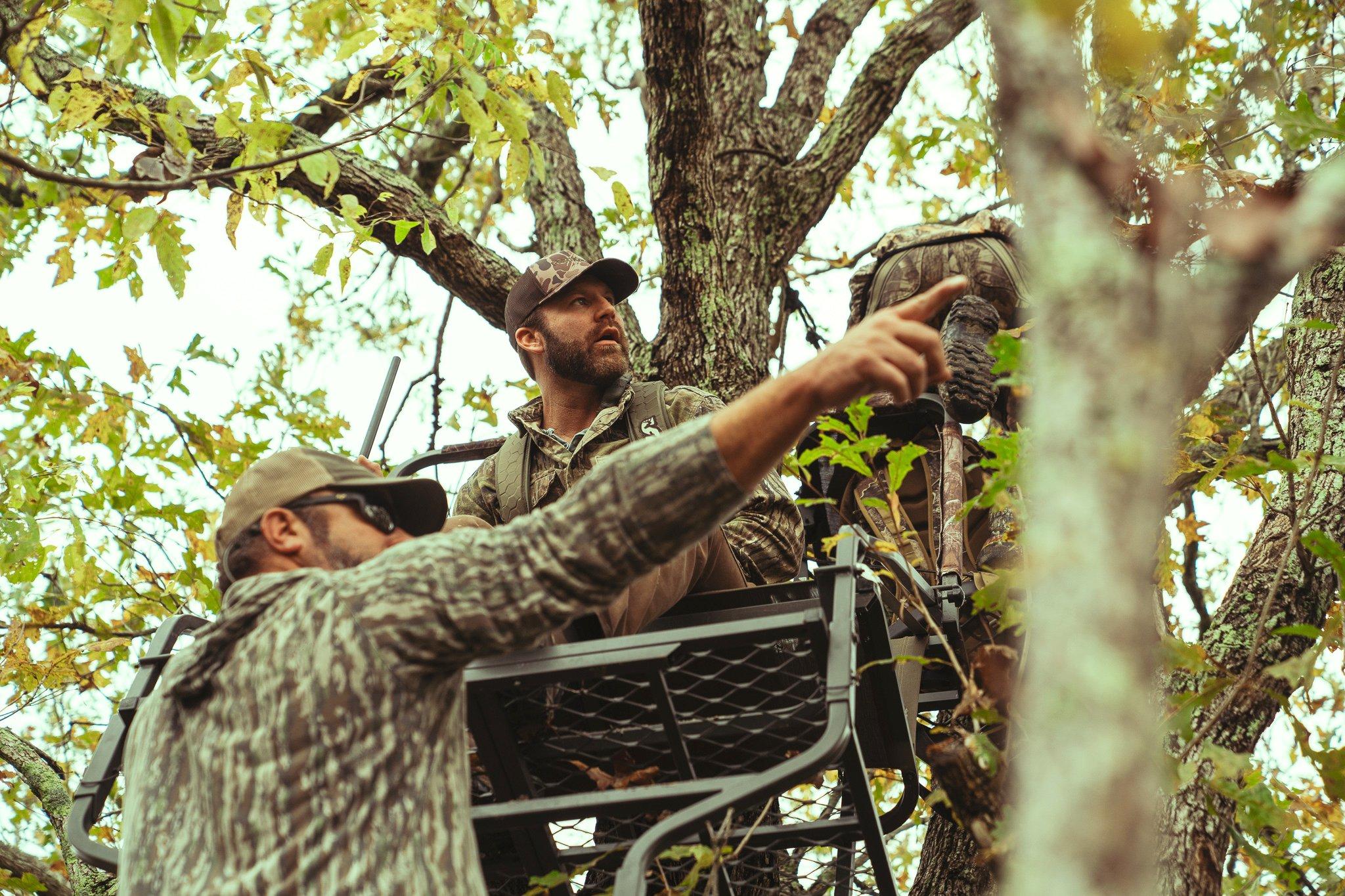
While recovering from the stroke, a trail camera photo of a giant whitetail buck inspired Drake White with the goal of being able to climb into the ladder stand behind his house. Prayer, determination, and hard work found him in that stand on opening day.
But Drake told her that it wasn’t an Iowa buck; this deer was 75 yards out the back door, smack in the middle of Tennessee. “I’m telling you, something changed when I saw that picture,” Drake says. “I must’ve checked that camera 500 times a day! It brought me straight back to being a kid. I was Huck Finn again.”
Drake went to his next therapy session and told Griff that he had a new goal in mind. “I needed to learn how to climb a ladder, so I could get in a treestand,” he says.
On opening day of bow season, Alex took Drake to the base of a ladder stand out behind their house, and then Drake set about accomplishing his new goal. “It took me 45 minutes to climb, one step at a time, 12 feet off the ground,” he says. “It healed me. I had the faith that I was healed.”
Drake hunted the buck over and again. His neurologist told him that he’d never seen a patient make such rapid progress, and he asked what he was doing. Drake just replied that he was eating well and exercising, but Alex quickly corrected that story. “I’ll tell you what he’s doing, he’s deer hunting every day!” she said.
“Whatever he’s doing, keep doing it,” the neurologist said. “It’s working.”
Drake says he saw the giant whitetail buck twice from the stand, but never got a shot at the deer. But that was OK. “God puts these things in our path,” he says. “There are no coincidences.”
***
Drake hunted all fall, but by December he hadn’t pulled the trigger on a buck. The rut had come and gone in Tennessee, and though he was in a better place, mentally and physically, he had recently been dropped from his record deal and was still a long way from recovery. That’s when fellow country music artist Riley Green reached out to him about going duck hunting down at Honey Brake, in Louisiana.
Drake knew Riley a bit — they’d actually grown up about an hour apart in Alabama — but they weren’t close friends at the time. In fact, Drake admits, he even had some animosity toward Riley back then. “Riley was living the life I wanted, and I was pissed,” he says. “He’d been signed by the record label that had dropped me. I’d been the guy on stage that everyone was talking about. Now he was. I’d been to Honey Brake before, I already knew Drew Keeth. And all these studs were going to be there. Riley, Tyler Jordan. They didn’t know me as MacGyver, as Huck Finn. I thought they just knew me as the guy who couldn’t walk. I was afraid I wouldn’t be able to get my waders on, and that I’d mess up the hunt in front of all those studs. But I’m a stud. I was like, ‘Hell no, I’m not going, especially not on Riley’s invitation.’ That’s how I felt. I wasn’t thinking right, but traumatic brain injuries are strange.”
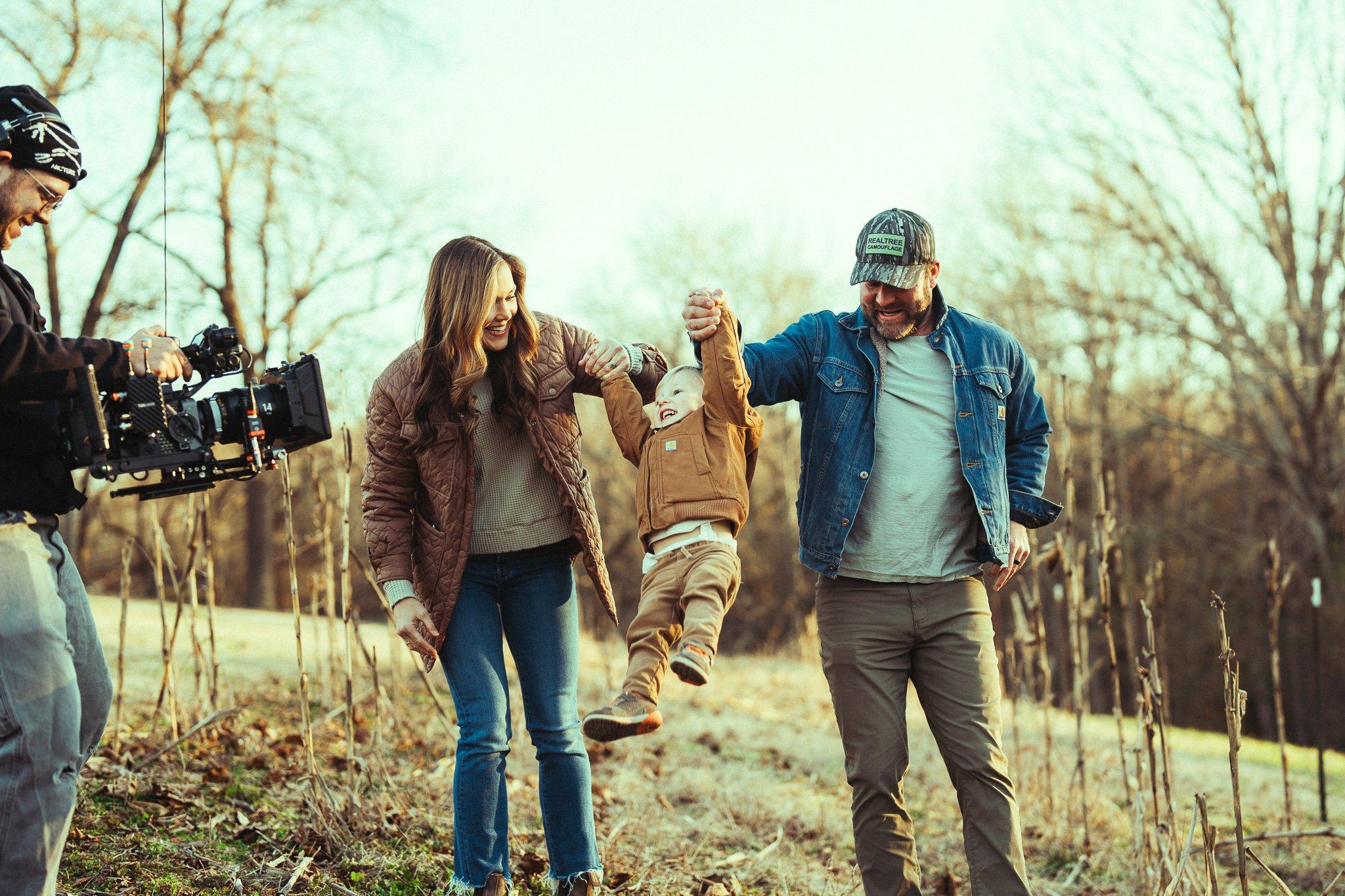
Drake White and his wife, Alex, enjoy some time at home with their son.
But fortunately, Drake had Alex. “Bro, you always marry up,” he says. “She told me that I was being an idiot, and that I needed to go. So, Riley came to pick me up, and we rode down to Louisiana together.”
As it turned out, Drake did struggle at getting his waders on before the first morning’s duck hunt, despite starting early. But Riley walked into the mud room, smiled, and helped him pop the wader boot onto his foot. It took a few seconds and smiles, and then life went on quickly.
“We shot a limit of ducks that morning, and then later, Drew asked if I wanted to go deer hunting,” Drake says. “I didn’t even know they did deer hunts at Honey Brake, or that Louisiana had that many big deer running around.”
At the time, the 142-inch 8-pointer that stepped out in front of Drake’s stand was one of the biggest bucks that he’d ever taken. He squeezed the trigger, and the deer fell within sight. It was the first deer that he’d taken since the stroke, and since beginning his recovery. Drew Keeth, with Honey Brake, rallied up with Drake after the shot, to celebrate in the success, and he offered to give Drake a ride to the buck. But Drake emphatically said no, that he’d be walking from the stand to the deer, even if the walk was a little slower than normal.
“You kill a limit of ducks in the morning, a buck like that in the evening, and you do some healing,” Drake says. “That feeling you get of walking up on a big buck, of something you’ve worked for, it was compounded. I had about 30 steps to take, and I wanted to savor every one of them. My feet hit the ground, I felt like I was floating. I thanked God for each step, for my boots, my feet. That animal. For taking such a hard-nosed, alpha-male southern idiot like me, and dying for me. When you’re a provider, a hunter, a predator, it’s in your marrow, your DNA. And it doesn’t go away. You notice the little things, the redbirds, the predators, the prey. The wind direction. The mud under your toes. That’s God, telling you which way to go.”
Postscript:
Drake White calls Riley Green one of his closest friends now, same as Dr. Griffin Moore and others he’s met along his difficult journey. White and Green have performed and toured together in the years since, including for Drake White’s Benefit for the Brain concert, which will be held this November at the Ryman Auditorium in Nashville. In addition, White has produced a rich library of new music in recent years, including his newest single, Nights on Fire, which he wrote and which was released on Sept. 5, 2025. The feature film, Ladder to the Sky | A Hunts the Healing Story, documents Drake White’s story and journey and was proudly supported by Team Realtree.


?fmt=auto&qlt=default&fmt.webp.qlt=65&fmt.png.qlt=73&fmt.jp2.qlt=35&fmt.jpeg.qlt=60)