Alabama
1,250,000
Est. Whitetail Population
190,000
No. Licenses Sold Annually
$33.55 (All Game)
Resident hunting license and deer permit
$240.40 (10-day) to $389.44 (Annual)
Non-resident hunting license and deer permit
186 3/8"
Picked up by George P. Mann in Lee County in 1986 and ranks 382 overall.
Record B&C Typical Stat
20
Total B&C Typical Entries
259 7/8"
Killed by Jon G. Moss in Perry County in 1989 and ranks No. 60 overall.
Record B&C Non-Typical Stat
14
Record B&C Non-Typical Entries
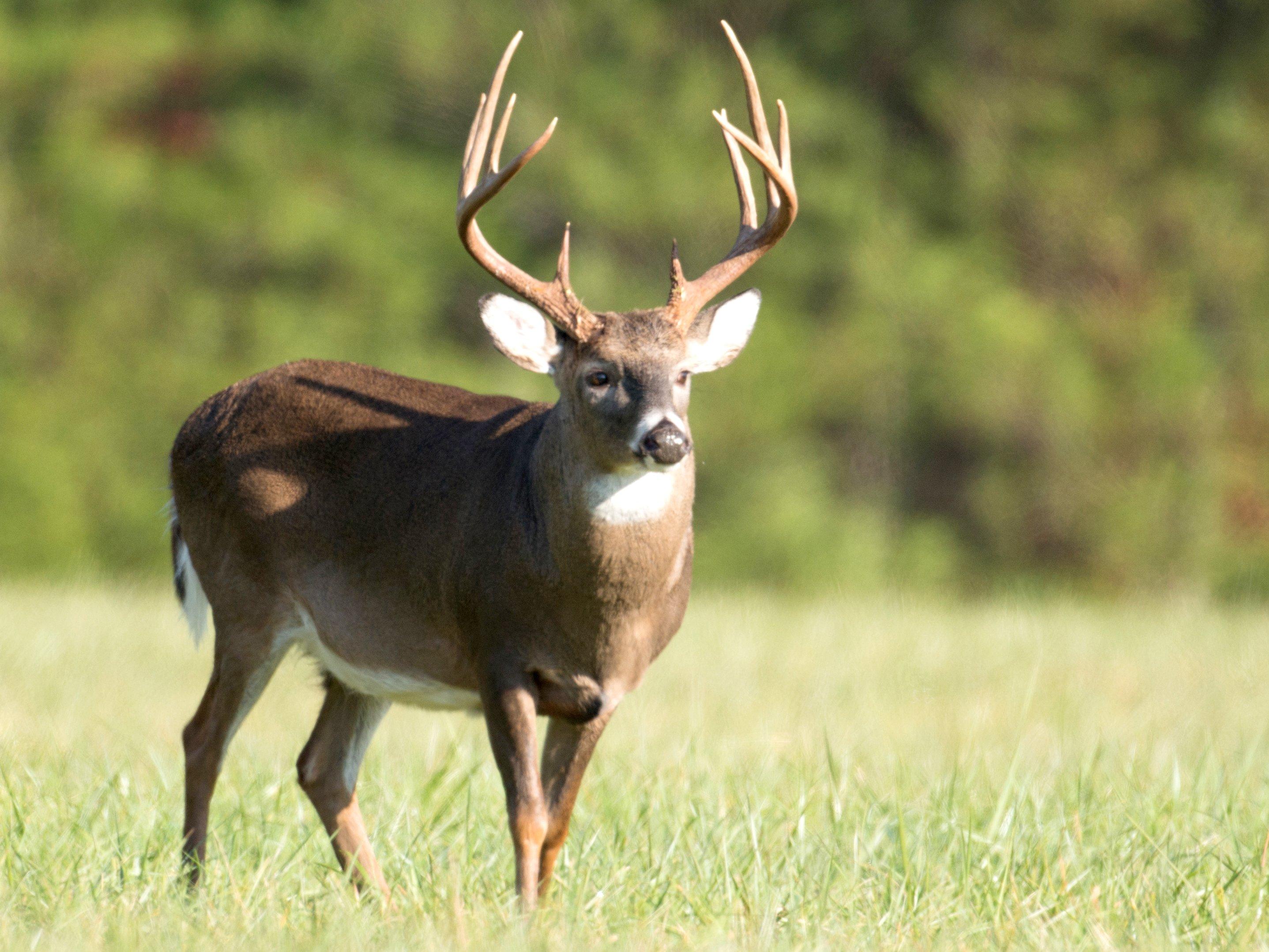
Get the latest deer-hunting info on Alabama. Image by Tony Campbell
Season Dates (2025):
Deer season dates vary in each of Alabama’s hunting zones. Please check the ALABAMA DEPARTMENT OF CONSERVATION AND NATURAL RESOURCES (ADCNR) WEBSITE to confirm season dates. In most zones, archery seasons open Oct. 15. Firearms seasons open Nov. 22 in most zones and run until Feb. 10 in a few (though some closing dates are earlier than others). Deer dogging seasons, where allowed, mostly run concurrently with firearms seasons, but with earlier closing dates.
The Grade: B
There have been plenty of changes in Alabama over the past several years. In 2016, mandatory harvest reporting and season date extensions were added. In 2017, restrictions were placed on the importation of deer carcasses and certain high-risk parts. In 2019, baiting became legal with the purchase of a baiting privilege license. In 2023, zones D and E were created, where the season opens and closes two weeks earlier than in the rest of the state.
“The deer herd should be in great condition,” said Chris Cook, deer program coordinator for the Alabama Division of Wildlife and Freshwater Fisheries. “Weather conditions during hunting season usually play a significant role in whether the annual deer harvest is above or below average. Rainy, hot weather during traditional periods of peak harvest, such as the two weeks prior to peak breeding, can greatly reduce the harvest in an area. On the flip side, excellent weather (cold, clear conditions) can improve harvest rates.”
Although Alabama hasn’t traditionally been known as a trophy buck destination, there are plenty of quality animals here. According to the National Deer Association’s Annual Report, the percentage of bucks in the overall annual harvest that are 3 1/2 years old or older is consistently high, usually about 60 percent.
Alabama’s Department of Conservation and Natural Resources also said that harvest rates are high, with the 5-year average success rate being 1.19 deer per hunter. Combine that with ample public land and reasonable license fees, and Alabama lands at a B.
Antler Nation Knowledge:
The Black Belt region stretches across the central part of the state, from border to border, and is perhaps Alabama’s best-known hunting area. It spans about 40 miles north and 40 miles south of Interstate 80. Historically, this region produces the best bucks.
There is plenty of public ground, too, including wildlife management areas, special opportunity areas, physically disabled hunting areas, Forever Wild Land Trust lands, U.S. Forest Service properties, U.S. Army Corps of Engineers ground, wildlife refuges and more. According to Cook, Alabama has about 775,000 acres in its WMA system, nearly all of which are open to deer hunting. He said that despite some misconceptions about the lack of quality deer on Alabama’s public lands, a generous share of bucks harvested on WMAs are 3 1/2 years old or older.
If you love the rut, there’s no place like the Cotton State. Cook said, “The rut in Alabama varies significantly across the state, from mid-November and early December in deer zones D and E, all the way to late January and early February in most of Deer Zone B,” Cook said. “Breeding in deer zones A and C may fall anywhere in between. To get a better idea of when the rut likely occurs in their area, hunters can consult the Alabama Rut Map.”