Iowa
Unknown
Est. Whitetail Population
350,000
No. Licenses Sold Annually
$68 and up
For resident hunting license, habitat stamp, and deer permit
Resident hunting license and deer permit
$492.50 and up
For nonresident hunting license, habitat stamp, and buck permit (pending successful draw)
Non-resident hunting license and deer permit
202"
Taken by David Brenigar in Wapello County, Iowa, in 1969. Ranks No. 12 of all time.
Record B&C Typical Stat
880
Total B&C Typical Entries
307 5/8"
Taken by Tony Lovstuen in Monroe County in 2003. Ranks No. 6 of all time.
Record B&C Non-Typical Stat
683
Record B&C Non-Typical Entries
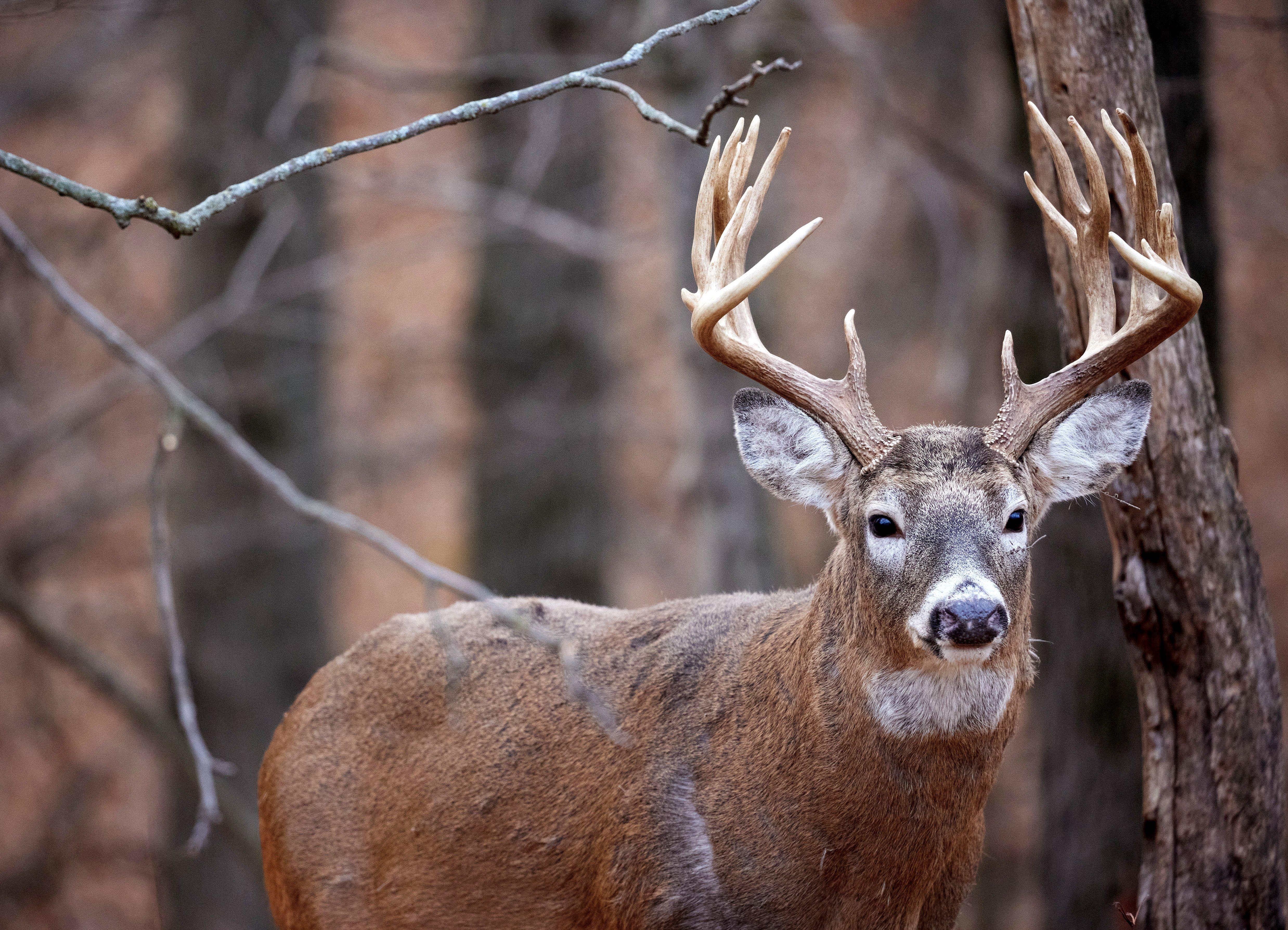
Check out the latest deer-hunting info for Iowa. Image by Rich Waite.
Season Dates (2025):
Bow season has two splits, Oct. 1 to Dec. 5 and Dec. 22 to Jan. 10. There are two shotgun seasons, Dec. 6-10 and Dec. 13-21, followed by a late muzzleloader season Dec. 22-Jan. 10. There are also youth seasons, resident-only early muzzleloader seasons, and special holiday seasons. Check the Iowa DNR WEBSITE to confirm.
The Grade: A
Iowa’s storied whitetail quality is, well, legendary. Tightly restricted hunting pressure and short, late firearms seasons help the Hawkeye State maintain its unrivaled reputation. Plus, the expansive farmland, timber, and floodplains here make up an ideal whitetail habitat.
Now, it can take non-residents several years to draw an Iowa buck tag, and when you can get one, they’re expensive. Antler Nation’s grading system considers tag availability, hunting pressure, trophy potential, available public land, and more when assigning grades. Even though drawing a nonresident tag requires some waiting, and public land in some zones is sparse, the big buck potential squashes those qualms, as Iowa hunters annually kill tremendous bucks on both public and private lands.
We would like to remind you that in 2024, Iowa made it illegal for non-resident hunters to “party hunt.” Each hunter in a group must possess his or her own deer permit. Party hunting is still legal for residents.
Antler Nation Knowledge:
Iowa hunters enjoy good odds of tagging a really big buck statewide. But there are two obvious hotbeds: southern and eastern Iowa. Southern counties such as Appanoose, Marion, Monroe, Van Buren, and Warren have solid reputations. Unfortunately, these are also some of the areas hit hardest by recent bouts with EHD. In the eastern region, Allamakee, Clayton, Delaware, Dubuque, Jackson, Jones, Linn, and Winneshiek counties crank out a lot of deer. Don’t overlook other Iowa counties, though. Just because they don’t rank as well doesn’t mean they don’t produce. Practically the entire state lights up with record-book entries.
Examining the Iowa DNR website reveals public ground is evenly distributed THROUGHOUT THE STATE. State forests make up the largest percentage of opportunities. However, there are additional options, including U.S. Army Corps of Engineers land, wildlife management areas, and some federal ground.
Also, don’t overlook the IOWA HABITAT AND ACCESS PROGRAM (IHAP). It offers more than 32,000 acres of private land open to all hunters. Many of these are smaller tracts of land, but still harbor good hunting opportunities. The key is to hunt these as soon as they enter the program. When people learn of them, hunting pressure quickly follows.
The Iowa DNR also makes planning easy and does a great job tracking the deer harvest and offering detailed information to the public. Use its online databases to observe HISTORICAL AND REAL-TIME HARVEST REPORTS, as well as quota limits for SPECIFIC AREAS. These tools can help you plan your next out-of-state Iowa deer hunt.
“Compared to most other Midwestern states, Iowa is unique in that only about 5% of the state is forested,” Jace Elliott, the Iowa DNR’s state deer biologist, said. “The remaining natural landscape consists of upland prairies, pothole wetlands, and early successional cover. While most deer hunters look for big sections of forest to hunt, white-tailed deer are a generalist species that can thrive in a diversity of land cover types. Iowa is a place where hunters can find great luck by getting creative and hunting often-overlooked areas, using ground set-ups.”
For 2025, hunters are required to provide main-beam length measurements when reporting harvest. County antlerless quotas have changed, and a Population Management January Antlerless Season will be available in several counties.