Kansas
772,000
Est. Whitetail Population
186,700
No. Licenses Sold Annually
$80 and up
Hunting license is $27.50. Deer tag is $52.50.
Resident hunting license and deer permit
$605 and up
Hunting license is $127.50. Deer tag is $477.50. If you don’t draw a tag, preference points are $26.50. The optional mule deer stamp (which validates your deer tag as whitetail or mule deer) is $152.50.
Non-resident hunting license and deer permit
200"
The top-scoring Kansas typical was taken in 1995 by Albert J. Daniels. It’s the 21st-largest typical whitetail on record.
Record B&C Typical Stat
531
Total B&C Typical Entries
321 3/8"
Killed by Brian Butcher in Chase County in 2019. The buck is the 4th-largest nontypical whitetail on record.
Record B&C Non-Typical Stat
498
Record B&C Non-Typical Entries
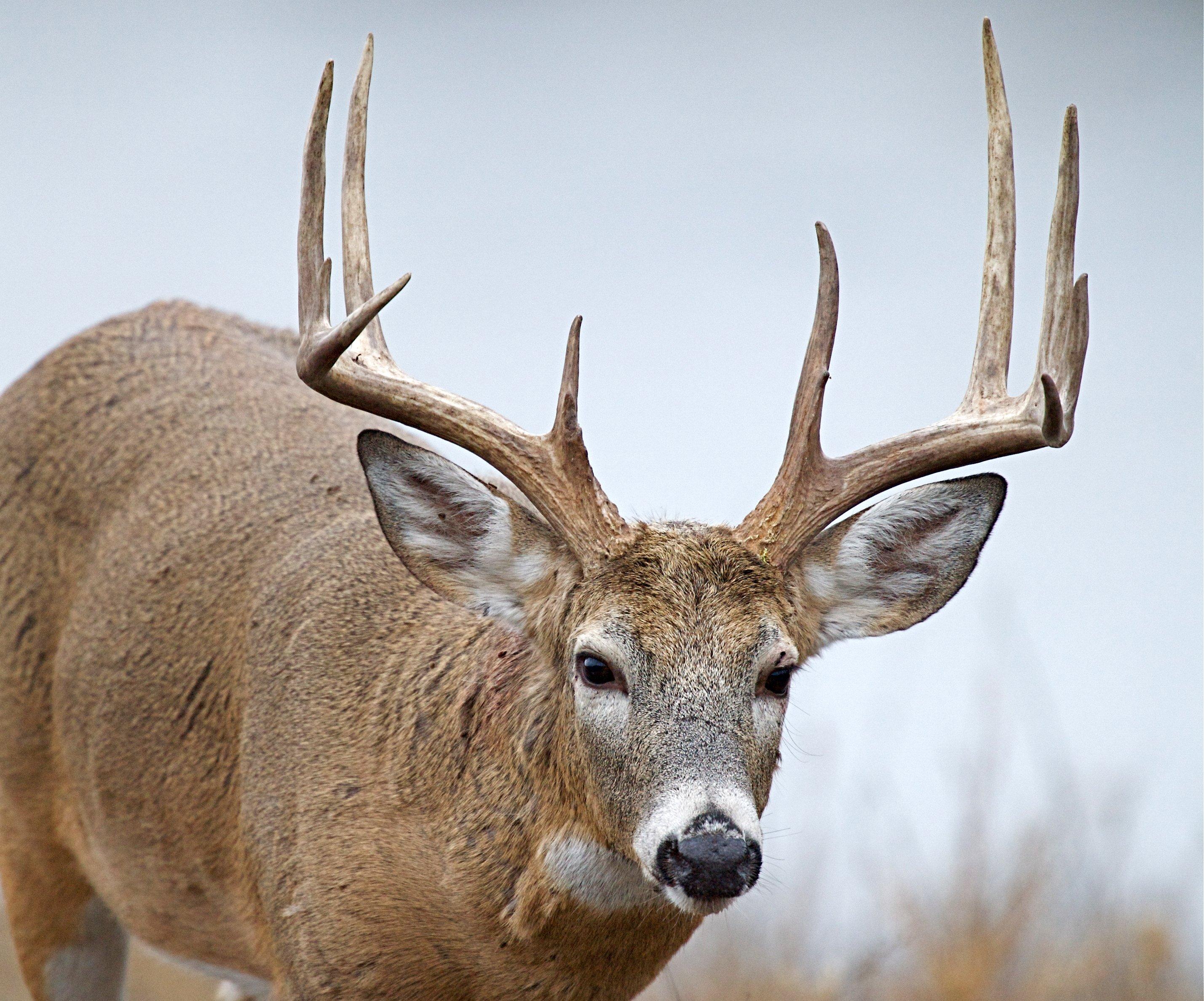
Check out the latest deer-hunting info for Kansas. Image by Tom Reichner
Season Dates (2025):
Archery season opens Sept. 15 and runs through Dec. 31. Muzzleloader season is Sept. 15 through 28. Firearms season is Dec. 3-14. Youth and disability season is Sept. 6-14. There are also extended archery and firearms seasons for certain areas. These are the dates set when published. Check the Kansas Wildlife, Parks and Tourism WEBSITE to confirm.
The Grade: A
It’s no secret that Kansas produces world-class whitetails, and non-resident hunters have flocked here for years. Many experienced Kansas hunters believe that the overall quality of the hunting here has declined as a result. Tags are expensive and limited to draw only for non-resident hunters, and leftover tags are largely a thing of the past. Public-land opportunities are limited, too, although most dedicated hunters do quite well on state-managed parcels and Walk-In Hunting Areas (WIHA) alike.
All things considered, the Sunflower State’s whitetail hunting is outstanding, even by Midwestern standards, especially on private and public areas with good management. It’s difficult to argue with more than 1,000 entries into the Boone and Crockett record books, and plenty of those have been taken relatively recently, including Brian Butcher’s 321 3/8-inch monster, which was shot in 2019 and ranks as the No. 4 largest non-typical of all time.
For nonresidents, getting a tag is an every-other-year reality in most units. It’s worth the wait, because you never know what buck will walk by your treestand in the Sunflower State.
Antler Nation Knowledge:
For those who pull a tag and FIND A SPOT TO GO, the early muzzleloader season is greatly underused. Only about 7,000 hunters carry a smokepole during that season. Plus, deer are still in summer patterns at that time. But expect sweltering temperatures. Hunting over water sources and around standing row crops is often the name of the game. According to Kansas officials, pressure is light in October, but ramps up around Halloween and through November.
Regarding trophy potential, the eastern half of the state cranks out Booners consistently. Anderson, Bourbon, Butler, Chautauqua, Cowley, Crawford, Doniphan, Greenwood, Jefferson, Linn, Lyon, Marion, Republic, Riley, Pottawatomie, and Shawnee take top honors in that region. The south-central part of the state does well, too. Barber, Clark, Comanche, Harper, Kingman, Reno, and Sumner are contenders. Records aside, don’t forget about the prairie country to the southwest. Few hunters consider it, and those who do find pleasant surprises along timbered creek drainages.
“Kansas has very little public land available to hunters, but the KDWP managers on those public lands do an outstanding job,” said Levi Jaster, big-game program coordinator for Kansas Department of Wildlife, Parks and Tourism. “Typically, our public lands have higher deer numbers than the DMU they occur in, but they also have substantially higher hunting pressure, too. The best thing a hunter who wants to hunt public land in Kansas can do is research what properties are available in the DMUs they are hunting in and try to find those overlooked spots. Also, check out the WIHA properties, and look for overlooked deer-habitat pockets on those.”
Speaking of public lands and WIHAs, a ban was put on the use of trail cameras on public lands in 2023. The topic has been revisited since, but the ban is still effective.