Louisiana
600,000
Est. Whitetail Population
260,000
No. Licenses Sold Annually
$35
Basic hunting and big-game licenses are $20. Bow and primitive firearm license are $15 each.
Resident hunting license and deer permit
$300
Basic hunting and big-game licenses are $200. Deer licenses are $100.
Non-resident hunting license and deer permit
184 6/8"
Taken by John Lee in Madison Parish in 1943. It ranks 508th overall.
Record B&C Typical Stat
62
Total B&C Typical Entries
281 6/8"
Taken by James H. McMurray in Tensas Parish in 1994 and ranks 20th overall.
Record B&C Non-Typical Stat
29
Record B&C Non-Typical Entries
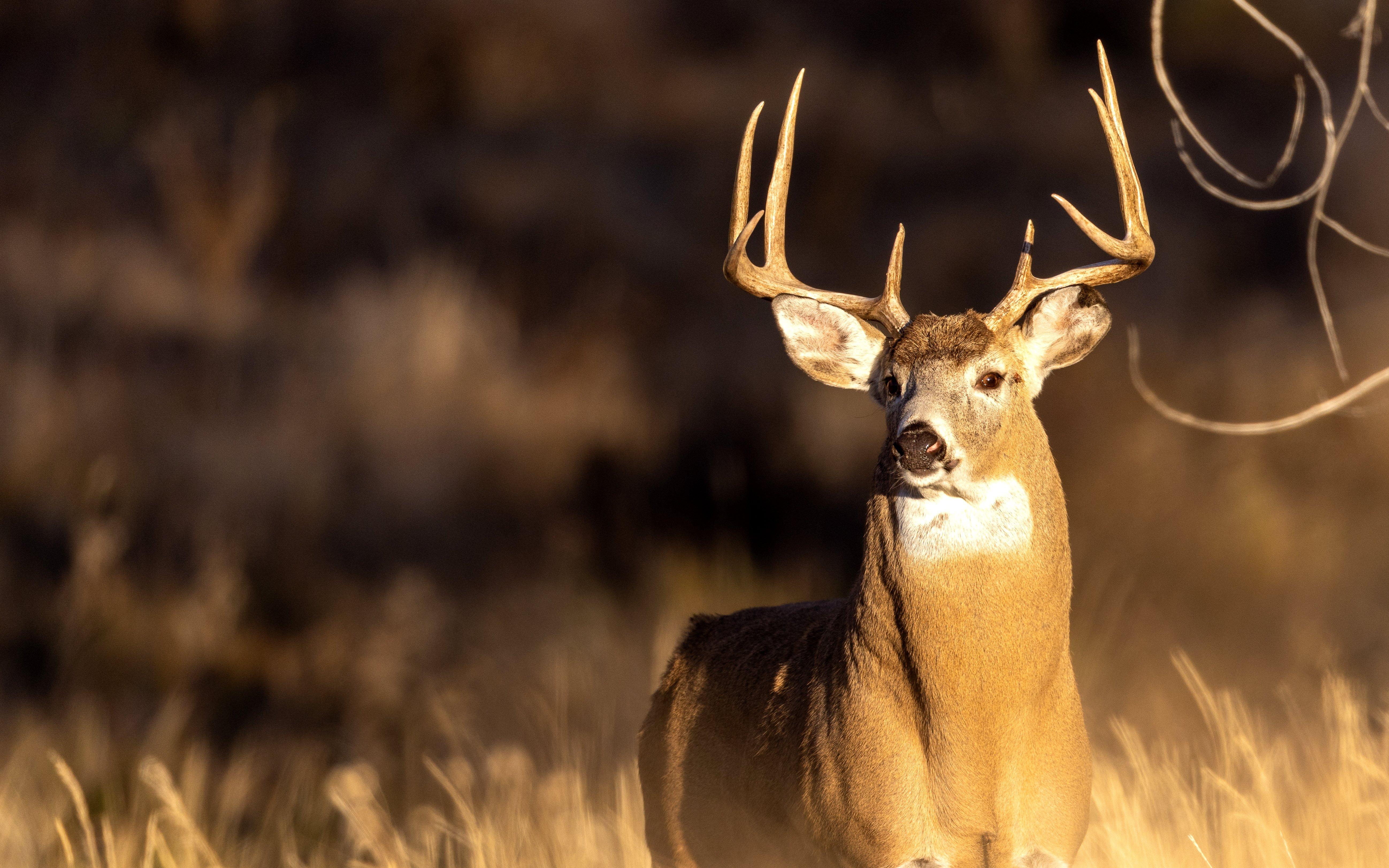
Check out the latest deer-hunting info for Louisiana. Image by J. Edwards
Season Dates (2025):
Louisiana is broken into 10 deer areas, and rules and regulations vary greatly in each. Please check the LOUISIANA DEPARTMENT OF WILDLIFE & FISHERIES (LDFW) WEBSITE for specific season dates. Most archery seasons open Sept. 20 or Oct. 1 this year. Primitive Firearms seasons, Firearms seasons, Firearms with Dogs seasons, and Youth and Honorably Discharged Veterans seasons follow, with openers generally falling in late October through mid-November, and closing dates in late January.
The Grade: B
Possibly the jewel of the southeast, Louisiana is becoming a southern sleeper state for big whitetails, with abundant opportunities for both resident and non-resident hunters. Bag limits are generally six deer per season, with no more than three of them being antlered and no more than four being antlerless. Being that it shares the southeast region with Kentucky, we’re giving it a B because it doesn’t produce anywhere near the number of B&C entries. It doesn’t get as much press as Kentucky, though, and the potential to shoot a giant exists.
Here are two examples from the B&C Records Book. Brennan T. Morris took B&C’s 28th overall buck, scoring 275 5/8, in 2020 in Richland Parish. In 2018, Amanda F. Smith anchored a 226 2/8-inch monster in Avoyelles Parish.
Antler Nation Knowledge:
It’s pretty clear where your best odds for a big buck are. Some of the best trophy bucks are along the Mississippi River and parishes within the floodplain. Realtree’s Tyler Jordan bagged one of his biggest bucks to date, a 190 4/8-inch stud, at Honey Brake in Catahoula Parish in December of 2020. In 2024, he bested that buck with a 203-inch-grossing monarch, which is likely the new state record in the typical category.
Numbers and body size are best along the state’s river basin, which has the nutrients and food sources to boost body mass and antler development. More specifically, Avoyelles, Concordia, East Carroll, Madison, Natchitoches, Rapides, and Tensas parishes consistently crank out studs. Most of the remaining parishes in the northern half of the state create the next tier of big-buck producers. There are also a few hotspots in the middle of the state, but the coastal areas have fewer and smaller deer.
“The Mississippi Alluvial Valley is well known for producing large-bodied and large-antlered bucks ,” said deer program manager Johnathan Bordelon. “However, portions of western and northwestern Louisiana are often overlooked. Many of these areas are managed for older-age bucks, and they produce their fair share.”
Some of these big deer are taken on public land. Certain wildlife management areas, conservation areas, national forests, refuges, U.S. Army Corps of Engineers lands and other property types are open to hunting, totaling more than 1.6 million acres. These are scattered across the state, providing opportunities for people to hunt all of the state’s physiographic regions. Sure, some spots are under water (for duck hunting), but pockets of quality deer habitat exist. Use the LOUISIANA OUTDOOR EXPLORER MAP to find a public hunting spot near you.
Finally, for those with extended time to hunt, the breeding season in Louisiana spans a four-month window, depending on location. The wide range in dates allows hunters to pursue rutting deer during an extended period if they are willing to travel and hunt in different breeding zones.
“Harvest trends have revealed an increase in reported and estimated harvest in recent years,” Bordelon said. “Louisiana has a diverse range of breeding dates across the state depending on region, this provides an opportunity for hunters to pursue deer during the rut over an approximate four-month period, depending on location.”