Wisconsin
1,555,000
Est. Whitetail Population
803,900
No. Licenses Sold Annually
$24 and up
Archery and gun licenses are $24.
Resident hunting license and deer permit
$200 and up
Archery and gun licenses are $200
Non-resident hunting license and deer permit
206 1/8"
Taken by James Jordan in Burnett County in 1914, ranked No. 2 of all time.
Record B&C Typical Stat
1501
Total B&C Typical Entries
253"
Taken by Elmer Gotz in Buffalo County in 1973. It ranks No. 100 of all time.
Record B&C Non-Typical Stat
613
Record B&C Non-Typical Entries
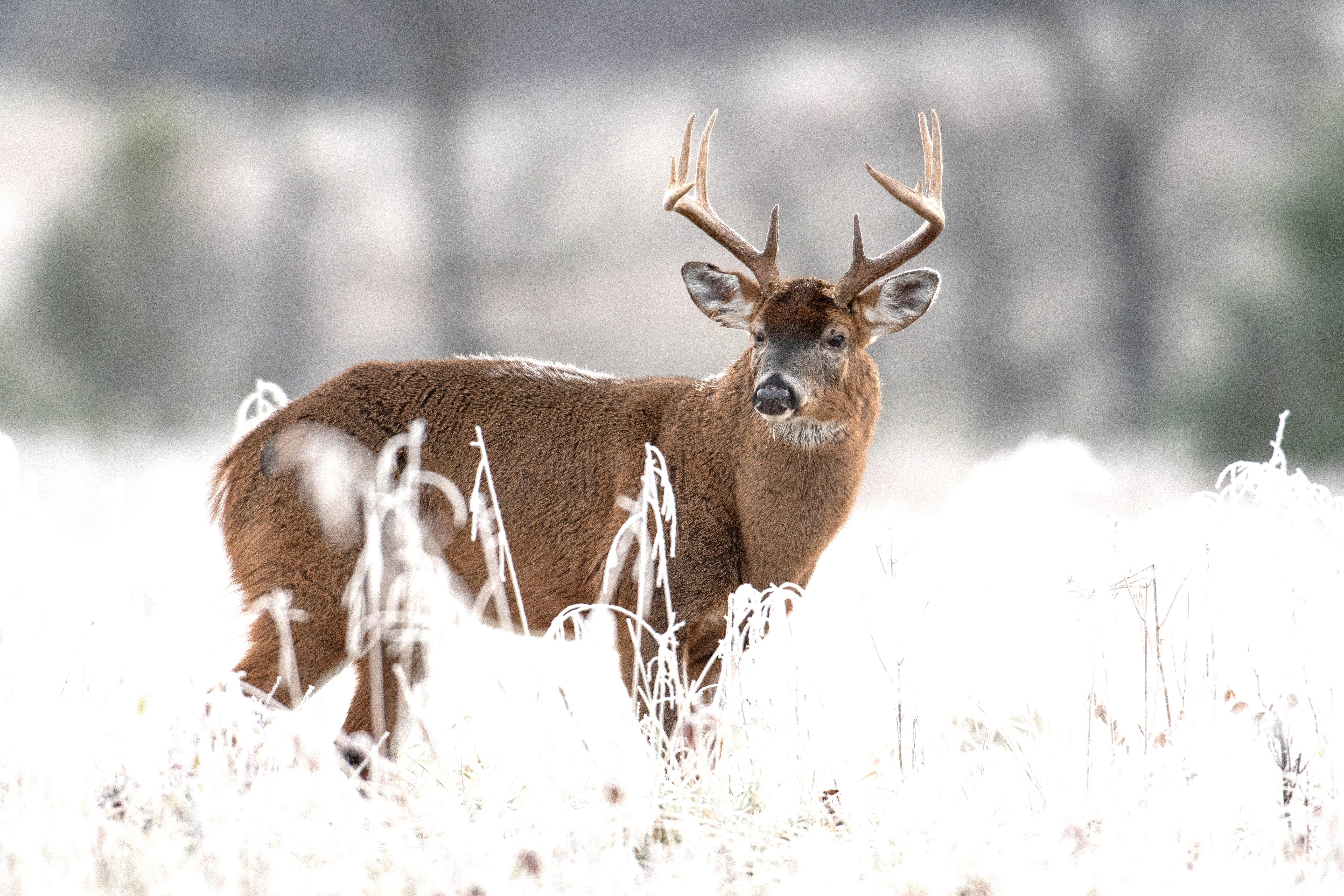
Check out the latest deer-hunting info for Wisconsin. Image by Tony Campbell
Season Dates (2025):
Archery and crossbow season is Sept. 13 to Jan. 4, but it runs through Jan. 31 in some metro units. Youth season is Oct. 11-12, and the gun season for hunters with disabilities runs Oct. 4-12. Gun season is Nov. 22-30, and muzzleloader season is Dec. 1-10. Check the Wisconsin DNR website TO CONFIRM dates and additional opportunities.
The Grade: B
Chronic wasting disease prevalence has historically kept Wisconsin’s Antler Nation grade at a B, and it continues to plague many of the southern counties where the best hunting occurs. Still, Wisconsin manages to produce more trophy whitetails than any other state, including in recent years. Combine that with ample public land and extremely affordable licenses, and choosing between A and B is difficult.
Even though the Badger State leads the pack in record-book entries, it’s important to temper your expectations. Most of the B&C entries come from very specific areas of the state and on private land. The northern half of the state has less agricultural nutrition, and the central and northern regions have wolf problems.
The northern region is filled with public access and checkerboard private lands, so the management is inconsistent. That’s a fancy way of saying that most hunters during the gun season abide by the “if it’s brown, it’s down” mentality, and buck age class suffers greatly. Oh, there are some giants out there, but they’re elusive and few and far between. For those reasons, Wisconsin gets a B.
“Be aware of county-level regulations regarding baiting and carcass transport,” said Wesley Ellarson, a deer biologist with the Wisconsin Department of Natural Resources. “Use DNR dumpsters for butchered carcass disposal. Wisconsin continues to grow trophy bucks and supply hunters with a classic deer hunting experience. We also have several programs and price incentives for first-time hunters.”
Wisconsin is home to the Johnny King buck, which some claim is the rightful world-record typical white-tailed deer. But because of a scoring technicality, the deer didn’t dethrone the Milo Hanson buck, and many hunters were upset about that.
Antler Nation Knowledge:
When it comes to record deer, the entire state lights up like a Christmas tree, but Buffalo County is the crown jewel. Dane, Richland, Sauk, Shawano, Trempealeau, Vernon, Waupaca and others are right at the top, too.
Although the farmlands in southern Wisconsin post solid pre-hunt populations each year, northern county deer densities are way down from historical figures. Fortunately for deer hunters, Wisconsin biologists estimate, forecast and publish data on deer populations IN EACH MANAGEMENT UNIT. This provides insight that you don’t get from many other states.
Wisconsin offers more than 7 million acres of public land. Annually, about 10% to 15% of the deer harvest comes from those properties. Hunters enjoy a wide range of PUBLIC ACCESS, including U.S. Army Corps of Engineers land, conservation areas, county forests, national forests, restoration areas, state forests, state parks, state natural areas, state wildlife areas, and more.
Looking for a really tough but fun backwoods adventure? Don’t just think agriculture. Check out properties that are difficult to access. These often hold better populations of deer because of it. There are hilly and marshy areas throughout Wisconsin that deter hunters. In the central and northern counties in particular, again, be on the lookout for wolves, which aren’t currently being hunted due to being listed as federally endangered in Wisconsin. Many hunters and property owners want to see the wolf delisted and the wolf hunt back on.
Regardless of the area you choose, use the DNR’s extensive online map system to locate potential spots for YOUR NEXT HUNT.