Wyoming
52,600
Est. Whitetail Population
28,600
No. Licenses Sold Annually
$42 and up
License sales totals include mule deer and whitetails. In addition to the deer license, there is a $5 application fee, $16 archery license, and $21.50 conservation stamp.
Resident hunting license and deer permit
$374 (regular) and up; $1,200 (special) and up
License sales totals include mule deer and whitetails. In addition to the deer license, there is a $15 application fee, $72 archery license, and $21.50 conservation stamp.
Non-resident hunting license and deer permit
191 5/8"
Taken by Robert Ross in Albany County in 1986 and currently ranked No. 136.
Record B&C Typical Stat
17
Total B&C Typical Entries
261 5/8"
Taken by Bobby Beeman in Park County in 1998 and currently ranks No. 53.
Record B&C Non-Typical Stat
26
Record B&C Non-Typical Entries
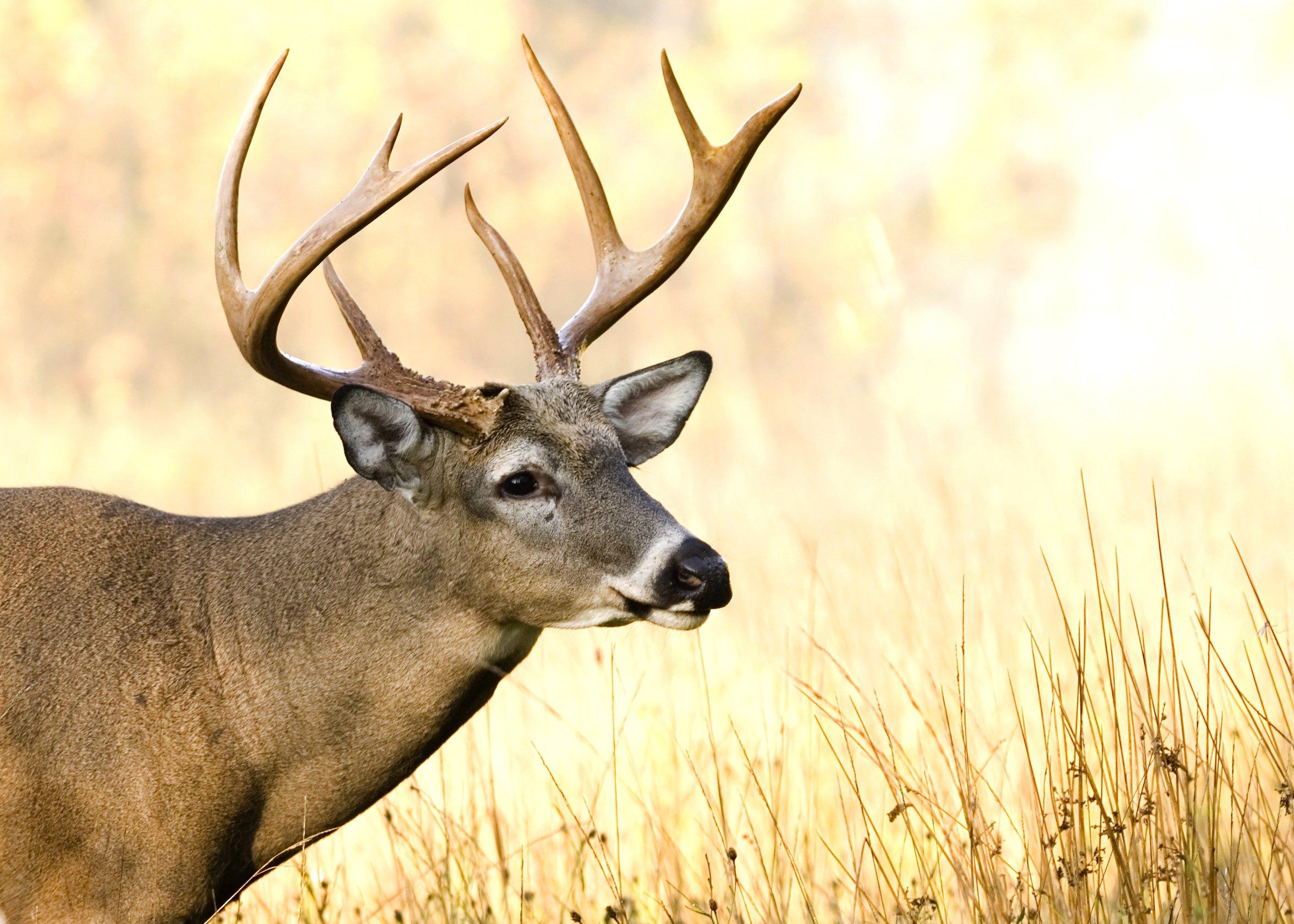
Check out the latest deer-hunting info for Wyoming. Image by Bruce MacQueen
Season Dates (2025):
For most hunters, archery season opens Sept. 1 and ends at various times, location depending. Likewise, in most areas, regular season opening and closing dates vary greatly by hunt area. Additional season dates apply. Check Wyoming Game and Fish Department regulations for SPECIFIC SEASON DATES.
The Grade: B
Because mule deer are the first choice for most Wyoming hunters, the Cowboy State’s whitetails are somewhat of an afterthought. Wyoming’s whitetail herd is scattered in pockets but primarily located in the Black Hills, Bighorn Basin, and Riverton regions, as well as along the river drainages and farmland in the state’s eastern third. The lush alfalfa fields of the river bottom farm country and the rugged terrain up in the foothills and Black Hills offer unique hunts.
For those merely hunting for meat, there are often opportunities to hunt with doe licenses that can be purchased in addition to a buck license. Further, a general license allows a hunter to pursue mule deer and whitetails. Seasons run from September to November or beyond for white-tailed deer. Regarding applications, limited quota licenses restrict hunters to one area, but these can provide a chance for a less-crowded experience with a better opportunity at a mature, trophy-class buck.
Even so, recent challenges abound. Following severe winter/spring conditions a few years ago, Grant Frost, senior wildlife biologist with WGFD, said, “In some parts of the state, hunters will observe a significant reduction in the number of deer. Licenses have been reduced accordingly.”
EHD outbreaks have affected the Black Hills and eastern Bighorn Basin in the past decade, too, but according to state game officials, whitetail populations have since recovered from that. CWD is increasingly a concern, but that’s the case in many states. A major downfall is steep tag pricing and potential draw wait periods. Until we get word that the herd has rebounded significantly from the recent disease and winter mortality, we’ll leave the grade at a C, but that shouldn’t discourage you from trying your hand at a Wyoming whitetail within the next few years, because there are some good bucks to be had for hardworking hunters.
Antler Nation Knowledge:
There are public-land opportunities across Wyoming. But the best hunting is generally found on private ground in the more productive whitetail regions, and the biggest bucks are found throughout the eastern and northern counties. An outfitter is generally required for private land hunts, and there are plenty to choose from.
In hunt areas with limited public land, we highly recommend obtaining permission from a landowner before applying for the license. Otherwise, you might have a license with nowhere to hunt. Or, take advantage of opportunities in the form of Bureau of Land Management and U.S. Forest Service lands, and WALK-IN HUNTING AREAS open to the public.
Not many Booners have fallen on Wyoming soil, but there are 43 entries in the records book, and a handful of those were harvested within the last 10 years, including a 219 2/8-incher in 2021. Holy moly.