3 Great Deer Cartridges That Don’t Get Enough Respect
Posted 2025-08-11 by
These rounds might not make headlines nowadays, but they continue to deliver sizzling performance on whitetails
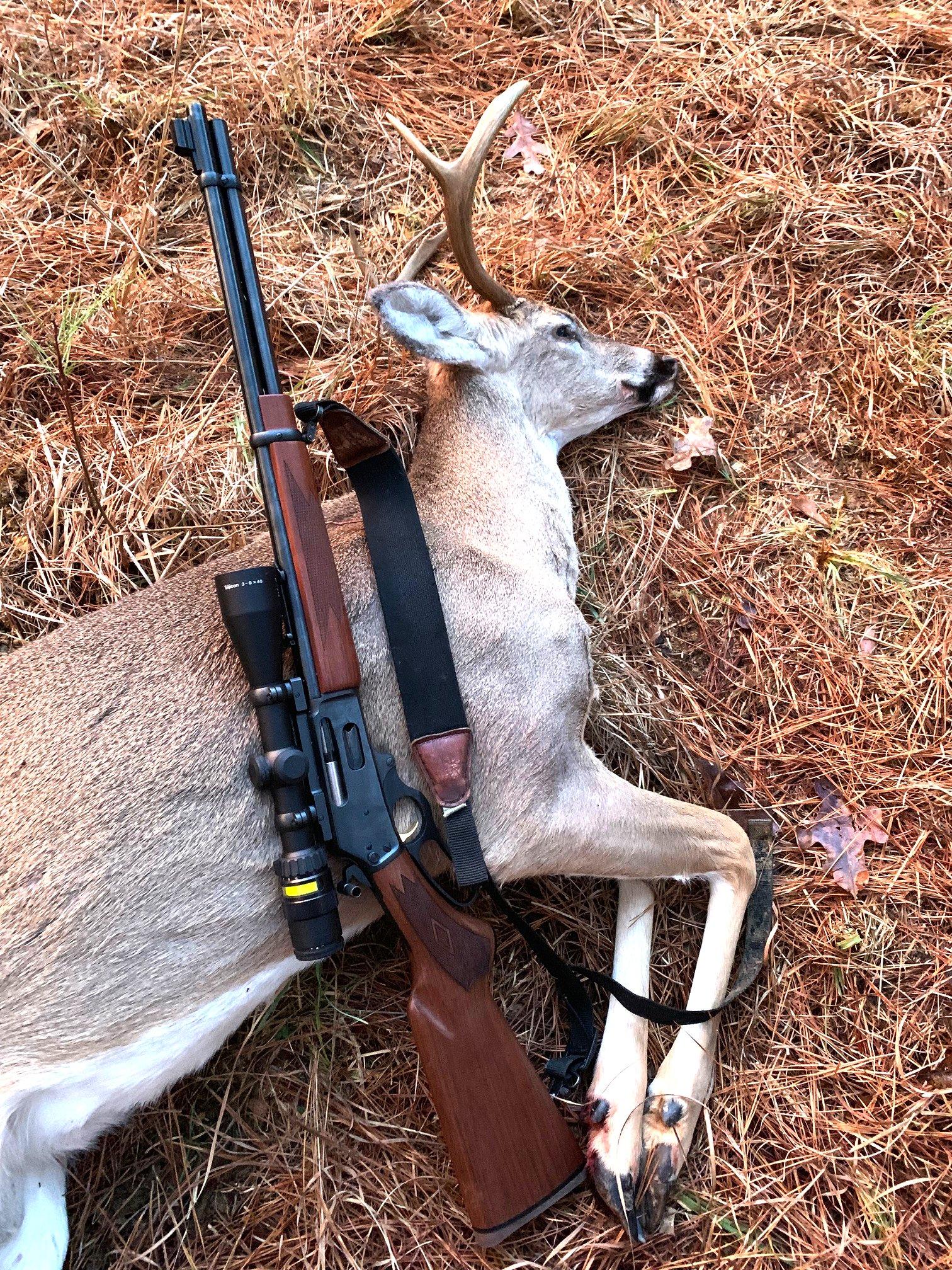
Is this 1980? Seriously, some people consider the .35 Rem. to be obsolete, but the cartridge is a hammer out to 100-plus yards. Photo by Mike Hanback.
Like me, most of you rifle hunters enjoy visiting local gun shops and checking out the racks of used firearms. Many days, you aren’t planning to buy. You just like looking at old wood-stocked guns and admiring their craftsmanship. But next time you’re window-shopping and run across a rifle chambered for one of these cartridges, make an impulse buy. I’ve shot dozens of deer with these underrated rounds, and they’re legit.
Don’t Miss: 4 Ways to Shake Up Deer Season This Year
.35 REMINGTON: THICK-WOODS THUMPER
Most hunters younger than 40 might never have heard of the .35 Rem., much less owned a rifle chambered for it. The cartridge gained popularity in the 1950s and ’60s, when Marlin and Winchester chambered lever-actions for the .35 Rem. People who hunted thick woods, from northern Michigan to Maine, where most shots are 100 yards and in, loved the hard-hitting cartridge that dropped deer on the spot. The niche round continued to be popular into the 1980s and ’90s.
I began hunting with the .35 Rem. in 2018, when Marlin, then owned by the now-defunct Remington Arms Co., chambered a new Model 336 lever for the round. The first time I shot it, some things stood out. The huge 200-grain bullet (muzzle velocity of about 2,225 fps) was amazingly accurate at 100 yards and acceptable to 150 yards. Past that, the huge chunk of lead drops precipitously; about 13 to 16 inches at 250 to 300 yards. This is a short-range deer cartridge for sure.
The recoil of the .35 Rem. is manageable because of the compact design and fit of a lever gun. The first buck I shot with a .35 Rem. lever, a Tennessee 6-pointer, dropped like he had been hit over the head with a bag of bricks. All the deer I’ve killed with the .35 Rem. have been 120 yards or closer, and all have thumped down or shuddered and ran less than 60 yards. When you hit a deer right, the 200-grain bullet makes a big wound channel and exit hole for short, easy blood trails.
Although several ammunition companies still offer 200-grain .35 Rem. loads, no major firearms companies build new guns for the cartridge. I fear the days of the .35 Rem. are numbered. If you see one on a used gun rack, especially one of the 2018 model Marlin levers, buy it.
Don’t Miss: Crossbow or Compound Bow: How Do You Choose?
7MM-08: RECOIL WINNER
In the 1980s and ’90s, the 7mm-08 had a strong following for its fine attributes of accuracy, flat trajectory and, most notably, mild and manageable recoil. Back then, it was the cartridge of choice for youngsters, ladies and any hunter who didn’t like the kick of larger rounds. Then in 2007, along came the 6.5 Creedmoor, a sexy new cartridge with low recoil and impressive ballistic efficiency. Perceived by many modern-day hunters to be the ultimate long-range cartridge, the 6.5 supplanted the 7mm-08 as the go-to round for recoil-averse shooters. Nothing against the Creed, but that’s a shame. The stodgy old 7mm-08 is one of the best whitetail cartridges ever developed.
A necked-down version of the .308, the 7mm-08 shines with a 140-grain bullet, which I have used to fell a dozen does and bucks. Sight-in a 140-grainer (muzzle velocity of 2,800) to print holes in a target 2 to 3 inches high at 100 yards, and you can hold dead-on and kill a buck cleanly at 300 yards.
I own two sweet little bolt-actions chambered for 7mm-08. Both are a pleasure to shoot (zero felt recoil) and minute-of-angle accurate with the 140-grainer. All of the deer I’ve killed with the 7mm-08 were 120 to 220 yards, which I consider to be the sweet spot for best terminal performance. They deer ran 60 to 80 yards and keeled over. Nothing fancy or flashy, but a dead deer at the end of a short blood trail.
Though the popularity of the 7mm-08 has waned, several gun companies still offer new rifles chambered it. There are plenty of used 7mm-08 bolts on used gun racks. Shop around and you should be able to get a deal.
Check Out Our Latest Camo Pattern: Realtree APX
7MM RUM: BEST EVER?
Introduced by the old Remington Arms in 2001, the 7mm Remington Ultra Magnum, for some strange reason, never really caught on with hunters. That’s a shame, because the 7mm RUM was and remains one of the fastest, flattest, hardest-hitting deer cartridges ever designed and built.
A 7mm RUM load with a 140-grain bullet sizzles along at about 3,400 fps. Sight in 2 inches high at 100 yards, and you’re dead-on at 250 and only 3 or 4 inches low at 300 yards. The 7mm RUM delivers 3,000 to 3,400 foot-pounds of muzzle energy, and produces devastating knock-down power on game. There is considerable recoil, but 20-year-old bolt-actions chambered for the round were wood-stocked, long-barreled and heavy. That hefty design helped to mitigate much of the shoulder thumping.
For a decade in the early 2000s, I hunted almost exclusively with the 7mm RUM and killed four or five bucks each season with it. From 300-yard pokes on the Wyoming plains to 80-yard shots at 300-pound bucks in Canada, the cartridge performed so well for me that to this day, I consider the 7mm RUM the best round ever developed for deer hunting.
Today, the 7mm RUM hangs on by a thread. No major gun companies build new rifles chambered for it. A few ammo companies make limited runs of 7mm RUM loads, but those are dwindling. If you run across a scarred old Model 700 chambered for this round, snatch it up on the spot. Purchase 10 boxes of 140-grain 7mm RUM rounds while you still can. Shoot a few deer with it, and I promise you’ll be impressed.