Habitat Improvement Yields a Giant Tennessee Velvet Buck
Posted 2025-09-03 by
Justin Curtis passed on an already impressive young buck last season in hopes he would see it again
| Rack Report Details | |
|---|---|
| Buck: | 179” |
| Time of Year: | August 22, 2025 |
| Place: | Bedford County, TN |
| Weapon: | TenPoint 505 crossbow |
Some properties naturally hold deer year-round. Others don’t, but some of them probably could with a little help. When Justin Curtis purchased a farm four years ago, it needed some TLC. Although mostly cedar, the farm was surrounded by hardwoods. It held deer all summer, but as soon as both velvet and acorns began to drop, the bucks would vacate to the surrounding big timber.
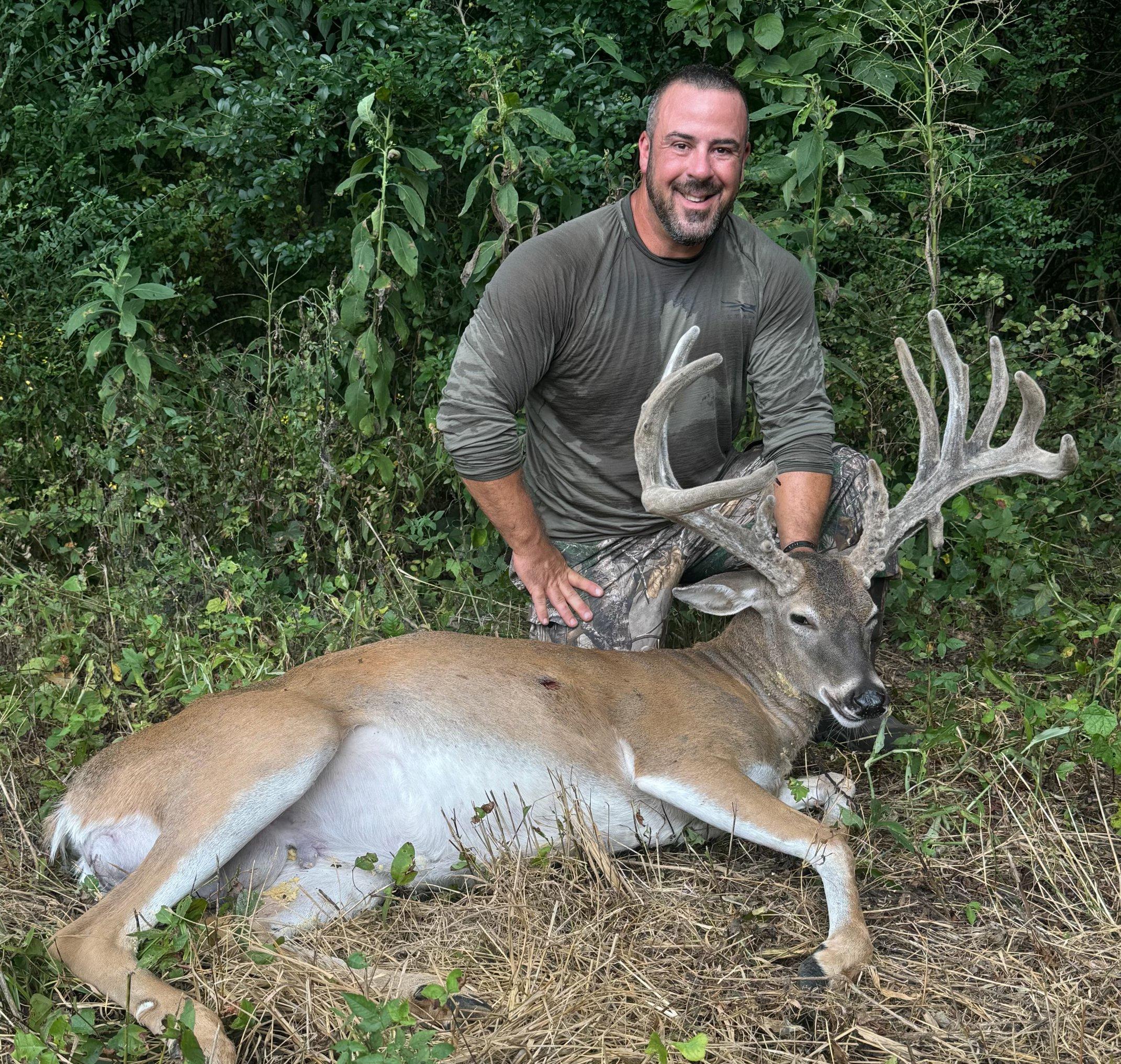
Tennessee hunter Justin Curtis knew that hard work and habitat improvement would pay off when it came to holding big whitetails on his farm. All images by Justin Curtis
“We immediately started with habitat work,” Curtis said. “Hinge-cutting, food plots, bedding areas, and waterholes were first. I’m not a farmer, but I jumped all in, putting in bean, clover, sunflower, sorghum, and millet plots.”
The hard work paid off. Bucks started holding on the farm. Last season, one buck in particular caught Curtis’s eye. The main-framed 8-pointer was extremely wide, but its tines were short, and the buck appeared to be young. Curtis decided to gamble, hoping the buck would survive the season and be around in 2025.
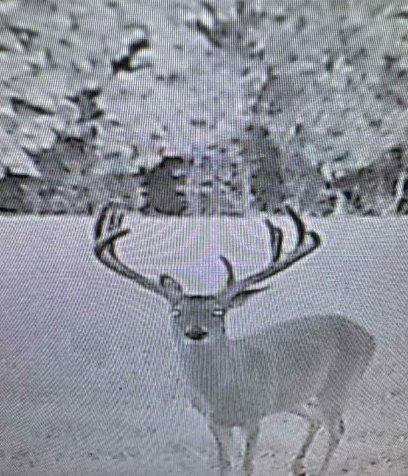
Last season, the buck was already impressive, but Curtis gambled and passed him in hopes that he would put on more antler with another year of age.
The gamble paid off. “I started getting him on my trail camera in June,” Curtis explained. “The first pictures made me think he would be something special, but he didn’t grow much in June. Then July and August hit, and he exploded. I knew then that he would be my goal for the season.”
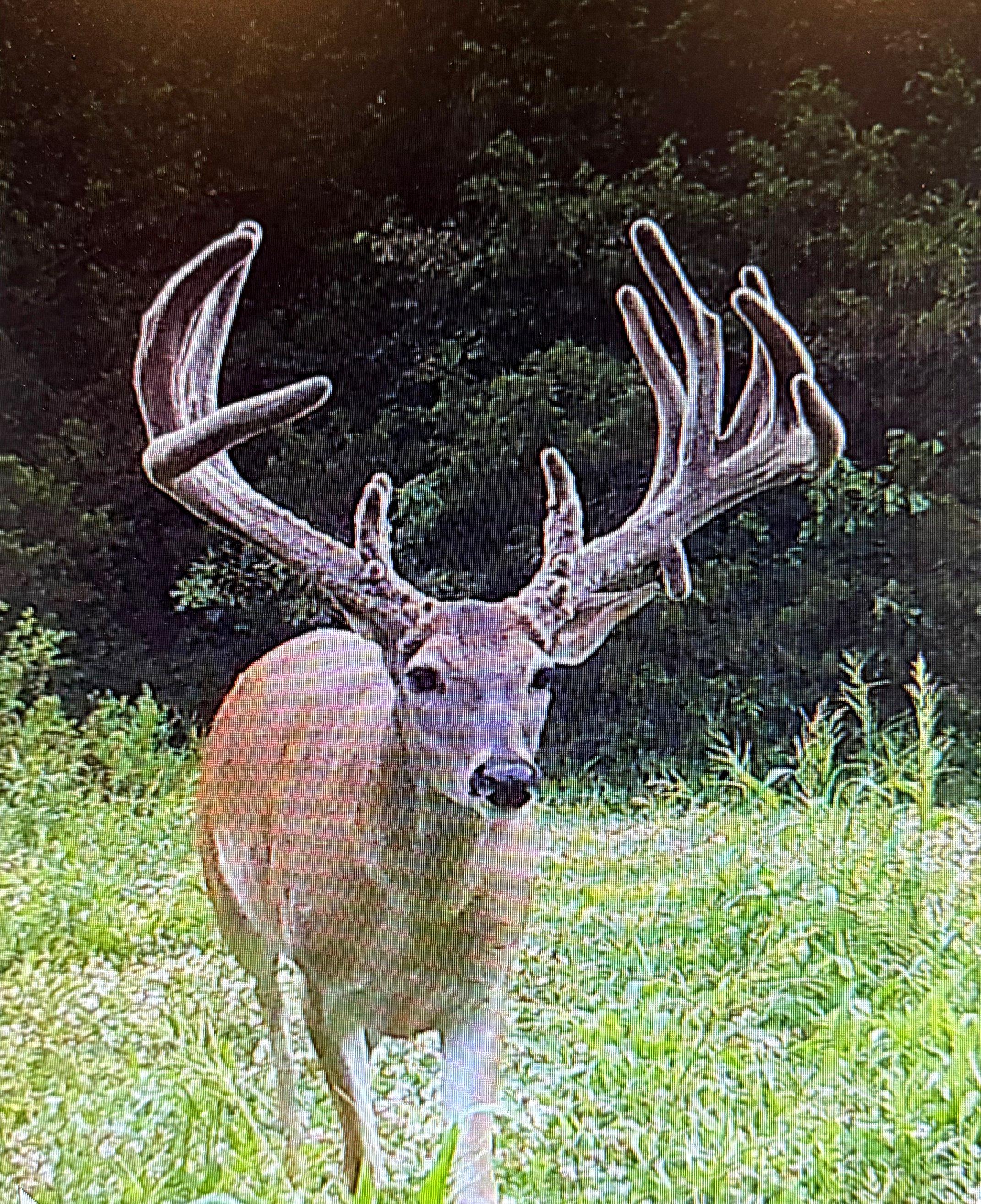
The gamble paid off. The buck packed on mass and antler inches this season.
As summer progressed and the three-day Tennessee early velvet season drew near, the buck was on a pretty solid pattern. He would hit the soybean and clover fields each evening, always coming from the same bedding area. But the big buck turned almost entirely nocturnal. “He was still on the pattern, but not until after dark, and he was headed back to his bedding area early in the morning,” Curtis detailed.
If the Tennessee hunter was going to have a chance at the buck during the three-day season, he'd have to hunt mornings and catch him returning from the food plots to his bedding area.
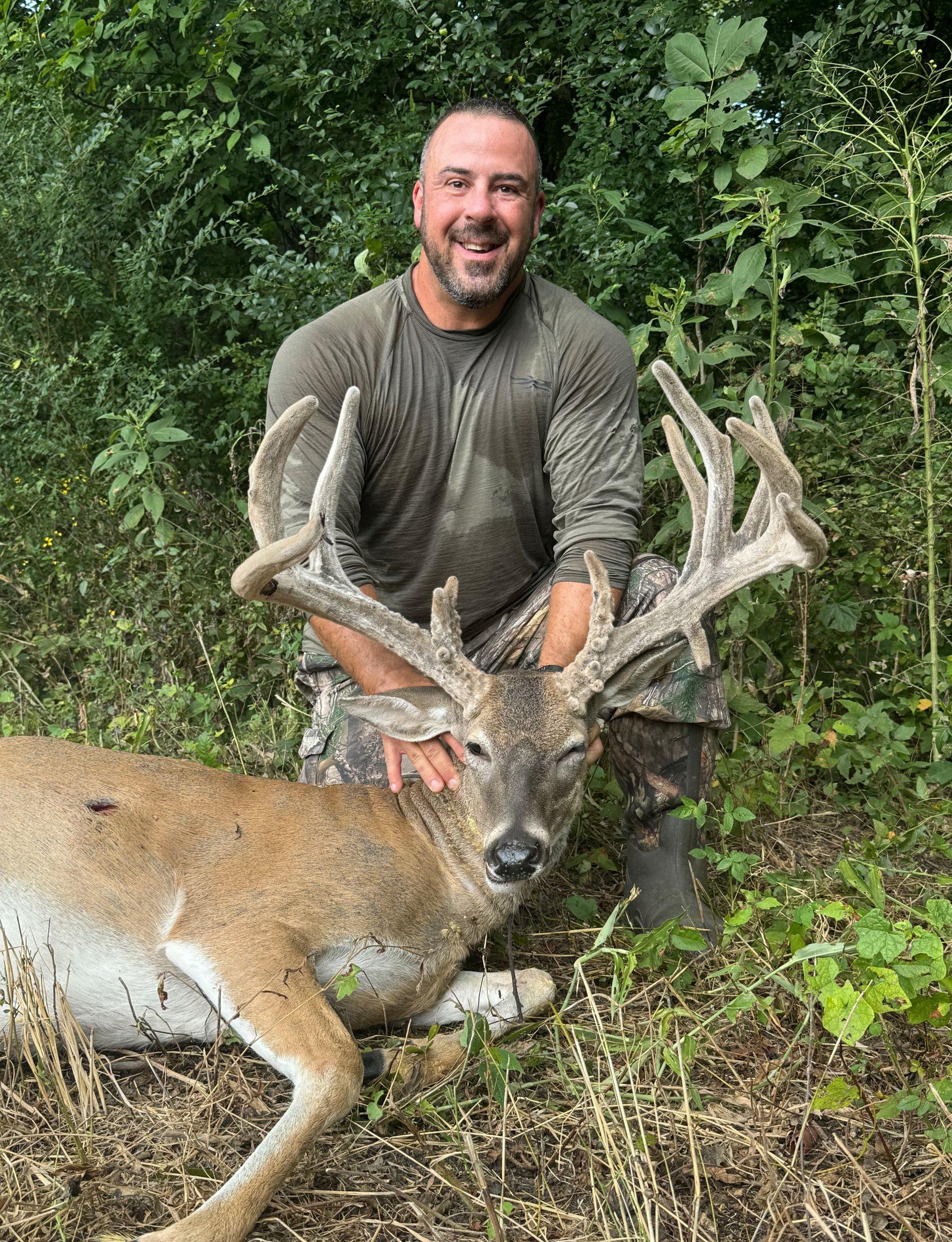
Curtis knew his only shot during the three day early velvet season would be to hunt mornings and catch the buck returning to his bedding area.
“I had two spots I could hunt,” he explained. “I went in a couple of weeks before the season and cut trails to both so that I could quietly enter from the woods rather than through the field.”
Opening morning found Curtis in the stand early. He climbed up around 4 a.m., hoping to let everything settle before the bucks left the food.
At the first glint of daylight, Curtis picked up his rangefinder and ranged the trails around his stand. After confirming the ranges, he lowered his arm and looked to his right, noticing a deer about 40 yards away.
“I knew immediately that it was a big-bodied buck, but I couldn’t make out his rack to be sure it was him,” he said. “Then I saw the left side and was pretty sure. He then turned his head, and I knew it was him.”
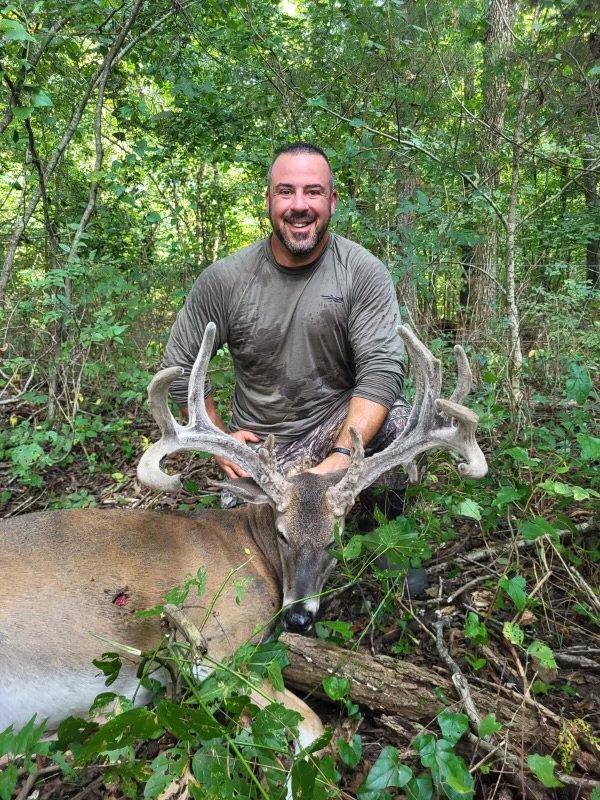
As daylight slowly increased, Curtis looked up to see a large bodied deer just 40 yards away.
Curtis eased up his TenPoint Crossbow and found the buck’s shoulder in his scope. Squeezing the trigger, Curtis watched his lighted nock zip through the buck’s shoulder and heard a solid smack on contact.
The buck lunged forward into the cover, and Curtis could no longer see him. Then, all was silent. Curtis sat in the stand for nearly 45 minutes, replaying the shot in his mind. It had looked good, but the buck disappeared quickly and the hunter heard no crashing as the buck fled through the thick cover; he was perplexed.
After what seemed like an eternity, Curtis climbed down to search for his arrow and blood. He found neither. He followed the trail he thought the buck would have exited on. Nothing. Walks along the clover and bean field edges also yielded no sign. Excitement turned to concern.
“At that point, I backed out and called a buddy with a tracking dog,” Curtis explained. “We replayed the shot and discussed where I thought I’d hit the deer, and my buddy agreed that the buck should be down. He was hunting with his son and couldn’t come right away, but he called another buddy with a good dog, who agreed to head my way.”
A couple of hours elapsed before the dog and handler arrived. Taking them to the spot of the shot, Curtis watched the dog begin to work.
“First, he went out into the beans and just wandered around, not really keying in on anything,” he said. “I went one way while the dog and handler went the other. After a few minutes, I heard the dog yip. The handler yelled out for me to come that way. I just figured they had found some blood. When I got there, they were standing over my buck. He had dove into the thick cover just beyond where he stood at the shot. I had walked within seven yards of him two or three times, but couldn’t see into the thicket.”
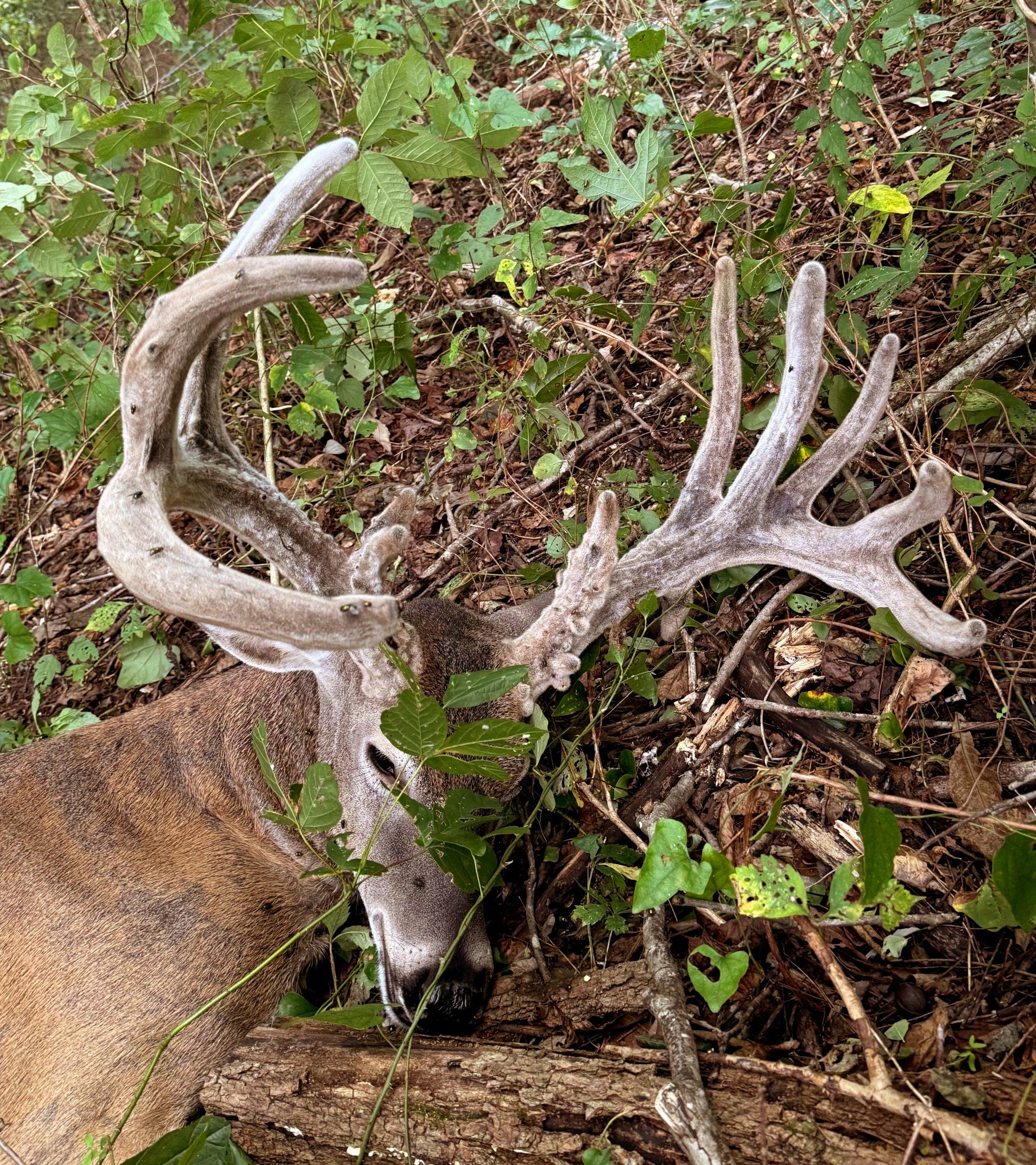
After not finding blood, Curtis turned to a trained tracking dog that quickly found the buck buried in heavy cover just a few yards from where it had been standing at the shot.
Interestingly, even though the shot was perfect and the buck had expired quickly, there was no blood, not even where the buck was lying. Curtis, who had shot at a downward angle at the slightly quartering-toward buck, thinks the intestines plugged the exit, keeping the buck from bleeding.
After field-dressing and retrieving the buck from the woods, Curtis was finally able to study the rack. With main beams measuring 23 and 25 inches, a 22-inch inside spread, and a whopping 87-inch left side, it didn’t take long for the score to total an impressive 179 inches.
“This buck is a testament to what can happen when you put in the work to improve the habitat on your hunting land and give the deer a chance to reach their full potential,” Curtis concluded.