Wait, You’re Turkey Hunting Without a Rangefinder?
Posted 2025-09-01 by
Modern rangefinders are crucial pieces of gear for today’s turkey vests, and they can mean the difference in bagging a bird or not
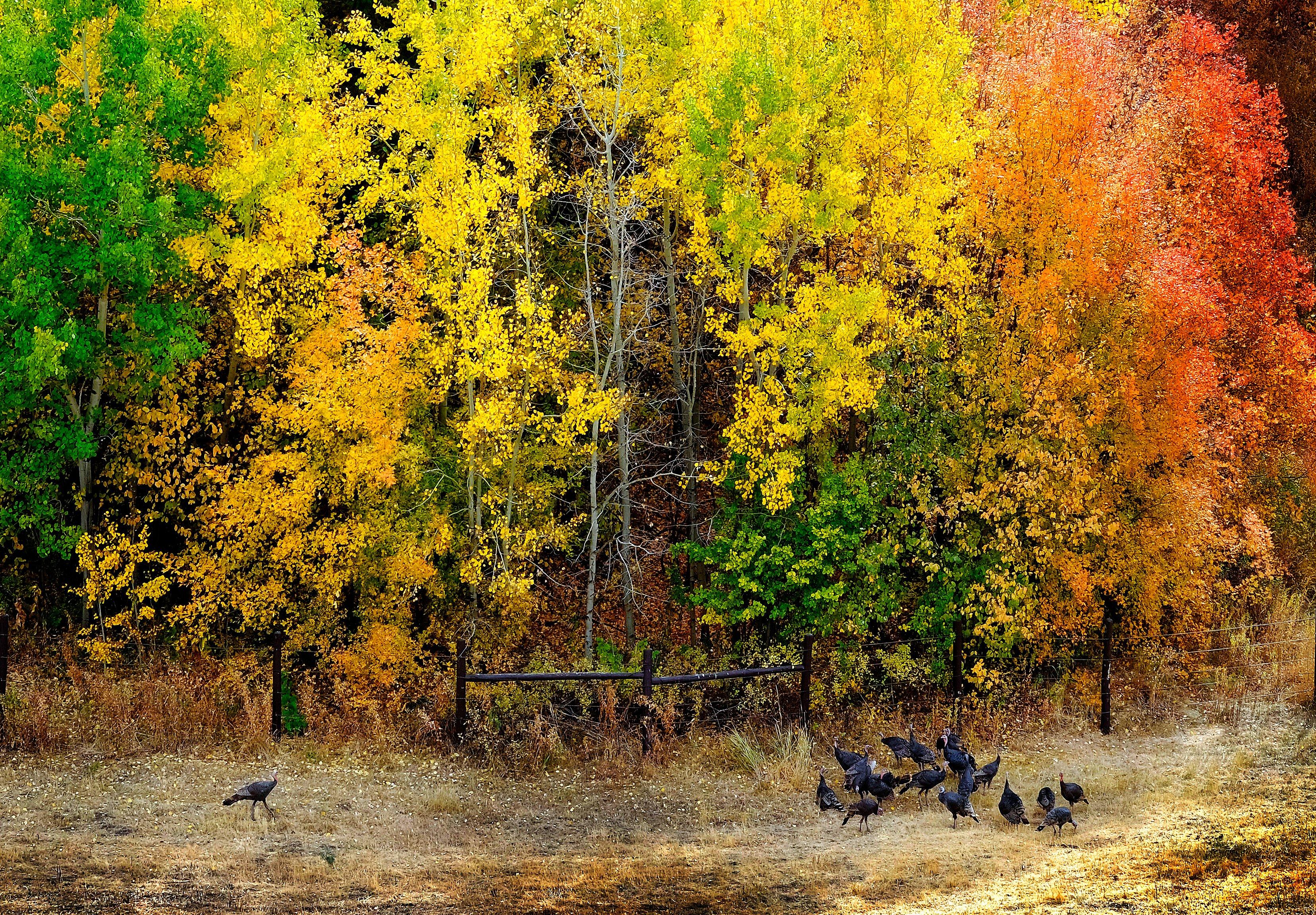
Turkeys in open fields can appear closer than they actually are. Using a rangefinder in such situations eliminates guesswork. Photo by Lane V. Erickson.
Every turkey hunter has felt the rush of excitement followed by a gut-punch of despair. Some birds in the family flock you flushed rush back to the scatter site, and before you’re quite ready, a jake pops his head up to find his siblings. However, he’s right at the edge of your shotgun’s range or maybe even beyond it. Resisting the urge to pull the trigger, you’re forced to watch Thanksgiving dinner rubber-neck away.
Deflated, you wonder how close the turkey was and whether you could have shot. And then you kick yourself for not knowing that beforehand.
Don’t Miss: 5 Good Reasons to Try an Over/Under Turkey Gun
Crazy as it seems, many turkey hunters still don’t use a rangefinder while afield. Sure, when you compare most turkey hunting situations to bowhunting deer or long-range hunting for big game, a rangefinder might not seem as important. After all, pretty much anyone can discern that a gobbler standing by a decoy you placed 30 steps from your setup is well within range.
But not every turkey hunting scenario is so cut and dried. And in many common situations that unfold during fall and spring seasons, a rangefinder can make the difference between a successful hunt and a lost opportunity.
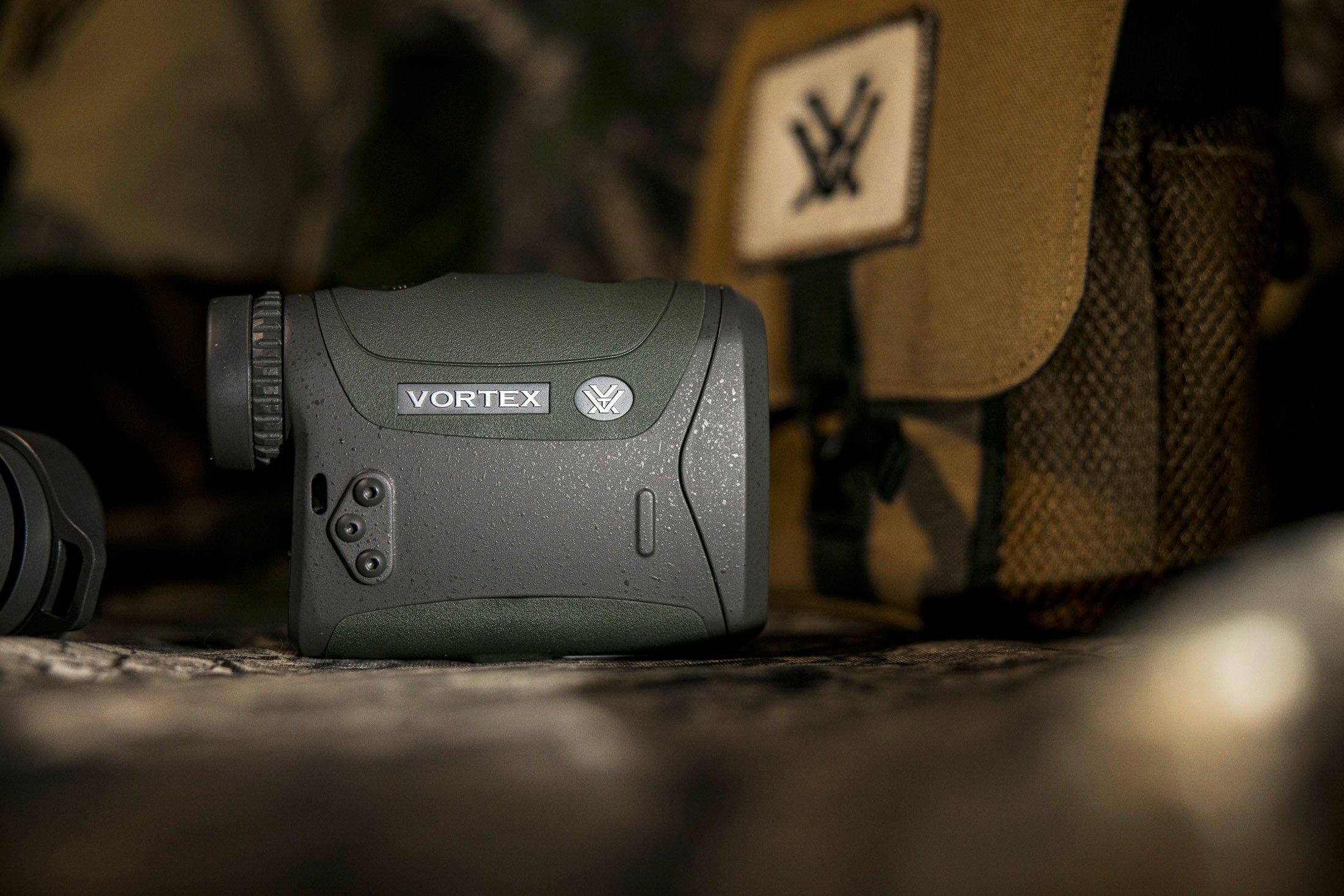
A compact rangefinder easily fits into a turkey vest or jacket pocket, making it accessible at a moment’s notice. Photo by Realtree (Klatt).
CASES IN POINT
On the surface, the advantages of using a rangefinder for almost any type of hunting are obvious. Ranging distances is quick and easy, eliminating guesswork and even compensating for angles and elevations in steep terrain. It seems to make more sense when you consider that turkey hunting, despite many technological advancements, is still a short-range game, in which the vast majority of hunters rely on shotguns or archery gear. Consider also that although most experienced hunters are pretty good at estimating range to a point, guesswork accuracy typically starts to degrade beyond 30 yards.
Unlike big-game hunting, when hunters might range the distance to animals for shooting info, rangefinders let turkey hunters find the precise distance to surrounding landmarks or objects as they set up or while a hunt unfolds. Two situations stand out: Hunting in timber or in sprawling open spaces, such as pastures or ag fields.
Don’t Miss: Myth or Fact? Examining 16 Pieces of Turkey Hunting Folklore
In the woods, spring or fall, turkey opportunities can be fleeting, as birds often search for other turkeys based on sound (ideally, your calling). When an approaching turkey reaches a point where it instinctively knows it should see the source of that sound, it will stop and look. And if it doesn’t see another turkey, it will leave quickly. You won’t have a chance to guess the bird’s range during such flash hunts, like when a gobbler pops up from behind a tree or the crest of a ridge, so it’s important that you range your surroundings before. Knowing the distance to those and other objects before you set up or call reveals precisely where you can — and shouldn’t — shoot.
Big fields also present a challenge, because objects — including turkeys — often seem to be closer than they really are, which can tempt you to shoot at a bird that’s out of range. By ranging various points in the field, you’ll know the instant an approaching turkey comes within your effective range.
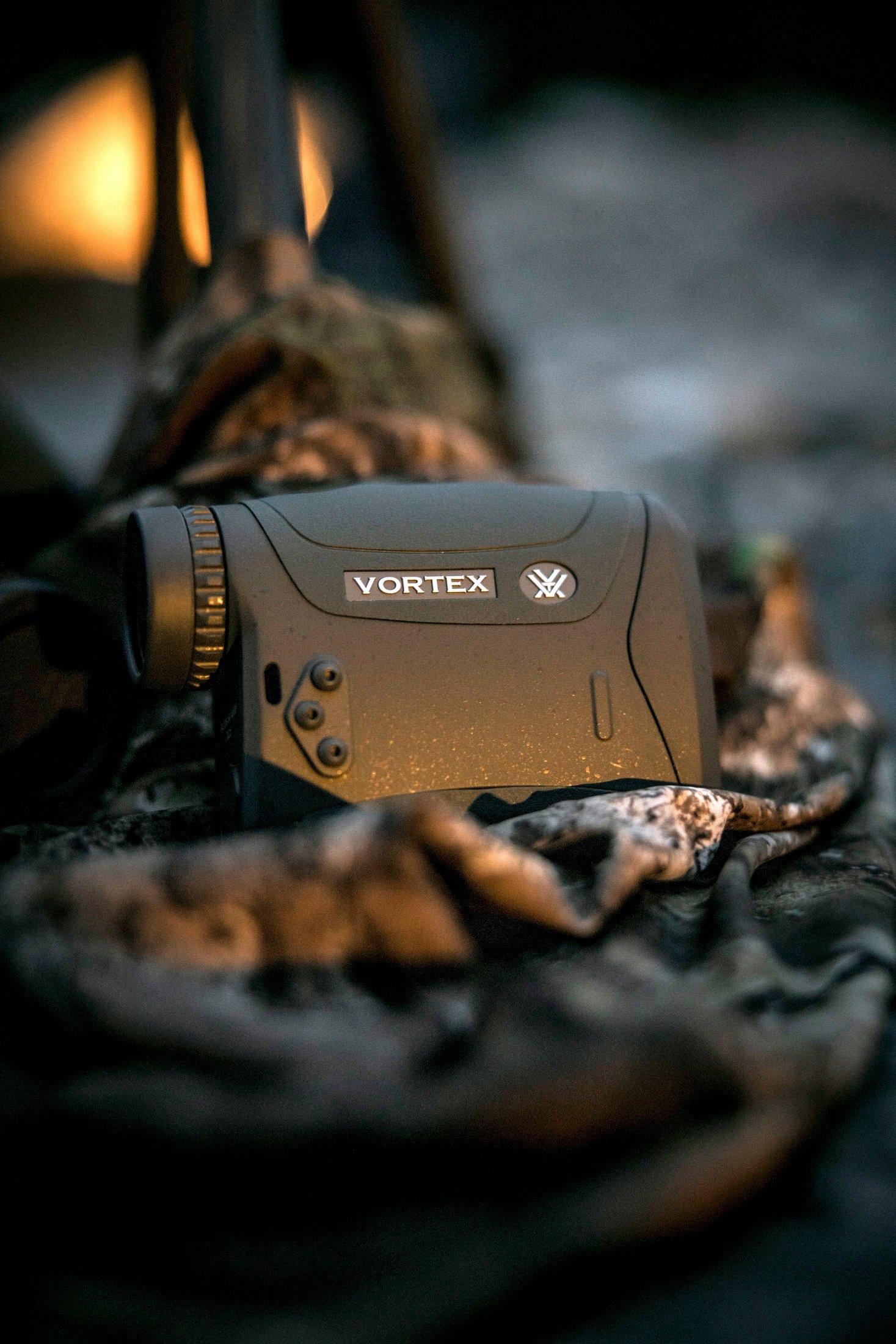
Ranging the precise distance to objects in the woods lets you know where you can shoot a turkey — and where you shouldn’t. Photo by Realtree (Klatt).
HOW TO USE A RANGEFINDER WHILE TURKEY HUNTING
It’s easy. You just need to make it part of your turkey hunting routine. I carry a light, compact rangefinder — in this case, Vortex’s Crossfire HD 1400 — in my vest. Or, if I’m traveling light during fall hunts, I’ll simply throw it in a jacket pocket.
As I travel through the woods, whether calling or glassing, I constantly look for good setups where I might plop down if a bird responds or where I might cold-call for a while. After locating one, I range an object that looks to be in easy shotgun (or bow) range, such as a stump or blowdown about 30 paces away. After I get an exact reading, I’ll search for objects a few yards farther and continue the process until I’ve ranged several landmarks that are at the limits of my effective range and even farther. Then, as a bird approaches, if I can see or hear it, I can almost track the instant it walks into range.
I’ll also use the rangefinder to help me decide exactly where to sit. When considering terrain features, such as the lip of a ridge or a bend in a logging trail, I’ll try to find a tree or hide about 25 to 35 yards away and sit there. That way, when a bird approaching my calling appears, it will be within ideal range the instant it tops the ridge or comes around the bend, and I can shoot immediately. It’s also wise to note other pathways a bird might take on approach — say a field edge or long ridge 30 degrees off the turkey’s expected approach route — and range objects there just in case.
The same approach holds true for open areas. Know the effective limits of your weapon, and then range out to that limit — say 50 yards with a shotgun. Associate that with a visible object or point in the field. When a turkey crosses one of those points, you’re clear to shoot.
Check Out Our Latest Camo Pattern: Realtree APX
DON’T LOSE IT IN THE SHUFFLE
Turkey hunting produces many thrilling moments and sometimes requires quick decisions. Don’t get so caught up in those that you forget to take a few seconds to range your surroundings. It won’t slow you down and will eliminate the heartache of passing up a makeable shot or hurriedly taking a poor one.