Modern Management for the Ultimate Farm Pond
Posted 2026-01-27 by
Many of today’s ponds routinely produce giant bass and panfish, but making them productive can mean forgetting outdated practices
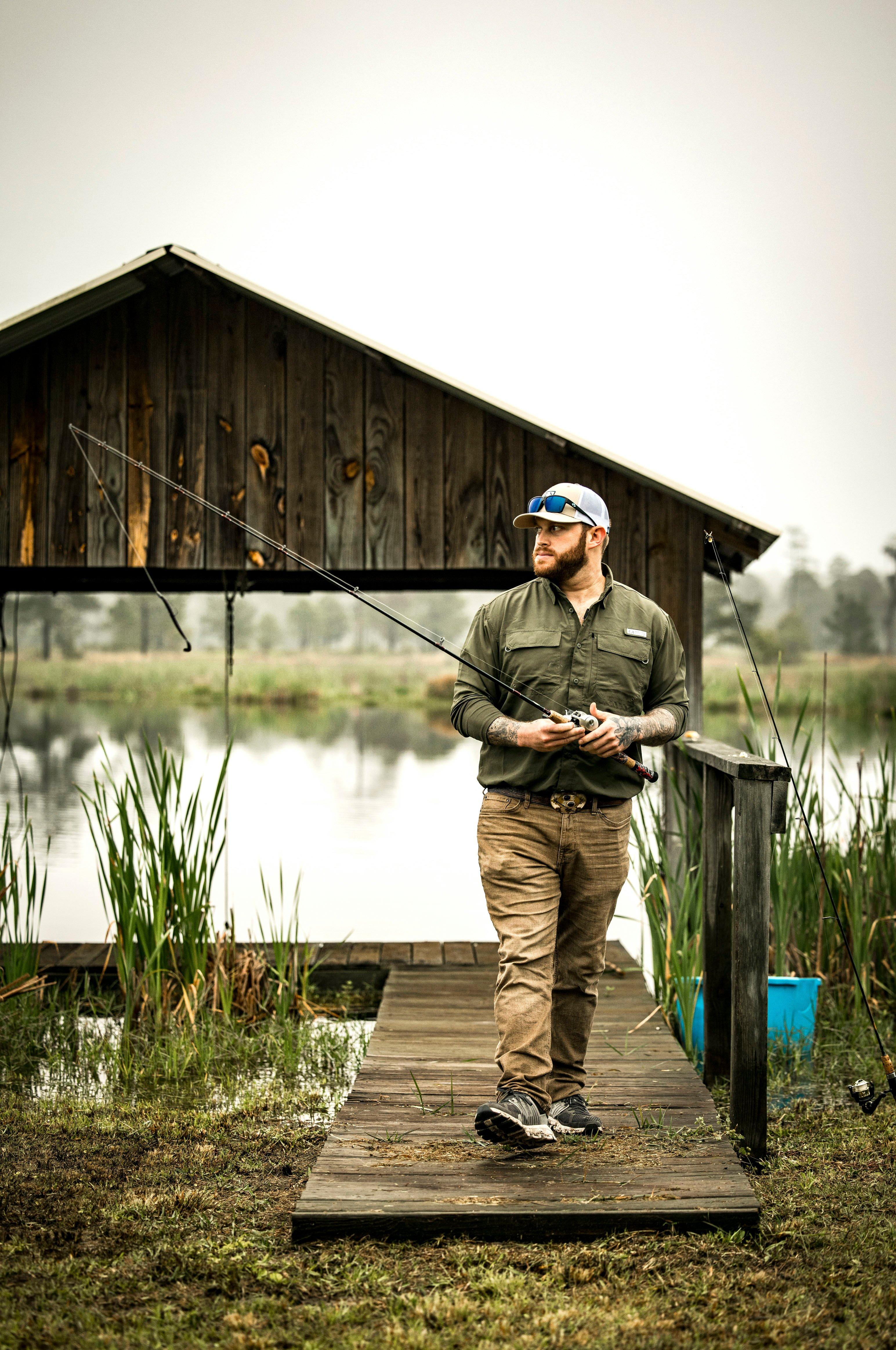
Using a scientific approach to stocking and managing your farm pond can turn it into a world-class fishery. (Photo by Realtree)
Our country’s agricultural history helped shape the outdoor landscape. While this fact is immediately noticeable in our balance of farms and fields, it’s subtly apparent in our waterbodies, too. Farm ponds occupy as many surface acres as our largest reservoirs, yet they fly under the radar in terms of their ecological role. Following the Dust Bowl of the 1930s, the U.S. Department of Agriculture began a campaign to establish farm ponds throughout the country as a way to control erosion and promote livestock establishment.
The ponds provided a number of non-agricultural services, too, most notably recreational fishing. Kids across the country learned to fish in ponds, and many still do.
When I was young, a farm pond could be expected to house large numbers of bluegills or bream, channel cats, and a sizable population of 12-inch bass. While they kept a bend in my pole, I quickly graduated to bigger fisheries and fish.
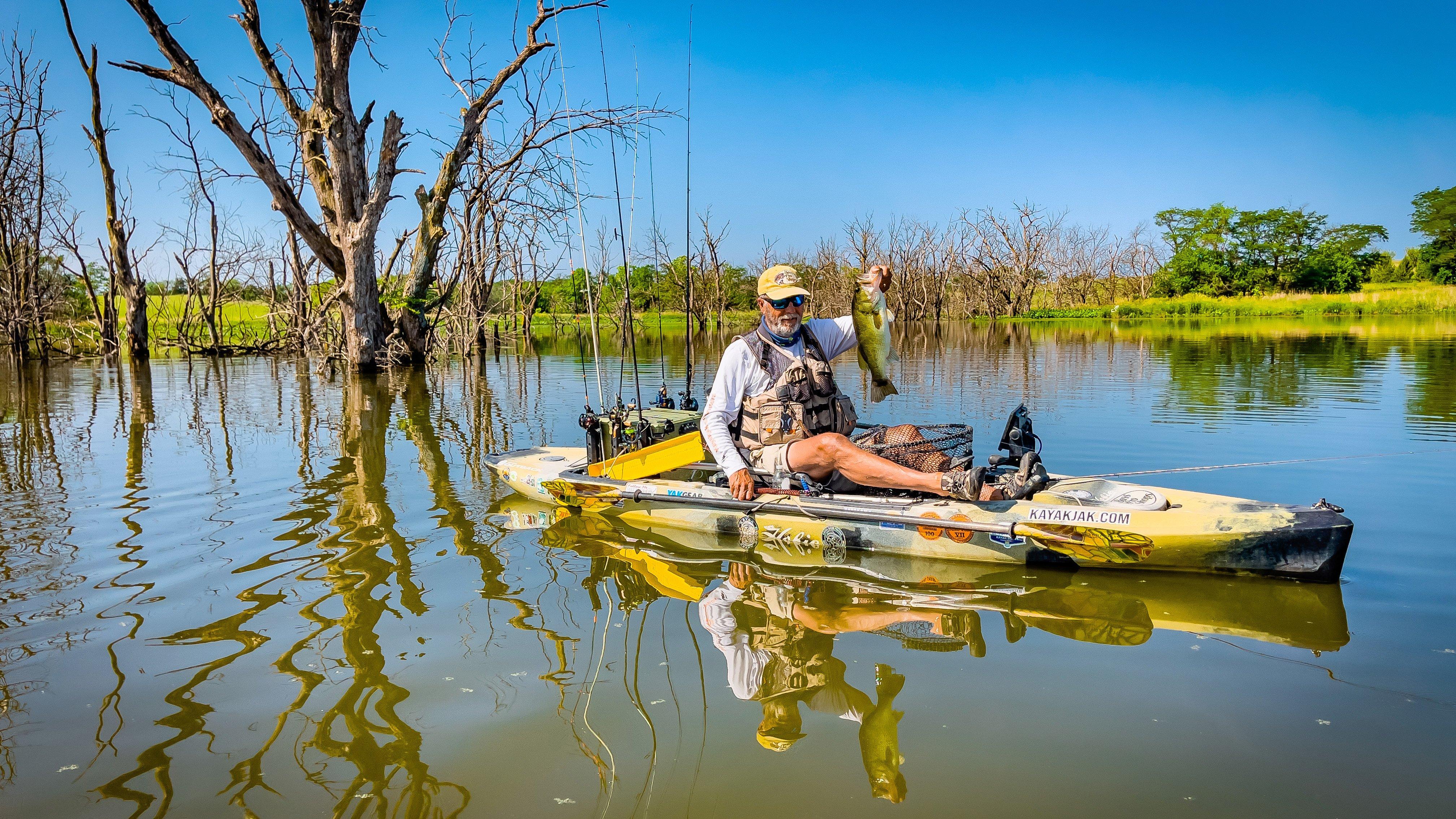
To increase trophy bass potential, anglers must routinely remove a substantial number of small bass to allow for more forage for remaining fish. (Photo by Jason Sealock)
Today, however, the best farm ponds are anything but child’s play. Increased knowledge backed by technology has opened up a whole new world of controlled fisheries. Plenty of ponds regularly produce 10-pound bass, while others are managed for giant panfish or hybrid species. Some farm ponds even have redfish.
So, what makes a good farm pond great? And what do we need to do to elevate our own private waters? We asked Steven Bardin, a fisheries biologist and head of Texas Lake Pro Management, for his insight. For more than two decades, Bardin has been transforming mediocre ponds into hidden honey-holes. But he remembers the days of old.
Don’t Miss: How to Effectively Fish Boat Marinas
“You basically had few choices and some pretty hard rules used by the entire industry,” he said. “If your pond was smaller than 1 surface acre, you stocked channel catfish with redear sunfish and fathead minnows. Sometimes you could get fancy and add hybrid sunfish. If it was larger than an acre, you could stock bass. Bass ponds would rely on bluegill sunfish as the primary forage and would also incorporate fathead minnows, redear sunfish, and golden shiner minnows. For all these options, the number of fish you stocked depended on if you planned to fertilize and how large you wanted your fish to grow within the next several years.”
Today, the pond management industry has “matured,” according to Bardin, thanks to a better understanding of fish ecology and what drives success. Technology is used to fine-tune a pond basin and aeration is supplemented.
“For water quality, aeration and circulation are a must,” Bardin added. “We know moving water is naturally healthier than stagnant, and products exist to make that happen no matter what power options are available.”
Topographic mapping provides the ability to maximize a diverse range of depths and structure. When designing a new pond, Bardin’s team plans for shallow water (less than 6 feet deep) to take up a maximum of 20% of the surface area. “This helps to naturally control aquatic plant growth,” he says, and “is a huge cost savings long-term for management and a known way to maximize fish growth.”
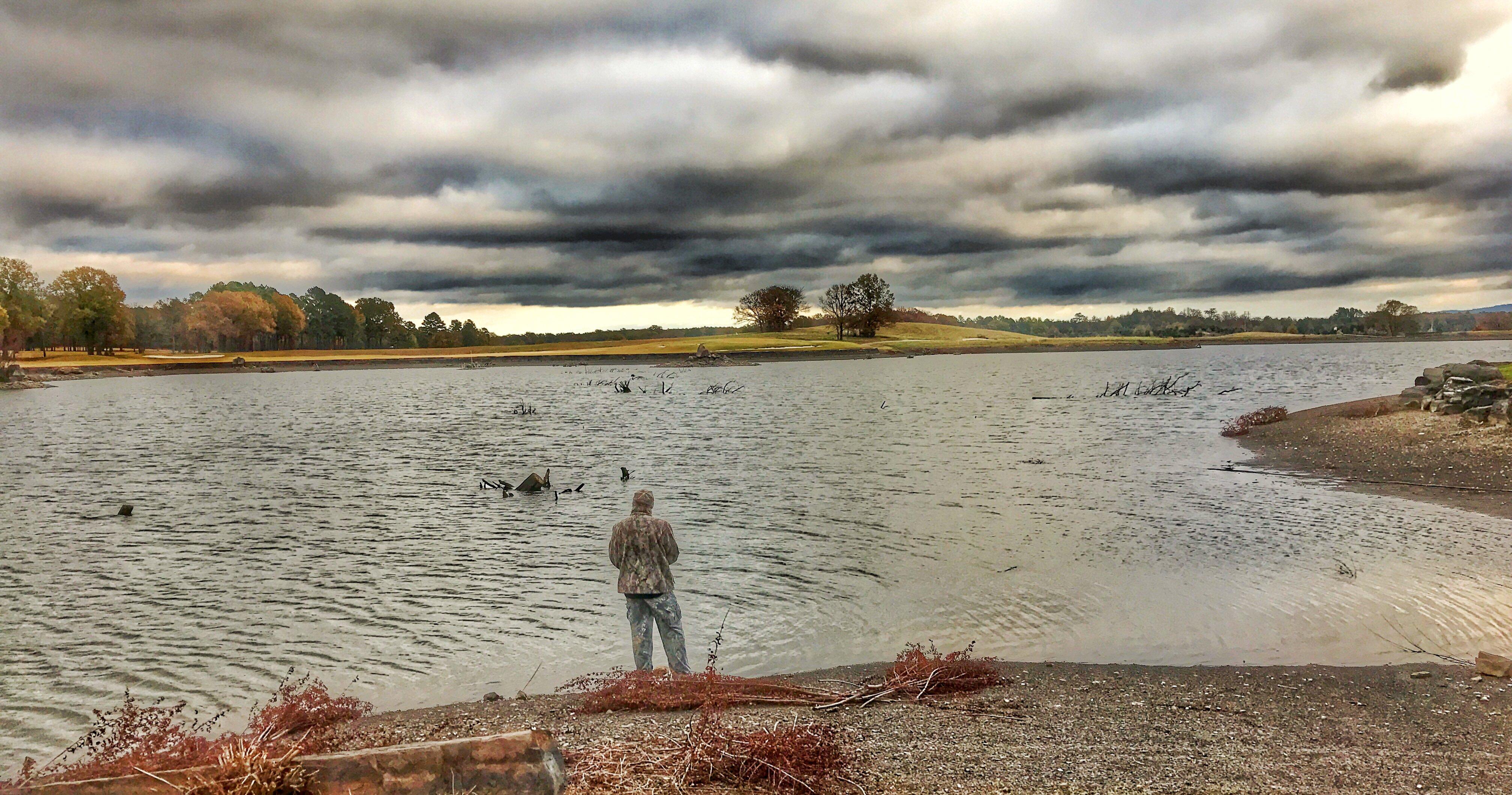
The best ponds provide a mix of shallow feeding areas along with deep water, plenty of cover, and adequate water circulation. (Photo by Jason Sealock)
Shallow feeding areas combined with cover elements increase the potential of predator fish like bass growing big. Bardin’s team aims for 30% coverage of cover items and utilizes a mix of vegetation and hard cover like rocks and hardwood trees. Softer trees, such as leftover Christmas trees, rot out quickly and are a poor long-term choice.
Initial pond stockings consist strictly of forage fish: fathead minnows, various bream species and golden shiners get the most play, but shad, crawfish, rainbow trout, and even tilapia also filling the need in certain locales. Forage is left to succeed without the presence of predators for a minimum of one spawning cycle.
Once forage is established, predator fish are considered. Today’s list includes a variety of bass, from pure Florida bass to F1 crosses, female-only bass, smallmouth, and hybrid stripers. Trophy catfish species can be stocked. Walleyes, brown trout and even paddlefish are being added to custom ponds.
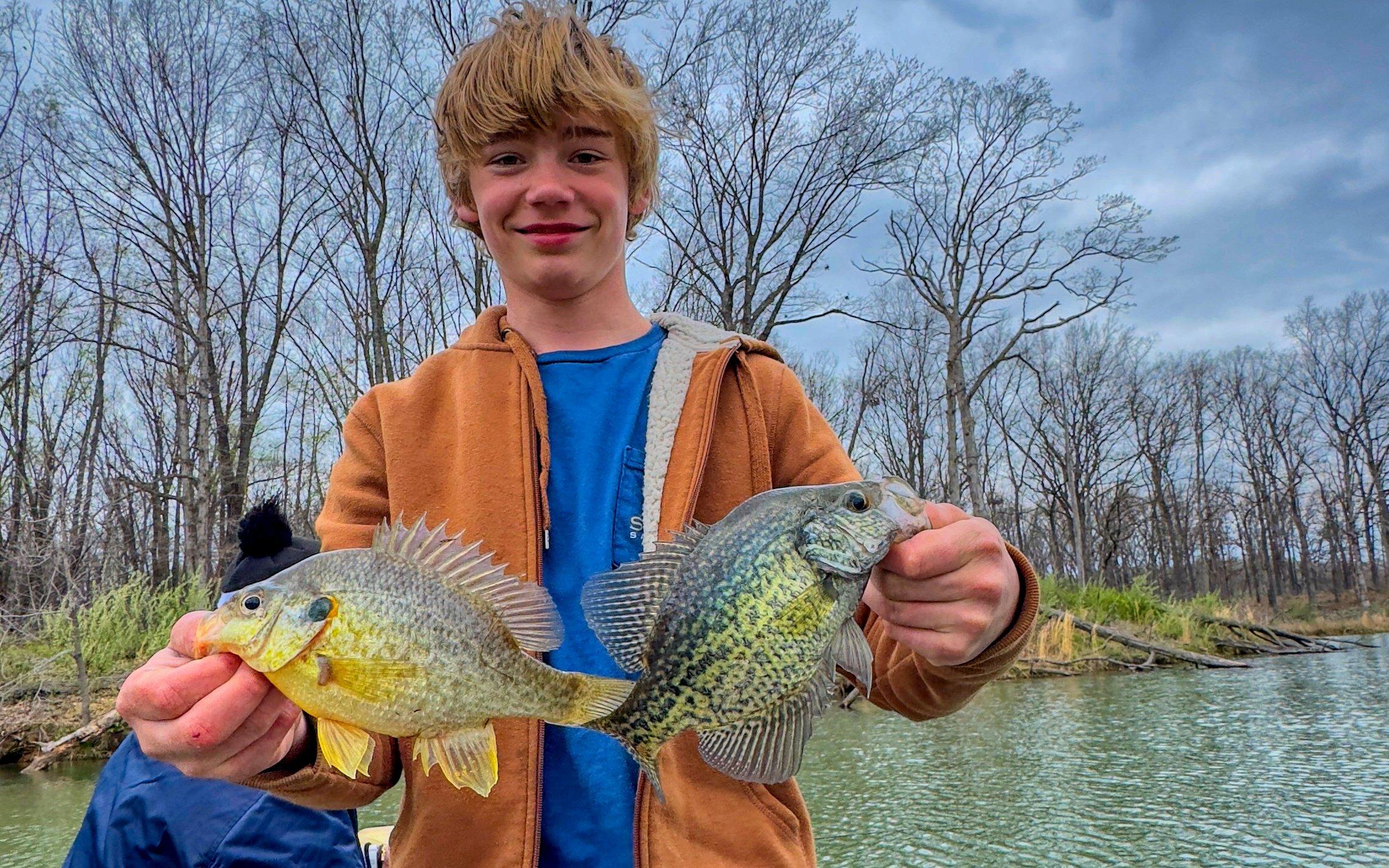
It’s easy for farm ponds to become overpopulated with stunted fish. Aggressive harvest is usually required to maintain fishing quality. (Photo by Jason Sealock)
The predators often succeed initially, but careful management is required to keep the momentum. “After we see predators successfully spawn, we also set harvest quotas. Harvest is probably the biggest driver for long-term success and the part pond owners struggle to do effectively,” Bardin mentioned. “It’s important to remember that fish have more and larger eggs as they increase in size. So growing trophy bass means you have a greater amount of competition every year for those same resources.”
Don’t Miss: The 5 Best States for Bass Fishing
The scenario repeats itself nationwide: pond owners, working hard to increase their bass population, shy away from removing their pride-and-joy. But in order to repel stunted growth, substantial numbers of small bass must be routinely removed, allowing for more forage for each remaining fish.
Bardin’s management team goes further to increase trophy bass potential by digital mapping and tagging specimens to provide instant assessments of body condition and genetics. This helps both in preparation of a new pond and for long-term management of an existing one. Some of that knowledge helps correct the pitfalls of previous pond management strategies. For example, nutrient levels, which were once increased through fertilization, are now being routinely reduced.
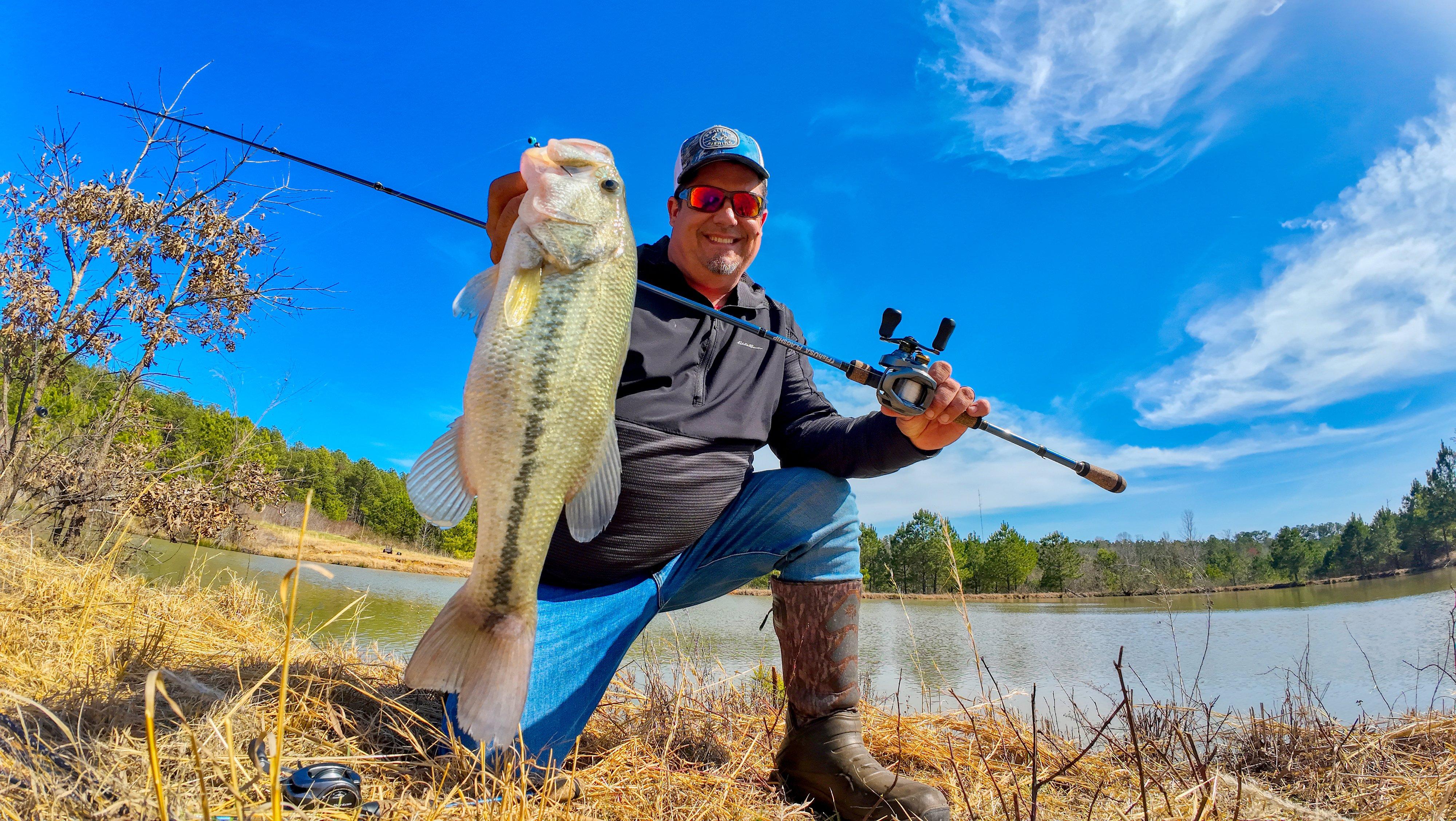
When a pond is well balanced, largemouth bass can grow quickly. (Photo by Jason Sealock)
“We have started moving away from fertilizing as we learned phosphorus drives blue green algae growth in summer months,” Bardin says. “In fact, we are pretty regularly assessing free phosphorus in ponds and applying bacteria or phosphorus-binding solutions to push systems away from blue green algae. Our fish foods are even becoming low phosphorus and focusing on proteins and how fish metabolize them to reduce waste.”
Bardin demonstrates that there is a scientific approach to all parts of pond stocking, managing, and fish growth. Fighting old habits and archaic principles is often the biggest hurdle. But once pond owners move away from Dust-Bowl era practices, they often see their private waterways mature into world-class fisheries.
Best of all, they’re the only boat on the lake.