The 2025 Western Deer Season Forecast
Posted 2025-08-26 by
There’s more to western hunting than elk and mule deer. Many states have outstanding—and often overlooked—opportunities for whitetails, and this season is shaping up to be a good one
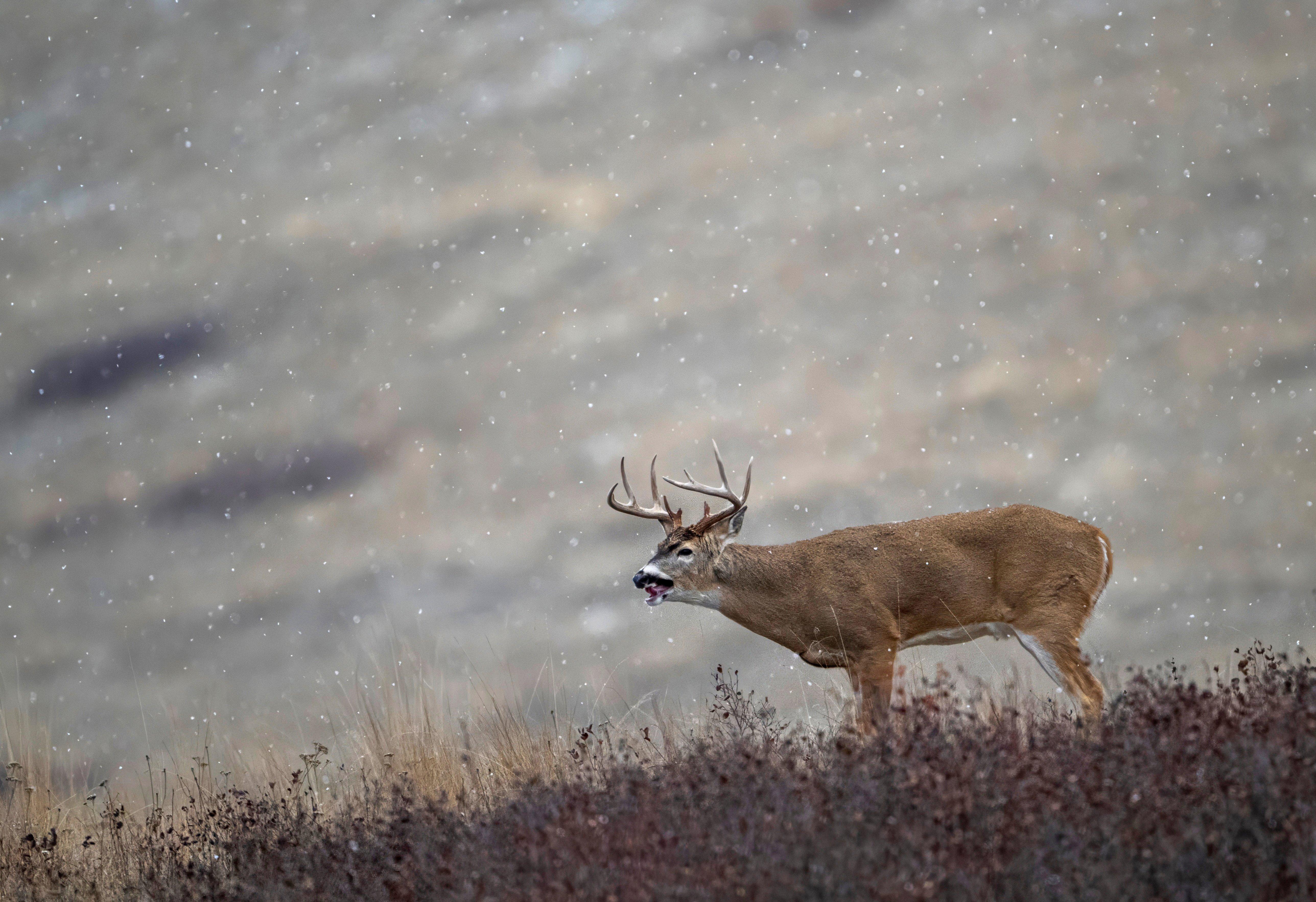
Whitetails aren’t the first big-game animals that come to mind for many western hunters, but the opportunities can be outstanding. Image by John Hafner
Although the mule deer is king of the West, most western states also have solid whitetail populations. Several have even contributed some head-turning, Boone and Crockett contenders. Still, hunting western whitetails is more about the wide-open visibility and a true western hunting experience with ample public land than antler scores. Some tags are valid for mule deer or whitetail, where their ranges overlap, which is pretty cool, too.
Disease mortality, winter kill, and predators are challenges that Western bucks face, and hunting quality has declined to some degree across most of the region. Still, there are plenty of bucks to chase, and some good ones, too.
Check Out Our Latest Camo Pattern: Realtree APX
To that end, let’s have a glimpse into the whitetail-hunting prospects for each Western whitetail state in Realtree’s Antler Nation.
Arizona
Strictly a mule deer and Coues deer state, Arizona is a top producer of record-class bucks. The Boone and Crockett records book says so. Archery non-permit deer tags valid for either species are sold over the counter, but in response to increased hunting pressure, there are limits on individual units. Once the limit is reached, the season in that unit closes. Ample public land and decent deer numbers make this a great DIY hunt. However, this is big country, and Coues deer are tough; bowhunting success rates reflect that. Look to units 22, 24A, 29, 31, 33, 34B, 35A, and 35B for some of the best hunting.
Colorado
Colorado’s Eastern Plains traditionally harbor some screamer whitetail bucks in addition to some unbelievably huge muley bucks. Yet, in recent discussions with a Colorado Parks and Wildlife conservation warden, I was told that prolonged drought conditions and disease mortality have made the plains pretty bleak for both deer species. Sure, there are still some monsters here and there, but the age class overall is suffering and needs some time to rebuild. As a whole, the Eastern Plains have a small percentage of public lands, but some units have decent access to great whitetail habitat. Be attentive to mandatory CWD testing regulations.
Idaho
A hearty population of whitetails makes the Gem State a great deer-hunting destination. Buck quality is good compared to some of the other Western states, and OTC quota tags are first-come-first-served. This makes it more difficult to acquire a tag, but it also limits hunting pressure. Antlered-buck harvest rates have declined somewhat over the last few seasons. Predators — grizzlies, black bears, wolves, coyotes, and cougars — and tough winters are challenges that Idaho’s whitetails are subjected to, and harvest rates are a direct reflection of those realities. Units north of I-90 have been solid big-buck producers over the last two decades.
Montana
Montana is a big state with big adventure and big whitetails. Although Boone and Crockett bucks are few and far between, nailing a Pope and Young-class specimen with a bow is a realistic expectation for the hunter who does his homework and hunts hard. The southeastern corner of the state experienced some recent EHD mortality, but it is still a good place to try. Tags are pricy and must be drawn. Public access is hardly a problem, as there are many state, federal, and Block Management lands open to hunters. Traditionally, the best bucks have come from the western side of the state in the agricultural land and adjacent foothills above it.
New Mexico
New Mexico is primarily a mule deer state, but it has a generous pocket of Coues whitetails in the southwest corner, not to mention some Texanus whitetails in the northeast portion near the Texas border. Public access to whitetails is limited, though some BLM lands coincide with whitetail country. Tags must be applied for and drawn, although there are usually some leftovers, especially for archery and muzzleloader seasons up in the northeast. If you’re after a good Coues buck, it’s worth applying, but for big whitetails, you might consider saving yourself the hassle and hunting in Texas with an outfitter instead.
Oklahoma
Oklahoma has lost the sleeper status it maintained for years. With OTC tags and its proximity to Texas, where even residents struggle to carve out a public-land hunt, it has become a popular destination for nonresidents. This is likely one reason that nonresident deer hunting privileges now exceed $700; fewer people are willing to pay that much, so it naturally mitigates overhunting and public-land crowding. Mature bucks dominate the antlered-buck harvest by a landslide, and some great deer can be found on many of the state’s public parcels. Dallas Barber, a wildlife biologist with the state’s Department of Wildlife Conservation, said, “Deer numbers are good, quality of bucks is on the rise, [and] doe harvest is within our management goals.”
Oregon
If you’re after a big whitetail or want to hunt large herds, Oregon shouldn’t be at the top of your list. One neat aspect, though, is that the Columbian strain of white-tailed deer can be found here in limited numbers, providing a unique hunt. EHD and AHD have affected whitetails, and populations are appropriately low in Umatilla County. In all, Oregon is a better blacktail and even mule deer state, though Justin Dion of the Oregon Department of Fish and Wildlife said, "Mule deer have been on a steady decline for several years in Oregon and the Western U.S. as a whole.”
Texas
From great herd numbers in the Hill Country to world-class monsters in South and West Texas, there are lots of opportunities for Texas deer hunters. There are some public lands, most of which are draw hunts. Your best bet is to book with an outfitter, of which there are many throughout the Lone Star State. And with 915 bucks in the Boone and Crockett book, there is certainly a chance to encounter the buck of a lifetime. Lengthy seasons and reasonable tag fees make this a great destination. Most of Texas should be in great shape for deer hunters this fall.
Washington
Washington produced plenty of big deer historically, but the recent Boone and Crockett entries are fewer, which suggests declines in buck quality and age class. But a Pope and Young-class buck is a realistic goal for bowhunters who put in some time scouting and hunting during the early or late seasons. The antlered-buck harvest has remained stable at around 20,000 animals over the last few seasons, per the National Deer Association’s 2025 Annual Report, so 2025 should be on track for a similar harvest.
Wyoming
Recent disease mortality and a brutal winter and spring in 2022/2023 have tapered whitetail, mule deer, elk, and pronghorn numbers. Still, hunters who seek out quality whitetail habitat along the state’s eastern and central river bottoms, as well as the Black Hills, will find deer to hunt. Bucks as large as 261 5/8 inches have come from here, but Wyoming is more known for its 120- to 140-class bucks and a true Western hunting experience. Tags must be drawn, so you’ll have to plan your hunt at least a year in advance, and tags are also priced pretty high. Albeit, there is plenty of public access, and with limited tags comes limited hunting pressure.