7 Things to Know About Summertime Bucks
Posted 2026-06-10 by
White-tailed bucks are more visible this time of year than any other, which means it's time to start gathering intel for archery season
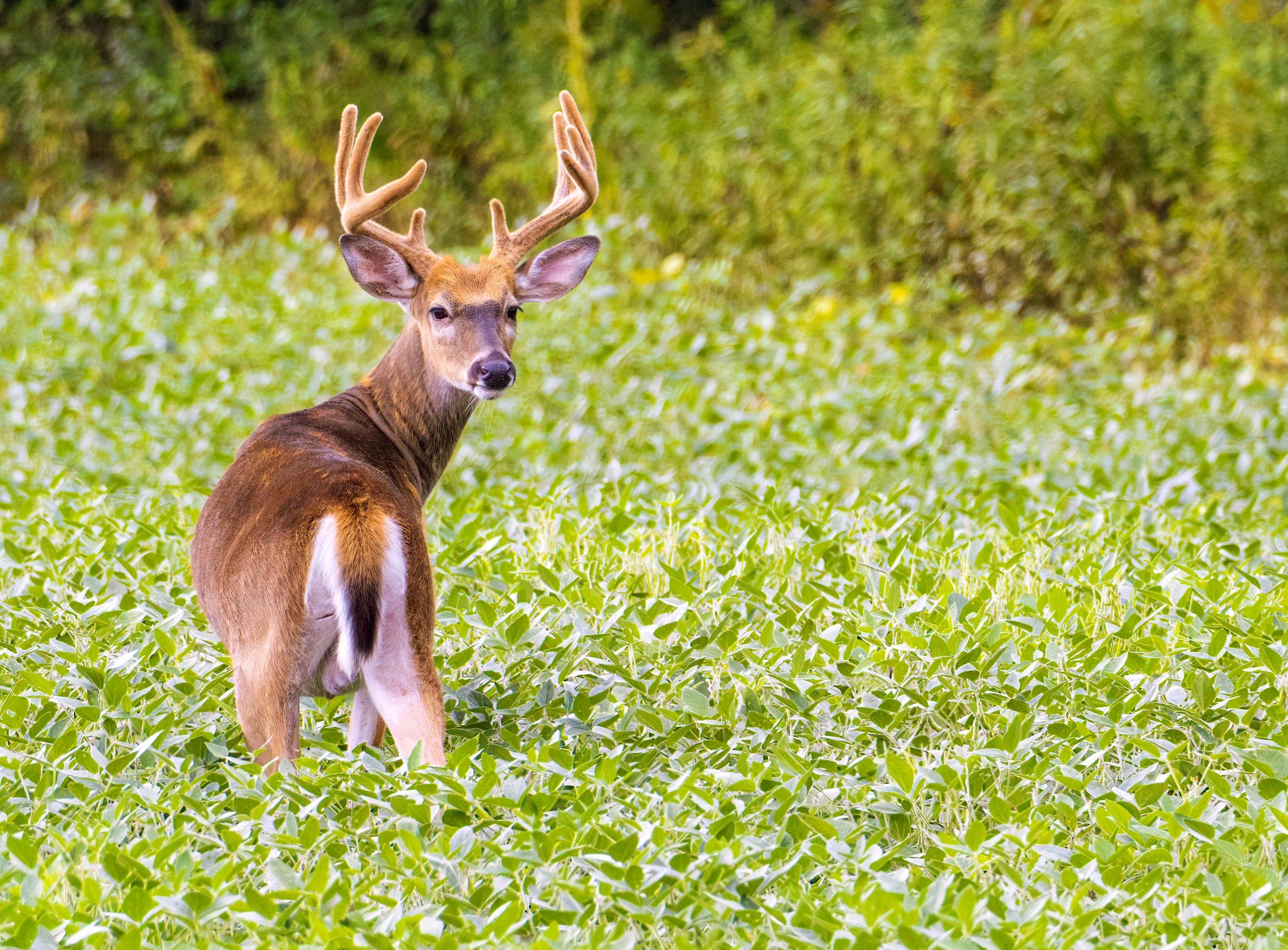
Knowing a buck’s summer tendencies can inform your scouting strategy. Image by Aaron J Hill
I can’t think of anything that will snap a deer hunter out of a summertime lull more than glassing a bean field in August and seeing several velvet crowns bobbing above the plants. Summer means prep time for the hunting community’s serious deer hunters, and it’s a great time to see what bucks you might pursue come fall. As you look at them, here are some things to keep in mind.
THEY’RE RUNNING MATES, NOT RIVALS
In the fall, when bucks are hard-antlered, they frequently spar or fight. But in summer, bucks commonly bed, travel, and feed together. Why are they like a band of brothers in summer but opponents in fall? Research tells us that the stripping of velvet coincides with a hormonal change. A buck has no viable semen and no interest in breeding until after he sheds his velvet. During the summer, bucks congregate around the best food sources and bedding cover, and they often hang in groups (many call them “bachelor groups”) because there’s safety in numbers. After the velvet is stripped away, some of the bucks in a group might stay in the same area while others could move a good distance to a new fall range.
THEY EAT — A LOT
Fall and winter mean breeding and cold weather, and a summer whitetail’s instinct is to consume as many calories in the summer as possible to fatten up for the leaner, more difficult times ahead. Green food sources such as alfalfa, clover, and soybeans attract bucks (and does) in summer. These are great places to glass from a distance in the evenings.
DON’T MISS: A Petition to End Hunting and Fishing in Oregon Has Met Signature Minimum
THEY HAVE SMALL DAILY RANGES
Research reveals that bucks move more as fall progresses. But summer is downtime. It’s hot and buggy, and there is a lot of food across the landscape. Bucks have little reason to walk a couple of miles a day. Because of the lack of pressure and the dense canopy, bucks often bed closer to food sources at this time of year than in fall and winter.
THEY DRINK FREQUENTLY
Ever mow the lawn on a sweltering-hot day? When the job’s complete, nothing beats air conditioning and a glass of ice-cold water. Deer aren’t much different. Sure, they can get some hydration by feeding on dew-coated greens in mornings and evenings, but given the heat, they’ll almost certainly drink at a stable water source to meet their daily water requirement.
DON’T MISS: 3 Long-Lasting Deer Habitat Projects to Tackle Right Now
THEY HOLD PATTERNS
Other than summer scouting efforts, summer bucks feel almost zero hunting pressure. That, combined with their small daily ranges, means they’re easy to pattern. There are exceptions, but if you find a buck in an ag field one evening, he’ll likely be back the following evenings. Maybe not every evening, but frequently. Be sure to keep your expectations for hunting season in check, though. It’s common for patterns to shift around the time that archery seasons open, and what seemed like a sure bet for opening day might be completely upended.
THEY’RE TRAIL-CAMERA-FRIENDLY
Given a buck’s summer predictability, it’s relatively easy for hunters to capture good trail camera photos of them in productive spots, which include waterholes, green fields, bait sites (where legal), and soft-mast trees.
THEY’RE VISIBLE DURING DAYLIGHT
Seeing a shooter buck during daylight in hunting season is a feat. During summer, though, even locations that get hammered by hunters in the fall might find bruiser bucks on their feet and in the open, especially during the first and final hours of daylight.
Check Out Our Latest Camo Pattern: Realtree APX
STAY TUNED
These summer tendencies are good to know and can help you identify buck prospects for fall, but don’t get too glued to them. Tendencies often change drastically by the time archery season opens — remember, food sources and hormones shift — so be prepared to adapt come hunting season.