When Do Bucks Quit Breeding for the Year?
Posted 2026-02-19 by
Research data connects testosterone levels with antler-growth cessation, velvet stripping, shedding and breeding activity
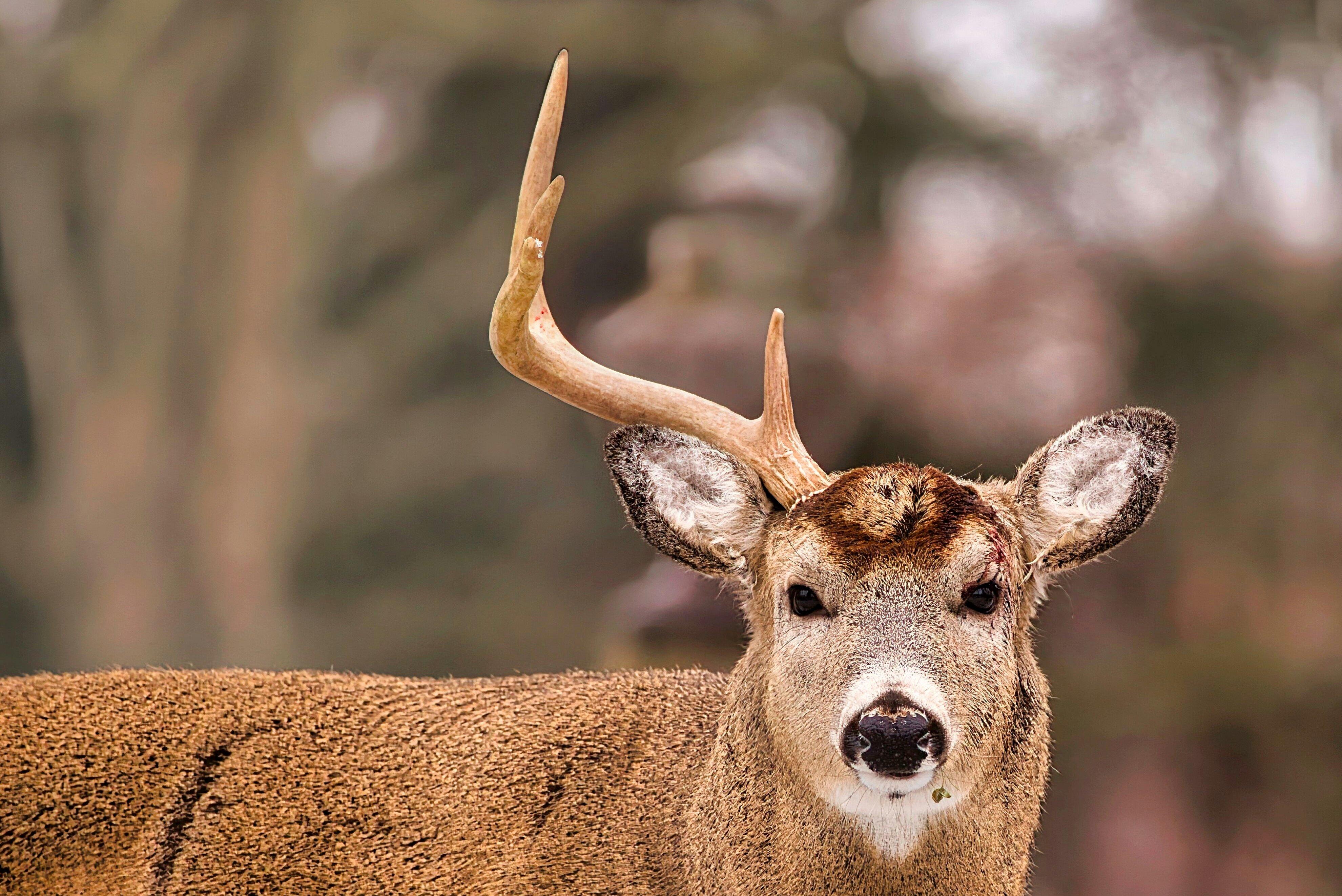
Antler shedding correlates with a major testosterone reduction. Research shows that within two days of shedding, testosterone levels are too low to stimulate semen production. Image by Spencer Sills.
When do bucks begin breeding, and when do they conclude? Some hunters erroneously believe that all whitetail breeding occurs in November. Let’s set the record straight. Research has long proven that breeding isn’t confined to a two-week period or even a month.
According to noted whitetail researcher Dr. James Kroll, 40-some subspecies of white-tailed deer roam the planet. And he said that each breeds during a time of year that coincides with the best fawn production results.
“Breeding dates of these different subspecies are determined by when the best time is for fawns to be weaned,” Kroll said. “That, of course, is climatically driven. The exceptions to that are subspecies that are influenced by other environmental factors. A case in point would be the deer occupying the Mississippi River Delta, which are affected by the flooding season. So different factors dictate when the best time is for a given subspecies to breed, but it’s generally influenced by the best time for fawns to wean.”
DON’T MISS: Alberta Monster Buck Has 50 Inches of Mass
When it comes to actual breeding, some hunters believe that a doe comes into estrus during November and that’s it. Research paints a different picture.
“The breeding system of a white-tailed deer involves the females coming into estrus as many as seven times,” Kroll said. “Other than in Florida, white-tailed does across most of North America typically start coming into estrus for the first time around the Hunter’s Moon [the first full moon after the Harvest Moon, typically appearing in October or early November]. That is directly related to the length of the day, which is actually determined by the length of the night. The pineal gland produces melatonin, which helps regulate sleep patterns and is influenced by light exposure. It also interacts with the pituitary gland, affecting the secretion of certain hormones related to reproductive functions.”
In most cases, deer are short-day breeders, Kroll said. That is, they initiate their breeding cycle during autumn or winter, when daylight is decreasing and nights are lengthening.
“As the days get shorter and shorter to a trigger point, the does begin coming into estrus,” he said. “Again, they can have up to seven estrus cycles to ensure they actually get bred. That’s the doe part of the breeding system. The bucks are also short-day breeders. The question is how they get synchronized with the does. In our research, we collected semen from bucks in Michigan, Ohio and Texas. We aimed to determine how early bucks produced viable semen.”
This research is where the puzzle pieces came together. Kroll said that as the days get shorter, serum testosterone increases in the blood of bucks. And the testosterone boost stimulates the testes to prepare to produce viable semen.
DON’T MISS: Louisiana Considers New Drone Legislation for Locating Injured Game
“When serum testosterone increases, it reaches a point when antler growth ceases, and the bucks strip their velvet,” he said. “After they strip their velvet, at some point after that, they begin to produce viable semen. As long as serum testosterone remains high, they’ll continue produce viable semen. In our studies, we learned that we could begin collecting viable semen from midwestern bucks in October. When we tried to do the same thing in Texas, we got no viable semen in October. We had to wait well into November.”
Interestingly, researchers could place a Northern doe in a pen with a southern Texas buck, and the doe would conceive at the same time as southern Texas does conceived.
“We could also take a southern Texas buck to Michigan, and the does would breed the same time as they did in southern Texas,” Kroll said. “That revealed that the does don’t determine when breeding occurs. Bucks do.”
Another telling revelation from doing necropsies and aging thousands of fetuses for 20-some years in Michigan is that rut dates aren’t hard and fast.
“We found that the peak of the rut in Michigan, for example, floats around as much as 12 to 14 days,” Kroll said.
Next, Kroll wanted to know how late in the antler cycle a buck would continue producing viable semen. In other words, when do bucks stop breeding for the year? He and others began collecting semen at regular intervals, starting when the first good semen was collected and continuing until the semen production ceased.
Check Out Our Latest Camo Pattern: Realtree APX
“We found that as serum testosterone decreases, it triggers bone-eating cells in the bases of the antlers until the antlers are cast from the head,” Kroll said. “There is a synchrony between casting antlers and diminished testosterone levels in the blood. We found that we could get viable semen for up to two days after bucks cast their antlers. But after that, there was no more viable semen. At that point, the bucks also exhibited very little interest in breeding. Basically, once a buck casts his antlers, his testosterone levels are below the level that stimulates semen production, and he stops breeding.”
Kroll concluded by saying that this doesn’t happen at the same time for all bucks. For example, he has shot two Kansas bucks in the first week of December that shed after he’d shot them. And I shot a North Dakota buck that lost an antler while I was dragging it out a few days before Christmas. In other words, although some bucks are done breeding by early to mid-December, other bucks still packing antlers are taking advantage of late estrus cycles that carry into the new year.
?fmt=auto&qlt=default&fmt.webp.qlt=65&fmt.png.qlt=73&fmt.jp2.qlt=35&fmt.jpeg.qlt=60)