Rack Report | Bowhunter Arrows Trophy 8-Pointer During Tennessee Velvet Season
Posted 2026-09-25 by
Lee Bridges, with Midwest Whitetail, broke the ice on the 2026 season with this big buck from the Volunteer State
| Rack Report Details | |
|---|---|
| Buck: | 138 5/8" |
| Time of Year: | Aug. 28, 2026 |
| Place: | Giles County, Tennessee |
| Weapon: | Hoyt Carbon RX-10 compound bow |
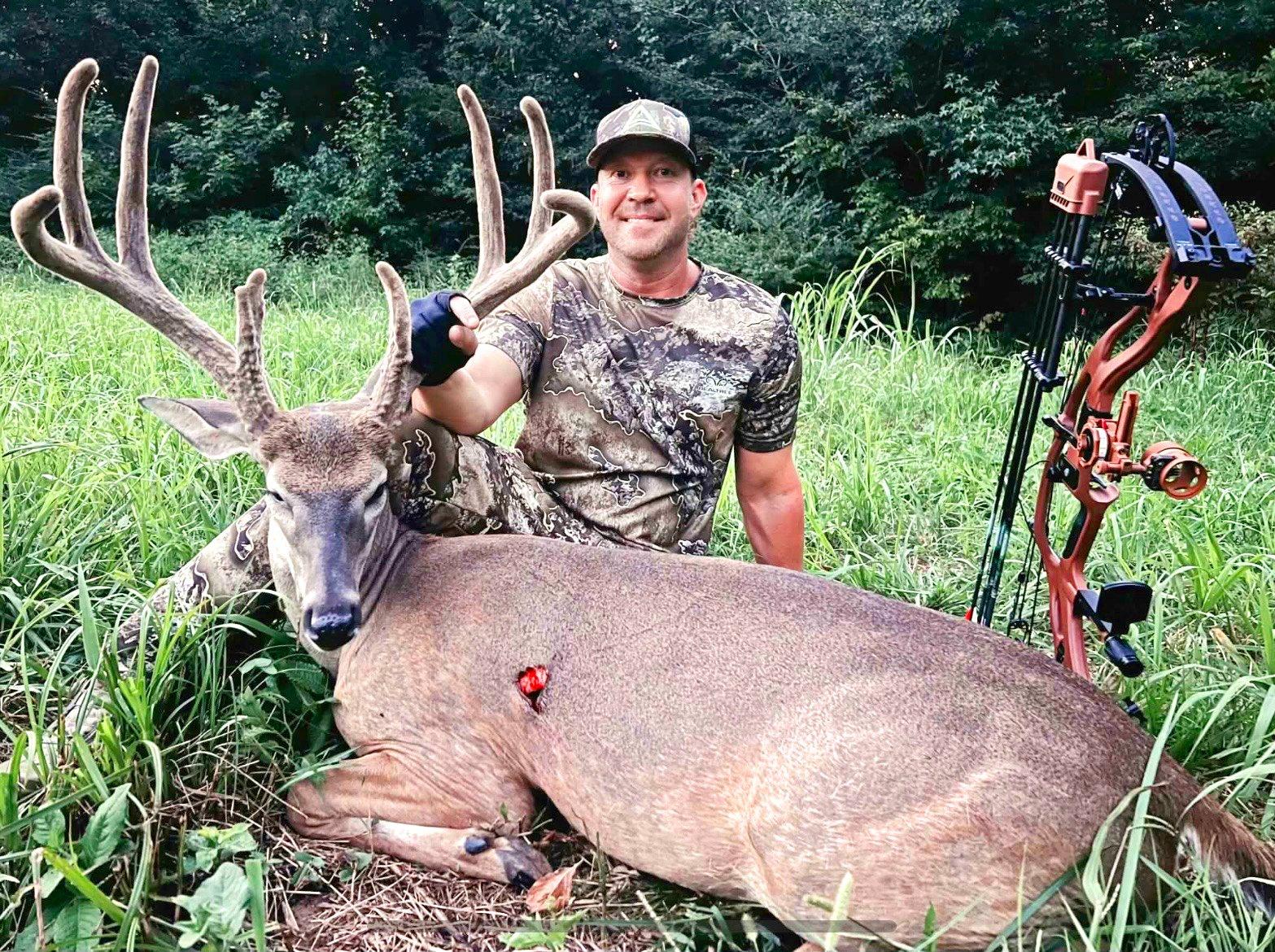
Lee Bridges of Midwest Whitetail put this buck away on the opening afternoon of Tennessee’s August velvet hunt. The big 8-pointer is an exceptional buck for the region of the state in which it was taken. Image courtesy of Lee Bridges
Lee Bridges lives just south of the Tennessee border in Alabama, but he’s hunted Southeast Tennessee since he was a young teenager. With steady hunting pressure and poor genetics, the area seldom produces truly big deer. But this summer, Bridges had a couple of nice bucks frequenting a farm he’s been hunting for the past eight years.
“The farm is too small to hold deer year-round,” Bridges explained. “It usually holds one or two good bucks in the summer, but they tend to disappear once they shed their velvet and begin splitting up. Well, Tennessee introduced the special velvet season about three years ago, and that has given me a more realistic chance of getting an early-season buck.”
DON’T MISS: Basement Buck Ousts Jordan Buck from No. 2 B&C Typical Spot
Leading up to the 2026 velvet hunt, Bridges had two big 8-pointers frequenting the farm. He puts out feed to help with taking inventory, but he hunts the terrain rather than sitting directly over the bait. This makes accessing his stands easier. One of the 8-pointers was an exceptional buck for the region and had been on the cameras since 2024.
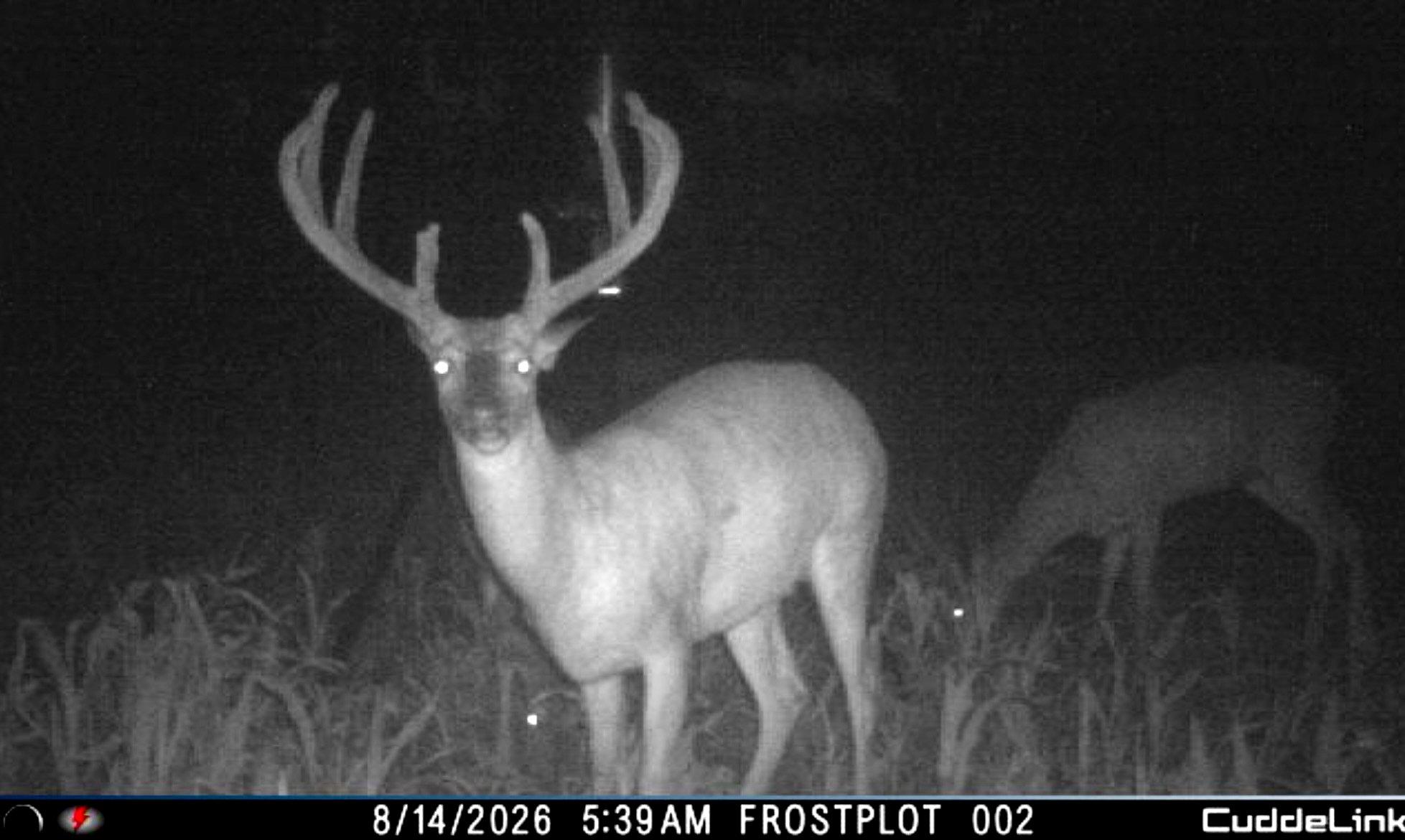
A frame like that will get just about any deer hunter’s attention. Image courtesy of Lee Bridges
“He is the largest buck I’ve hunted on this farm in the eight years I’ve been hunting here,” Bridges said. “A 140-type buck is really big for the area. Most of the mature bucks in the area don’t hit 130 inches.”
Although Bridges had pictures of both big 8-pointers in previous years, he hadn’t encountered either buck on the hoof. As the velvet season approached, he visited the farm at least once weekly to move cameras around and dial in a spot to kill one of these big bucks.
DON’T MISS: New Hampshire Man Attacked by Mystery Animal
“The farm has a big lake on it, and the landowner has some type of agreement with a dog trainer who trains dogs for duck hunting,” Bridges detailed. “Every time I went to the farm, they were out there training. I used the commotion to my advantage and drove my truck right up to my spots, leaving the truck running while I did my duties. Of course, I stayed out of the bedding areas.”
By the velvet opener, Bridges had a pattern on the larger of the two 8-pointers. If the buck appeared on a particular trail camera in the morning, it was often on the same camera in the afternoon.
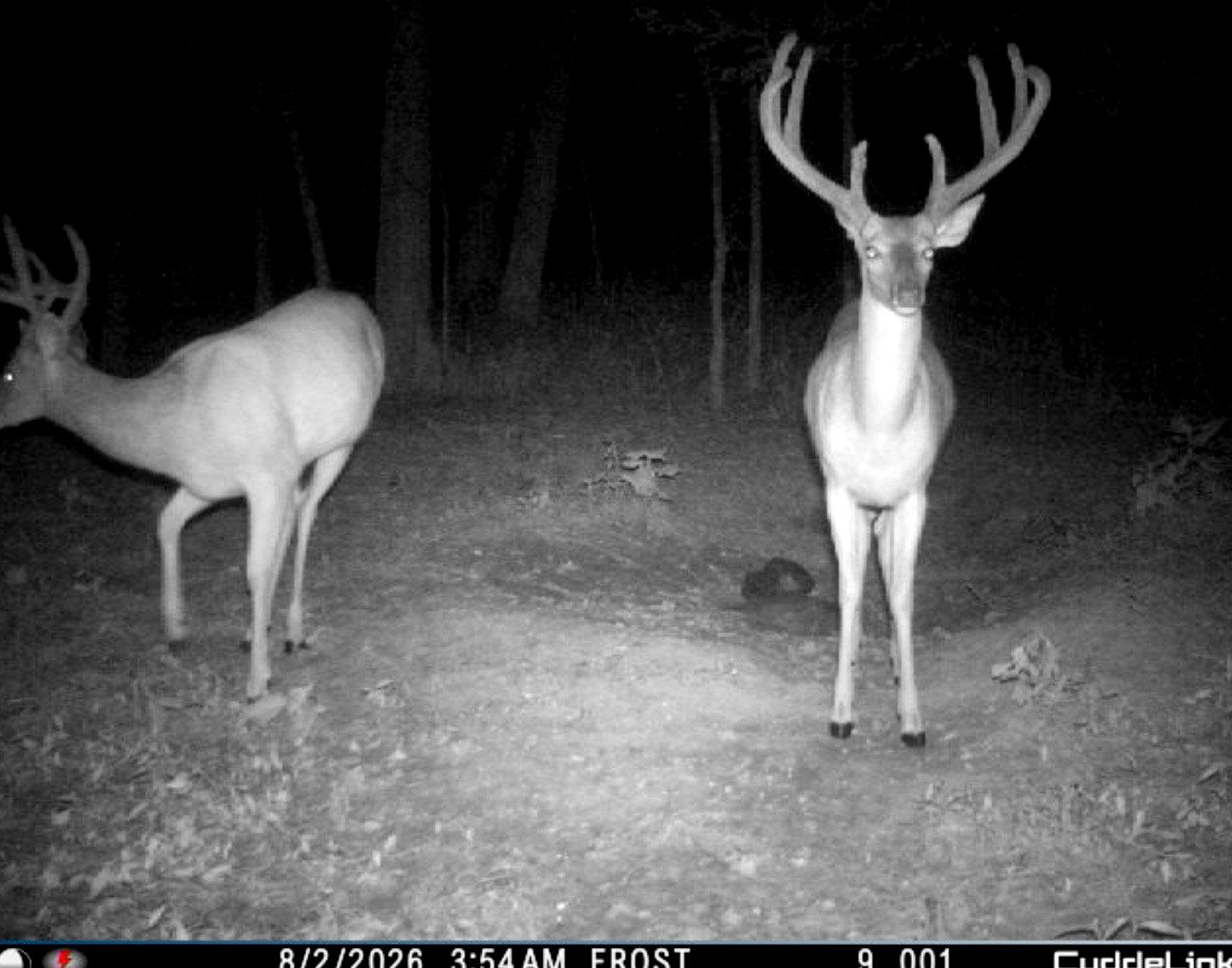
The buck was very regular on the trail cameras this year. Image courtesy of Lee Bridges
“Opening day was Friday, Aug. 28,” Bridges said. “I went in at 4 a.m. because the bucks were sometimes on the camera at or just before dawn. I didn’t want to run them out on my way in. I sat in the blind for an hour and a half waiting for legal shooting light. My trail cameras updated, and I was looking at pictures on my phone. The buck was on my camera on the other side of the farm. Based on his pattern, I knew I had a good chance of encountering him over there that evening.”
Bridges is part of the Midwest Whitetail team and had self-filmed that morning, but he called his buddy Jeremiah Roberson to film him for the afternoon hunt. With no treestands in place, the two went in for a hang-and-hunt with sticks and saddles.
“Everything lined up,” Bridges said. “The weather was ideal. We’d been having south winds in the preceding days, but it switched to north, which is ideal for the location. We were set to go about 5 p.m. A doe and fawn moseyed through shortly after. Then, around 6:30, I noticed the buck I was hunting about 60-some yards away in the timber. He was cautious and moving very slowly; he’d take a step and then freeze. It seemed as though he was looking right at us. This went on forever.”
Check Out Our Latest Camo Pattern: Realtree APX
Eventually, a 4-pointer came out right under the hunter and cameraman, then walked over to the big buck. The bucks looked at each other, and then the 4-pointer turned and beelined right to the hunters. Finally, the big deer moved about 30 yards closer and presented a shot opportunity.
“When I drew my bow, the 4-pointer was literally right below us,” Bridges said. “The big buck was at 31 yards, and at first I thought I’d hit farther back than I wanted. He had been slightly quartering to me. The advantage of shooting a lighted nock and having video footage to review is that I could see exactly what happened. My arrow hit behind his shoulder, and it exited slightly back on the opposite side.”
With about 45 minutes of daylight left, Bridges and Roberson climbed down and looked for the arrow. It was covered in good blood. The two were looking for a blood trail 10-15 yards from where the arrow was recovered when they noticed the buck piled up just ahead. It had run no more than 30 yards. If the woods hadn’t been so thick, they would have seen the buck fall from their saddles.
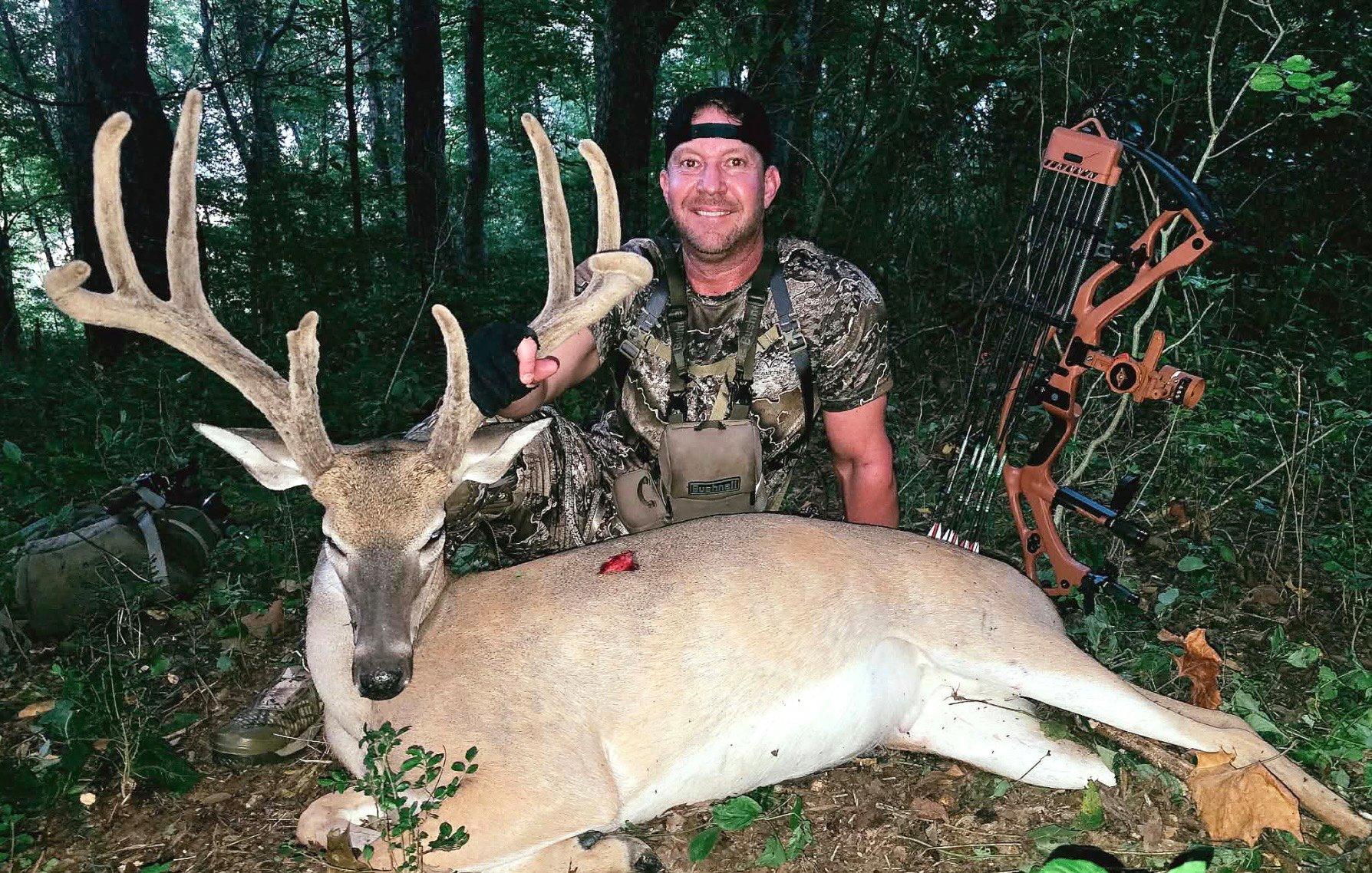
The buck was slightly quartering toward Bridges at the shot, but his arrow got the good stuff, resulting in a 30-yard recovery. Image courtesy of Lee Bridges
Bridges’s buck sports a tall, wide 4-by-4 frame, and the right brow-tine is split. The impressive antlers are in full velvet, and Bridges believes the buck is five and a half years old.
“I always say that the stars have to align to kill a big mature buck like this,” Bridges said. “Everything shook out exactly how I drew it up, which rarely happens.” Watch Bridges’s hunt on the Midwest Whitetail YouTube channel.