NoDak Bowhunter Connects on a Rainy Day Velvet Buck
Posted 2025-09-19 by
Trevor Martin was underdressed for the chilly evening, and almost climbed out of his stand early. Turns out, staying put was a good decision
| Rack Report Details | |
|---|---|
| Buck: | 160" |
| Time of Year: | Sept. 4, 2025 |
| Place: | Cass County, North Dakota |
| Weapon: | Mathews DXT bow |
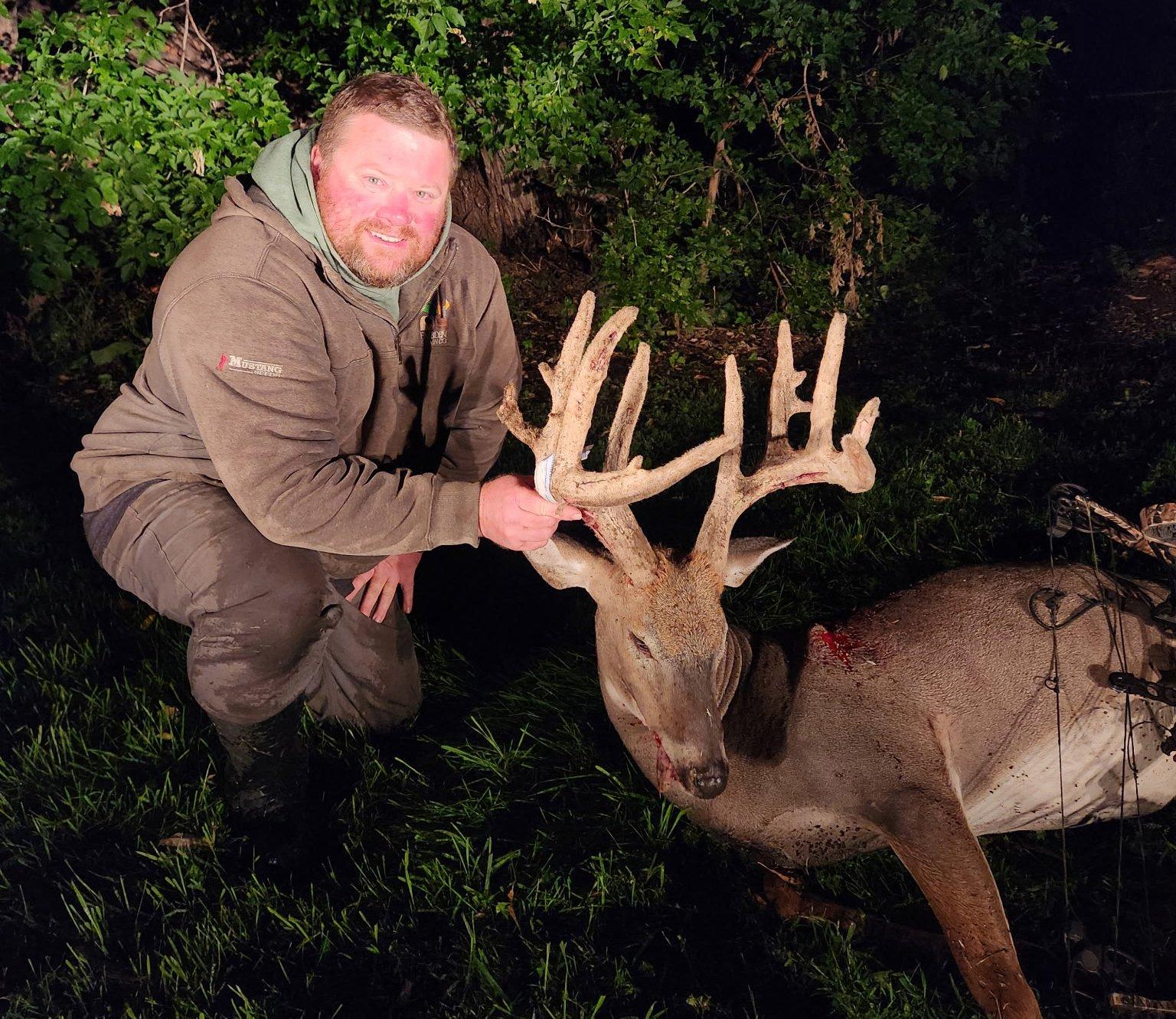
Bowhunter Trevor Martin knew that this buck was the focus of several other hunters and that he had to strike when the time was right. On Sept. 4, the buck appeared on his trail camera at noon, and with incoming weather, it was go time. Image courtesy of Trevor Martin
This past summer, Trevor Martin rode his four-wheeler out into a cattle pasture to trim out some cattails at a slough crossing. When Martin fired up his weed trimmer, a big buck erupted from the cattails about 15 yards away. It ran right through an electric fence wire, snapping it in half. Despite the frenzy, Martin immediately recognized the buck, as long brow tines and kicker points were dead giveaways. The North Dakota bowhunter had seen the buck a number of times in 2024, and had gotten hundreds of trail camera pictures of it. He decided the buck was a bit too young last season and so he held off. This year left no doubt, as the buck had grown into a true trophy animal.
Baiting is legal in North Dakota, and so Martin put out five bait piles over the summer, monitoring them with wireless trail cameras. The buck showed back up in that area about three weeks before the archery opener.
DON’T MISS: South Carolina Girl’s First Deer Is a Full-Velvet Monster
“He’d show up on one camera and be there for about three days, then he’d move about a mile and spend a few days there, and then he’d disappear for a few days,” Martin said. “He was working a big circuit, and I think he was on the neighbor’s land when he’d go missing on mine. Five other people were trying to hunt the buck. I used to be the only one who bowhunts the area, but the land around mine has changed hands, plus with rifle tags being hard to get, a lot more people bowhunt now.”
Given the hunting pressure on neighboring properties, Martin knew he’d have to strike fast. So, when the buck appeared on one of his trail cameras at around noon on Sept. 4, he made his move. He figured the buck was bedded nearby and would likely return to feed that evening. Martin headed for his stand and settled in at around 4:30 p.m.
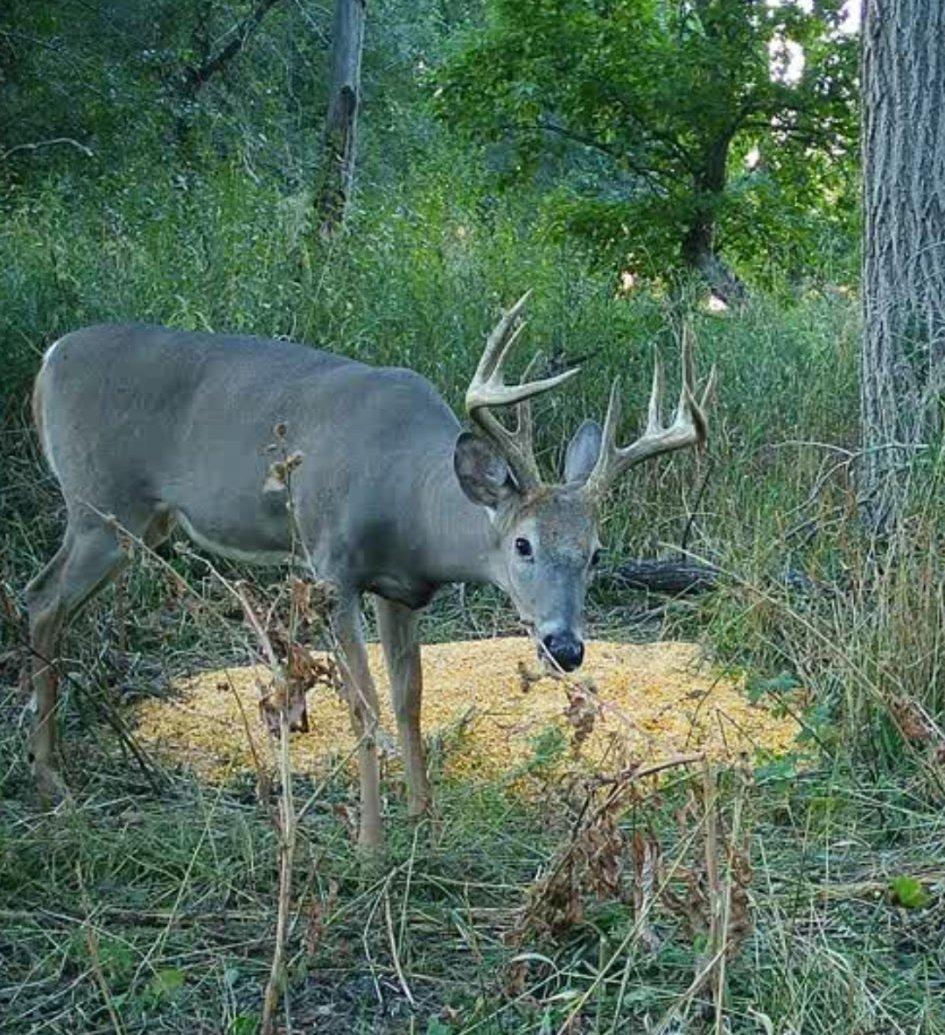
This 2024 image of the buck shows the potential it had and why Martin wisely elected to wait one more year to hunt it. Image courtesy of Trevor Martin
“I was pretty confident given the conditions,” he explained. “I headed out early because, with the way the stand location lays out, there’s always a chance of bumping deer. My stand is in the T intersection of a shelterbelt, and there are standing crops all around.
“The winds were fairly strong,” he continued, “and I got rained on three different times. I was underdressed for the conditions and actually got really cold. I got so uncomfortable at one point that I considered leaving the stand, but I knew I’d be upset if I did that, and then got pictures of the buck in the daylight. I stayed put.”
Martin said that a doe came out at 6 p.m. but didn’t come to the bait. A little later, a different doe with a fawn came running out to the south, which was straight downwind. Another doe and fawn did likewise, and the fawn ran straight beneath Martin’s stand. The doe actually veered and ran in a different direction from the fawn. Martin wonders if a coyote was stirring things up.
DON’T MISS: The Best Low-Recoil Elk Rounds
“At 8 o’clock, I caught movement from a direction I didn’t expect the buck to approach from,” Martin explained. “He came straight from the south on the exact trail that I walked to reach the stand earlier that afternoon, and the wind was blowing that way, too. I saw the kickers and knew it was him. He was about 20 yards away when I stood and drew my bow. When he stepped into the clear at 15 yards, I mouth-grunted to stop him and took my shot. It happened so fast that I didn’t even have time to get worked up. I bet I shot him within 45 seconds of seeing him.”
The shot angle was steep, and the buck was slightly quartered toward Martin. The hit was good, but the bowhunter elected to give the buck some time to expire just in case.
“It rained for the fourth time that day at about 9:45 p.m.,” Martin said. “My dad and I went to look for him at 10:30 p.m. It was wet and still sprinkling. I couldn’t find anything where he was standing when I shot. We started walking in the direction he ran, and I noticed a branch that he had blown right through; there was even some chest hair on a twig. I found a section of my arrow right there, too.
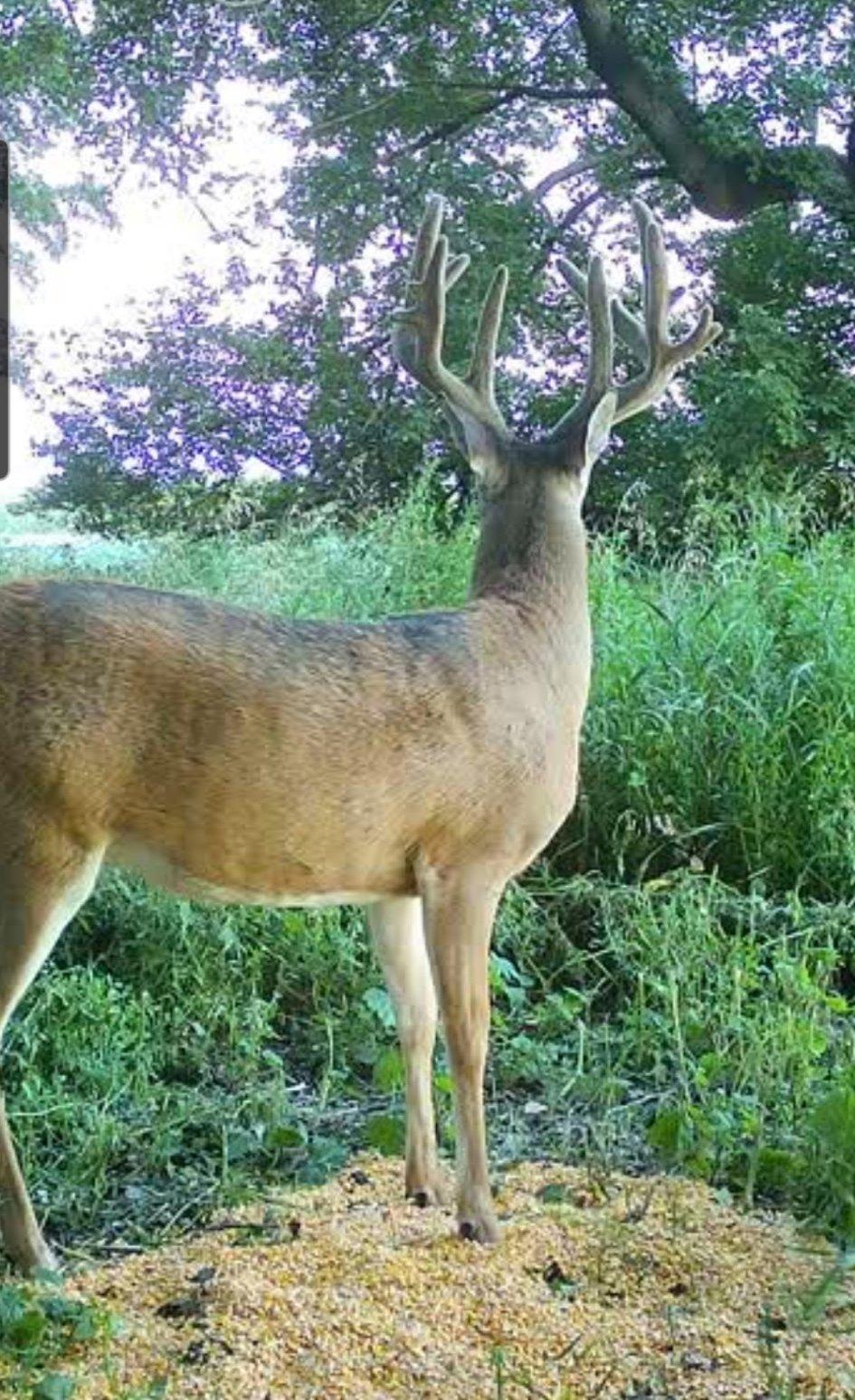
Getting a daylight image of your target buck is always an exciting event, especially when bow season is already open. Image courtesy of Trevor Martin
“We continued tracking and found only a dozen or so drops of blood,” he continued. “It was slow going, but we found my buck about 125 yards from where I hit him in a little opening in the cornfield. The lack of a blood trail was due to the high entry wound and the lack of an exit wound.”
Check Out Our Latest Camo Pattern: Realtree APX
The rack has only about a 14 1/4-inch spread, but it sports long brow tines, massive bases, and kickers on both G-2s. With 12 scorable antler points, the buck grossed 160 inches. Martin said that he does a lot of shed hunting and has noticed similar genetics in the area running about 15 miles north and south of his ground. In fact, he shot a similar buck four seasons ago.
Martin is looking forward to hunting the western part of the state on his rifle tag in November. He also has a few other hunts lined up, so he’s glad that he was able to connect on a great bow buck during the first week of the archery season.
?fmt=auto&qlt=default&fmt.webp.qlt=65&fmt.png.qlt=73&fmt.jp2.qlt=35&fmt.jpeg.qlt=60)