The 6 Best Low-Recoil Elk Rounds
Posted 2025-09-17 by
There’s nothing wrong with a big gun for elk, but smaller ones are easier to shoot and, with good bullets, can be the better choice
A big bull elk is a tough customer, but you don’t need a cannon to bring one down. And no, your buddies aren’t going to consider what rifle you shoot when they’re debating over who’s the toughest hombre on the mountain. For far too long, gun writers and guides have warned elk hunters that they need big guns, .338 Winchesters and the like, in order to be successful. But that’s just not true, especially not in today’s age of highly efficient cartridges and bullets.
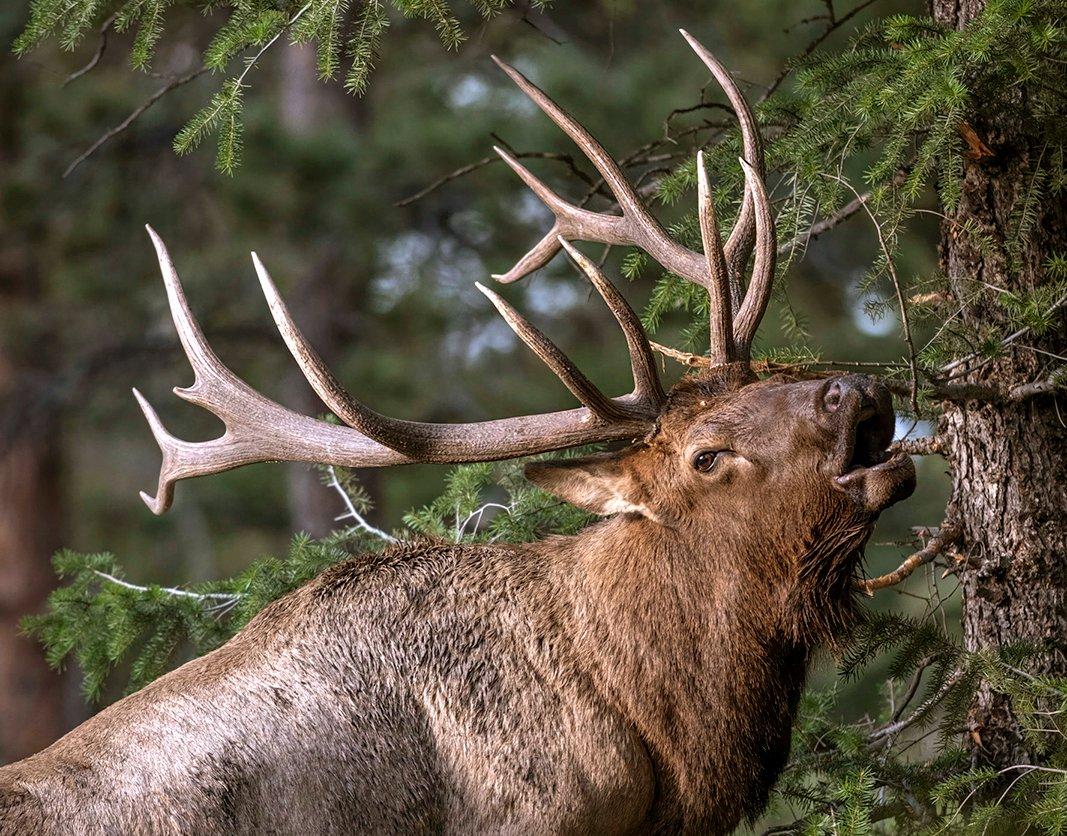
With modern bullet design and construction, elk hunters no longer need to shoot punishing rounds from heavy rifles. Image by John Hafner
Will a magnum rifle put a big, buff-shouldered bull in the dirt? You’re darn right it will. But so will plenty of far lesser cartridges. Magnum cartridges do have a whole host of benefits, but an equally long list of downsides. Heavy cartridges require heavy guns, long barrels, long actions, more expensive ammunition, and oh yeah, magnum recoil. Lighter cartridges might shorten an elk hunter’s effective range, but they’re easier for most hunters to handle and shoot well — and with elk or any other big-game animal, shot placement trumps magnum ballistics every time. These six cartridges are plenty adequate for even the biggest bulls, provided you load them with the right bullet, but they won’t leave your shoulder in agony. It is important to check the regulations in the area where you’ll be elk hunting, as some states do have minimum cartridge and bullet diameter requirements.
.280 Ackley Improved
Recoil Energy: 19.29 ft-lbs
Pros: Long-range accuracy and power with manageable recoil compared to magnum rifle cartridges
Cons: Still the most recoil on this list, factory ammo options are limited
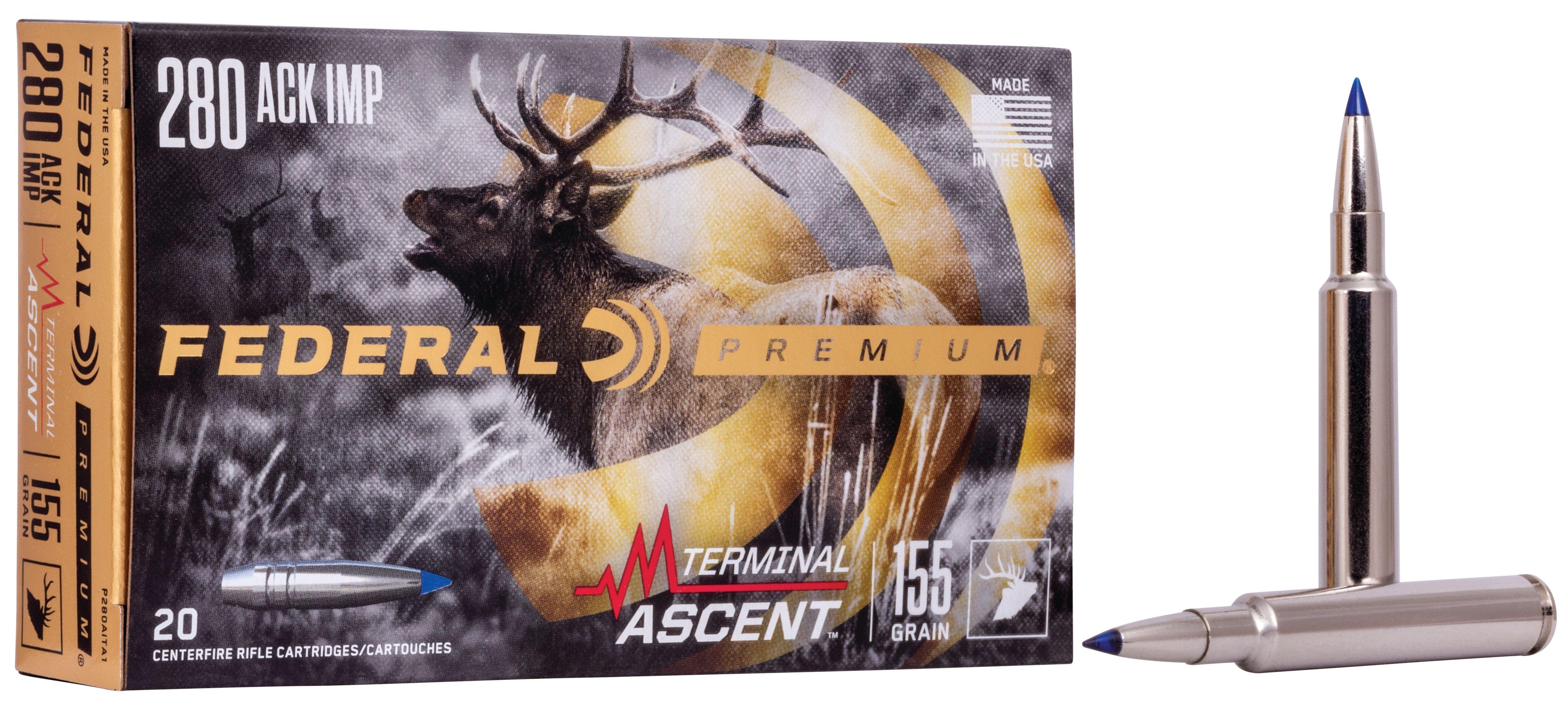
While at the upper end of what might be considered low recoil, the .280 Ackley Improved has more than enough power to take down a big bull, even at extended range. Image by Federal
Ten years ago, this cartridge would have made the honorable mentions list. While its performance leaves zero doubt, its history is slightly nuanced. Developed by legendary gunsmith P.O. Ackley in 1957, this cartridge was long considered a wildcat round until it was SAAMI certified in 2007. Despite its cult-like following, factory ammunition and chamberings have been few and far between. While its recoil is on par with a .308, the .280 Ackley Improved will carry the 1,500 ft lbs of energy needed for elk to around 600 yards. While recoil is far from “light,” it will punish a shooter 30% less than a .300 Win Mag with 90% of the performance at range, and that makes me want to join the cult. Federal’s Terminal Ascent is a proven bullet on heavy game, and the 155-grain option is one of the best .280 Ackley Improved factory loads available.
.308 Winchester
Recoil Energy: 18.27 ft-lbs
Pros: Large bullet diameter provides more elk-appropriate options, widespread availability, short action
Cons: Stiff recoil, at least for this list, and limited range (best for inside 350 yards)
Nobody gets too excited about the .308. It’s not big or fast or new. But it’s plenty of gun for elk hunting, as I can personally attest, because I’ve seen two big bulls fall from its graces. That’s good enough for me. There are almost endless bullet options available for the .308, and, it being a .30-caliber, most of them are adequate. But your best bet is to shoot something on the heavy end of the spectrum, say 165 to 175 grains, and well-constructed. Again, look to options like the Federal 175-grain Terminal Ascent, the 168-grain AccuBond LR in Winchester’s Expedition Big Game lineup, or the classic 165-Grain Nosler Partition. Velocities on the .308 are generally around 2,600 fps, so it’s not as flat-shooting as other rounds on the list.
Don’t Miss: THE TOP BIG-GAME CARTRIDGES, ACCORDING TO BOONE AND CROCKETT
.270 Winchester
Recoil Energy: 17.64 ft-lbs
Pros: Easy to find, flat-shooting, and all-around excellent performance
Cons: Sluggish performance by today’s standards in a long-action cartridge
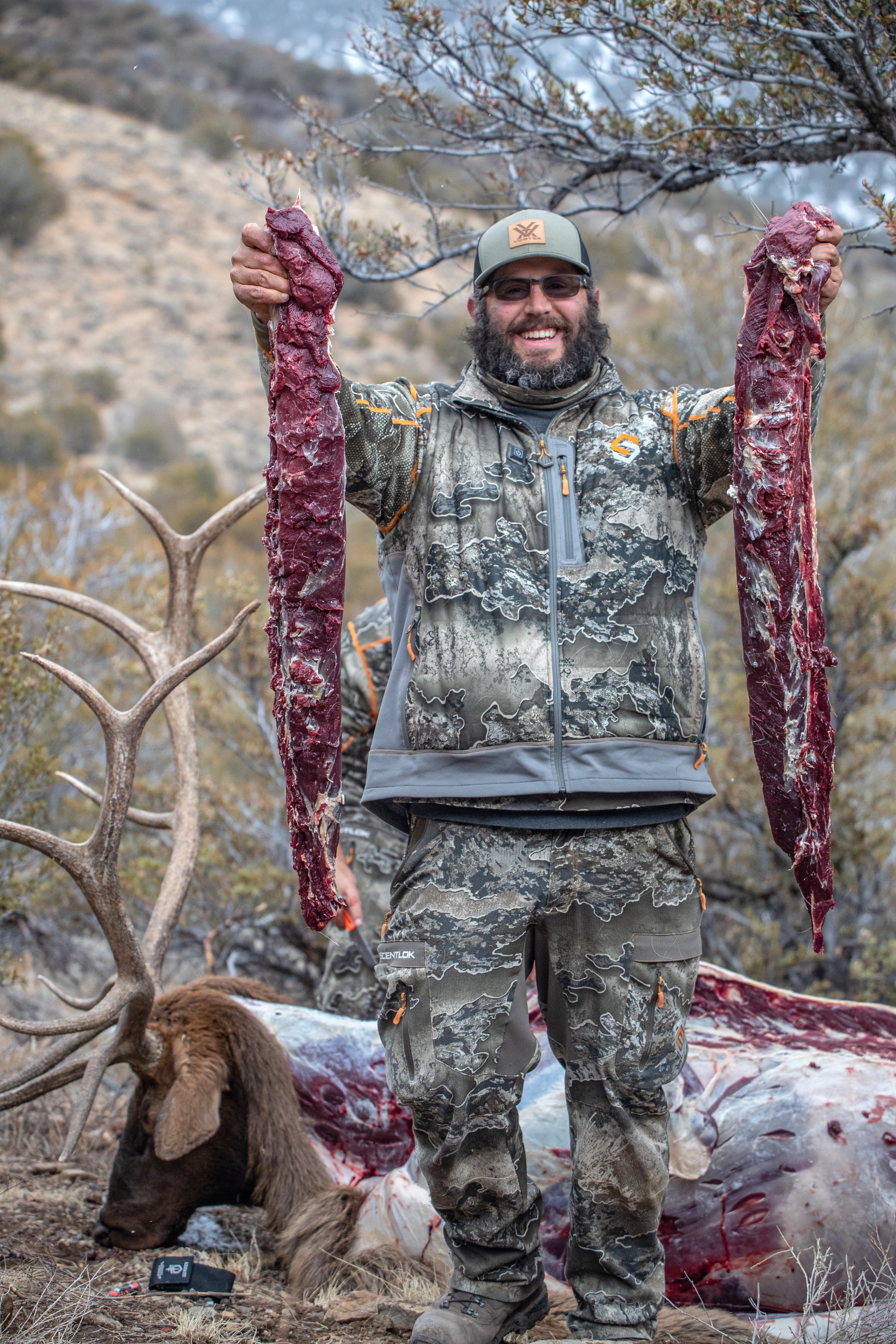
More power doesn’t hurt, but shot placement is the most important factor in bringing down a bull ek. Image by Realtree
In the old days, hunters were fond of heavier, slower bullets. The buffalo hunters of the late 19th century famously slung bullets in excess of 400 grains around 1,400 fps – and to much effect. Thirty-caliber bolt actions became popular after the .30-06 won us two World Wars, and Winchester’s dark horse .270 Winchester struggled to gain popularity. That is until the legendary gun writer Jack O’Connor became such a fan. He appreciated the .270’s fast, flat-shooting trajectory and its efficiency in flight. In his 1954 article, The Controversial .270, he wrote, “Because of this flat trajectory, high velocity, and mild recoil, the .270 is the easiest standard cartridge to make well-placed hits on game.” While the .270 Win is no longer the best at anything, it is certainly almost the best at everything. O’Connor’s words still ring true today. Popular bullet weights range from 130 to 150 grains, and elk hunters should opt for the heavier side of that with heavily constructed bullets, such as the 150-grain Nosler Accubond LR.
Don’t Miss: 100 YEARS OF HUNTING WITH THE .270 WINCHESTER
6.5 PRC
Recoil Energy: 16.27 ft-lbs
Pros: Provides outstanding long-range ballistics in a short-action case with minimal recoil
Cons: Small bullet diameter may not be legal for elk everywhere; expensive to shoot
The 6.5 PRC is the newest cartridge on this list and likely provides the best blend of long-range power with minimal recoil. Developed by Hornady in 2018, the secret lies in its shape; a short, fat case married with a long, heavy-for-caliber bullet. The 6.5 PRC is like a magnum version of the 6.5 Creedmoor, which we’ll talk about below. But it provides better ballistics — flatter shooting, higher velocity, and more long-range energy retention — than a .270 Winchester in a short-action case, and with less recoil than either it or the .308 in a comparably weighted rifle. Look to bullets in the 140-grain range, such as the 143-grain Hornady ELD-X chambered in Federal’s Premium rifle line and Hornady’s Precision Hunter line.
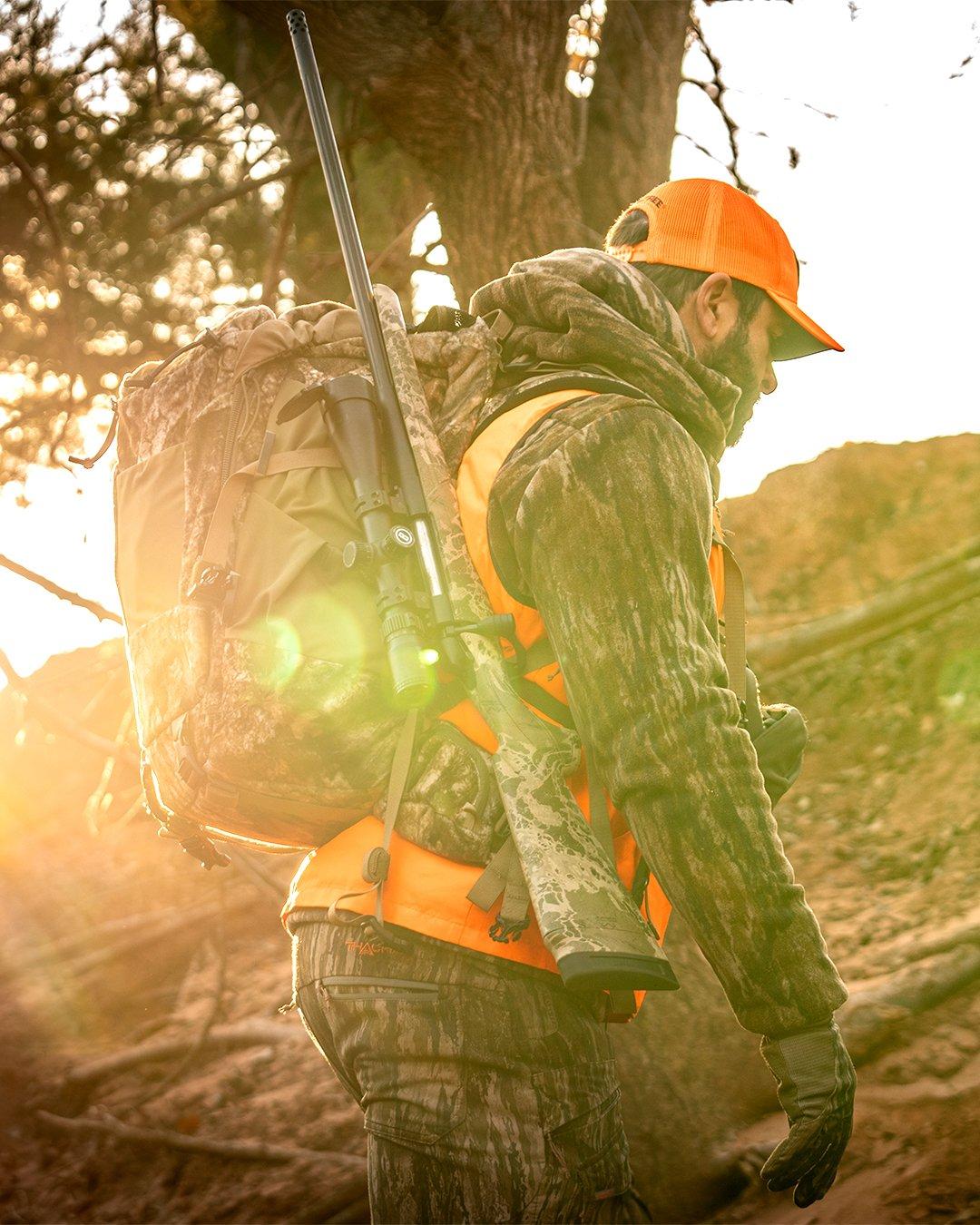
Lighter recoil means elk hunters can carry lighter weight rifles, an important consideration on tough mountain hunts. Image by Realtree
7mm-08 Remington
Recoil Energy: 14.88 ft-lbs
Pros: A classic short-action cartridge with a 7mm bullet and easy recoil
Cons: Limited factory ammo options that are appropriate for elk
The “O-Eight” is perhaps the most underrated cartridge on this list. In the 1980s, Remington developed the 7mm-08 to piggyback off its success with the 7mm Rem Mag. Its release gave hunters a lighter, short-action option for its popular 7mm bullets and their high ballistic coefficient. If you yank the bullet out of a 7mm Rem Mag and neck down the case of a .308 Winchester to fit it, then voila, you have a 7mm-08. It’s light recoiling and good on elk to 350 yards, making ‘08 the classic low-recoiling elk cartridge. One big downside for this cartridge is a lack of factory-loaded ammunition with bullets rugged enough for elk hunting, but Nosler’s 140-grain Accubond Trophy Grade, loaded both by Nosler and Federal Premium, is a notable exception.
Don’t Miss: HOW TO READ AND UNDERSTAND MOUNTAIN WIND
6.5 Creedmoor
Recoil Energy: 11.87 ft-lbs
Pros: Lightest recoil on the list makes this cartridge easy to shoot; ammo with good bullets is widely available
Cons: This cartridge is on the light side for elk, so disciplined shot placement at moderate range is required
Many would argue against the 6.5 Creedmoor’s efficacy on elk. The trouble is, lots of good hunters have already proven the argument wrong by downing one bull after another with the Creed. The 6.5 Creedmoor is the lightest-recoiling cartridge on this list, by far, kicking about 20% less than the 7mm-08, though it does give up some punch in return. But the 6.5 Creedmoor is one of the most popular hunting rifle cartridges available today, and as such is factory loaded with a variety of excellent big-game bullets including the 140-grain Nosler Partition, the 143-grain ELD-X, and the 142-grain AccuBond LR. Use one of those good bullets, keep shot distances reasonable and placement precise, and your bull will fall as dead from the Creed as it will from anything on the list.
Don’t Miss: 10 MISTAKES THAT’LL RUIN AN ELK HUNT
?fmt=auto&qlt=default&fmt.webp.qlt=65&fmt.png.qlt=73&fmt.jp2.qlt=35&fmt.jpeg.qlt=60)