5 Old-School Crappie Fishing Tactics
Posted 2026-04-15 by
These techniques have been used by generations of crappie anglers, and they still score as many slabs as ever
With anticipation in the air, the anglers made their final preparations before heading out. It was February, the height of “speck season” on Florida’s St. Johns River, and the first day of the region’s biggest crappie fishing tournament. Anglers from across the South had gathered for a shot at the prize money purse. Their large, shiny bass boats were forced to slow down when passing the aluminum rigs of locals, including Randall Storming and Bobbie Robinson. The duo was known to be meat-hunters, their metal boat carrying no electronics and only a few cane poles.
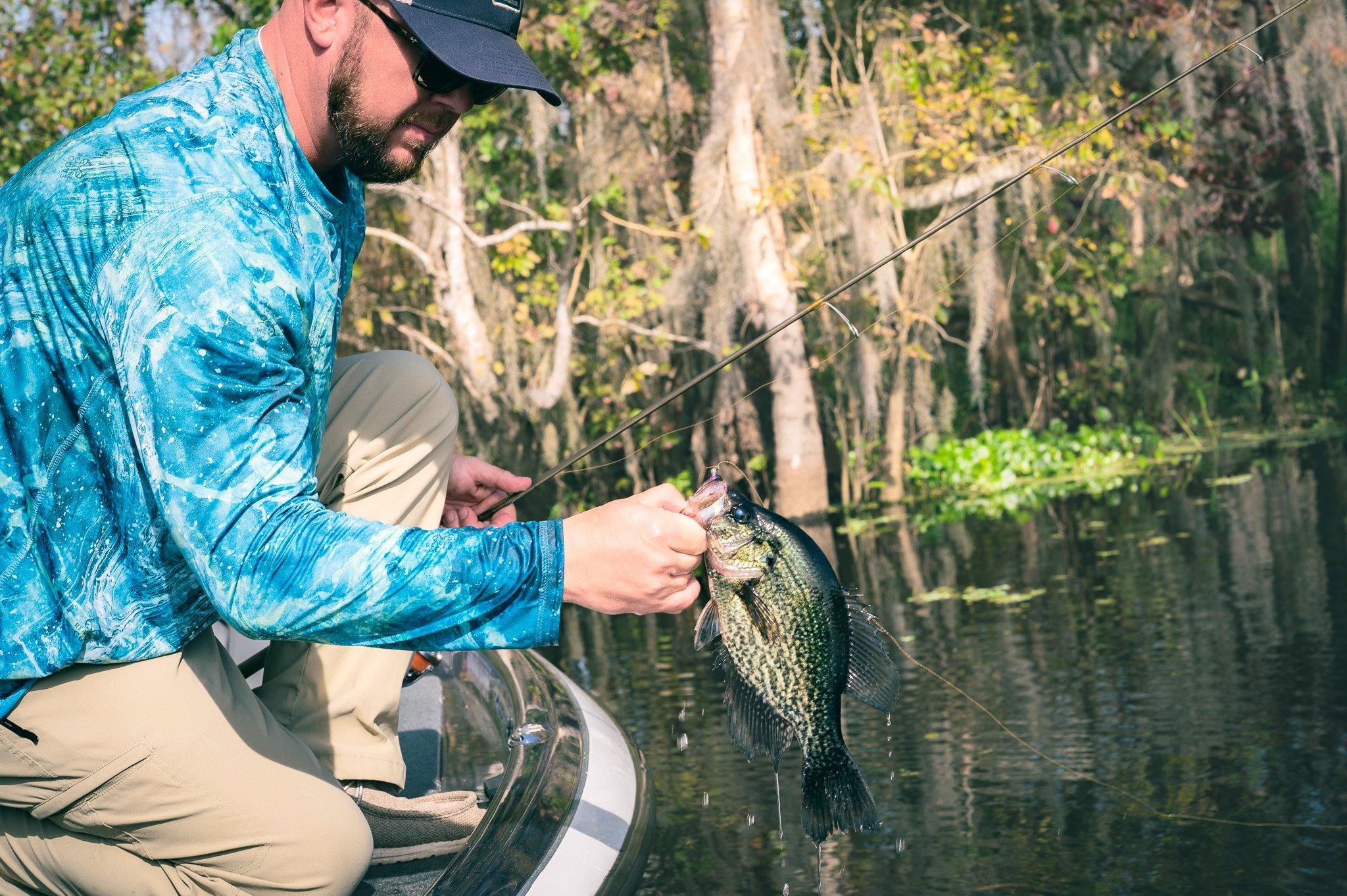
You don’t need fancy electronics and high tech boats to catch crappie. These old school tactics have worked for generations and will still put fish in the boat. Image by Joe Balog
As the rest of the field spent time endlessly scanning down, out to the side, and in front of their boats through every type of sonar imaginable, Bobby and Randall kept their eyes on the prize. While others fished as many as 12 rods simultaneously, the duo stuck to one pole each. And, at the end of the weekend, under seemingly impossible odds, the two veterans again took home the big money, beating the region’s best crappie anglers — and all of their technology — using refined tactics from an original playbook. The Florida locals saw it coming. When fishing for specks, sometimes you just can’t beat an old-school approach.
While modern technology and the newest methods may lead to big crappie catches, they’re not necessary to be successful. Under certain circumstances, in fact, keeping things simple will actually increase your bottom line. Consider these conditions and tactics to win the old-fashioned way.
Don’t Miss: THE BEST BASS BAITS FOR EVERY SEASON
LONG-POLING HEAVY COVER
We’ll start with the most basic, effective and efficient of the old-school methods. Here, a long rod or pole is used to place a bait in places that would be impossible to reach with other tactics.<span class="Apple-converted-space"> </span>
The origination of this concept, of course, is the cane pole. Ten feet of line is tied to the end of a 10-foot pole and a bait is dipped everywhere a crappie may hide. Anglers fish from a boat, the shoreline, or wade. The key is to quietly get close to the fish. Flooded willows and bushes are prime for this procedure. Lily pads and spatterdock fit the bill. Big flooded trees can be effectively “dipped” too.
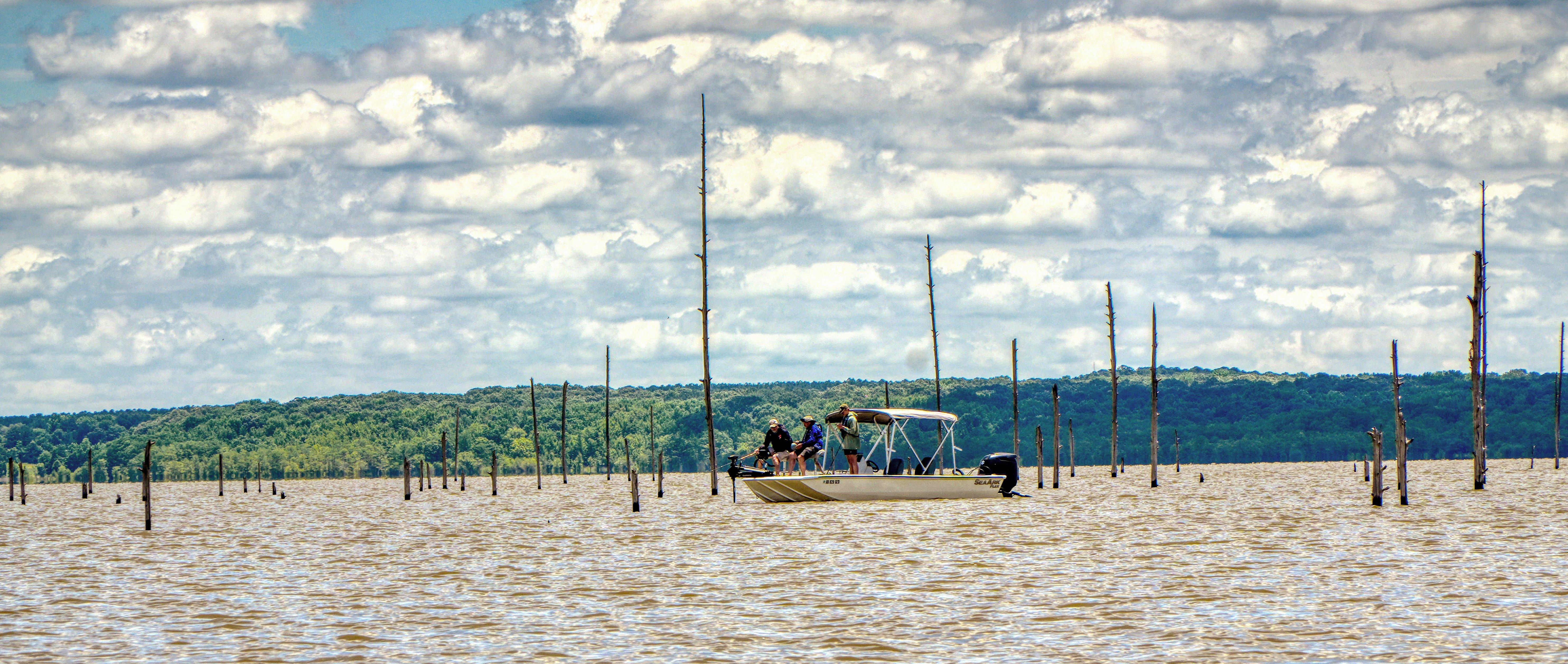
Long poling around heavy cover has probably produced as many crappie as most other methods combined. Image by Jason Sealock
Most often, cane-pole style angling is done with a length of fairly stout line (say, 10-pound test) tied to a 1/8-ounce jig. No live bait is necessary as the tactic is more about covering water than enticing picky fish.
In areas where thick, flooded vegetation like water lettuce, hyacinths or bulrush holds crappies, fishing straight down through the grass is key. This method is wildly similar to punching for largemouth, but with smaller tackle. Here, substitute mono for braided line and don’t be afraid of bright colors. Plastic tube jigs fish efficiently as do marabou and tinsel jigs.
One final consideration: straight-line poles (with fixed line) work well, but I prefer a rod with guides. This enables an angler to push out a snagged jig with the rod tip.
Don’t Miss: How to Crappie Fish Without a Depth Finder
SLIP-BOBBERS AND MINNOWS
In the frozen North, crappies can be caught as soon as the ice leaves the lake, providing you fork over a few bucks for bait. For years I watched live bait anglers clean house around boat docks while us jig fishermen caught a cold. Their secret lied entirely in the use of small shiners and fatheads under a slip bobber. The rig positioned the bait directly in front of lethargic fish in the 33-degree water and the wiggly minnow sealed the deal.
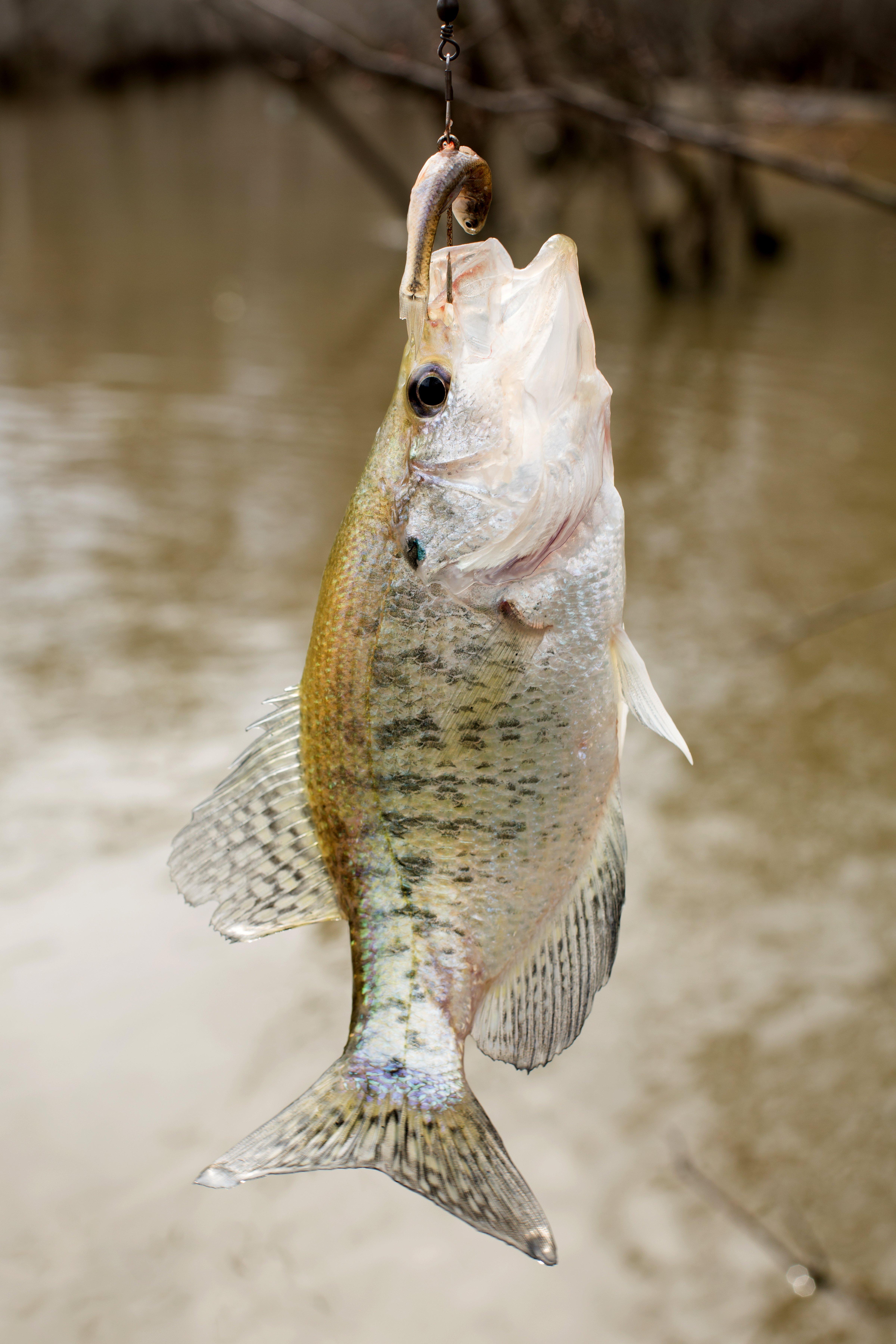
Live minnows under a slip cork might be the closest thing to a sure limit of crappie. Image by Jennifer White
Yes, you can catch crappies under these same conditions using artificial lures, just like ice fishing. But it requires that same ice fishing mentality: ultra-thin lines while holding a bait perfectly still from a fixed position. If, in order to reach the fish, you need to cast, nothing gets it done like live bait and a slip bobber.
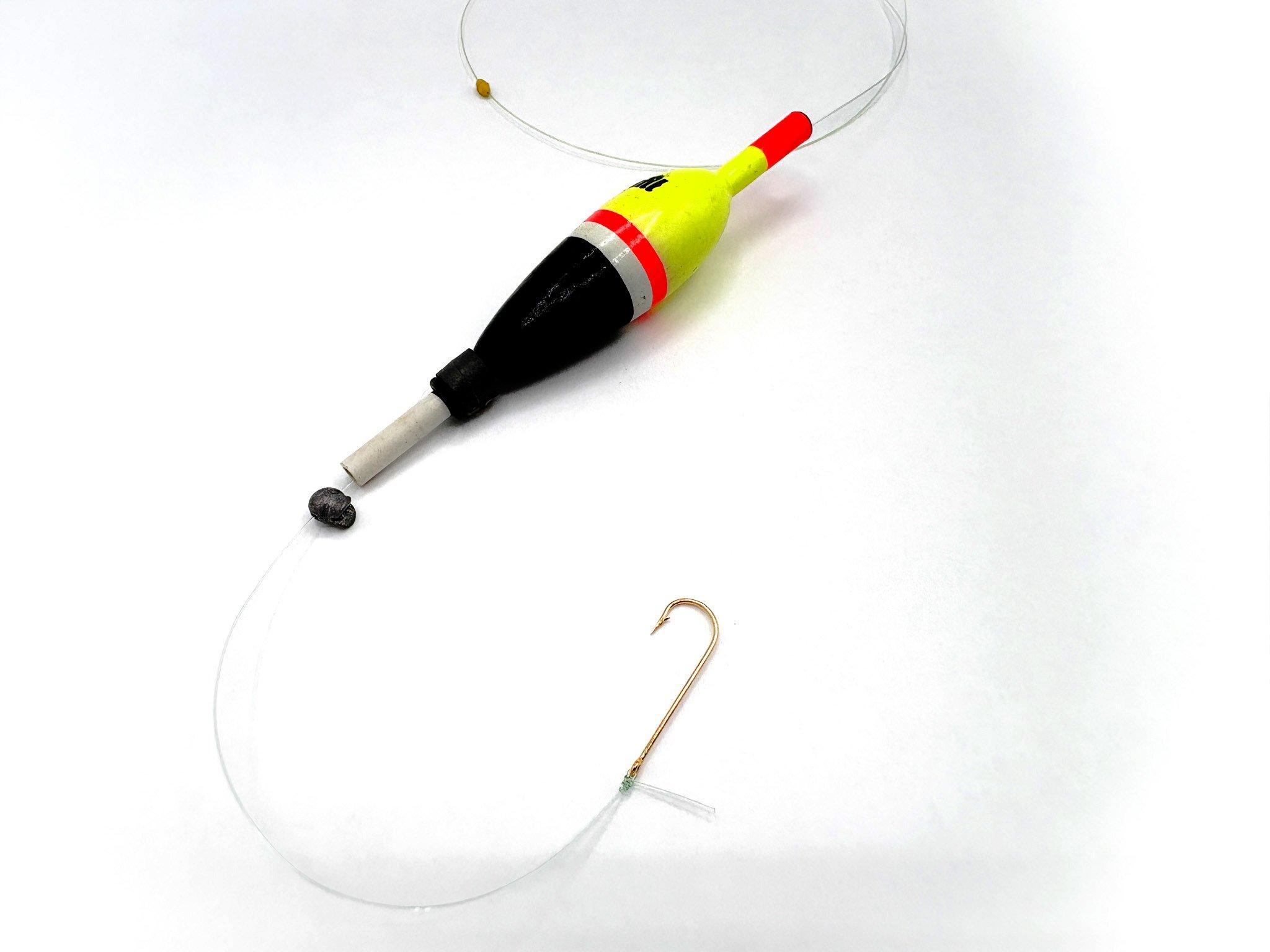
<span class="Apple-converted-space">Light line is the key to effective slip bobber fishing in clear water. Image by Joe Balog</span>
Stick with light line — 4-pound test — and a small, Aberdeen style hook. Resist the urge to impale the minnow on a jighead and instead choose split shots. Change your depth until you find the fish. Watch for subtle bites.<span class="Apple-converted-space"> </span>
LANTERNS IN THE MOONLIGHT
If you’ve never done this, it’s wild. Back in the days of the Greatest Generation, blue-collar workers would often take to the lake at night. Entire communities of anglers would fish in the darkness off causeways and bridges, waiting for springtime crappies to migrate past the hard structures. The soft glow of propane lanterns would draw in bait and the predators weren’t far behind.
As a youngster, I fished by lantern light with my grandfather and later dialed in the method as an adult. Most often, fish show up in waves late in the night. Total darkness always seems better than twilight periods and new moon phases were better than full.<span class="Apple-converted-space"> </span>
Lanterns can now be substituted with LEDs, but it takes away a bit of the mystique. There’s something about the drafty “breath” of a lantern as it burns. Regardless, live bait is best here, as you’ll be waiting for the fish to come to you. Keep a bait just a few feet below a float and choose a location where deep water runs in close to the bank. Riprap is always good, as are areas with lots of brushy, laydown trees. Fish substantially up off the bottom.
Don’t Miss: How to Crappie Fish from the Bank
THE JIG AND CORK COMBO
You’re sure to notice old timers fishing with a long pole holding a fixed piece of line, minuscule float and a jig. It’s easy to dismiss this style of fishing as a means for relaxation rather than results. They’re just out there taking it all in, right?
Probably not. Fixed-float fishing is incredibly effective for crappies because it allows an angler to cover water quickly and efficiently while presenting a subtle, finesse presentation. Crappies are real suckers for baits that hover in front of their noses. By using a small, fixed cork, the jigs stay in the strike zone, convincing lookers to take a bite.
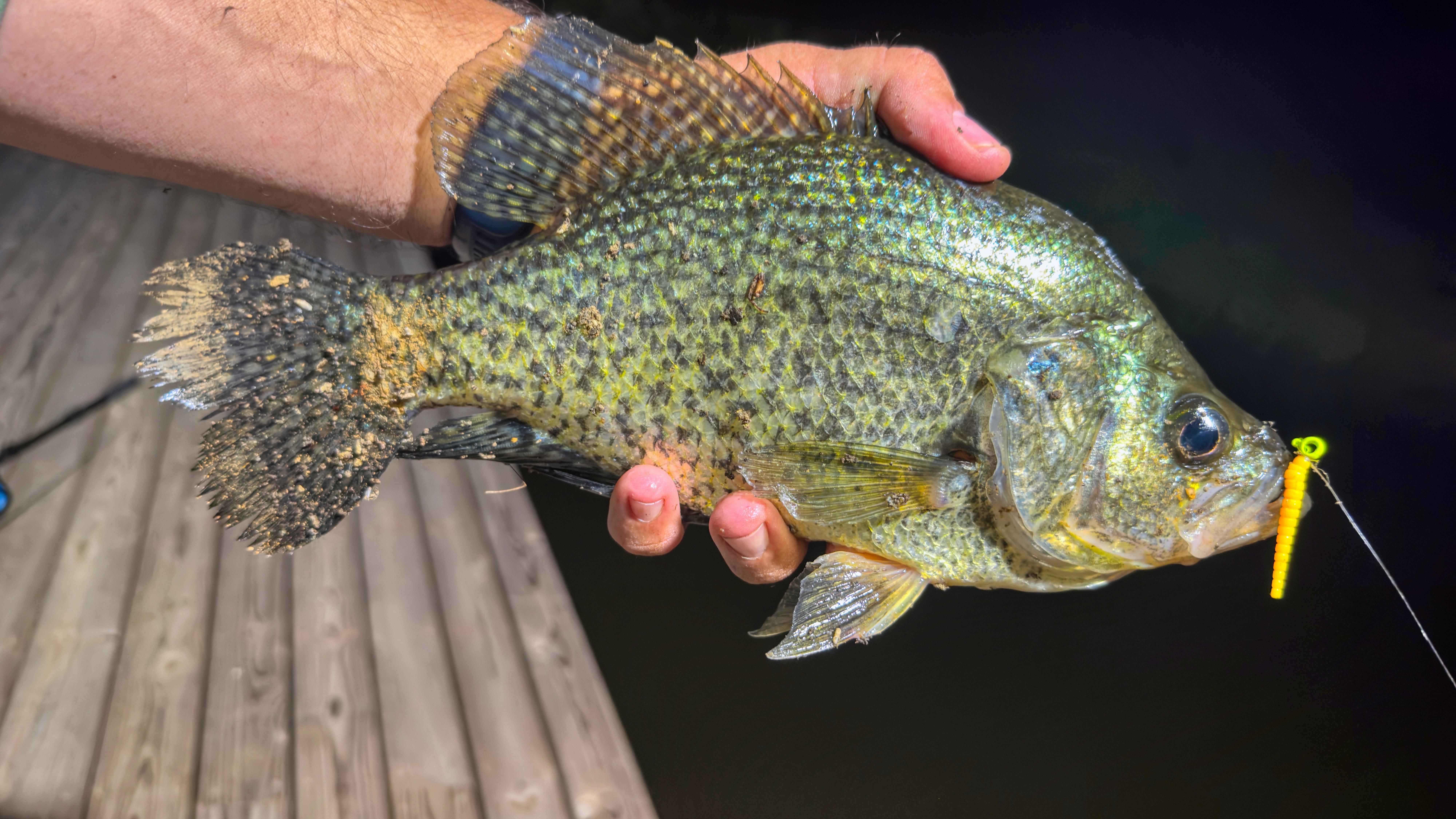
Crappie love a bait that hovers in place, and a jig suspended under a cork is the perfect answer for that feeding pattern. Image by Jason Sealock
This method, of course, is only efficient in shallow water. The best bite occurs when crappies push into shoreline cover for the spring spawn. Then, groups of fish spread out into brush, boat docks, stumps and weeds where the cork-and-jig shines.
A long rod is helpful here, but not so long that you can’t perform an underhand swing-cast. Avoid fixed-line poles, and instead stick to a setup with a small reel for this purpose. You’ll reach more targets.
The shape of the cork may play a role, too, especially if you’re fishing areas with lots of small minnows. In warmer climes, mosquito fish inhabit freshwater systems and hang out around shallow targets. A flat-faced cork allows anglers to “pop” their rig, creating a disturbance mimicking one of these little fish getting eaten. It’s a dynamite turn-on for shallow specks.
CASTING TWISTER TAILS
Not many anglers blind-cast for crappie. But it’s an overlooked, incredible method for catching suspended fish or those holding around mid-depth targets.
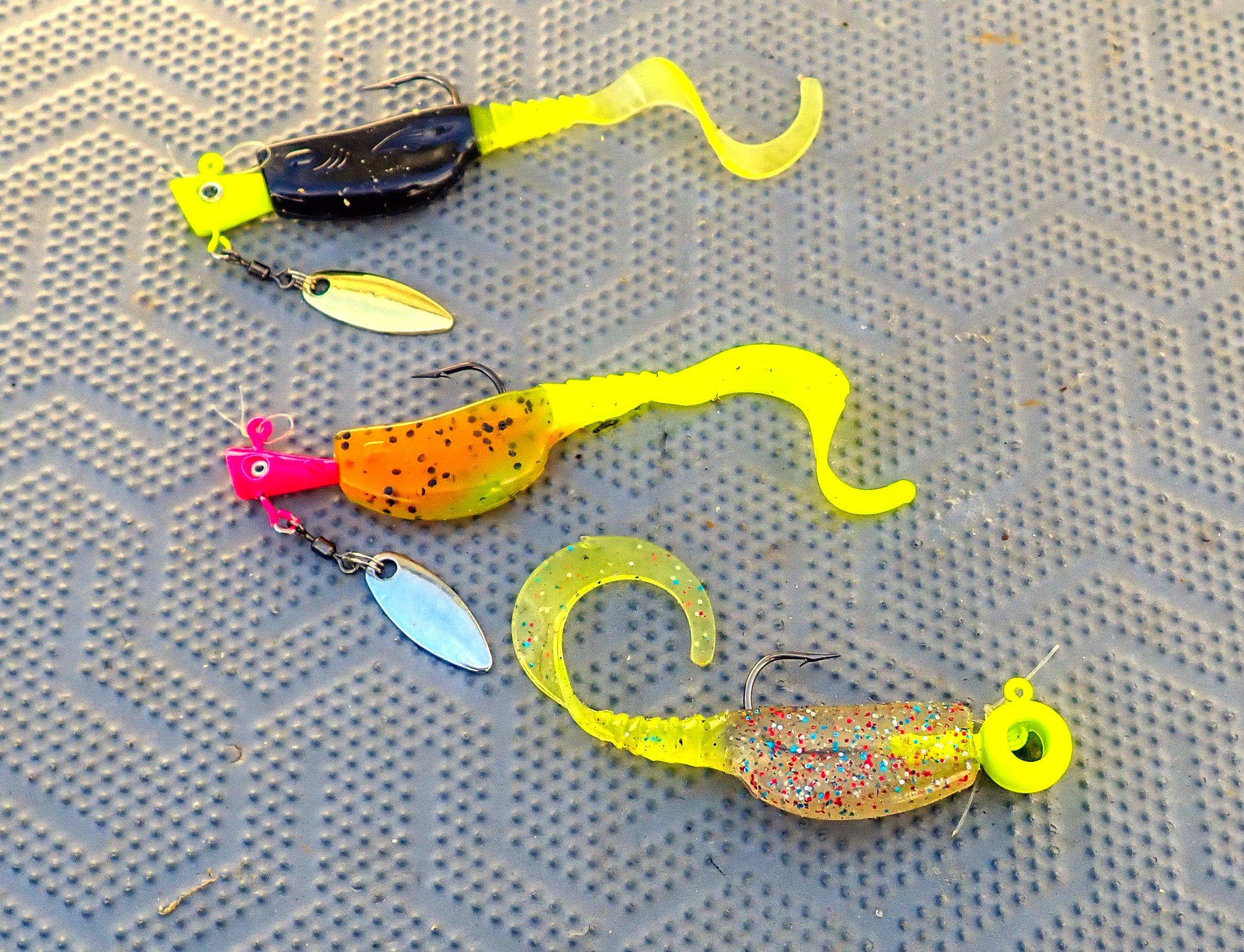
Don’t overlook casting and retrieving a curly tail jig for suspended fish. Image by Jason Sealock
Casting around boat docks takes center stage. The key is to pick a lure that can be effectively cast and allowed to pendulum on the sink. Most times, a 1/16- or 1/8-ounce jig with a twister tail or small swimbait fits the bills. Pick light monofilament and a spongy 6- to 7-foot rod. Be sure to thread your plastic on straight for the best action.
Casting around targets takes some feel. Most often, the best method involves getting your bait in tight with an underhand roll cast — maybe even skipping the lure — then clicking over the bail and allowing the bait to purposely sink on controlled slack. Yes, this will cause the lure to sink slightly toward you, rather than straight down, but that’s an action crappies seem to love. They’ll hit on the sink, every time. Pump the lure up, swim it a little, and allow it to sink back down. The key lies in getting the bait in and around possible snags, but not within the cover.
Besides docks, laydown trees and brush are great targets. Deep weedbeds can be productive too, especially cabbage up north. And don’t forget bridge abutments. There, allow your slack line to lay right against the concrete and watch it closely as the jig sinks.
Modern crappie fishing incorporates space-age tackle with rocket-ship technology, often resulting in legendary catches. But it’s not the only way to be successful on the water. If you prefer relying on natural skill over sonar, don’t forget the methods that, for generations, have put crappies in the cooler. They’re as effective as ever.<span class="Apple-converted-space"> </span>
Don’t Miss: THE 5 RULES OF SPRING CRAPPIE FISHING