
Bass Fishing After Dark!
Posted 2025-08-13 by
The night bite is often the best one for big summer bass, and the fundamentals are simplified. You need heavy tackle, dark lures, and maybe a little caffeine
Some trophy bass hunters enjoy bucking the system. They’re not concerned with notoriety or social media attention, and they do most of their fishing under the cover of darkness. Often, their catches are of the sort that daylight anglers could only dream about. Nighttime fishing results can’t be that much better, can they?
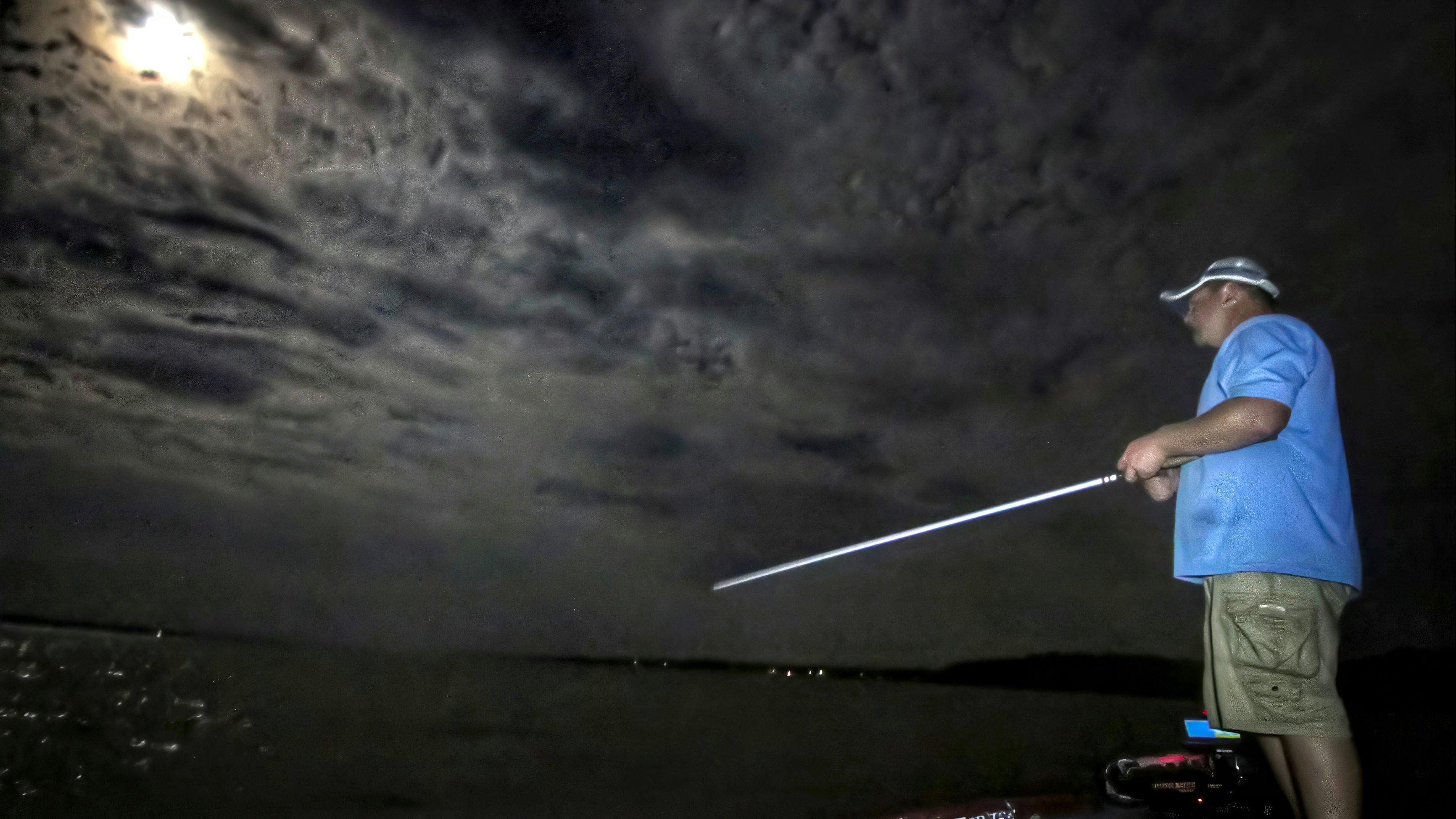
Want to catch big summertime bass without the hassle of a crowded lake? Try fishing the night shift. Image by Jason Sealock
Maybe. I’ve researched the subject, dabbled in it occasionally, and have interviewed numerous night anglers through the years. Their stories are eye opening. So let’s take a look at the details behind the pursuit. Maybe you’ll come away well-equipped and ready to give nighttime bassin’ a shot. You might end up with your own stories that are hard to believe.
HOW BASS SEE AT NIGHT
It’s believed that a bass’s vision is similar to a human’s, in that they can focus on objects at varying distances and perceive color differences. Some fish — like those of the deep oceans — lack effective color vision but excel in the dark. Others see broad spectrums of colors but lose much of their vision effectiveness in low-light conditions.
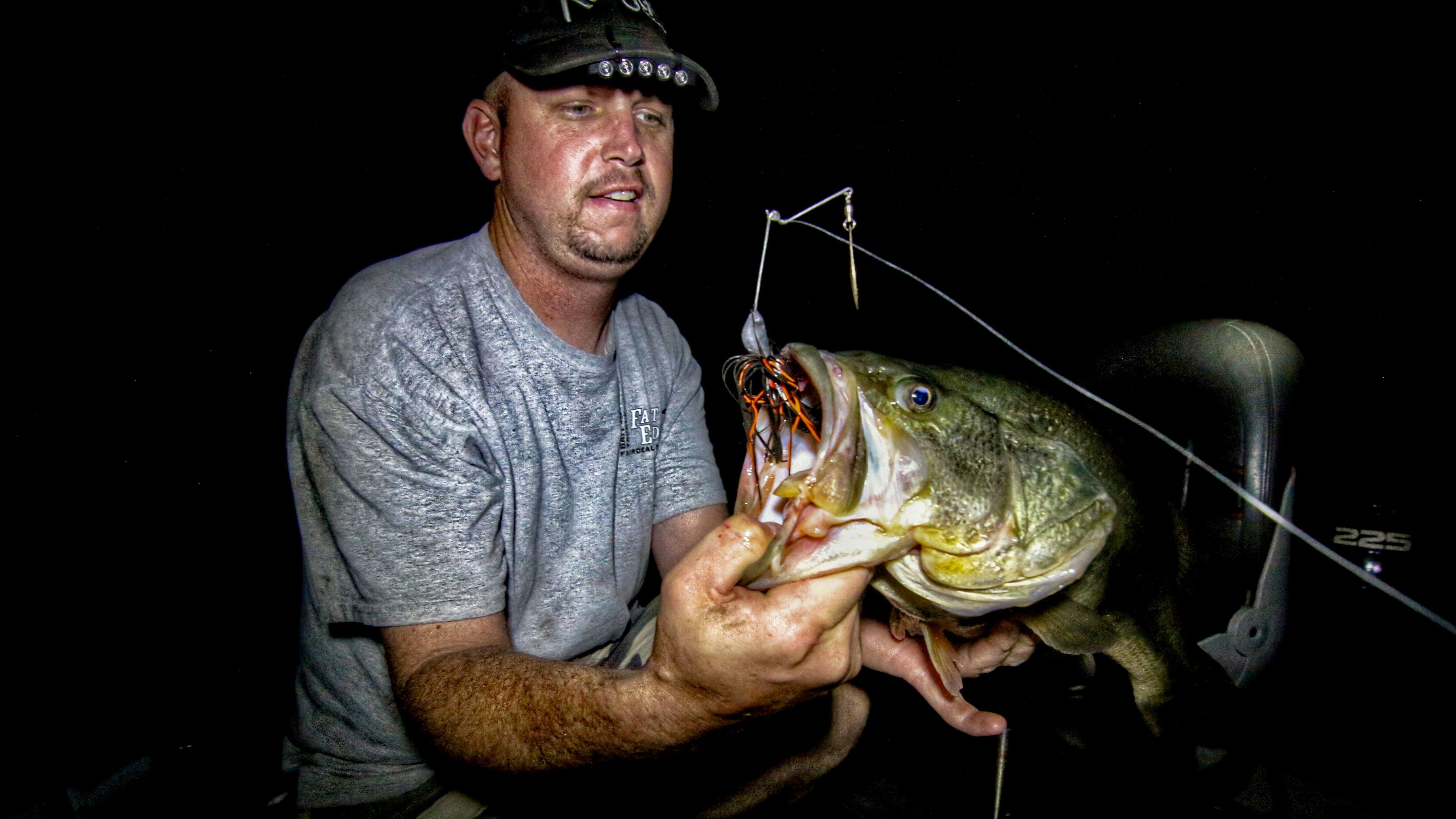
A bass’s night vision allows it to effectively hunt minnows and other bait in low light conditions. Image by Jason Sealock
A bass falls somewhere in the middle. They’re efficient daytime feeders in varying light and water colors, but also capable predators under darkness. Studies on the eye and brain function of largemouth bass are limited compared to other species, such as bluegills. But, based on our findings of eye structure, we can assume that bass hold an upper hand over minnows and other baitfish during periods of low light. This would explain the periods of high activity — and fishing success — we all have experienced around dusk and dawn. It’s predator getting one over on prey.
In terms of light sensitivity, bass in clear water can hunt as efficiently under moonlight as they can during the day. Studies show nearly a 100% prey-capture rate in these circumstances. Efficiency goes down for the bass on moonless nights or, of course, in dirty water.
Don’t Miss: THE BEST DAYS TO DEER HUNT IN 2025
Regardless, much of a bass’s ability to locate prey is from the prey’s movement. Fish track movement a number of ways, through both their ears and lateral lines, and bass are capable of homing in on a moving object in complete darkness.
So, knowing all of that, many lures simply become silhouettes to a bass after dark. Color disappears, as do details like the eye on a jig or dangling hooks.
WHY THE NIGHT BITE IS SO GOOD IN SUMMER
Summer afternoons bring action to our water-bodies. Jet skis, boaters, and anglers are all out there enjoying the season. But all of that activity often results in reduced feeding opportunities for bass.
Nighttime is a different story. Throughout much of the country, it’s rare to see another angler, or even another boat, when fishing in the dark. Sure, activity exists in the Deep South where nighttime bassers know the playbook, but even there, the pressure is minuscule and non-existent after midnight.
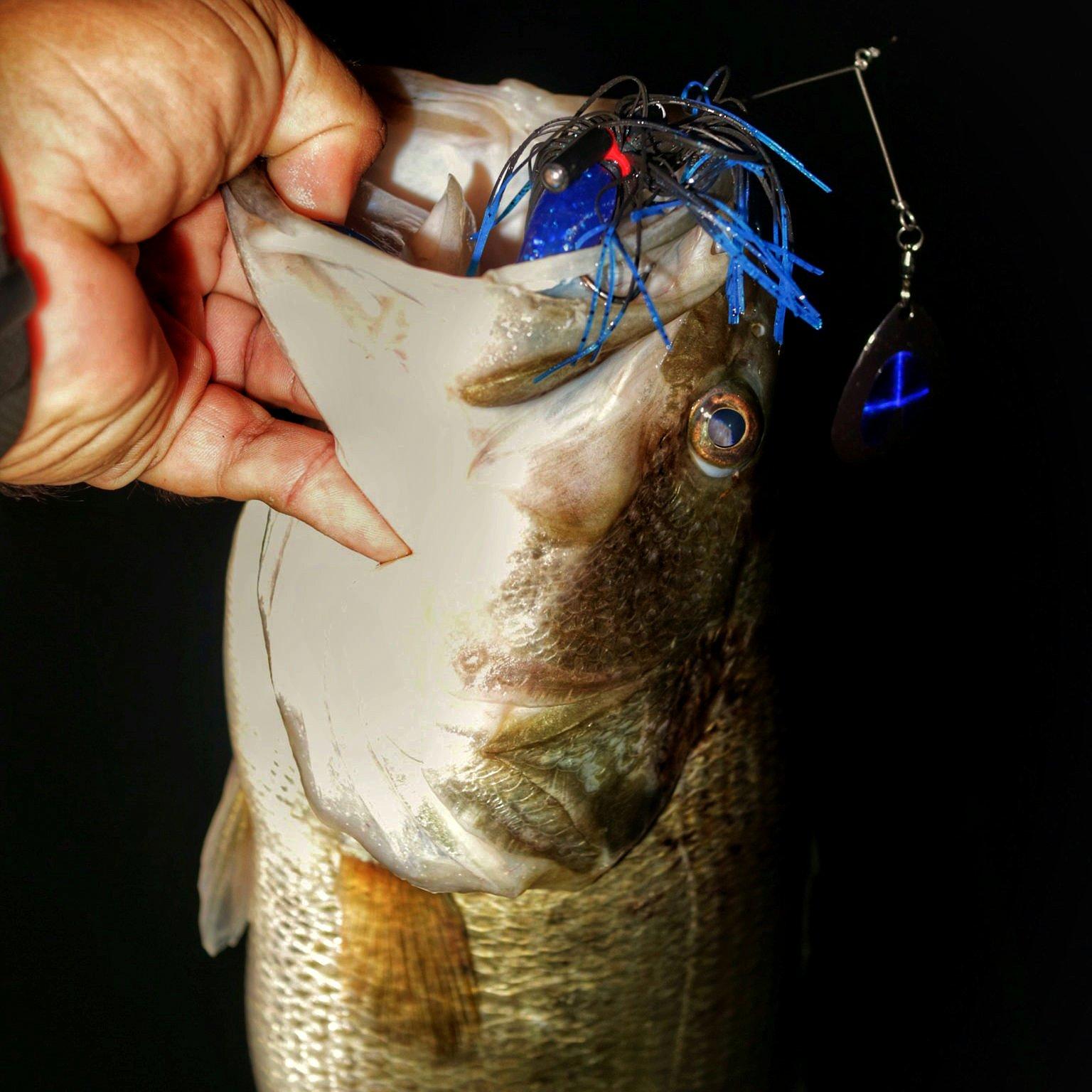
Low light bass fishing usually means little to no pressure on the fish. Image by Jason Sealock
What we’re dealing with, then, is drastically reduced fishing pressure. Bass are more comfortable in their surroundings, have better opportunities to feed due to their genetic advantages over many baitfish, and aren’t being harassed by outboards. So, they go about their business. In fact, it’s reasonable to assume that bass feed almost exclusively by night in many lakes during summer.
AT NIGHT, START SHALLOW
Bass seem to make a noticeable migration to shallow water under darkness. Truth is, these fish were likely there all along. Beneath your boat dock, or the massive floater at the state park, a big bass is lurking. Good luck catching her during the day. Nighttime is another story.
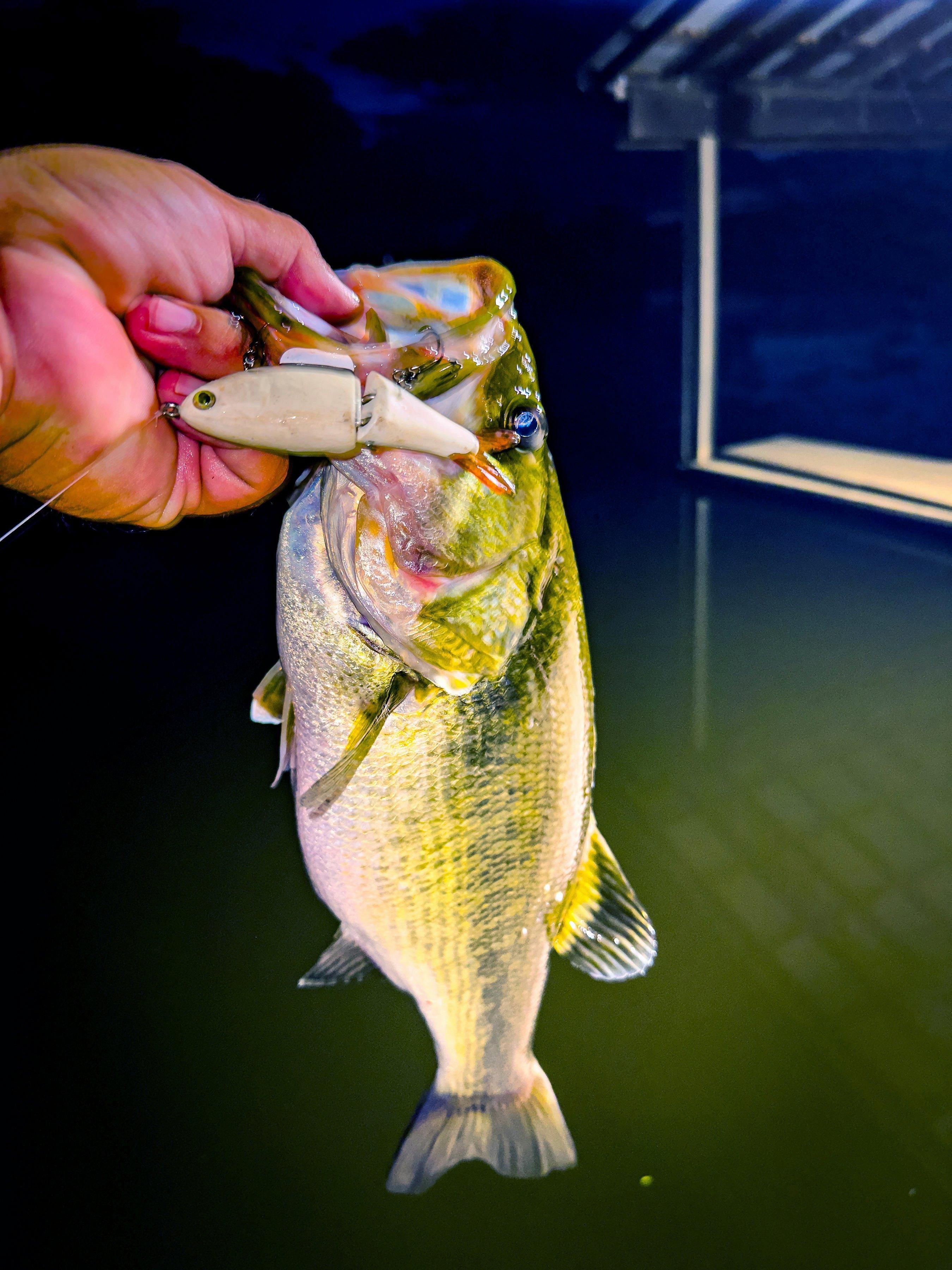
Start shallow near boat docks, bridges, weed lines and other structure. Image by Jason Sealock
Shallow bass, especially big ones, definitely feed after dark and so we should start our hunt near their holding areas. Shady boat docks, as we mentioned, hold big bass all summer. Same with dense weedbeds, whether that be matted out hydrilla or a bay full of lilies. Bridges can be dynamite. Steep, main lake points, moored boats, undercut banks and blowdowns; all house big bass that sleep away the day and crush baits at night. Don’t get caught up in the open-water roamers or the deep fish on the ledges. Go shallow, it will work.
WHAT ABOUT LIGHTS?
When researching night fishing for bass, you’ll inevitably come across an expert who points out artificial light sources as potential honey holes. I will not lead you in that direction. In all of my nighttime forays, from sneaking onto golf courses as a kid to present day, I’ve never found a “well-lit hotspot” or seen lights make a difference. Redfish and sea trout? Heck yes, that’s a thing! But not for bass, at least not in my experience. In fact, the best fishing is often in the darkest areas.
NO, THOSE LIGHTS!
Boat lights? Sure, if you want. Many nighttime bassers utilize black-lights, as they’re effective and reduce “night blinding.” Others use a flashlight with a red lens. Most night-time diehards, however, go at it in the dark, illuminating only their boat’s navigation lights — as required by law — and maybe a quick flashlight for tying on lures. After a while, you’ll see surprisingly well at night without the use of artificial light, making casting easier.
THE BEST LURES FOR NIGHT-FISHING
Night fishing equipment and lure selection should be kept simple, and for good reason. As we mentioned earlier, the details don’t matter. The vibration and profile of your lures do. Large lures should be a mainstay, as we’re after large bass and big baits are easy for the fish to locate. For that reason, stout baitcast outfits work best.
Load fairly heavy line: 17 pound-test is a good starting point. It will reduce the possibility of backlash, needs re-tying less than lighter lines and will handle a big bass. In no instance do I use braided line when nighttime bass fishing; it’s a recipe for disaster. In fact, old-school mono is often best.
Don’t Miss: WHAT’S UP WITH PIEBALD CATFISH IN THE TENNESSEE RIVER?
A quick tip: spool your reels to 3/4 full, max. This also drastically cuts down on backlashing in the dark. You won’t be making long casts anyway. A quality 7-foot, medium-heavy power rod should work well. I carry two identical outfits to cut down on confusion and minimize boat clutter.
Nighttime lunker bass lures can be divided into four groups: bottom bumpers, spinnerbaits, topwater plugs, and buzzbaits. Sure, other lures work. Rat-L-Traps can score big, as can swimbaits. But I prefer to rule out any treble-hooked lures unless absolutely necessary. And monster glide-baits are too difficult to cast and need a set of eyes to keep from blowing up a reel.
Bottom baits include worms and jigs. Each should be large to XL, and black. There’s no place for color here. Keep jig trailers bulky, like creature baits or large craws. For worms, action-tails can work, but big, straight worms or paddle-tails do better. Keep sinkers light to avoid tangling in weeds. It’s unnecessary to penetrate cover because the bass won’t be deep within. Use large hooks; the fish won’t be scrutinizing your bait.
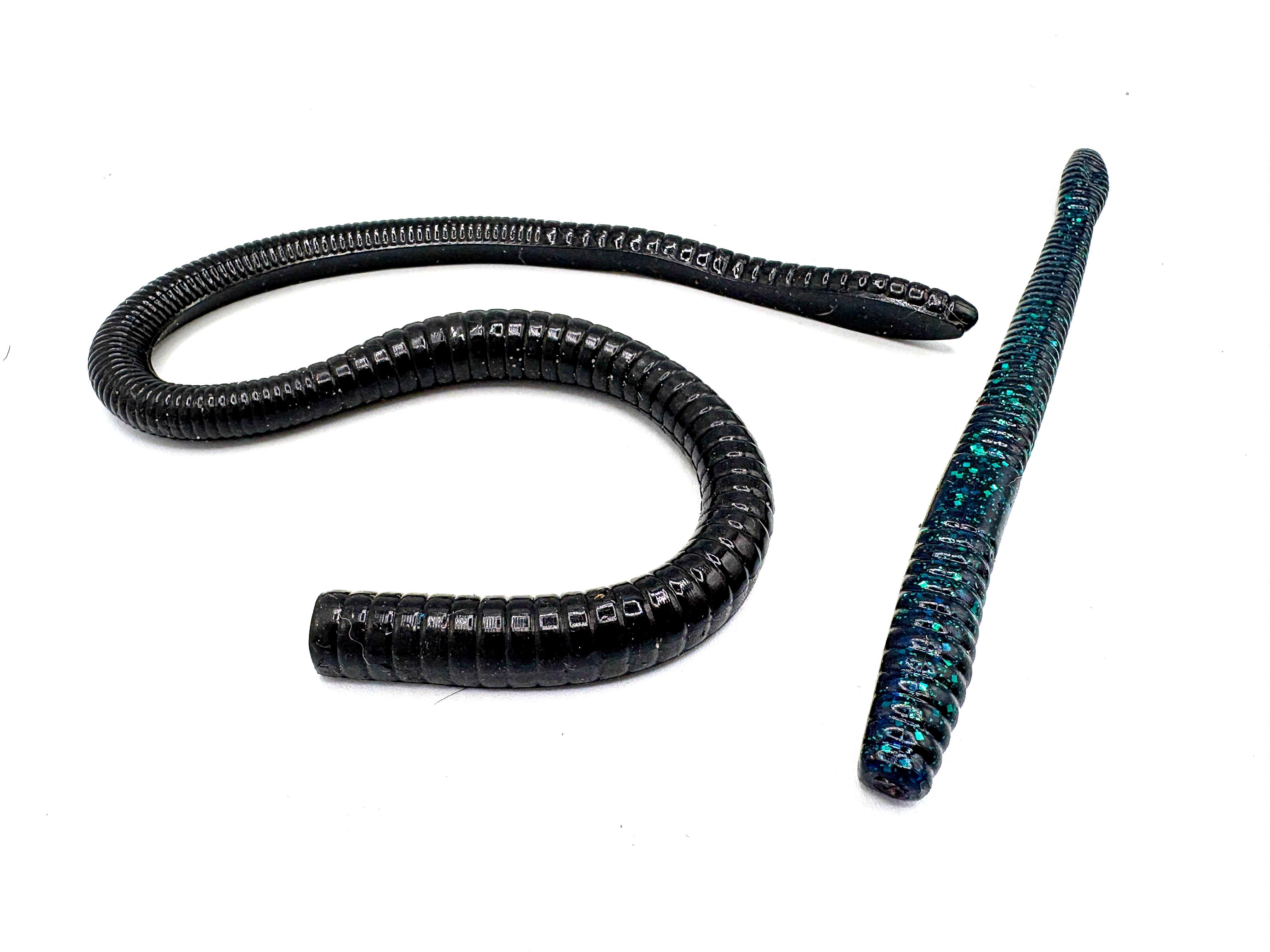
Black worms and jigs work best after dark. Image by Joe Balog
Black spinnerbaits are dynamite. Large Colorado or Indiana blades thump best. Stick to heavy lures that support a large trailer and won’t roll. Tip with a bulky grub or section of plastic worm. Vary retrieves from high in the water column to slow rolling near the bottom. Strikes are jarring. If you must sub in a Chatterbait, go ahead, but a spinnerbait will catch more monsters year after year.
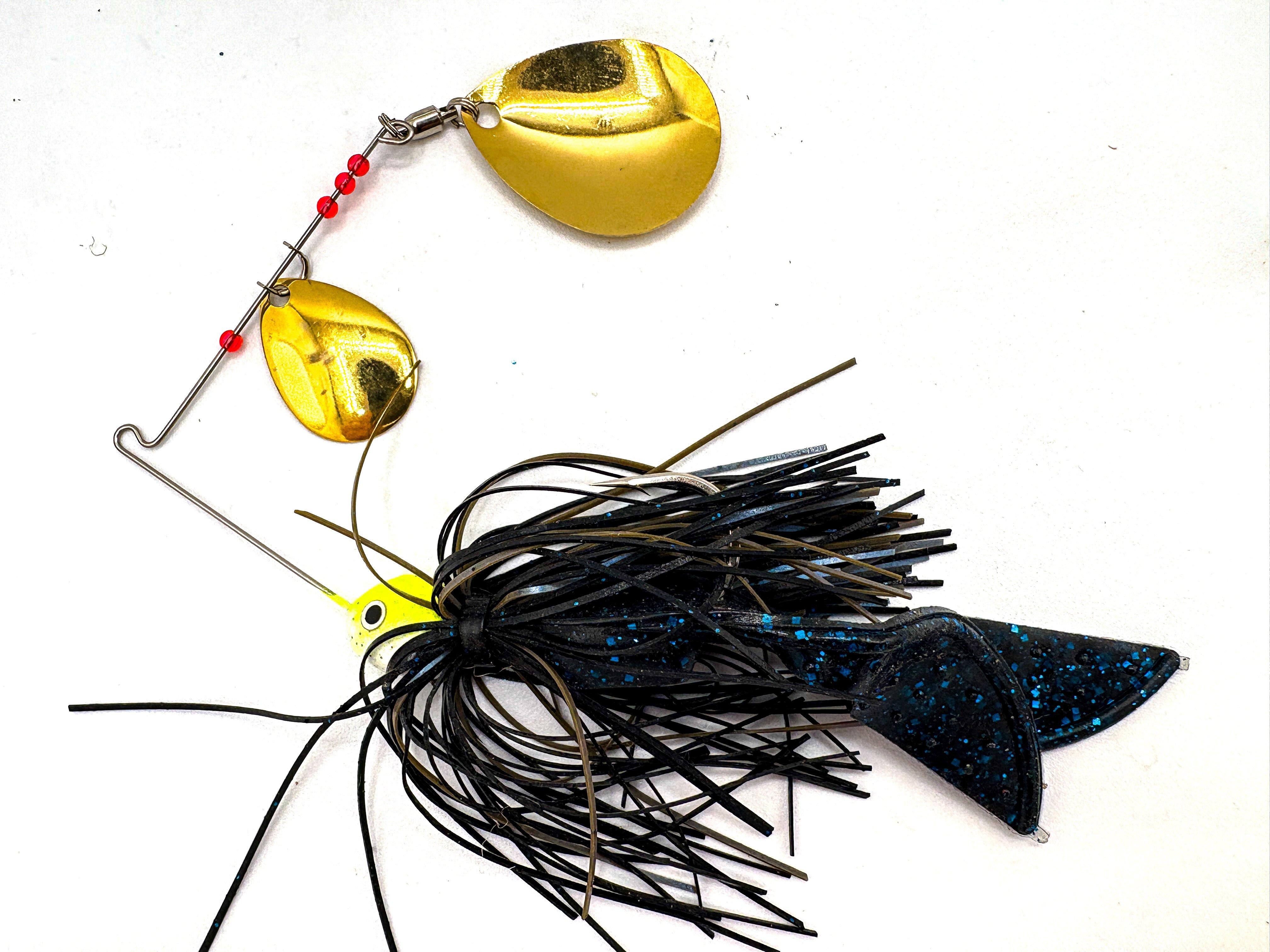
Black spinnerbaits with large Colorado or Indiana blades can be extremely effective night baits. Image by Joe Balog
Topwaters come in many shapes and sizes, but nighttime big bass fishing has a cult favorite: the Musky Jitterbug. Introduced in 1941, this ounce-and-a-half plug casts a mile and holds up to abuse. The plop-plop-plop sound produced on a standard retrieve will all but lull you sleep when, suddenly, an explosive strike from a giant bass nearly stops your heart. The Musky Jitterbug is addictive and amazing.
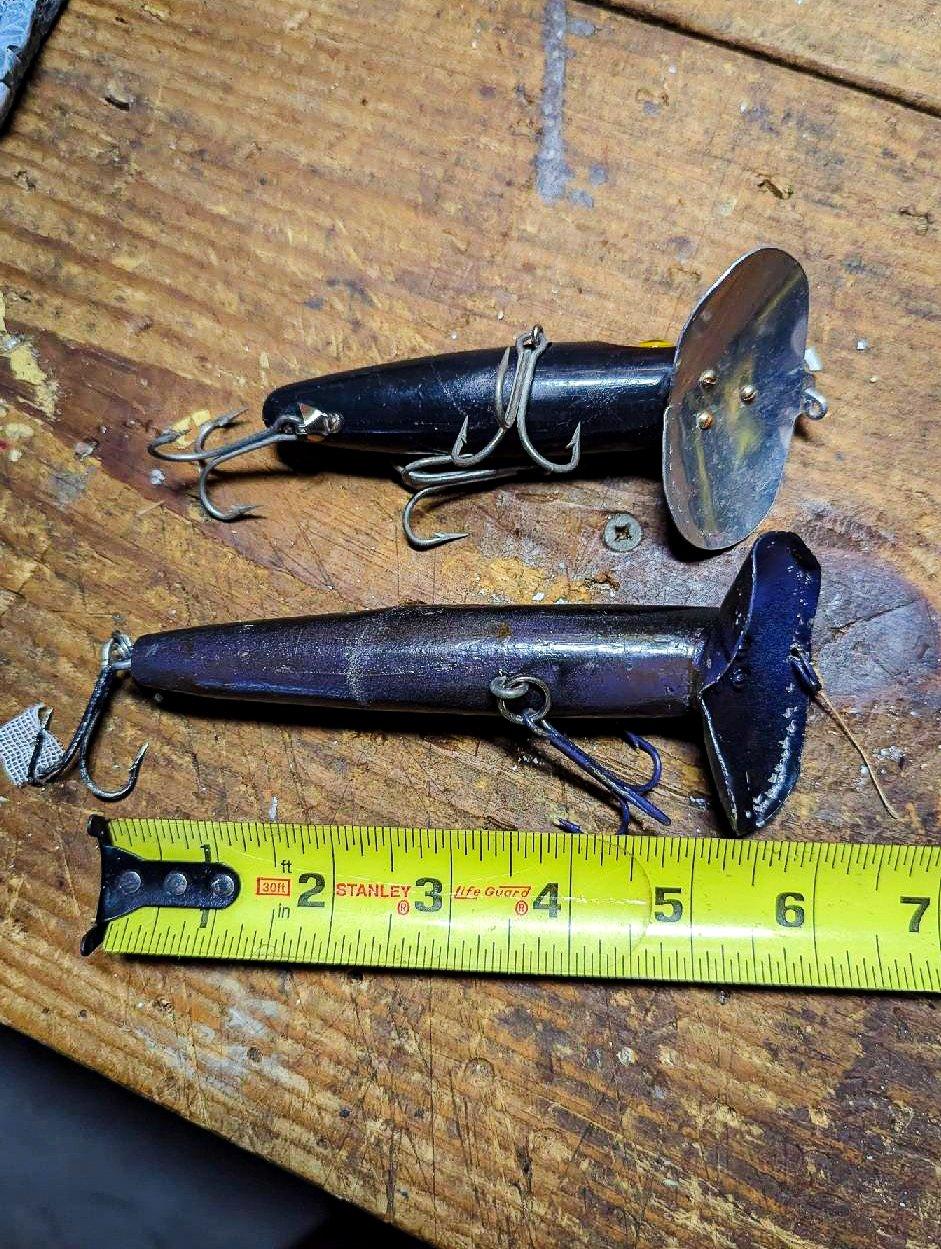
Big topwater baits like musky-sized jitterbugs are favorites among night time bass anglers. Image by Joe Balog
The lure is still available, though today’s versions are made of plastic (originals were wood) and are slightly lighter than the old baits. A few enterprising anglers have made their own to more closely match the inaugural version.
Buzzbaits are a category all their own, as nothing matches them in terms of noise or effectiveness when things are right. Picking a good buzz bait is about like picking a watermelon. You do your best based on experience and a few signs known only to you. Then, eventually, you just try it.
When a buzzbait bite is on, you’ll know right away. Fish will swirl and miss, hit and get, or just seem to be extraordinarily interested in the lure. That’s when you keep throwing, as a big girl is sure to show herself. Again, use all black lures. Don’t worry too much about trailers, but do use a trailer hook if the cover allows. Lob-casting the buzzbait will prevent any overrun issues. Alternate between clackers and squealers; one will quickly become a favorite for the night. When you get a strike, simply keep reeling, as if you’re setting a circle hook.
Buzzbaits have likely landed more giant bass than any other lure at night. In Florida, nothing beats the Jitterbug. On golf courses, stealth is key; spinnerbaits can be reeled up quick when running from security (we’re kidding, don’t trespass). And a worm always works.
You’ll find your best lures but, more importantly, you’ll experience some of your best fishing of the summer. All to yourself; no more jet skis or stereos blasting at the sandbar. Nature returns and giant bass are on the prowl.
Get it while the getting’s good.
Don’t Miss: HOW TO EFFECTIVELY FISH BOAT MARINAS