Find a Fall Crappie Bonanza in Falling Water
Posted 2025-09-24 by
Many reservoirs are lowered to winter pool in the fall, just as shad are moving into the shallows. The pattern can create some of the year’s easiest and best crappie fishing

Some of the season’s best crappie fishing happens in the fall, when many reservoirs are lowered to winter pool. (Photo by Jason Sealock)
Some of the country’s best crappie fishing happens on flood-control reservoirs, many of which are located along the Tennessee and Cumberland River systems throughout the Southeast. Most of those lakes are lowered to “winter pool” beginning in the late summer and early fall, and they stay that way all winter in anticipation of flooding rains that often occur in the spring.
Water levels can drop 5 feet or more on many reservoirs, resulting in a dramatic change to the fishery at a time of year when the weather is often going through dramatic changes of its own. Shallow shoreline cover and many boat docks are suddenly left high and dry, and fish such as crappies are forced out of their summertime haunts and into new territories.
But make no mistake, they don’t go hungry. In some cases, reservoirs that are drawn down concentrate fish and lead to bountiful catches. Other times, it becomes a hunt for crappies that seem to have vanished. Either way, falling water levels in the fall definitely shake things up. Here’s how to adapt.
FOLLOW THE FLOW
Crappies are predatory fish that capitalize on a diverse diet. They consume more items than most freshwater fish, from micro-sized invertebrates to full-grown threadfin shad. Those shad provide the primary forage base on most southern reservoirs, and the crappies definitely take note. To find slabs, you’ll need to first find the shad.
Don’t Miss: How to Effectively Fish Boat Marinas
In autumn, waters are cooling and, in our case, dropping. Both initially lead to shad gathering in large schools and moving out, away from shallow water. That’s one of the hard, fast rules of reservoir fishing: dropping water moves fish out. But it isn’t a case where every crappie vacates its favorite brush pile and swim into the abyss. Instead, falling water simply positions fish out toward the perimeter of their chosen habitat.
In the case of brushy cover, we’ll need to begin to look deeper, and more along the edges. Brush that’s along deep channel edges, or fallen trees on channel banks, will hold more crappies than brush that it’s in the back of a shallow cove. The same goes for boat docks. The deeper docks, and the outside perimeters, will usually be best.
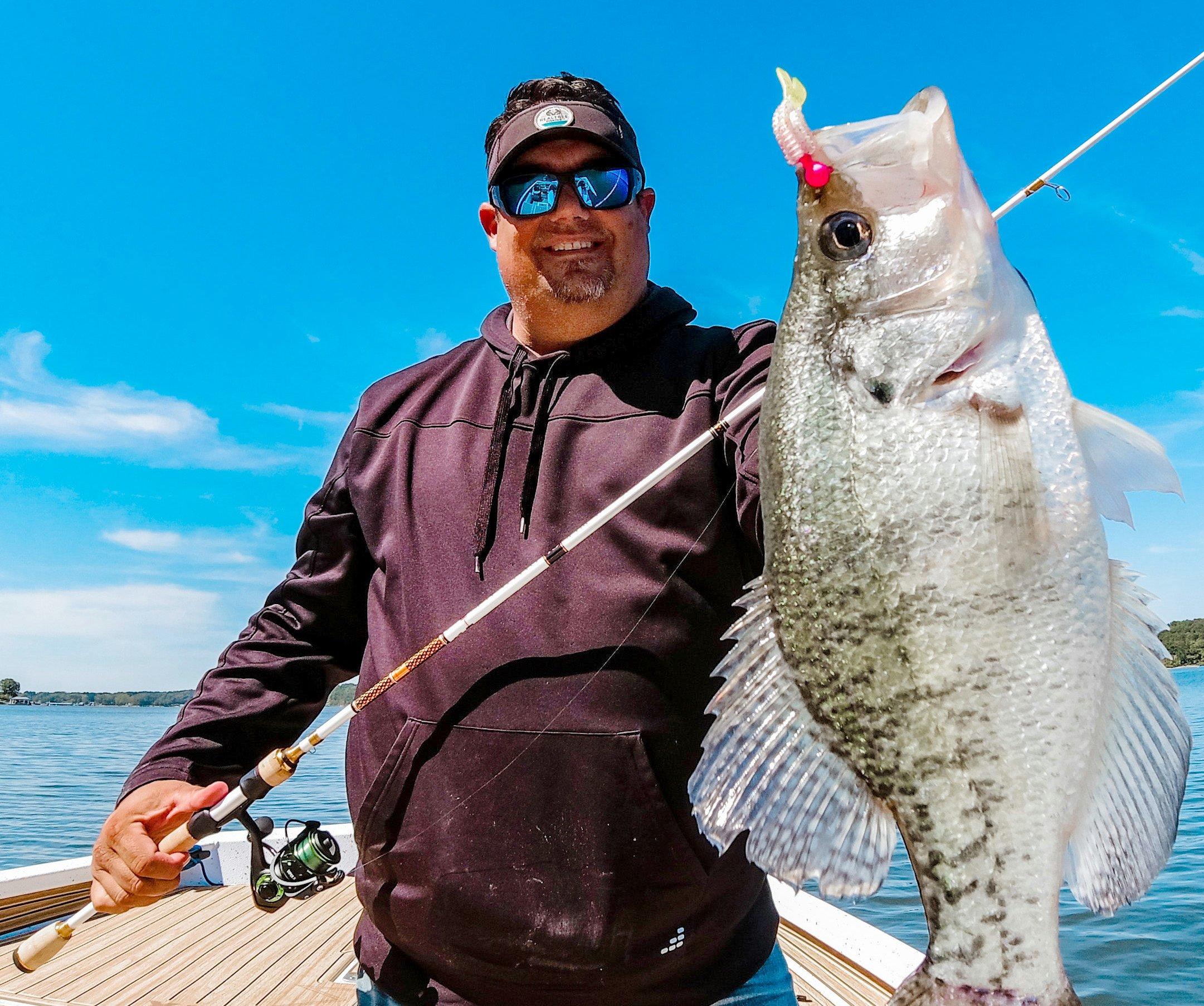
To find more crappie during the fall, you need to locate the shad, which can often be found in deeper cover on channel banks near the mouths of coves and the deepest docks. (Photo by Jason Sealock)
This is just the beginning of the fall transition, but it’s important to follow the flow. As reservoirs drop, move to the outsides of the places where you connected with crappies throughout the summer, and you’ll likely find them bunched up and ready to bite.
One more thing about shad: they’re greatly affected by wind because wind moves free-floating plankton, the shad’s primary food source. When looking for open-water schools, always check areas where a moderate breeze is blowing in or has blown the previous few days. Especially early during this fall transition, shad will often concentrate in places where the wind blows against deeper banks or through neck-down areas. Crappies will follow suit.
So, our search has been narrowed down to deeper cover on channel banks, near the mouths of coves and the deepest docks. We’re actively looking for baitfish on sonar, and fishing the perimeters of areas where crappies concentrate throughout the summer. The best fishing methods will match those deep, open-water characteristics, making small swimbaits, grubs, twisters, and maybe crankbaits effective. It’s important to get a bait to the fish, so a 1/8-ounce head will be used more than a 1/32. Crappies will be feeding, especially during low light periods. Forward-facing sonar can be a deadly addition to your arsenal, as it allows anglers to definitively target fish with little downtime in vacant areas. As the water drops and crappies pull into the channels themselves, potentially suspending, follow them out and fish vertically. They’ll still bite.
FALLING FALL WATER
Waters continue to recede through fall, terminating at winter pool. Here, we’ve officially entered the draw-down phase. Most shoreline cover is left high and dry. Deep brush that was once productive now sits laughably shallow. The hunt for crappies will have to begin again, but the rules are the same. Find the bait, find the fish.
Don’t Miss: The Best 5 States for Bass Fishing
Here, we’ll need to consider migrations. While all fish, baitfish included, began the draw-down period by grouping up and moving deeper, the seasonal cycle will dominate their behavior, especially after falling reservoirs stabilize at winter pool. As days get much shorter and waters rapidly cool, threadfin shad are focused on survival. With a home range that barely extends into the freeze-belt, these delicate baitfish need to stay out of the chilliest waters to make it through. In addition, their food source is entirely temperature dependent. When things get too cold, plankton cease to exist or migrate, leaving shad with nothing to eat.
For these reasons, threadfin shad and other baitfish become nature’s temperature probe, always moving toward waters with the greatest buffer against the cold or those that have the ability to warm fast. They’ll move to the upper portion of the water column, just under the surface, waiting for the sun’s rays to warm the waters and trigger a light plankton buffet.'
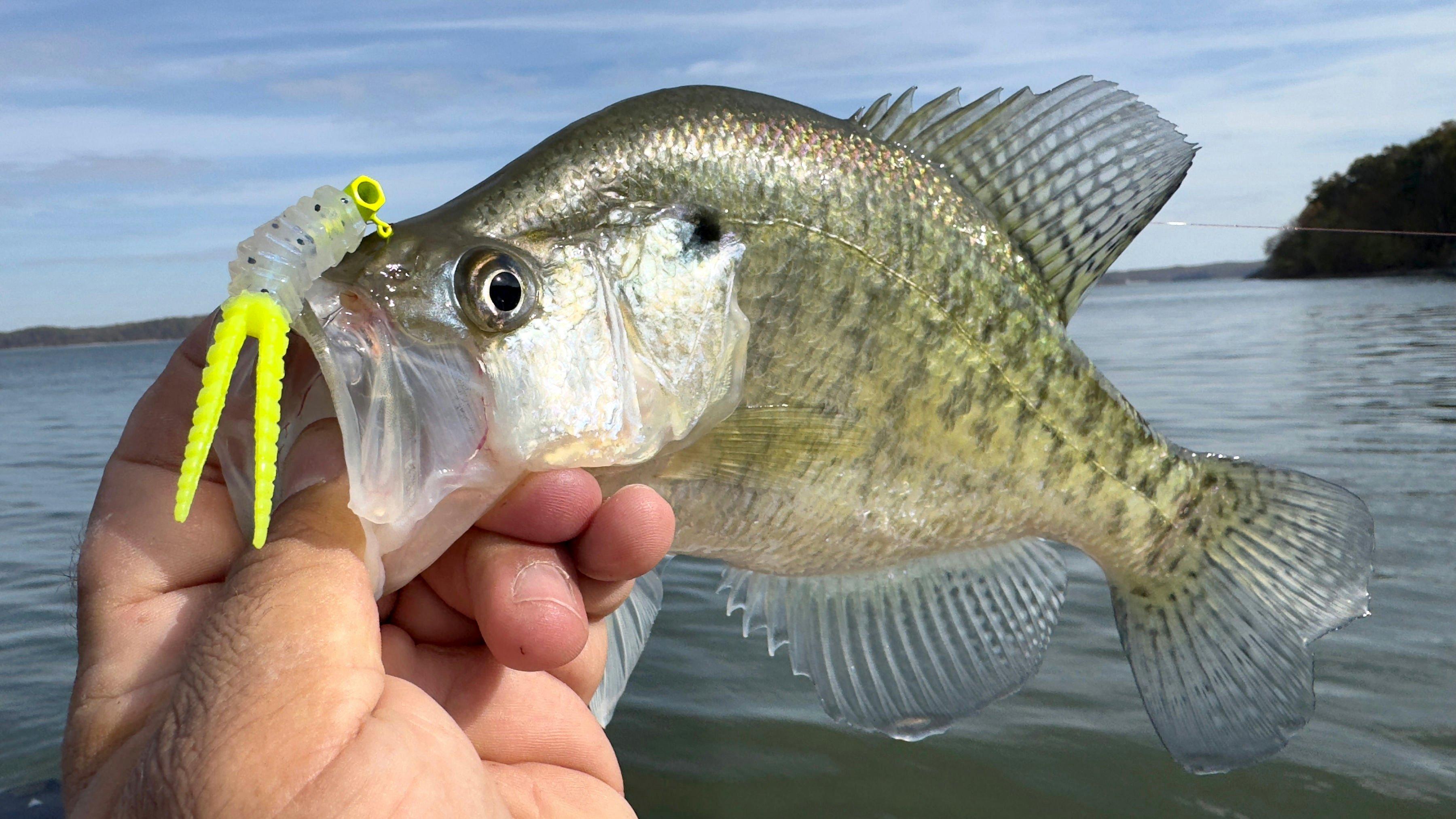
As the weather cools, casting grubs to schools of open-water fish seen on sonar becomes productive. (Photo by Jason Sealock)
You won’t see baitfish in the morning as the nighttime cool-down pushes them deeper but, once the sun warms the surface waters, shad begin flipping and moving into the shallows. This phenomenon often results in massive shad schools cruising through water just inches deep, often in the backs of major coves and creeks. Everything that eats a shad follows those schools, from bass to stripers, crappies to catfish.
While bass will get in the skinniest water available, crappies stay out a bit, setting up shop on subtle structural features. Kentucky Lake panfish ace Jason Sealock said, “Creek channel features with brush are key. Little high spots along the channel with cover like brush or stake beds are where (crappies) group up.” Sealock also explained that black crappies in particular gather into massive schools this time of year. “November is my favorite time to crappie fish,” he said. “Schools may be a hundred fish or more and there’s very little fishing pressure.”
Like many modern crappie pros, Sealock fishes a paddletail swimmer, casting to schools of fish he sees on sonar. His favorites are Crappie Magnet Tiny Dancers and the Mr. Crappie Slabalicious. Both are fished on a 1/16-ounce head and light spinning rod.
The key — once again — is finding baitfish. They’ll be hovering over depressions and dips in channels in the mid-sections of creeks. Activity will increase as the day proceeds. Sunny days with a light breeze are best. Simply watch for nice conditions during the very best time of year.
If you can wrestle yourself out of a tree stand, maybe on a warm, sunny day, the autumn period is a spectacular time to crappie fish. Drawdown conditions make the search easier and can result in giant congregations of fish. Have fun catching them, keep what you need for a few meals, and let the rest do their thing. You’ll see them again next spring.
?fmt=auto&qlt=default&fmt.webp.qlt=65&fmt.png.qlt=73&fmt.jp2.qlt=35&fmt.jpeg.qlt=60)