On Patrol with an Alabama Game Warden
Posted 2026-02-27 by
From catching all-night poachers to the case of the “Popsicle Deer,” a wildlife officer shares past stories and shows us what it’s like to be a conservation officer in the field
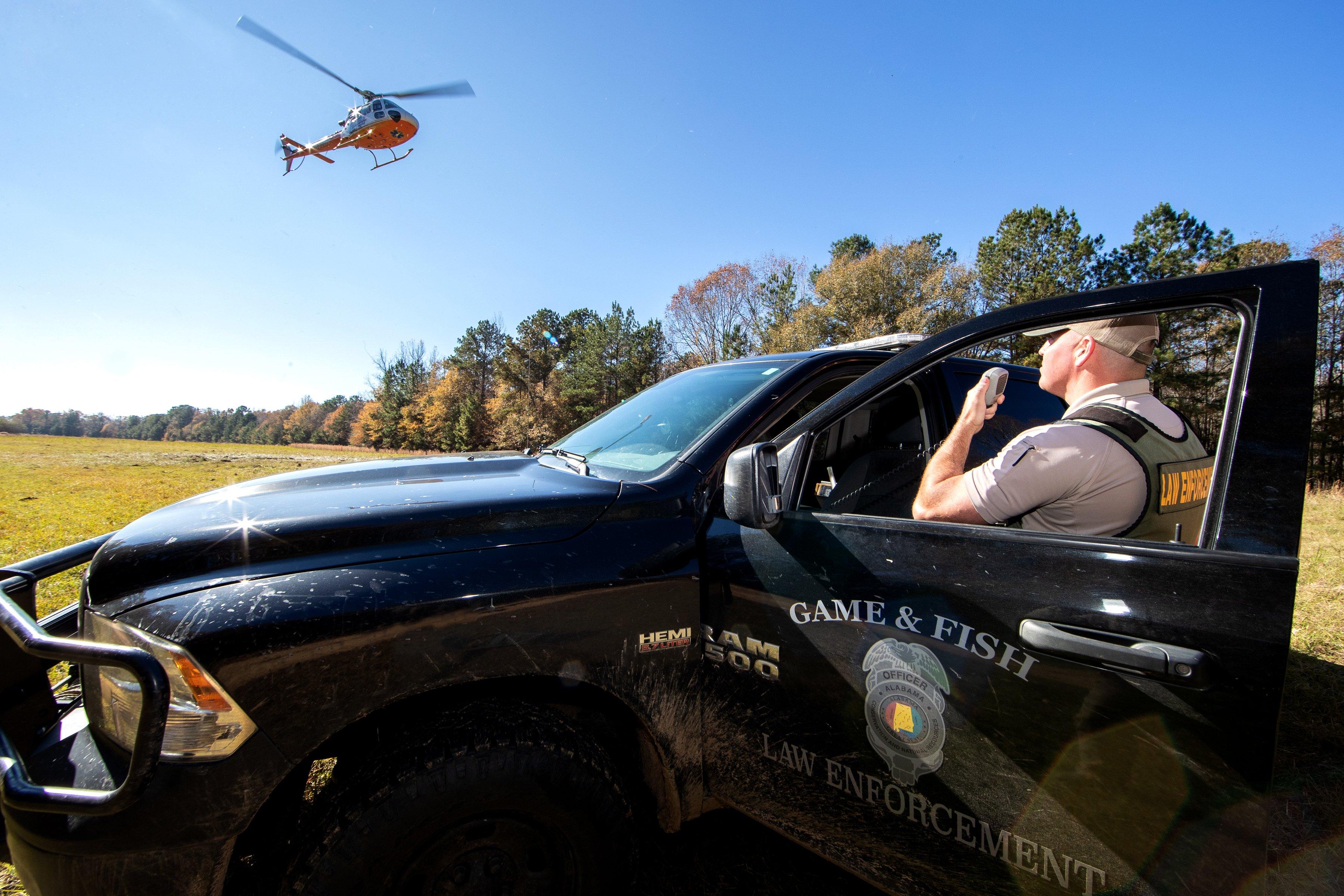
Alabama’s game wardens work hard to find a balance between enforcement, education, and conservation. (Image provided by ADCNR)
When I learned I’d be riding along with a state game and fish officer for an assignment, I imagined flashing blue lights, backwoods pursuits, and intense confrontations with poachers. But Lt. Jason McHenry, assistant supervisor with the Alabama Department of Conservation & Natural Resources, explained that a Thursday patrol at the tail end of deer season would likely be quiet. He was right. Although we didn’t make any headline-grabbing arrests, I did see the boots-on-the-ground work that defines the job and I got to hear stories from some of McHenry’s most memorable cases. I also gained a new appreciation for the patience, professionalism and commitment required to protect Alabama’s wildlife and natural resources.
Our first stop on patrol that morning was Lake Purdy, a 990-acre reservoir in Shelby County that’s popular with local anglers. As we drove toward the lake, I began firing off questions.
Q: Tell me about your position with the Department of Conservation and what you do.
A: I work out of Autauga County in Alabama’s District 3 where I supervise Dallas, Lowndes, Perry, Hale, Sumter, Green and Autauga counties. We only have one officer assigned to each one of those counties. So, they have their work cut out – especially during the thick of deer season or when we’ve got a lot of poaching and night hunting complaints or any other complaints coming in. You never know what each day will bring.
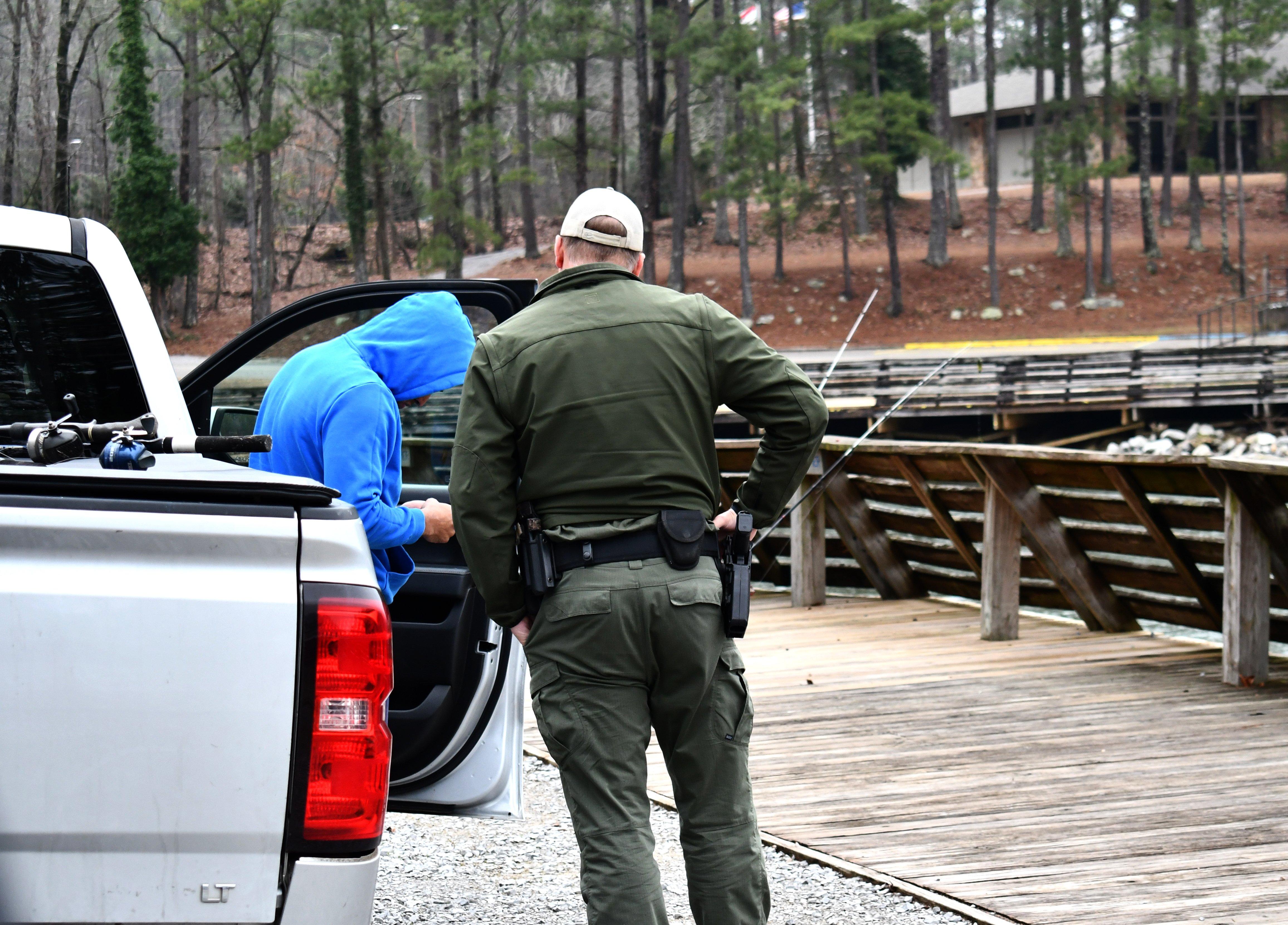
Lt. McHenry checks the fishing license of an angler at Oak Mountain State Park in Shelby County, Alabama. (Photo by Stephanie Mallory)
Q: Tell me about a typical day as a game officer.
A: There are no typical days. Our game officers stay pretty busy, which is the reason we have a flexible schedule. You may get information today that will change what you had planned for tomorrow. Each day is different. And, each season is different as well. No matter what season it is, we’re working a lot checking licenses and limits, following tips, and doing a lot of outreach stuff.
In a muddy parking spot next to Lake Purdy, McHenry got out to chat with a man sitting the driver’s seat of a lone car. The man told McHenry that he was a Grubhub driver waiting for the next call, which may have been true, but McHenry said there was a bunch of fishing gear in his back seat. “We may have just caught him before he started fishing. He may or may not have had a license. But he’s not breaking the law right now, so we’ll leave him be.”
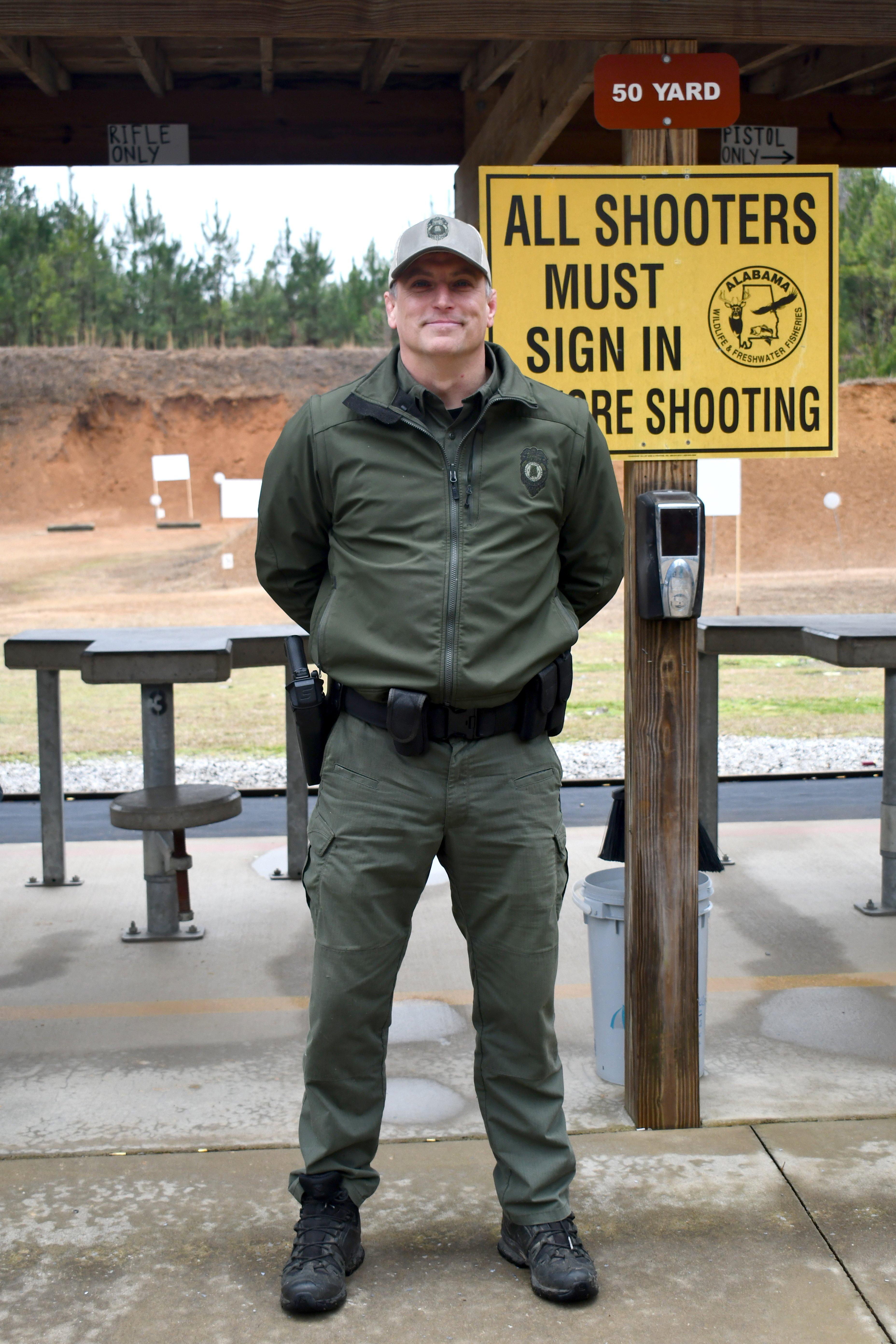
Lt. Jason McHenry is an avid hunter and fisherman and says he loves that he’s been able to turn his passion for the outdoors into a career. (Photo by Stephanie Mallory)
Q: Do you find yourself writing a lot of tickets for game and fish violations?
A: I try not to. If I can use the opportunity to educate someone, I prefer to do that. Oftentimes, people don’t even know they’re breaking the law. If it’s an honest mistake, I’ll usually just explain the law to them so they don’t make that mistake again. Sometimes violations occur by accident, but through proper investigation we do our best to determine the actions which are committed purposefully.
After we left the Lake Purdy area, we headed to the Cahaba River WMA to drive the dirt roads and patrol the area. We followed some truck tracks down one of the dirt roads deep into the forest to see if the occupants in the truck were hunting, but the tracks eventually looped back out to the main road.
Don’t Miss: Guide to Southern Turkey Hunting
Q: What percentage of time is spent on random patrol versus investigating specific calls?
A: 60% to 40%, call versus patrol. Calls definitely take priority. If we get a complaint from the public, that moves up in priority. We appreciate tips because we can’t be everywhere all of the time. Tips can be anonymous and confidential. Some areas and counties are prone to problems and poaching. If a county has not had an officer in it for several years, you’ll encounter more violations. There’s a correlation between a lack of staffing and crime.
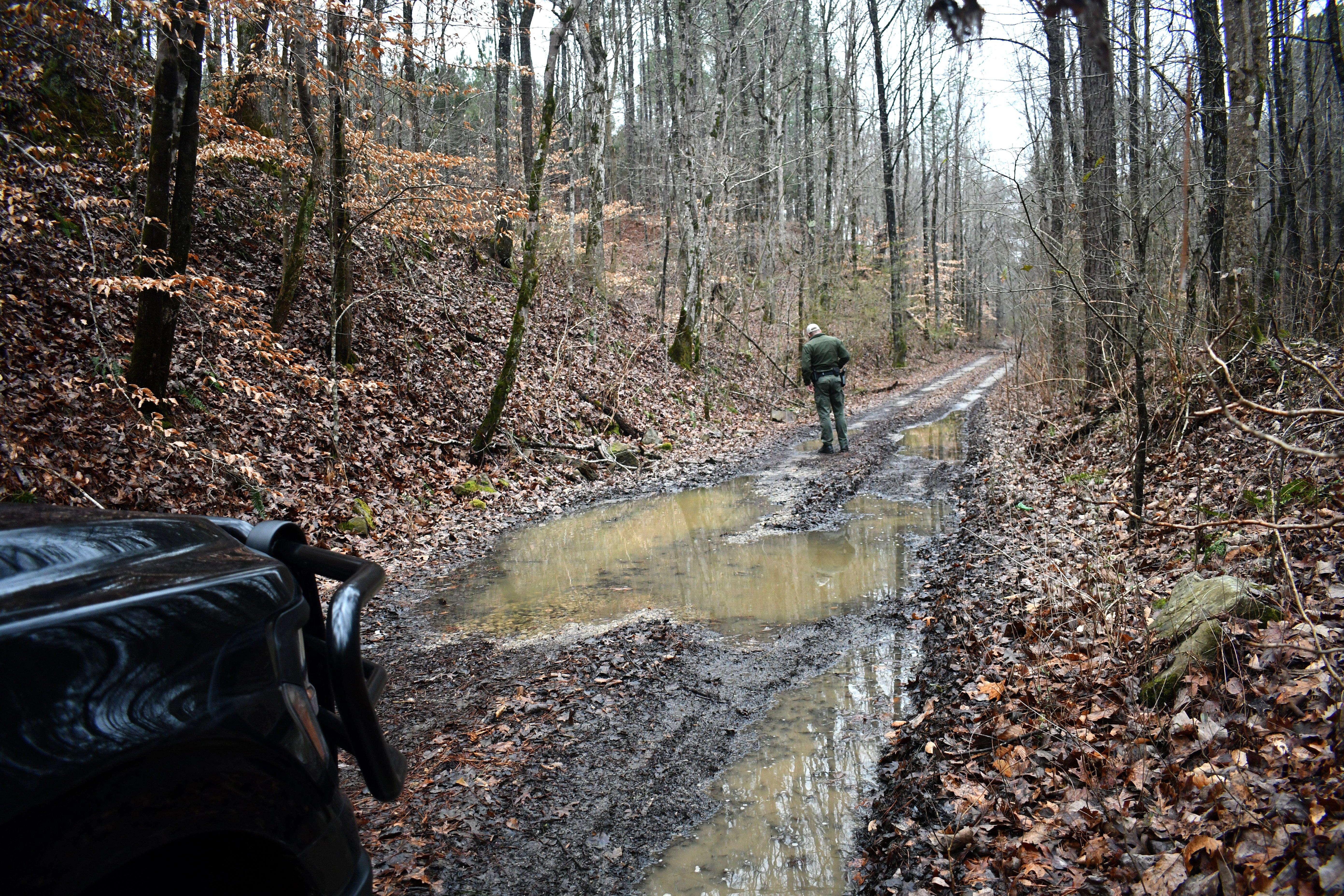
Lt. McHenry checks truck tire tracks leading into the Cahaba River WMA. (Photo by Stephanie Mallory)
Q: Tell me about one of your biggest cases.
A: We caught a prolific night hunter through a confidential tip not too long ago. He’d been hunting and taking the state’s resources for 10 years. He wasn’t just going out and shooting a deer every now and then. He was leaving his home state of Florida, coming into Alabama and hunting all night long. He was shooting as many deer as he possibly could. It was one of the most egregious cases I’ve ever seen. He was using thermal equipment and suppressors. That investigation took multiple agencies, but catching him was so rewarding because of the huge negative impact he was having on our resources. He lost his hunting license for three years and was fined around $4,500.
It takes a lot of people to investigate and catch someone actively breaking game laws. I served as a highway patrol officer before I became a game warden. When I was on the highway patrol, catching the bad guy was easy because things happened right in front of me. Being a game warden requires a lot more investigative work. You may see something that may trigger more questions that requires additional follow up. It took us several weeks to nail down the night hunter because we had to gather a lot of evidence. It takes a lot of patience but it’s a good feeling when it pays off. It validates what we’re doing.
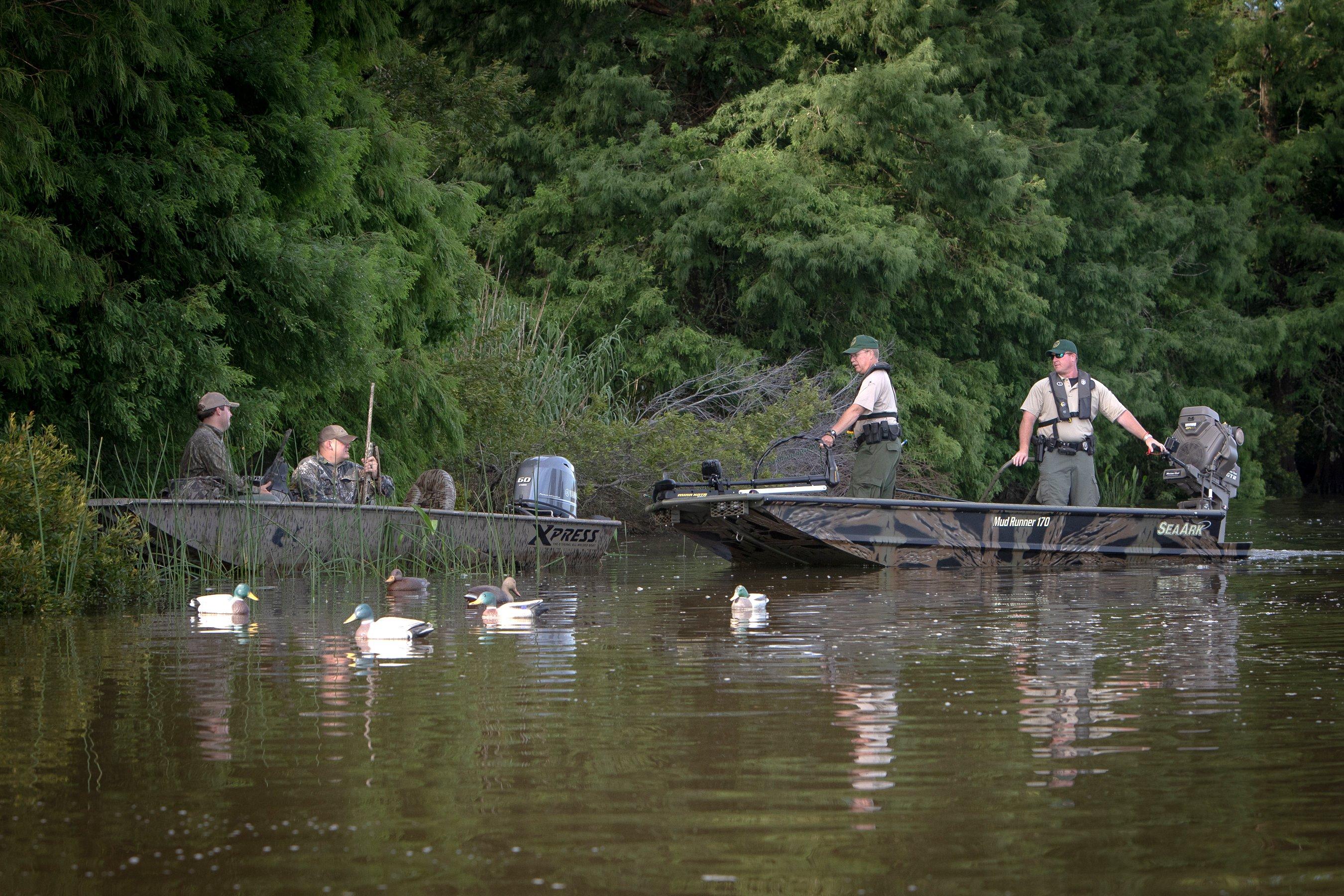
Game wardens are not the “fun police.” Most of them are also hunters and anglers who want everyone to enjoy the outdoors. (Photo by Stephanie Mallory)
Q: Tell me about some of your unusual or funny cases.
A: One of the funniest came out of Lowndes County. Some individuals purchased a deer from a game breeder in the state. They transported it without proper documentation. They did so because they were selling the hunt for that particular deer, which is against the law. After the deer died in transport, they decided to put it in a freezer. They froze it. Then, they stood it up and had the hunter stalk up to the deer and shoot it with his bow. In the video, the arrow made a loud thud sound when it hit the deer, which was stiff and fell over. The hunter knew it was bogus. We call that case The Popsicle Deer. It was so unusual that it was comical.
During another incident in Autauga County, someone called one of our game officers and said there’s a vehicle on your property and that someone might be poaching. I thought, “no way.” But sure enough, we went to the officer’s property and he was able to catch a turkey poacher. That was a bad day for that guy. Not only did he get caught poaching, but he was poaching on a game officer’s property. That certainly didn’t help him in court.
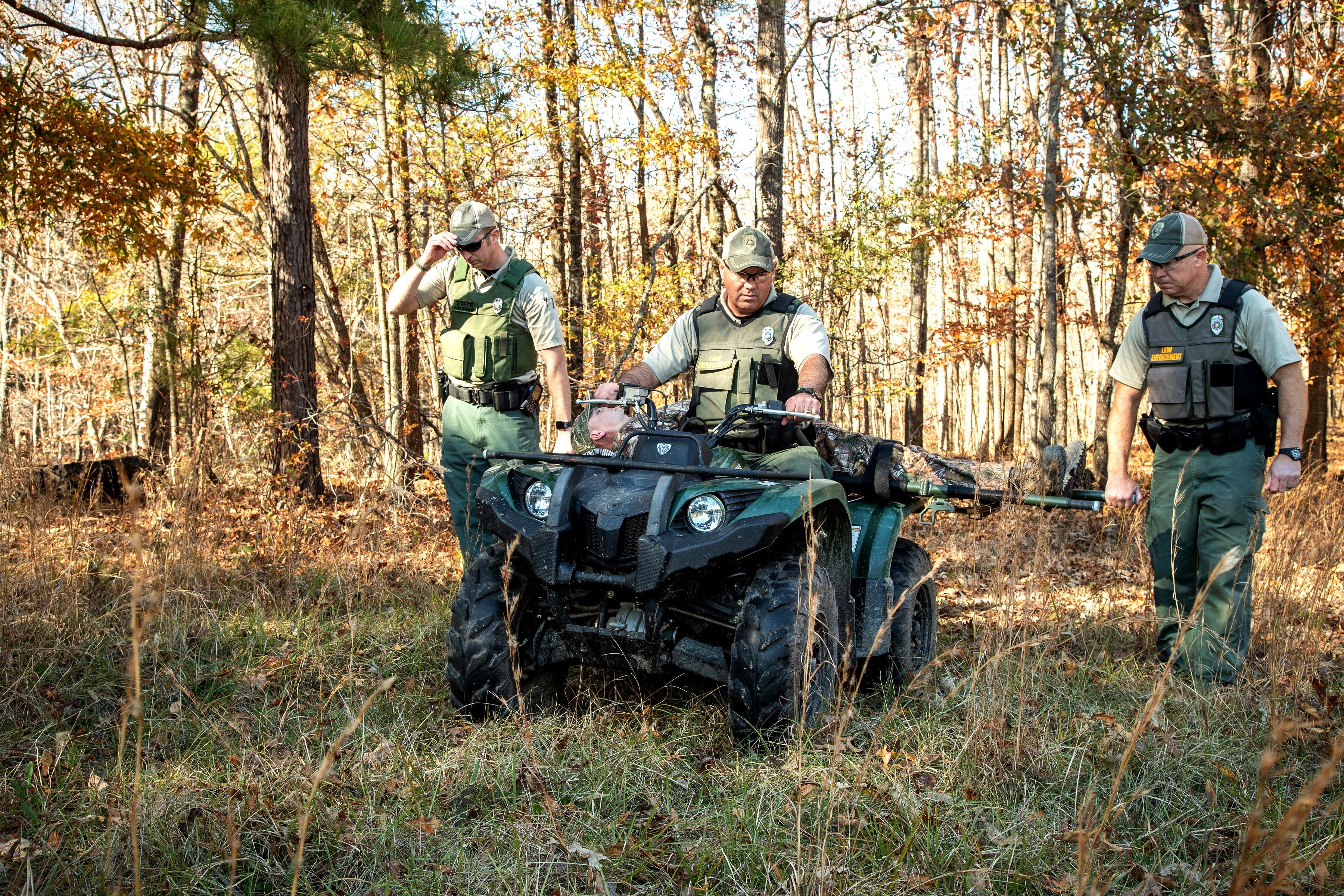
It can take officers a lot of time and investigation to catch someone actively breaking game laws. (Photo provided by ADCNR)
Q: What aspect of being a game warden would surprise people?
A: We spend more time educating people than we do writing tickets. We also spend a lot of time promoting the state’s new shooting range initiative. Alabama residents can purchase a Wildlife Heritage License for $13.95 that gives you access to one of 13 state public shooting ranges. If you have a hunting or fishing license, you automatically get that Wildlife Heritage License. (See sidebar for more info)
After leaving the Cahaba River WMA, we patrolled through Oak Mountain State Park, which has seven lakes and offers limited archery hunts to help manage the deer population. McHenry checked an angler’s fishing license at one of the lakes and then we rode over to the archery range, where a man was practicing. After speaking to him, McHenry learned the man didn’t have the Wildlife Heritage License required for using the state’s public shooting ranges. The man was new to archery, though, and McHenry didn’t write him a ticket, informing him instead that he needed to have the license going forward.
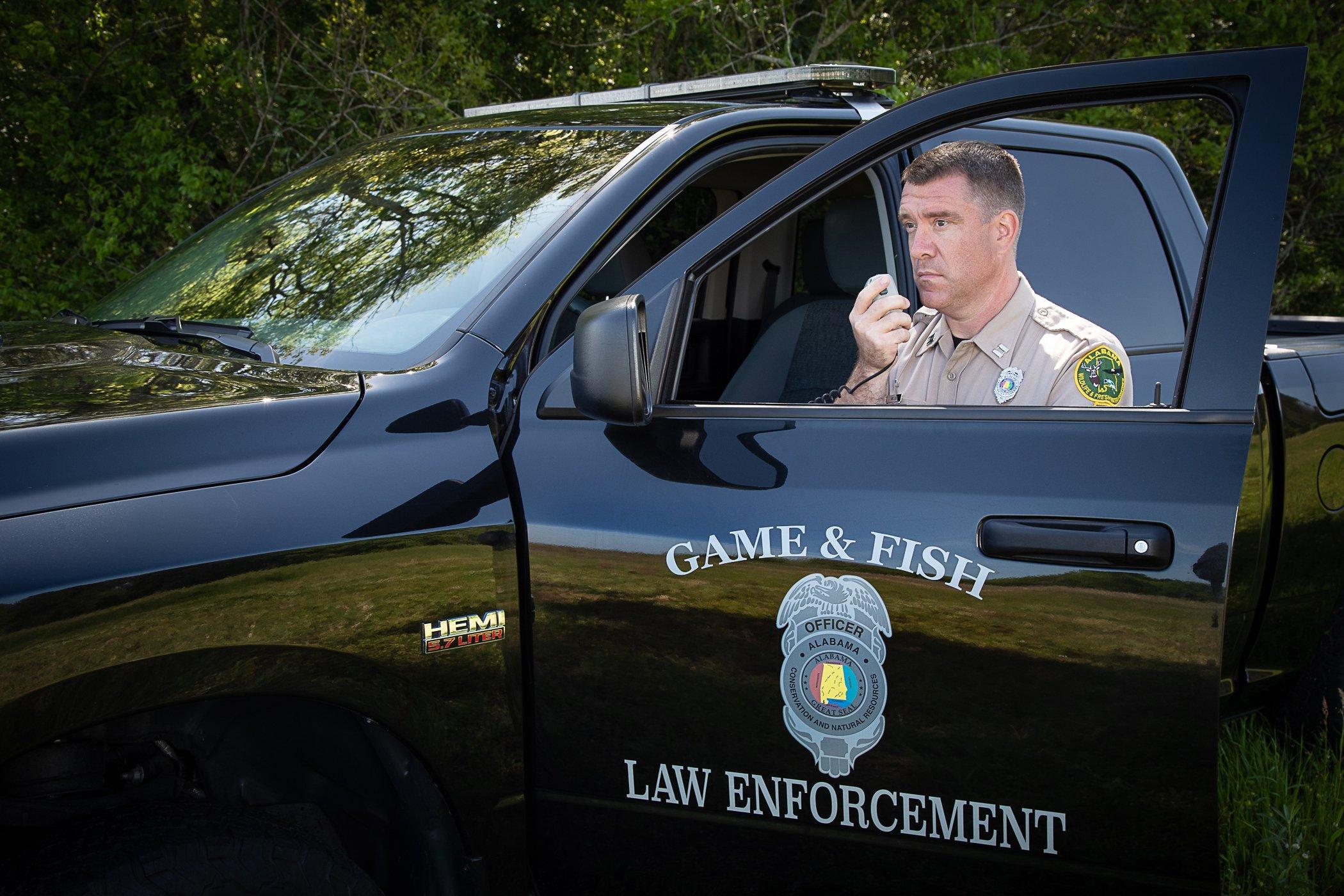
Game officers rely heavily on tips from the public to help them catch those who are breaking game laws. (Photo provided by ADCNR)
Q: What is it like meeting and interacting with the public?
A: Everyone has a story. I checked one guy’s license a while back and learned that his son had passed away and that he was back in the woods for the first time since his death. It's neat to meet different folks, hopefully have positive interactions with them and offer some education and advice if needed. So, with that gentleman I just spoke to on the archery range, I could tell, just based on his archery equipment, that he is pretty new to archery. So, I asked him if he had any questions and I gave him some recommendation on his arrows. I learned that he comes up here quite often to shoot and he was unaware that he needs to have a Wildlife Heritage License in order to utilize any of the shooting ranges. So, I gave him that information and I’m sure the next time he’ll have it.
Don’t Miss: Turkey Hunting in Alabama
Q: What do you want people to know about game wardens?
A: Despite what you hear, we’re not the “fun police.” I think sometimes people forget that we’re just normal people too. We have kids and families. We also like to hunt and fish and we’re not out to get everyone. We just have a mission that’s judicial at times. We’re here to do a job that benefits the public and protects the resources they own. We want to be part of the solution, not part of the problem.
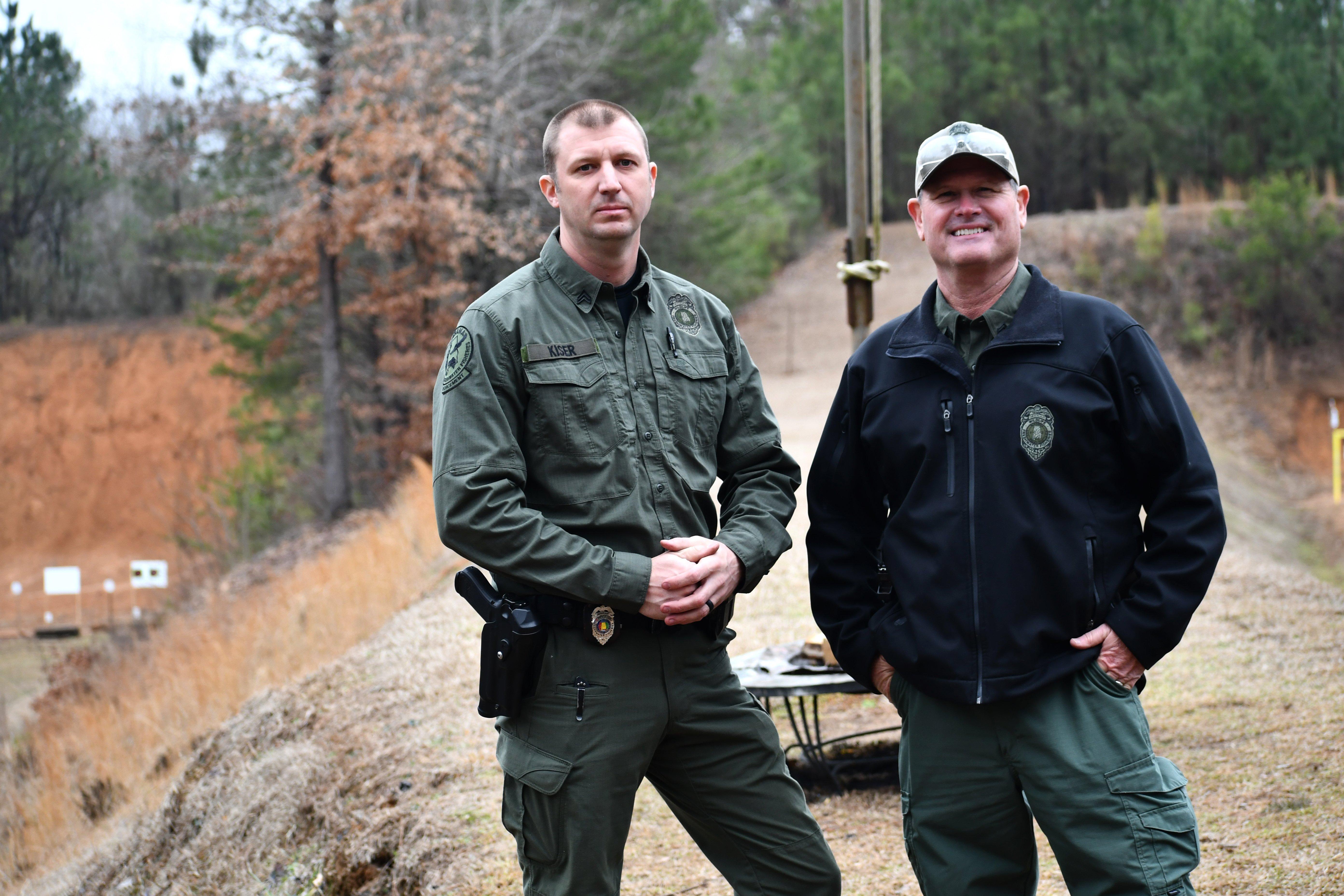
Sgt. Ben Kaiser and Sgt. Blair Sistrunk are part of the state’s newly formed Shooting Sports Unit. (Photo by Stephanie Mallory)
An enthusiastic outdoorsman and bowhunter, McHenry loves that he’s been able to turn his love of the outdoors into a career and he takes pride in protecting the state’s natural resources. From backwoods patrols and backroad conversations with hunters to checking licenses, investigating complaints, and monitoring remote stretches of public land, game wardens must find the perfect balance between enforcement, education, and conservation. McHenry showed me firsthand what that perfect balance looks like.
Shooting Sports Initiative Sidebar
While driving through the Cahaba River WMA, we pulled up to the recently updated shooting range that McHenry was anxious to show me. The Cahaba River range is one of 13 shooting ranges operated by the ADCNR. In addition to improvements to current shooting ranges, a new state-of-the-art shooting range is currently being built in Etowah County. McHenry explained that additional money has been allotted to the state’s shooting facilities thanks to a change in the way the USFWS apportions funds from the excise tax on firearms and ammunition from the Pittman-Robertson funds. While at the range, McHenry introduced me to Sgt. Blair Sistrunk and Sgt. Ben Kaiser with the newly formed Shooting Sports Unit. The men explained the new shooting sports initiative to me.
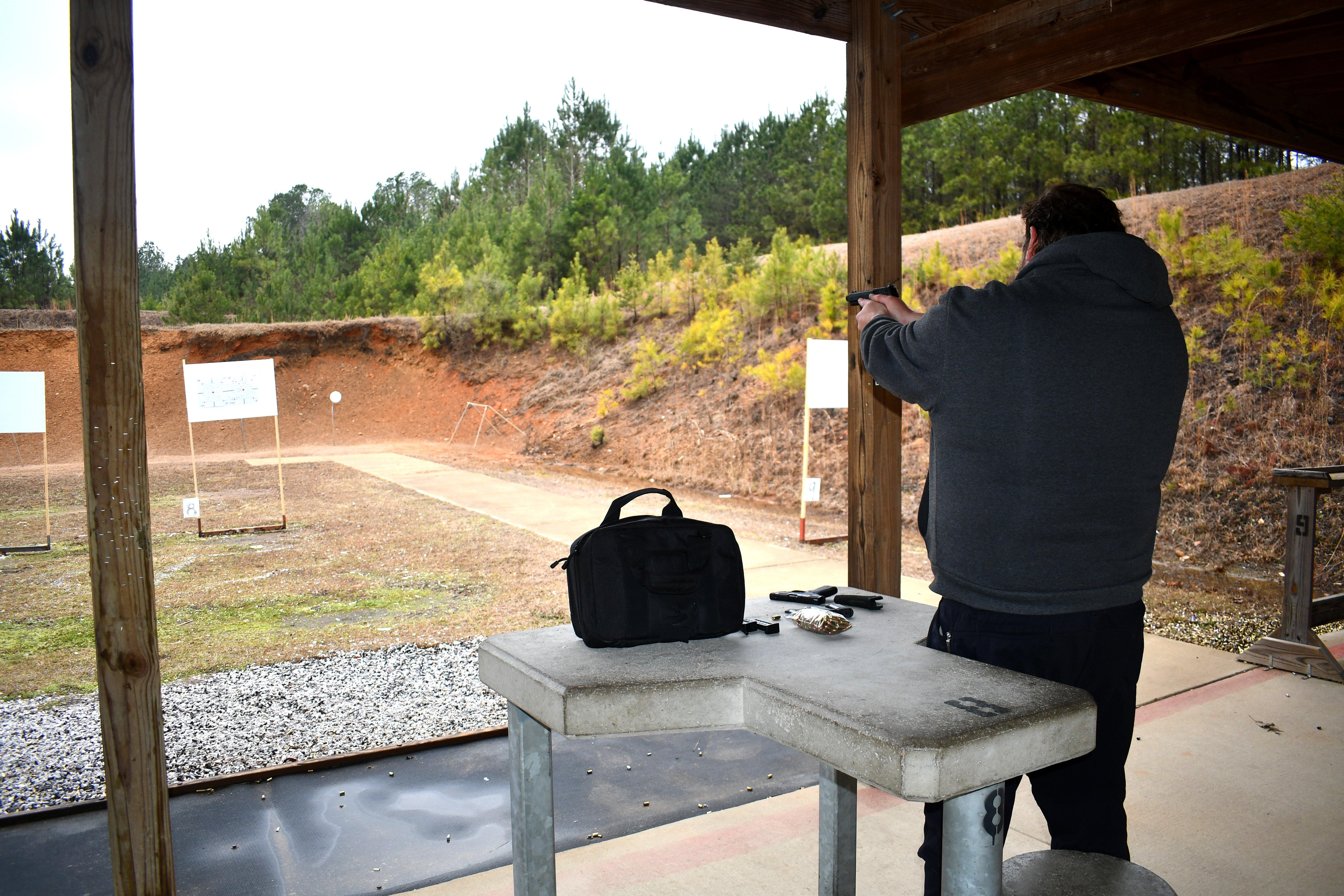
Aaron Tanner of Chelsea, Alabama, has been target shooting at the Cahaba River WMA shooting range almost every week for 15 years. (Photo by Stephanie Mallory)
“As part of this new program, we’re offering a lot of new shooting classes,” Sistrunk said. “We offer Firearms 101, which includes Pistol 101, Rifle 101, Shotgun 101, and Archery 101. These classes are perfect for those who are not shooters and want a gun for target shooting or for self-protection. We teach everything from stance, to grip, to sight alignment and how to store and keep a firearm in good use.”
Kaiser said although the classes are offered in group format, they have enough instructors to provide students with one-on-one training during those group classes. Each class has a classroom portion and then three hours of range shooting. The classes are usually on Saturday from 8 a.m. to 12 p.m. or 9 a.m. to 1 p.m., depending on season and weather.
?fmt=auto&qlt=default&fmt.webp.qlt=65&fmt.png.qlt=73&fmt.jp2.qlt=35&fmt.jpeg.qlt=60)