Essential Gear for Trapping Coyotes | Video
Posted 2026-02-03 by
From favorite traps and earth anchors to sifters and lures, here's a look at the gear needed to make your coyote trapping more successful
Many new trappers who find success on raccoons naturally want to try trapping coyotes and other larger predators. You don’t have to spend a fortune to get into coyote trapping, but having the correct equipment on hand from the get-go will increase your chances of success. I’ve been successfully trapping coyotes for quite a few years now, and when I look back on my early struggles, several of them were the result of using inadequate equipment. This video provides a rundown of the traps I use, how I rig and prepare them, and also the tools I carry with me every day to the field. Other trappers may recommend different things; this is just what’s worked for me.
Don’t Miss: The Ultimate Guide to Predator Trapping | Video
TRAP SETUP
Bridger No. 2 Dogless - This 5-1/2-inch foothold is my go-to coyote trap. They’re easy to set, and arrive tuned and ready to go. They’re also easy to tune and maintain over the long haul.
J-Swivel - I attach these to the trap chain, along with another short length of chain (10 inches or so).
Quick Link and Earth Anchor - I thread a quick-link onto the extra 10-inch piece of chain, and then thread the looped wire end of an earth anchor to that. Good earth anchors are essential pieces of coyote trapping gear. I’ve used several types, but for our soil, the Fox Hollow Super Stakes are my favorite.
Trapping Tag - A metal tag with my name, address, and phone number, as required by law, attached to the chain with a piece of wire.
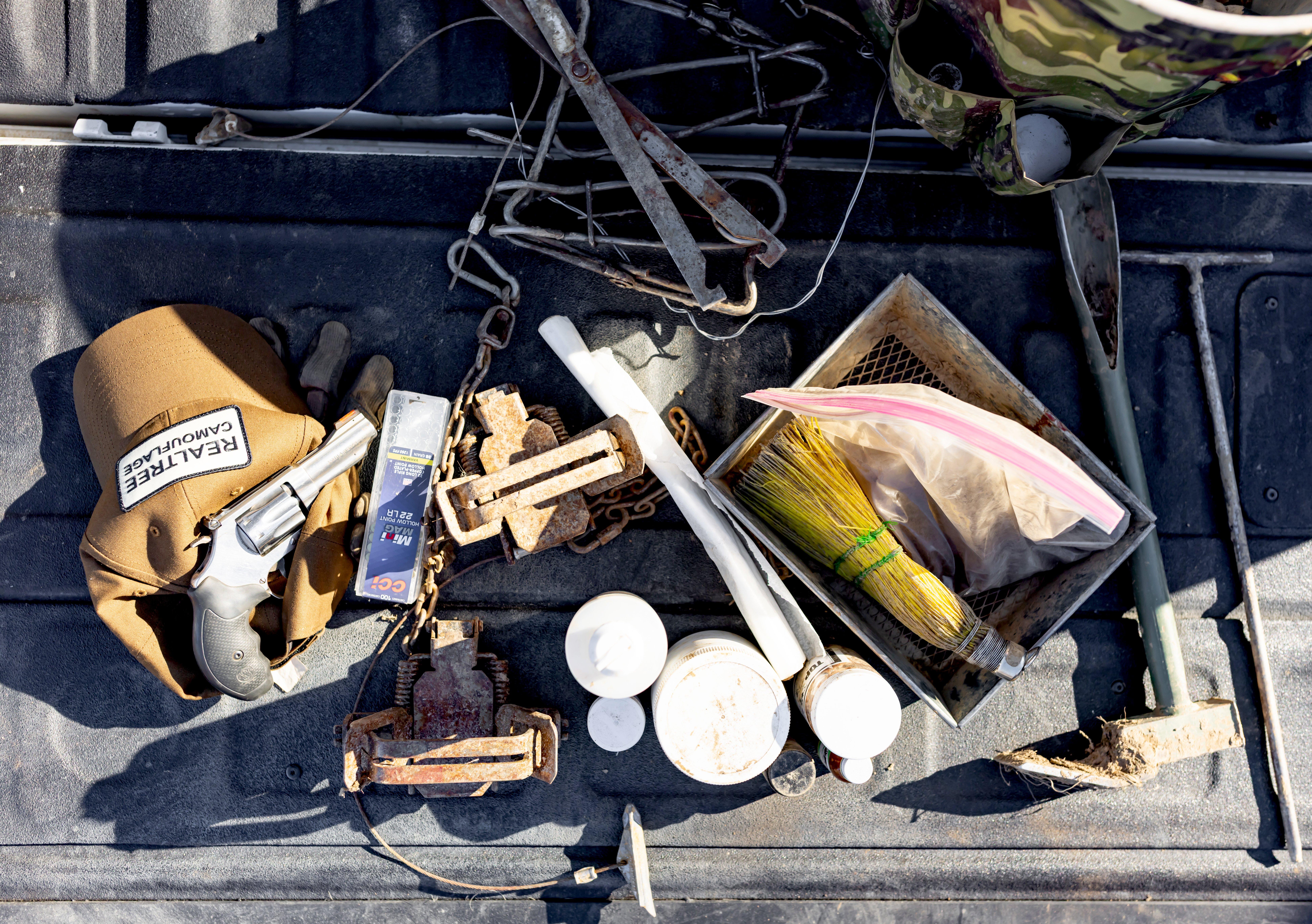
Coyote trapping gear isn’t complicated, but having all the right tools before you hit the field will help you catch more predators. Image by Godwin Photography.
FIELD TOOLS
Trapping Hammer - I use a Groundhog hammer to dig out new sets, move dirt, and punch in holes for my bait.
Anchor Driver - Match your earth anchors with the appropriate driver for securing the anchors into the ground.
Waxed Paper - For covering the trap pan and jaws for easy firing.
Waxed Dirt - Melted flake wax blended with fine barn dirt creates a weather- and water-resistant covering for my setups, ensuring they fire in inclement conditions.
Wire and Pliers - A good multi-tool and small bale of wire is useful for all sorts of trapline chores. Don’t be caught without them.
Gloves - I wear mechanic’s-style gloves when preparing sets, and then switch to rubber-coated gloves when handling lures and bait. It’s important to minimize the scent on your work gloves, because you don’t want that scent on your traps.
Metal Sifter and Whisk Broom - For sifting and smoothing waxed dirt and camouflaging dirt over the setup.
5-Gallon Bucket - I’ve yet to find a better way to carry my trapping gear from one setup to the next.
LURES AND BAIT
Coyotes like smelly stuff, and I like to mix a variety of lures and baits into my setups. In general, lures include heavy scents to attract roaming coyotes. My favorites include various gland scents, beaver castor, skunk scents, and fox urine.
Baits are typically chunks of meat mixed with additional scents and preservatives, and they smell stout in their own right. The idea is to place the lure outside your setup, and put the bait in the dirt hole over the trap. The lure brings the coyote in close. The bait piques his curiosity and causes him to dig. Then hopefully, he’ll spring your trap and get caught. I’ve caught coyotes on just about every bait that I’ve ever tried. I tend to buy Hoosier Trapping Supply Top Dog and Caven’s Hiawatha Valley most often, because both have been especially productive for me.
Don’t Miss: 10 Coyote Trapping Mistakes Beginners Make