How to Build a Precision Squirrel Rifle
Posted 2025-09-02 by
Modern rimfires are better than ever for sniping squirrels from a distance. Here's a look at a favorite long-range setup
My son and I snuck along a deer trail that wove like capillaries under the canopy of hardwood limbs. We knew there were squirrels cutting in the shagbark hickories up ahead, as we could hear bits of nut bumping gently against the spear-shaped leaves. And every so often, a full nut the size of a golf ball would crash to the forest floor.
It was 80 degrees and still technically summer, but there was a dryness to the air; a contrast to the mid-90s and dripping humidity we’d felt only a few days earlier. “It feels like fall out here,” Anse whispered, and I agreed. It really did feel like fall.
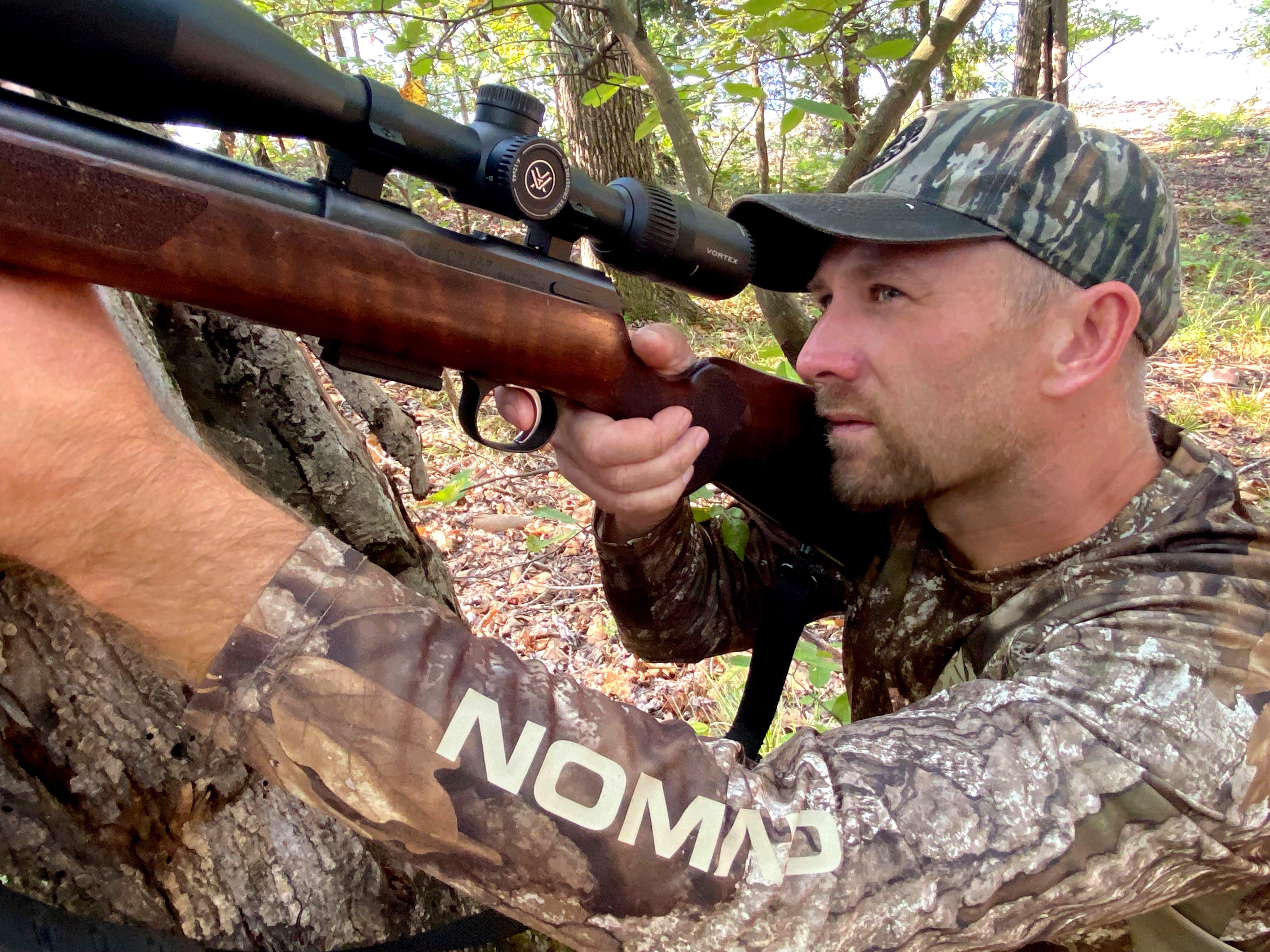
Squirrel hunting with a rimfire requires precision. The right rifle and scope combo makes it easier. Author image.
Anse was carrying his favorite shotgun, a 20-gauge double-barrel, and a pocket full of lead No. 5s. I told him to circle the tree, find a good opening through the canopy, and wait for a shot. I worked into place on the other side of the hickory, opened a set of shooting sticks and settled in with my favorite rimfire rifle.
Every hunter anticipates something above all else out of early fall. It’s a bugling elk or an antelope sipping from a water hole to some. To others, it’s winging doves or teal, or maybe a big velvet whitetail stepping into a beanfield. I love all of those things, but waiting for a clear view of an early season squirrel with my rifle in hand might be my favorite of all. It’s incredibly challenging without being stressful in any way — just the way hunting should be, if you ask me.
The 20-gauge roared within just a few minutes — once, and then twice — and two gray squirrels came crashing to the forest floor. That particular tree was full of the critters, and a couple of them leapt from their perches on my side, scrambling to get away from those lead No. 5s. My scope was down on 4x as I followed one of the squirrels across a low hickory limb and then onto the next tree, and then on to a sprawling white oak, some 60 yards away. The squirrel scurried down to the primary fork of the oak and stopped, still carrying a hickory nut in its mouth. It had been spooked enough to scramble, but not enough to drop its breakfast.
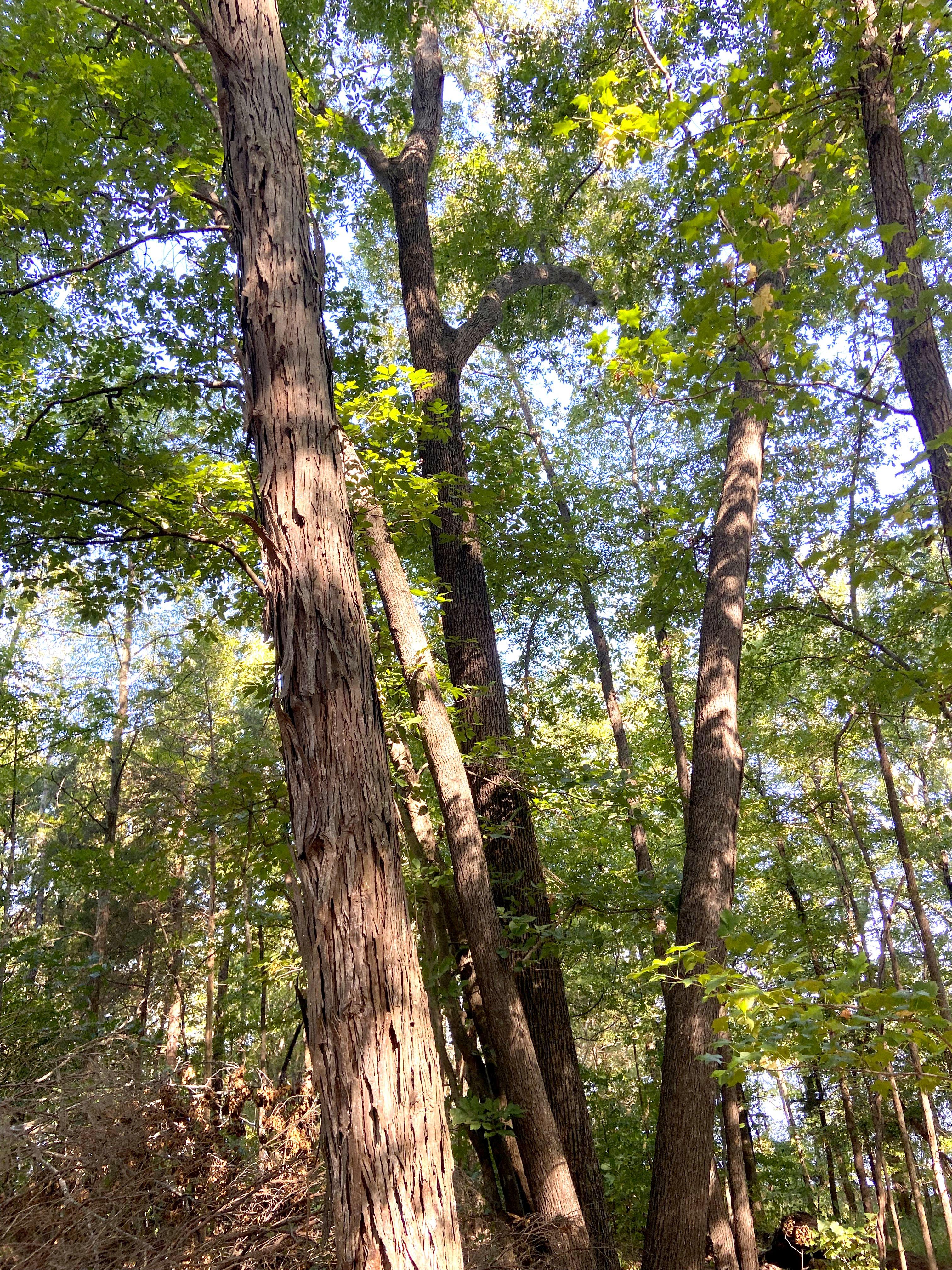
Tall hardwood timber creates challenging shot opportunities. Author image.
I knew I needed to act quickly, before the squirrel moved behind another limb and out of sight. I tightened my grip on the sticks and rifle fore-end, and zoomed the scope to 10x. I adjusted the parallax knob ever so slightly on the lefthand side of the scope, and my view of the squirrel’s noggin became sharp and clear behind a crisp crosshair. I exhaled, squeezed the trigger, and made the shot. In addition to the fun of it all, I had another young gray squirrel taken with a clean head shot and ready for the skillet.
Don’t Miss: 25 Hillbilly Squirrel Hunting Tips
Anse ended the morning with four of his six-squirrel limit, and I got five of mine. It was just enough to remind the kid to respect his daddy, but not so many that I felt the need to brag for long. Reliving the hunt here reinforces how much I enjoy squirrel hunting, and also that particular rifle, which I’ve carried for a decade now but have tinkered on all the while, changing accessories and testing different things until it’s become, in my mind, the perfect squirrel gun. Here’s a look at it.
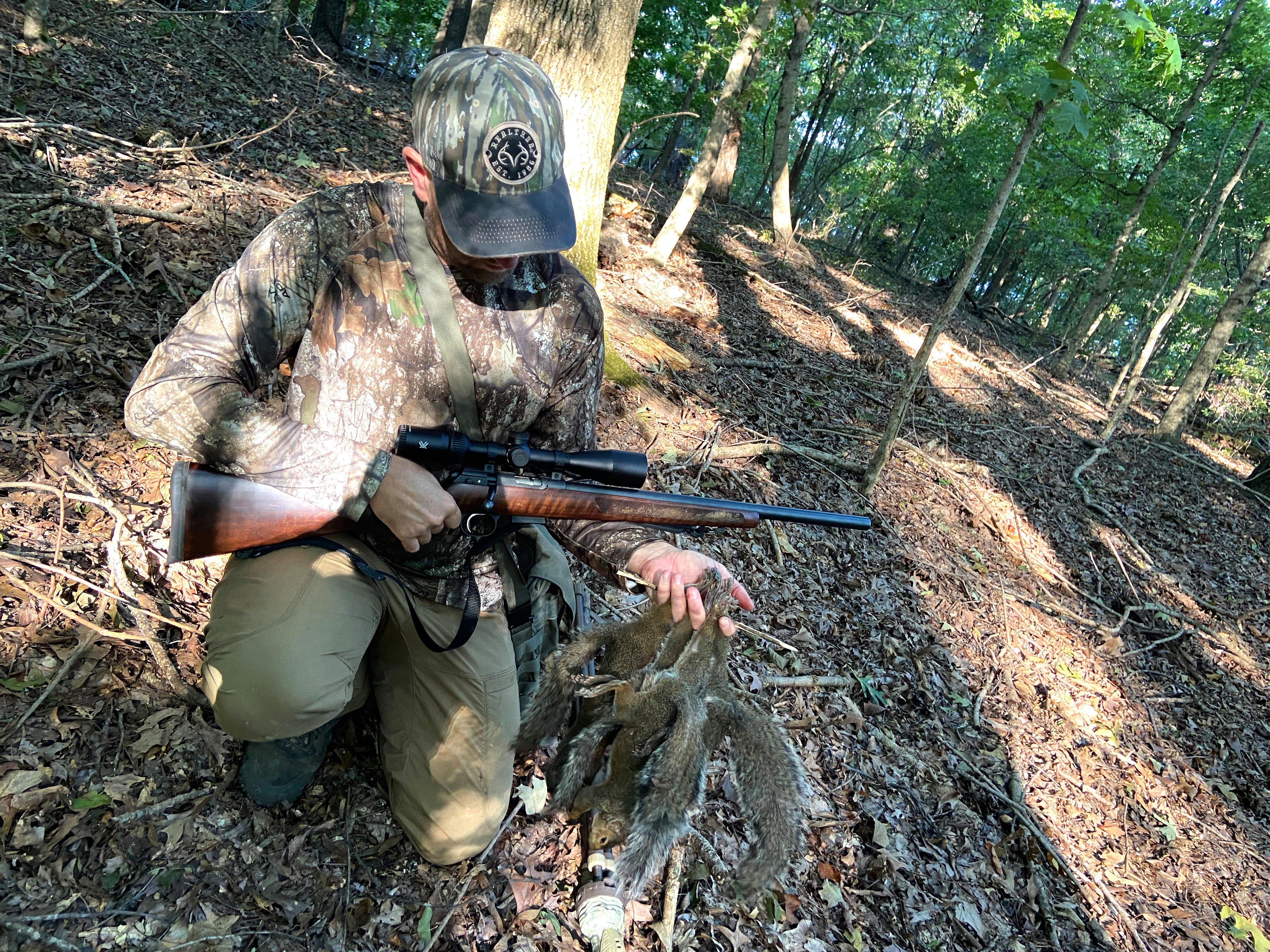
Squirrel hunting is one of the best ways to kick off a new fall season. Author image.
THE GUN
I shoot a CZ-USA 457 Varmint, a bull-barreled rimfire that’s available in .22 LR, .22 WMR, and .17 HMR. My gun is a .17 and it’s ideal for the areas I hunt, which are remote, miles from any homes, and covered in tall, mature timber. The average shot distance is 50 yards, and many chances are well beyond that. The .17 HMR’s flat trajectory makes it easy to kill those distant squirrels with a dead-on hold. My rifle shoots 20-grain bullets the best, with CCI Full Metal Jackets being my favorite because they minimize meat damage. In more populous areas, or in woodlot country with shorter timber, the .22 LR is the way to go.
The drawback to my rifle is weight, as the bull barrel brings the total package to more than 9 pounds scoped out. I don’t mind carrying it, but some hunters might balk at the heft. I’ve hunted extensively with the synthetic-stocked 457 American version of the same rifle, though, which is much lighter, shoots almost as good, and is suppressor-ready — another big advantage in the squirrel woods, which we’ll discuss in a bit.
Don’t Miss: The Best Rimfire Rounds for Small Game
SCOPE
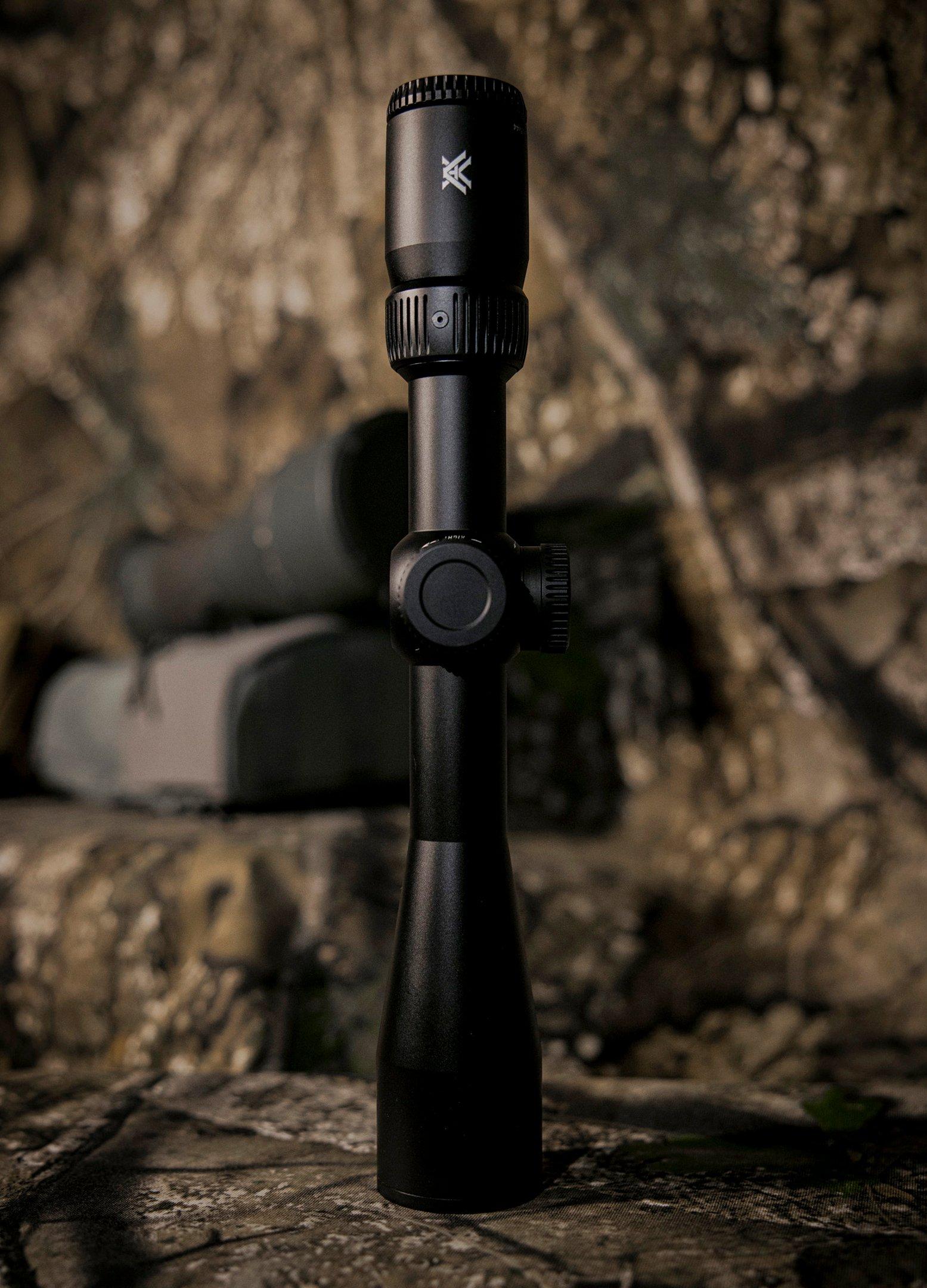
The Vortex Crossfire HD 4-12x44 has just the right amount of magnification and great parallax adjustment, making it ideal for serious squirrel hunting. Realtree image.
The days of scoping out .22 rifles with cheap, fixed 4x optics are over, but you also don’t have to invest more than you paid for your gun to get good glass. I’ve swapped scopes four times now on my squirrel gun in a quest to find one I really like, and I recently settled on a Vortex Crossfire HD 4-12x44 as the best one I’ve tried yet.
The Crossfire 4-12 has a 44mm objective lens diameter that gathers plenty of light without being too cumbersome and heavy. The magnification range is just right for tiny squirrel-head-sized targets inside 100 yards, and the side parallax adjustment allows for fine focusing from 20 yards clear out to 500 (obviously, for squirrel hunting, you’ll spend the most time adjusting from 20 yards to about 75). Good parallax adjustment is a must-have feature in a squirrel gun scope, so don’t skimp on that when shopping. This scope will set you back less than $300, and it comes with Vortex’s unconditional lifetime warranty.
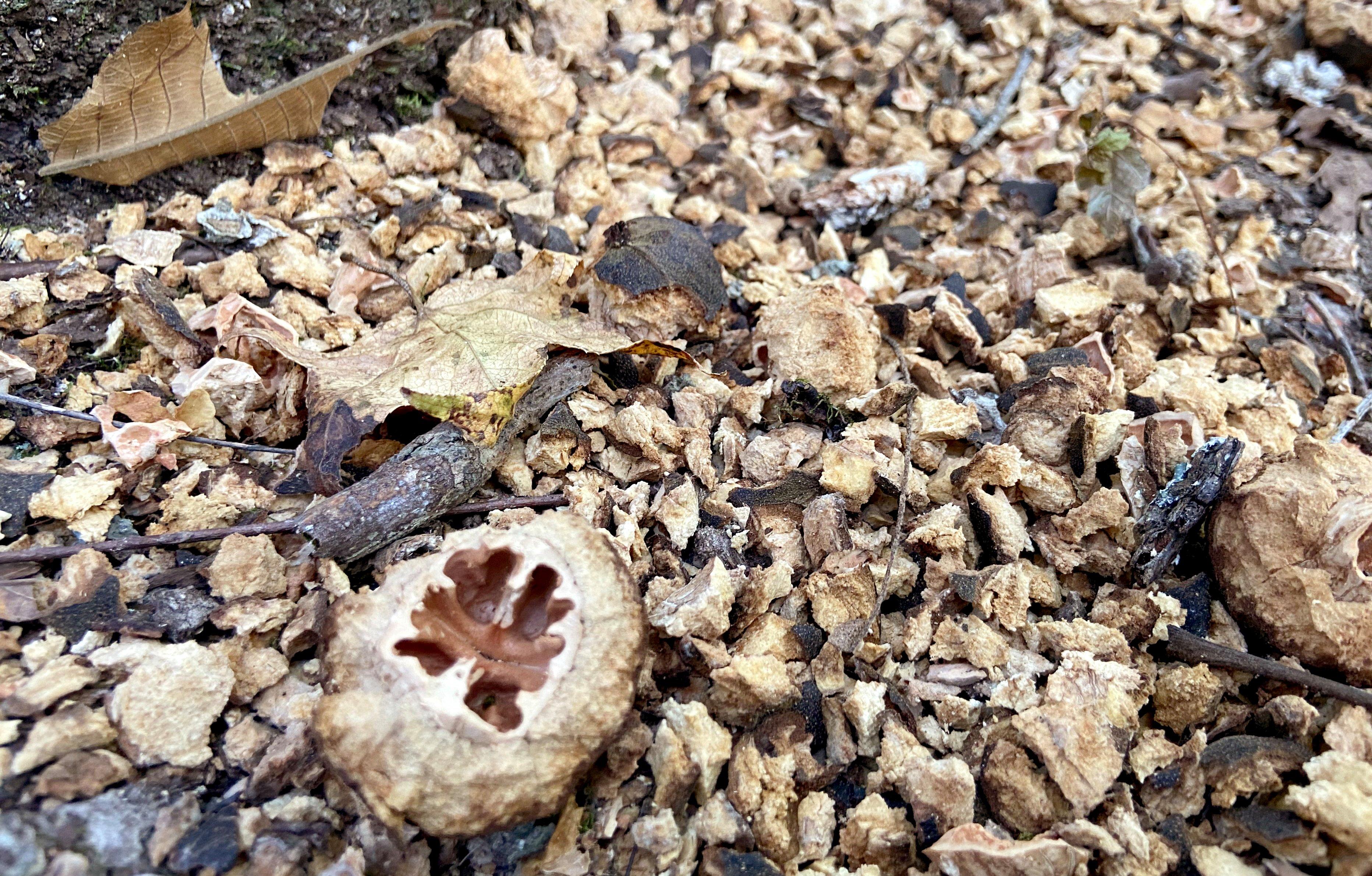
When big numbers of squirrels gather in a good hickory tree, a suppressor can help create more shot opportunities. Author image.
SUPPRESSOR
Getting a suppressor has never been easier in the states than it is right now, and a lightweight can such as Silencer Central’s Banish-22 is a great thing to have in the squirrel woods. If you shoot a .22 LR with sub-sonic ammunition, a suppressor will make the report only a little louder than clapping your hands. Some efficiency is lost on squirrels, though, so you’ll need to keep shots close if you go that route. I prefer higher velocity myself (obviously so with the .17), but the suppressor helps tame that report down to a reasonable level, where it’s safer to shoot without hearing protection, and also doesn’t spook the bejesus out of other squirrels in the area when you shoot. I’ve seen very few guns, too, that didn’t shoot a little better after adding a suppressor.
TRIGGER
CZ’s rifles come from the factory with good adjustable triggers, but I upgraded my setup with a Timney Trigger that has a 1-pound factory setting. I’ve tested the straight and curved triggers and might prefer the straight one a bit more, but both styles are fantastic. These triggers are easy to drop in with minimal tools, and they will absolutely make your gun shoot better, particularly on those longer shots when twitchy squirrels are on the move.
WHY YOU NEED A PRECISION SQUIRREL GUN
Most hunters aren’t as nutty as I am about squirrel hunting. Pun intended. You don’t need everything I’ve discussed here to put together a good squirrel rig. Personally I’ve enjoyed tinkering with my setup, and it’s rewarding to make shots in the hardwoods that would’ve been more difficult otherwise. But even if you only squirrel hunt a few times per year, the field-shooting skills honed in the squirrel woods are simply invaluable for hunting, well, just about everything else. Pick up a rifle for your next early season squirrel hunt, and embrace the challenge of it, while remembering there’s no pressure. It’s just the way hunting should be, if you ask me.
Don’t Miss: 19 Good Ways to Cook a Squirrel