Northern Gobblers Henned Up, But Still Responsive
Posted 2026-04-29 by
While a few hens are trickling away from flocks to nest, northern U.S. turkeys are still in fairly large flocks and using fields throughout the day now that things are greening up
| Strut Report Details | |
|---|---|
| Strut Stage: | Peak Strut |
| Temperature: | 51 to 60 degrees |
| Precipitation: | Light Rain |
| Wind: | 10 - 15 mph |
| Cloud Conditions: | Partly Cloudy |
| Food Sources: | Green vegetation |
| Gobbling Activity: | Gobbling at daylight and then tapering off |
| Strutting Field Activity: | Dominant birds strutting with harems of hens |
| Hen Gobbler Activity: | Every tom out there is henned up |
| Seen Any Poults Yet: | Not yet |
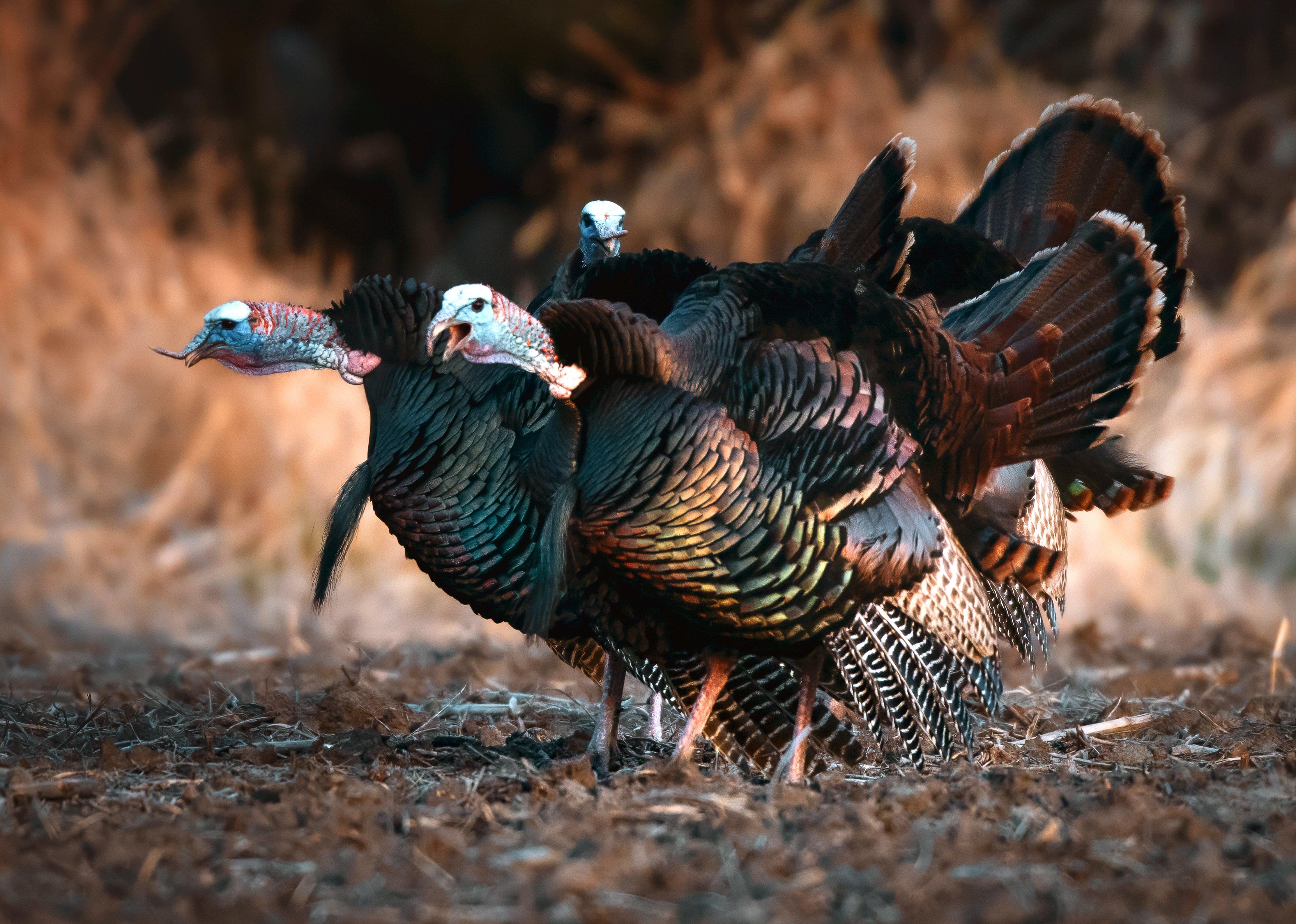
Midwestern and northeastern turkeys are quite vocal right now, but pretty henned up. Image by Clayton Worrell
The Upper Midwest had the gamut of weather over the last few days, from calm, dry and sunny to windy, foggy, and drizzly. Turkeys in central Wisconsin had been frequenting fields primarily in the early mornings and late afternoons, but the sudden green-up and precipitation had them in fields throughout the day on Monday.
I saw several larger flocks — as many as four toms, several jakes, and multiple hens — in fields from mid-morning through late in the afternoon. The toms seem to be glued to the hens, so I see two viable tactics for the week ahead. Either pattern birds and carefully select an ambush site along their daily routine, or try calling in the hens with aggressive cutts and yelps.
DON’T MISS: Grizzly Coolers NWTF 100 QT Realtree Camo Cooler
Carter Heath, the NWTF’s New England regional director, checked in from New Hampshire, reporting similar sightings. “Most states in my region have had their youth weekend, and plenty of mature birds were taken,” he said. “So far, it seems that the hen flocks are still pretty robust, with a few starting to peel off. I’ve seen multiple gobblers strutting for as many as 15 hens.
“As usual, packs of jakes are chasing mature toms off of hens,” Heath continued. “So, I’ll withhold jake decoys in my upcoming hunts until I see adult gobblers getting more aggressive. Birds have not been overly visible in fields, according to several anecdotal observations from other hunters. They still seem to be primarily making their living in the timber, but I expect that to change as the fields continue to green up.”
Brittany Jill of Walk 2 West Marketing hunted in Missouri over the weekend with a Turkeys For Tomorrow raffle winner. “The turkeys were gobbling hard on the roost, and they did gobble a little bit on the ground,” she explained. “We had two toms 374 yards away on a hilltop, and they came running down the hill to the calls and stopped about 58 yards out, across the property border. If we had decoys out, it would have been game over, but we didn’t have them out, unfortunately.”
Joel Burham of Whitetail Fit has been kicking around Iowa’s fields and timber. “Right now, birds are becoming more and more split from the hens as the hens move off to lay and tend to nests,” he said. “Blind calling to strike a bird during mid-morning can be an effective tactic for finding a lonesome bird in the timber looking for love. Hunting pressure, especially on public land, has made the birds pretty shy, so make sure you aren’t getting too aggressive with your calling technique. If you get a tom to respond, set up and be patient. A little goes a long way for a lonesome tom; too much chatter can make him second-guess his decisions.”
DON’T MISS: 4 Types of Turkey Gobbles and What They Mean
Back east in Ohio, Bryan Dawes of Brushy Fork Outfitters got the ball rolling over the southern Ohio opener with a husband and wife who hadn’t previously killed turkeys. “I thought that guiding two inexperienced hunters would be a handful, but they doubled up on two beautiful big toms,” Dawes said. “They gobbled hard on the roost and pitched down with some hens. One hen was very talkative, and I fired back at her repeatedly. I don’t think I’ve ever called so much in my life, but she kept calling, and so did I!
“She came in and actually strutted and gobbled around my decoy spread,” he continued. “It’s behavior that most hunters don’t get to witness, but it was cool, and I filmed the entire thing. Three toms came in, and my hunters pulled off a double. It was epic! All of the other clients my guides took hunting were tagged out on the first morning. The birds were gobbling pretty hard and were fairly receptive to calling. Things have changed over the last couple of days, though, and now the gobbling activity has been hit-or-miss. Locations where we generally hear three or four toms firing off are crickets.”
Check Out Our Latest Camo Pattern: Realtree APX
Out in South Dakota, my sister, Clair Marshall, explained that the seven gobblers she’s been hunting have an aversion to all decoy configurations she has tried. She reported that conditions had been extremely dry, but that a much-needed soaker finally brought moisture to the prairies. Hopefully, the weather shift will shake things up so that she gets her opportunity to bow-kill a tom.
Next week, check back right here for input on the latest turkey happenings from coast to coast along the northern U.S.