Illinois
800,000
Est. Whitetail Population
540,000
No. Licenses Sold Annually
$30 and up
Resident hunting license and deer permit
$361.75 and up
A nonresident hunting license is $57.75. Either sex permit applications start at $304.
Non-resident hunting license and deer permit
207 7/8"
Taken by Sam Aiuppa Sr. in LaSalle County in 1991. Ranks No. 3 overall
Record B&C Typical Stat
905
Total B&C Typical Entries
327 7/8"
Taken by Luke Brewster in Edgar County in 2018 and ranks 3rd overall.
Record B&C Non-Typical Stat
762
Record B&C Non-Typical Entries
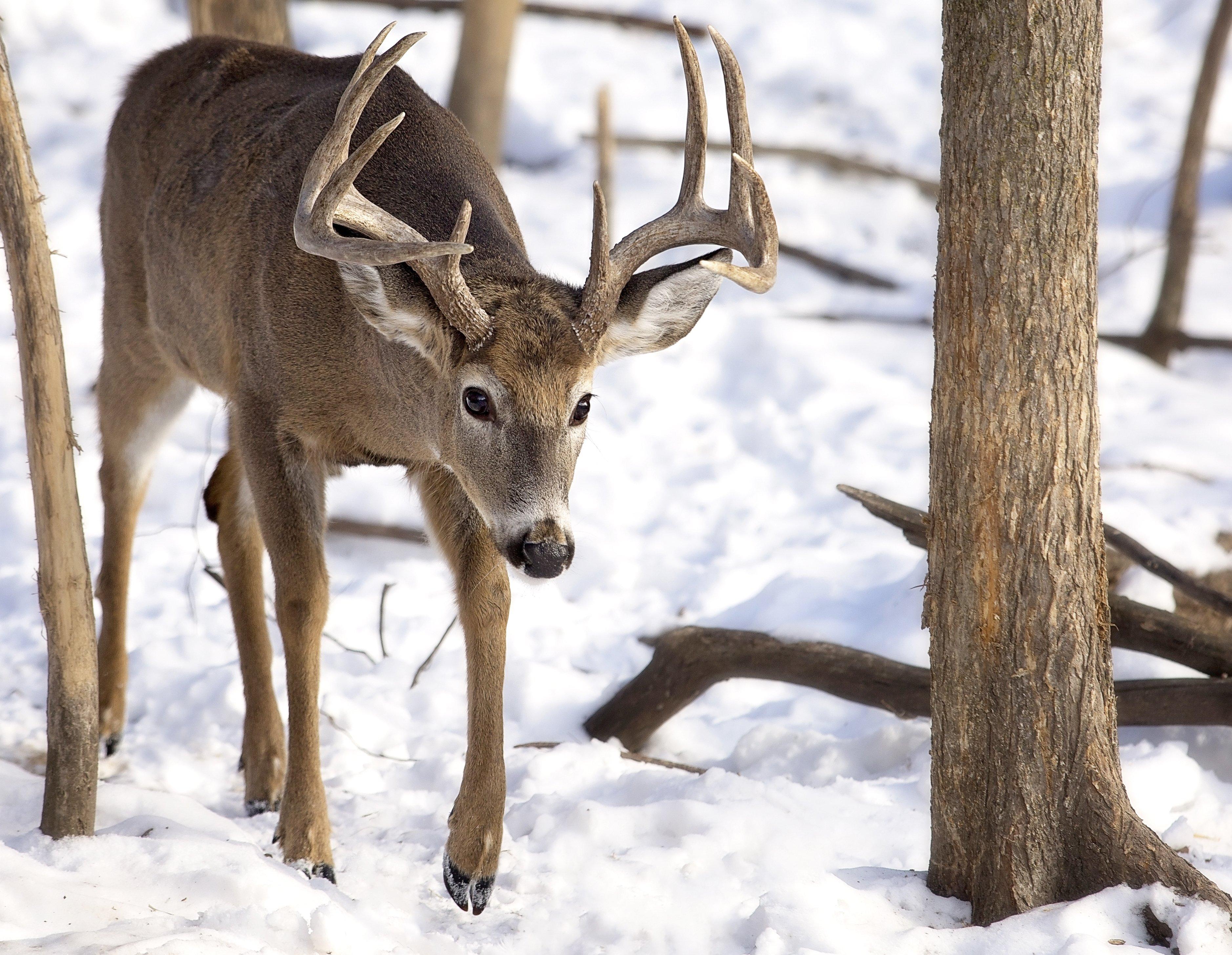
Check out the latest deer-hunting info for Illinois. Image by Critterbiz
Season Dates (2025):
Archery season spans Oct. 1 to Nov. 20, Nov. 24 to Dec. 3, and Dec. 8 to Jan. 18 in most of the state. Firearms season is Nov. 21-23 and Dec. 4-7. Muzzleloader season is December 12-14. Youth firearm season is Oct. 11-13. Other season dates apply. Check the Illinois DNR website to CONFIRM SEASON DATES.
Grade: B
If our grades were based solely on the record books, Illinois would get high honors. The top hunter-taken non-typical and two of the B&C Club’s top-10 typical bucks were killed here. But other factors influence our grades, and that’s where Illinois suffers. Tags are expensive, and there isn’t much public land compared to some states. Some believe the state’s glory days are behind it due to hunting pressure, but trends in the record books suggest otherwise. Some of the biggest whitetails have been killed in the past decade.
“General statewide population trends are stable,” said Peter Schlichting, deer project manager for the Illinois Department of Natural Resources. “We manage deer at the county scale, and we are working to reduce the population in some areas and increase it in others.”
Interestingly, the DNR also makes it clear it doesn't manage for older bucks.
“The Illinois DNR does not manage for trophy deer,” Schlichting said. “We leave that scale of management to individual landowners. With proper habitat management, all areas in Illinois have the potential to grow trophy-class deer.”
Overall, there is a lot of good deer hunting in Illinois. You might have to pay a little more for it. Plus, if you can find access to private land, chances are good it’ll be productive. The Illinois DNR does a phenomenal job managing its herd. HARVEST REPORTS paint this picture and can even help plan a good hunt.
Antler Nation Knowledge:
More than 95% of Illinois is privately owned. Only about 900,000 acres are public, and fewer than 10,000 deer are taken on those acres each season. However, the DNR is good at MANAGING WHAT IT DOES HAVE. It even produces PUBLIC HUNTING AREA REPORTS every year. These are excellent tools for planning a potential hunt.
Despite not having a lot of public land, Illinois’ HUNDREDS OF PUBLIC PROPERTIES fall under a wide variety of categories. Don’t overlook U.S. Army Corps of Engineers land, wildlife management areas, fish and wildlife areas, national forests, natural areas, natural preserves, reserves, state habitat areas, state recreation areas, state parks, state forests and walk-in properties.
“I can recommend several state sites that I see as up-and-coming or a good bet for hunters,” Schlichting said. “Dixon Springs State Park recently just about doubled its huntable acreage, providing more opportunities for our southern Illinois hunters. In northern Illinois, we recently opened up Redwing Slough Lake to youth hunters. Our central hunters can take advantage of a multitude of public land along the Illinois River, including Anderson Lake, Banner Marsh, Sand Ridge State Forest and Sanganois State Fish and Wildlife Area.”
In addition to Schlichting’s suggestions, the Illinois DNR has added a few new hunting sites to its public-access library, including two that are archery-only during deer season. Those are the Guthrie Cave SNA and the Illinois Caverns SNA.
Although the entire state contributes heavily to the record books, central and northern counties are a little more consistent at doing so. Some of the top producers of Boone and Crockett and Pope and Young bucks include Adams, Brown, Cass, Clark, Calhoun, Edgar, Fulton, Jo Daviess, Kane, Knox, La Salle, Macoupin, Marshall, Ogle, Peoria, Pike, Schuyler, Lake, McDonough, McHenry, Will, and Winnebago. Other counties are hot on their heels, though, especially some that border them.
Be aware that the Illinois DNR has new Mandatory Deer Harvest Registration details outlined on page 17 of the 2025-2026 Hunting and Trapping Regulations. Also, be sure to check the updated CWD Map on page 20, and familiarize yourself with the special CWD seasons and regulations.