How to Scout for Ducks and Geese in Dry Fields
Posted 2025-08-14 by
Finding birds might be the toughest aspect of hunting harvested ag fields. Here’s how the pros do it
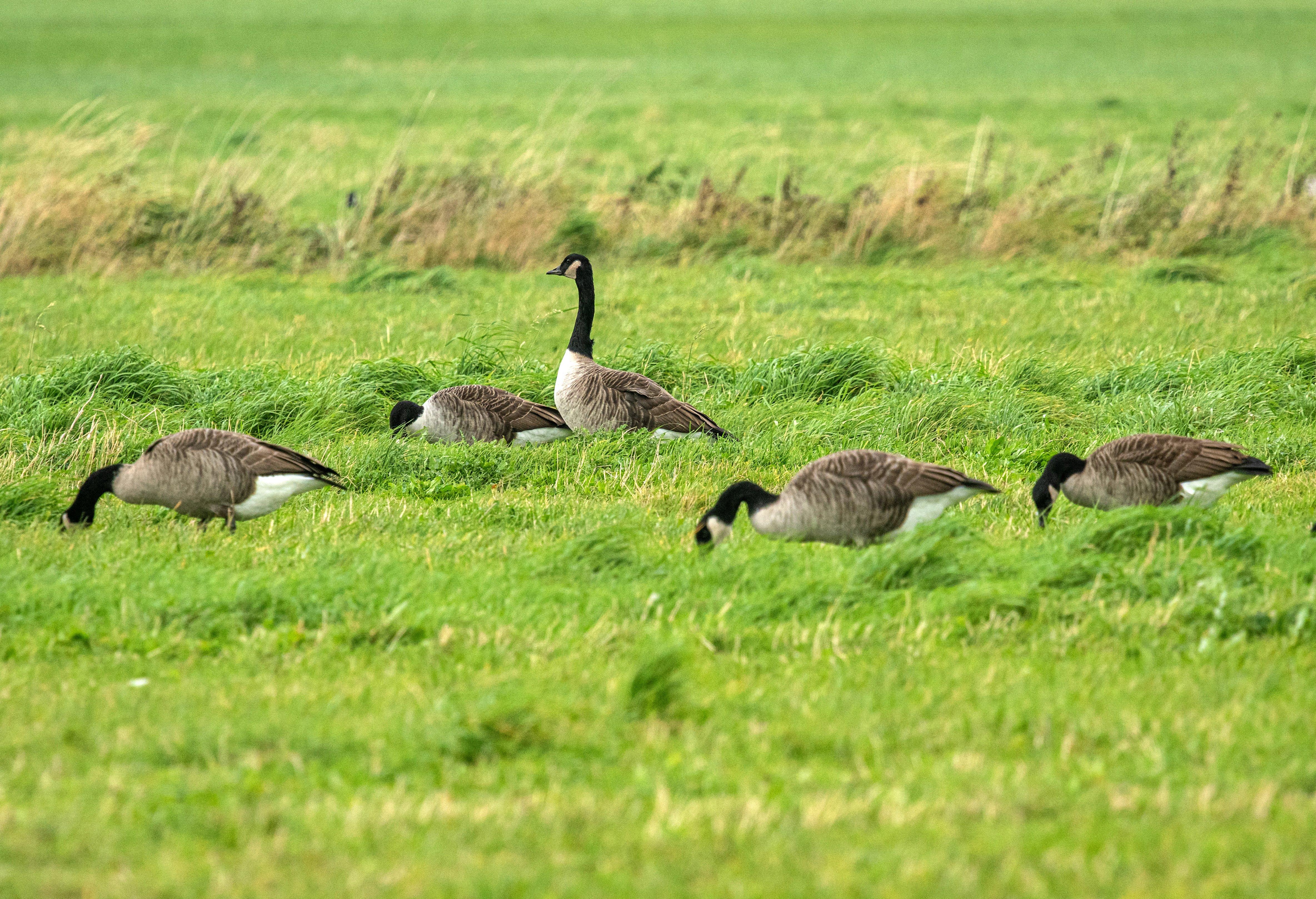
Glassing a few birds is a start, but you must also gain access and formulate a viable hunting plan. Photo by Trygve Finkelsen.
Veteran hunters half-jokingly suggest that the best way to shoot ducks and geese in harvested ag fields is to place decoys on fresh poop.
Humor aside, there’s no doubt that finding the X at a hot feed is the first and most critical step in successful dry-field hunting. It can also be the most difficult. Anyone who’s spent hours behind a windshield and binoculars on the prairies can attest to that.
As with any aspect of waterfowling, focusing on best practices usually wins the day. And when it comes to field hunting, no one knows more scouting tricks and tactics than guides who must find fresh birds for their clients every day. Here, some of the country’s top field hunting outfitters share their scouting secrets.
Don’t Miss: 5 Shots to Practice for Teal Season
THE FRONT DOOR
Graham Greseth, owner of MaXXed Out Guides, which runs field hunts in several states during fall, said the easiest place to start a scouting mission is the roost.
“Following the ducks to their favorite restaurant from their ‘front door’ is always the best practice,” he said. “Once you find the field, plat maps or apps like OnX are your best friend.”
After you contact a property owner, be careful to ask pointed questions to avoid uncomfortable situations.
“When talking to the landowner, it’s important to find out if they have the hunting rights,” Greseth said. “Does the farmer also have them? Does the farmer have them solely? Many hunts are ruined from roadside standoffs because you got permission from the landowner and the farmer gave someone else permission. Remember, this is a marathon, not a sprint. Don’t risk access to fields tomorrow because you got into it with another group of hunters over land access today.”
STARTING BLIND
Tony Vandemore, owner of Habitat Flats, which operates field hunts in Canada, said binoculars are always your best friend when scouting.
“If I don’t know where the traditional roosts are and I’m checking out a new area, I’ll drive a few miles and stop and glass 360 degrees, drive a few miles, and stop and glass some more,” he said. “When I see a tornado of birds, I’ll work my way to them and take a look at the field they are in.”
Vandemore then assesses whether the field is accessible and sufficiently dry for travel. He looks for cover or a potential hide and tries to determine if the birds look comfortable in that field.
“If it checks all the boxes, it’s time to look at maps and start tracking down the landowner,” he said. “Once permission is secured, sit and watch the field until the birds leave it. You want to know which direction they are going to roost and how far they are roosting from the field. If they are roosted too close, it’s a no go.”
Don’t Miss: 4 Ways to Plan Ahead for a Better Duck Season
THE TEAM APPROACH
Cooper Olmstead, also of Habitat Flats, said scouting fields is easier with a relatively large crew of guides or hunters.
“The most productive way we scout, particularly in Canada, is we split up into certain areas,” he said. “We have the guides/scouts get comfortable in those areas and know their way around. I have found that if you are more familiar and comfortable in an area, you are more successful in scouting. How many times do you go on free-lance trips to a new area and don’t find birds right away. But the longer you stay in the area, the more familiar you get with it the more you find.”
Olmstead said having two people in each vehicle also helps the search, as the passenger can always look when the driver is occupied with the road.
“It is a lot easier for two people to find birds than just one,” he said.
And when you locate birds, don’t underestimate and overlook seemingly small concentrations, especially with ducks.
“One rule of thumb we use — and it seems pretty accurate — is whatever you see for ducks in a field, you can usually double it, and that’s what is coming to the field,” Olmstead said. “With mallards, they don’t all come at once, and they don’t all just sit and eat. They hop, move around, and go back to the water and back to the field. If you only see a couple of hundred, chances are it's closer to 400 or 500.”
When you identify a potential hunt, jump on it. If a field has a huntable number of birds and a potentially good hide, try to secure permission.
“Do not wait around or try to find something different,” Olmstead said. “One in the hand is worth two in the bush.”