5 Shots to Practice for Teal Season
Posted 2025-08-07 by
Hunting early teal usually means challenging shooting, but you can get ahead of the curve by preparing for the tough shots
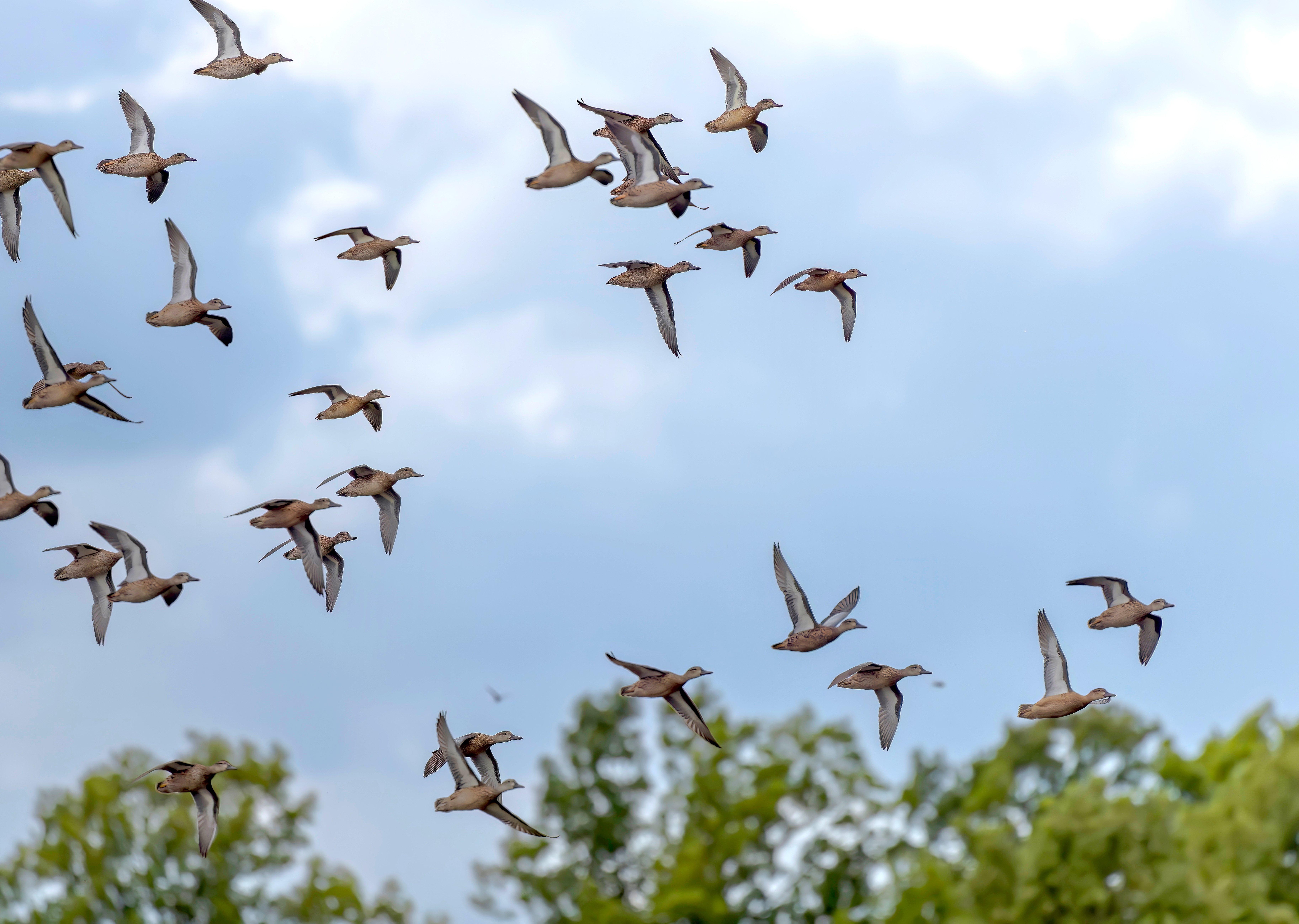
Teal are extremely agile in flight and might not slow down when they buzz your decoys. Be ready. Photo by Karel Bock.
Early teal seasons might be waterfowling’s ultimate hors d’oeuvre, offering the chance to taste a bit of duck hunting’s delights and previewing greater things to come.
But those twisting bluewings and greenwings can also expose any hints of wing-shooting rust that have crept in since January. In fact, some common teal hunting shots can drive you nuts and prompt very un-family-friendly language.
Preparing for those tough chances can help. Let’s review five challenging shots common in teal hunting and identify how to master them.
CLASSIC SPRINGING TEAL
If you’ve shot sporting clays anywhere, you’ve experienced a springing teal station, at which targets spring up vertically and at odd angles. The target is basically a trick shot, but it accurately represents how green-winged teal often flare when spooked or after being shot at. And it’s pretty deceptive if you’re not ready for it.
Hunters often miss this shot for three reasons: They rush, they don’t swing ahead of the target and follow through, or they get overconfident and try to shoot the target as it slows near its apex. Treat this shot like a vertical crossing target. Swing your barrel aggressively through and ahead of the bird, slap the trigger when your brain says “fire,” and continue following through. Practice for this shot by having a buddy with a hand-thrower hurl clays straight up. Or set a ground trap to throw birds almost vertically.
Don’t Miss: Early 2025 Duck Numbers Look Mixed
THE SWITCH-A-ROO
A flock of bluewings can resemble a swarm of bees, with birds balling up and switching positions as they approach. That can make it difficult to focus on one duck. And it’s especially tough when you’re hunting with a group and need to take the correct bird — not the easier one in front of your buddy.
As a flock approaches, resist the temptation to lock in on a duck and assume that’s the one you’ll shoot at. It might slow up at 3 o’clock and be overtaken by another. Focus on your safe zone of fire — 10 o’clock to 2 o’clock, and directly overhead — and only shoot at teal within that zone when the shot is called. That might mean firing at a swift crosser instead of taking the candy duck to the left or right, but don’t sweat it. If the hunting is any good, you’ll have more opportunities.
THE ROCKET
Science has proven that teal aren’t the fastest ducks in terms of straight-line speed. However, they are small and extremely agile, and crossing shots at small birds that zip across your blocks are still challenging. This might be duck hunting’s most basic shot, yet it has embarrassed more hunters than any other.
No secrets here. Swing that barrel through and ahead of the bird, and continue that follow-through after you fire. Don’t “float” the bird by attempting a sustained lead and stopping your gun. Be aggressive. For practice, sit on Station 4 at a skeet field, and shoot a bucket of shells at left-to-right and right-to-left crossers. And remember, if you miss, it’s usually not because you’re too far ahead of the target.
AERIAL ACROBATICS
Mourning doves are likely the kings of this category, but teal have some nifty aerial moves, too. They seemingly change direction on a dime, turning that straight overhead shot or low crosser into a fumbling, off-balance three-and-out.
You can’t really practice for these contingencies, but you can be ready for them. As teal approach, don’t assume they’ll continue on the same path. Be prepared for a sudden turn, swift ascent or subtle change of angle. Concentrate on moving your gun quickly to the target, and don’t hesitate when birds offer a shot. Focus on your first round, but be ready for chaos if you miss.
Don’t Miss: 4 Ways to Plan Ahead for a Better Duck Season
GOING AWAY
Like many ducks, teal often zip over your head from behind and continue going away. This really isn’t a tough shot, but it sometimes drives me nuts. Why? If you rush the chance or don’t have your feet positioned correctly, it’s easy to shoot over the bird.
Find a clays course with a decent going-away target thrown from a trap behind you, and practice the shot. Focus on picking up the bird with your eyes, shouldering your gun swiftly and smoothly, and then getting on target. Don’t hurry, because you have more time than you think. And don’t shift your feet or twist yourself off-balance. Bring your shotgun to the target, and fire when the bird is floating on the front bead. It’s almost as instinctive as shooting a standard straight-away trap target — if you keep your wits.
SHOTS AT TEAL
Spoiler: If you hunt a lot during teal season, you’ll probably miss a few shots. Don’t fret. Focus on quality opportunities and good wing-shooting technique. Through time, your hits will increase. And you’ll find that it’s easier to laugh off a few misses when you have a mess of early season ducks on your strap.