How do you make the most tender cut of a deer even more tender? Read on.
Beef Tallow Sous Vide Tenderloin
10 Min
Prep Time
180 Min
Cook Time
2-4
Servings
Easy, Medium
Difficulty
Just about every hunter loves the tenderloin from their deer. For those unfamiliar, the tenderloin is the muscle that lies along either side of the backbone where the ribs meat the spine. If you field dress your deer, simply remove them through the body cavity. If you use the western, or gutless, method, reach in under the ribs after you have removed the backstrap and remove them from either side. The same muscle in a steer would be the filet.
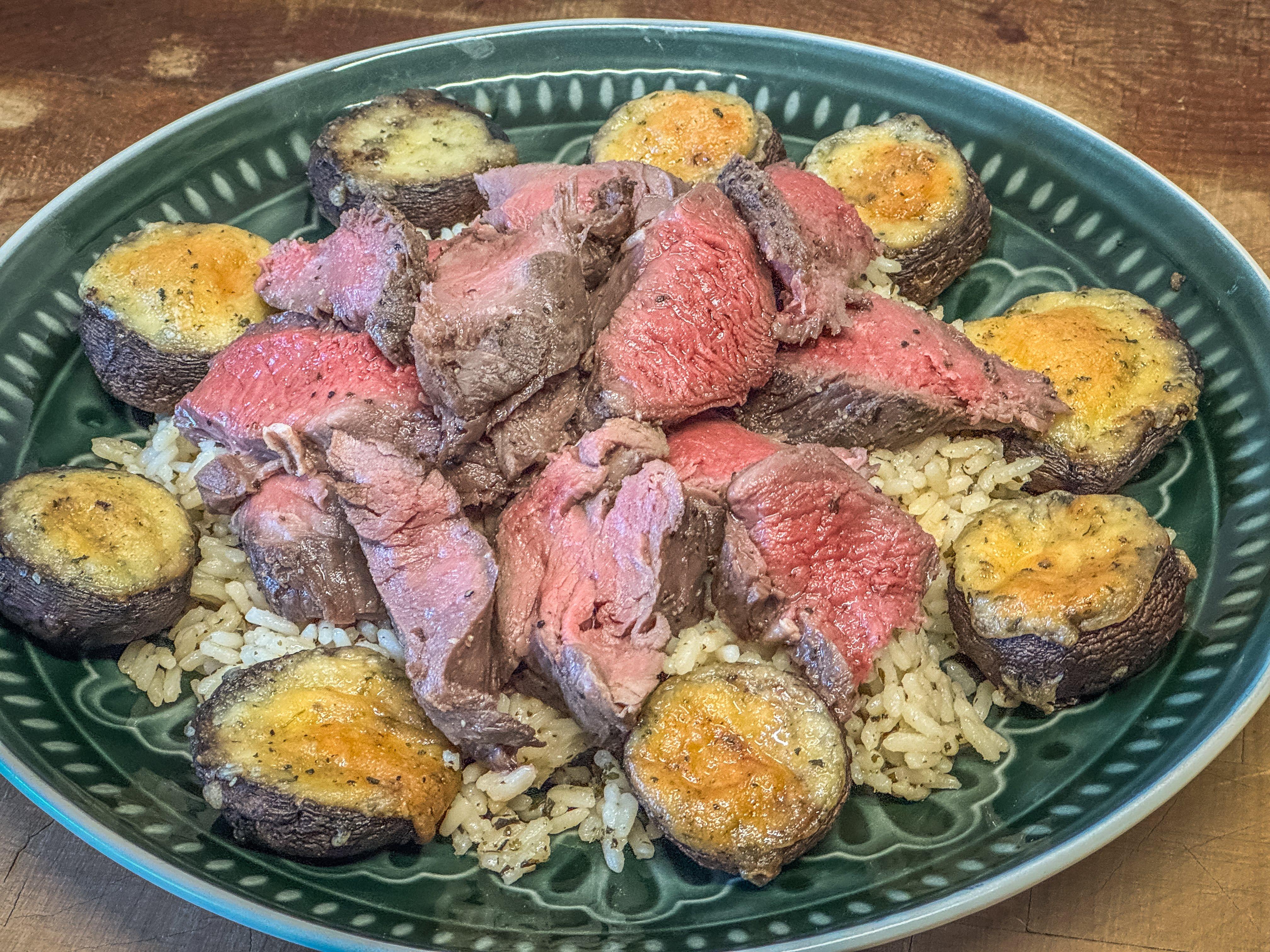
Want to make a tenderloin even more tender and delicious? Try this method. Images by author
Because the muscle lies inside the backbone, it doesn’t get a lot of hard use the way a deer’s legs do. That makes it the most tender cut on your deer, even more tender than the backstrap.
But what if you want to make it even MORE tender? Like cut with a fork, you don’t even need a knife, tender?
You can slow cook it, but that means it will be well done and you will lose a lot of flavor. What you need is a way to cook the tenderloin for a long period of time in a controlled temperature environment so that it doesn’t get overdone. Enter the sous vide, French for water bath, or something along those lines.
Sous vide cooking has been a restaurant staple for years, but home units now abound so that anyone can use the cooking method. It’s pretty simple. The food gets sealed in a bag, usually with a bit of extra fat for flavor, and submerged in circulating water. The sous vide machine keeps that water at a precisely set temperature. For most of my venison, my choice of temperature is 127.5 degrees for a nice medium rare. Since the water never gets above that temperature, the food inside doesn’t overcook. You can leave it in for hours while the muscle fibers slowly break down. The result is a fork tender, perfectly medium rare bite.
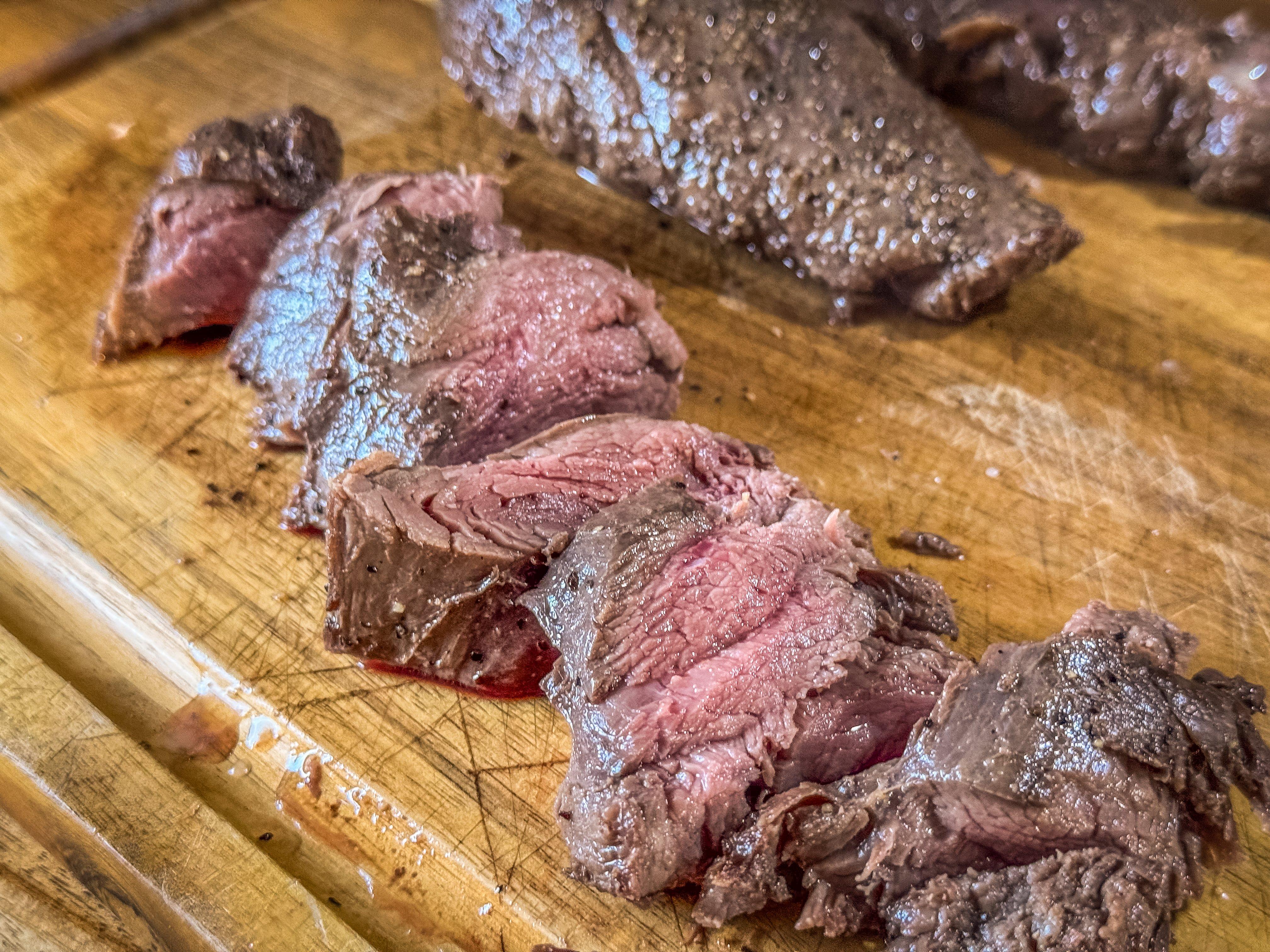
You can cook the tenderloin for hours without ever taking it above medium rare.
Since venison is lean by nature, a bit of fat always helps the texture. For this one, I went with beef tallow for extra flavor. You can render your own beef tallow from excess fat you trim from steaks, roasts or brisket, or simply buy it at most grocery stores.
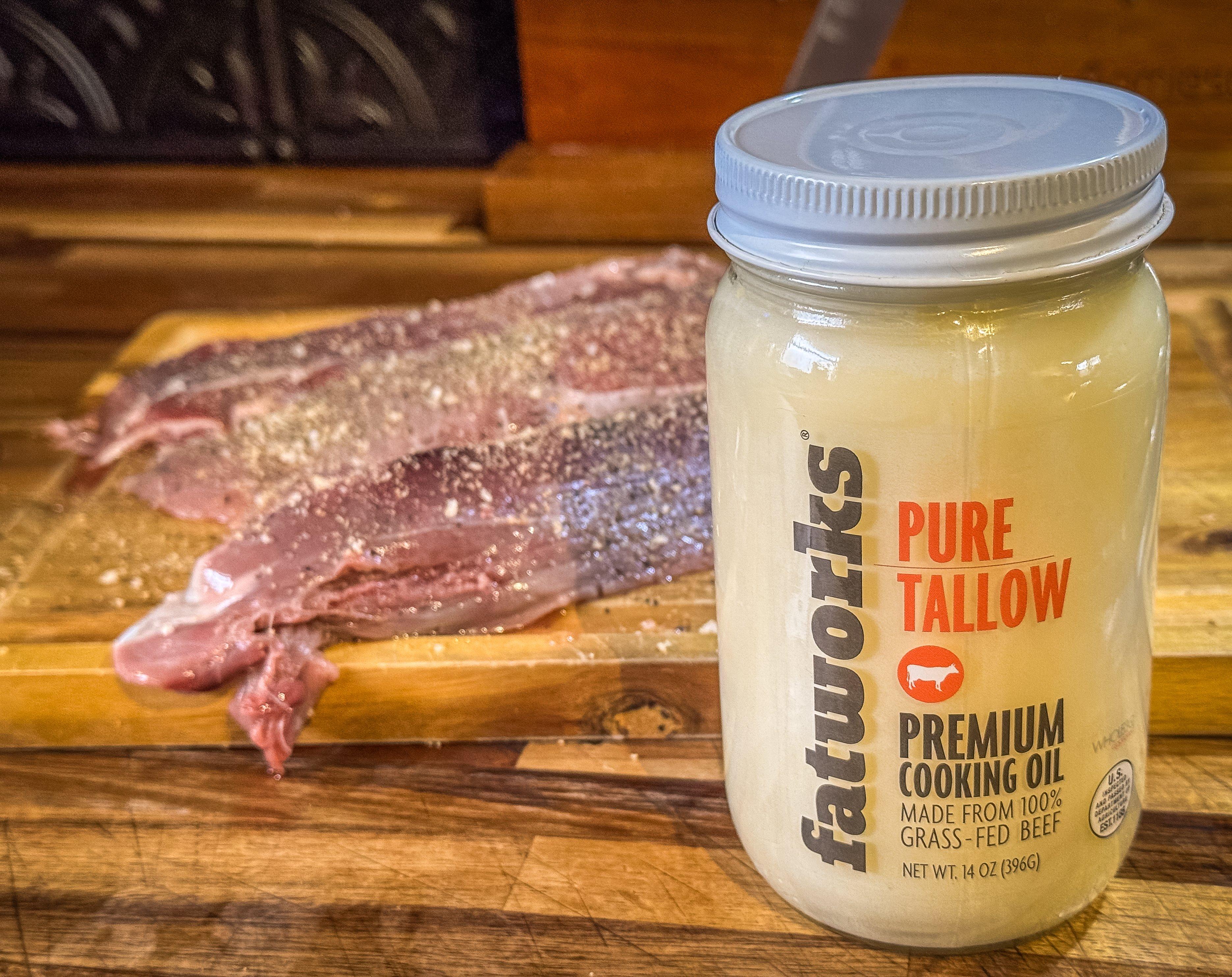
Beef tallow makes a nice added fat when cooking the tenderloin.
The one drawback to sous vide cooking is that you don’t get the nice brown caramelization on the meat surface that you do with high heat cooking. While the meat is perfectly done when it comes out of the bag, it isn’t very attractive. But a nice sear fixes that problem. I like to use a blazing hot cast iron skillet for this step. Simply add a spoonful of additional beef tallow to the pan over medium-high heat. Once it starts to smoke, place the venison into the skillet and sear it on all sides. You aren’t really cooking it now, just getting good color on the surface, so a few seconds per side is all it takes.
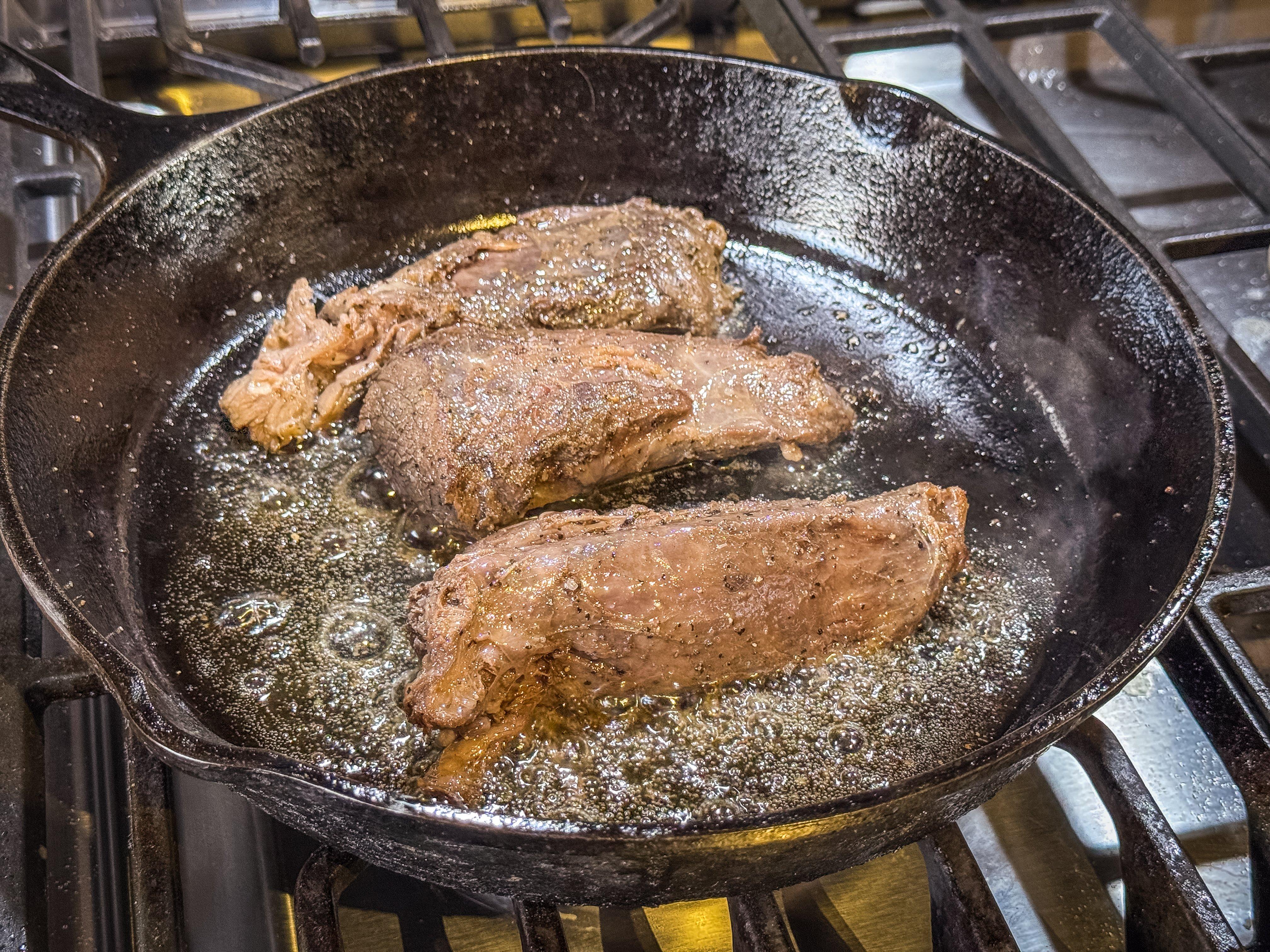
Browning the surface over high heat adds even more flavor and makes the meat more attractive than sous vide cooking alone.
When sous vide cooking, I like to lightly season the meat before placing it into the bag, then season again before the sear. Lightly use Realtree APX or your choice of meat rub.
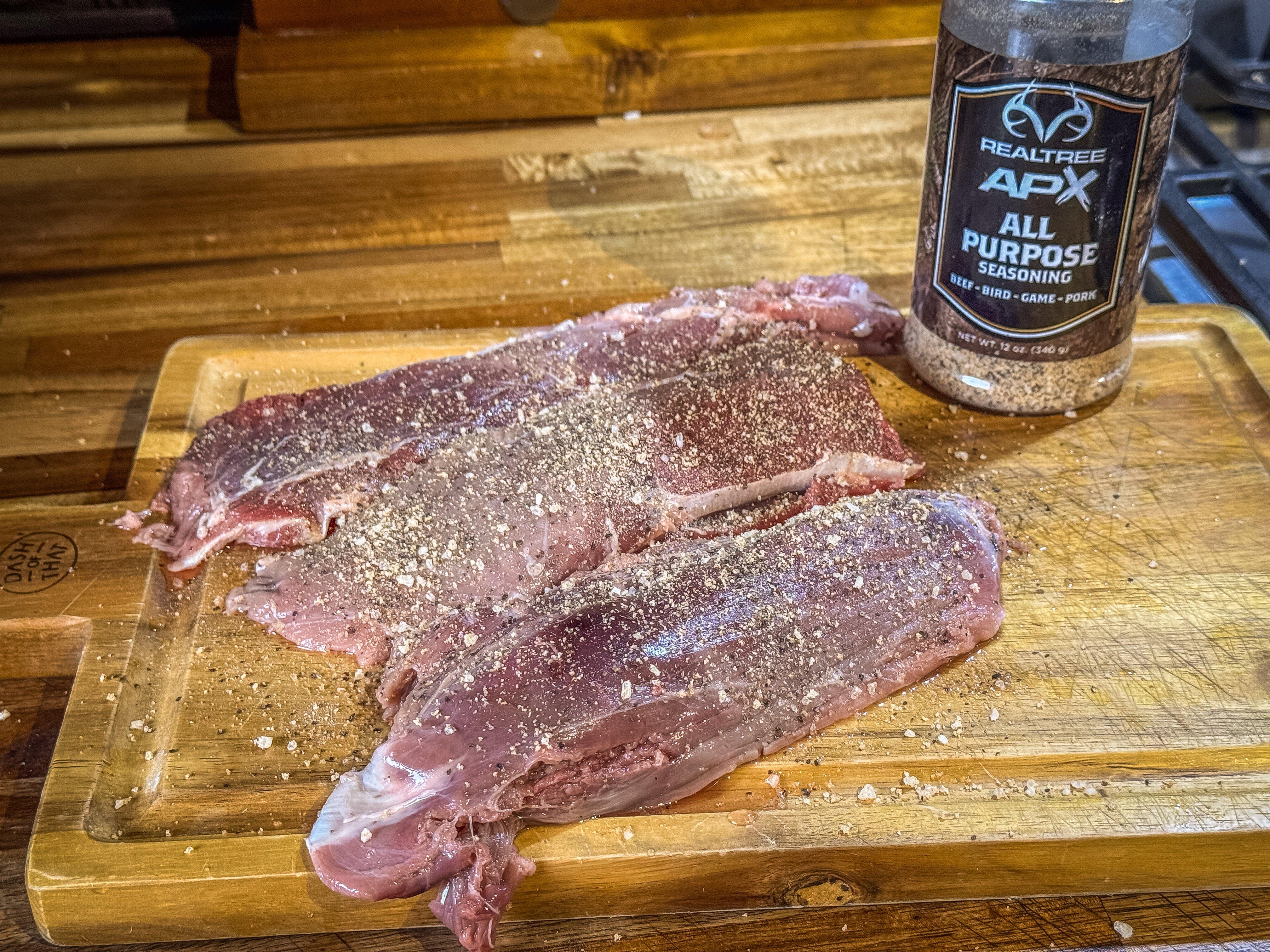
Lightly season the meat before sous vide cooking.
You can vacuum seal the meat or use a zip top, food safe, freezer bag. If you use a freezer bag, squeeze all the excess air out before dropping it into the water bath. I’ll usually double bag the meat when using zip top bags as added insurance to keep any water from coming into contact with the meat surface.
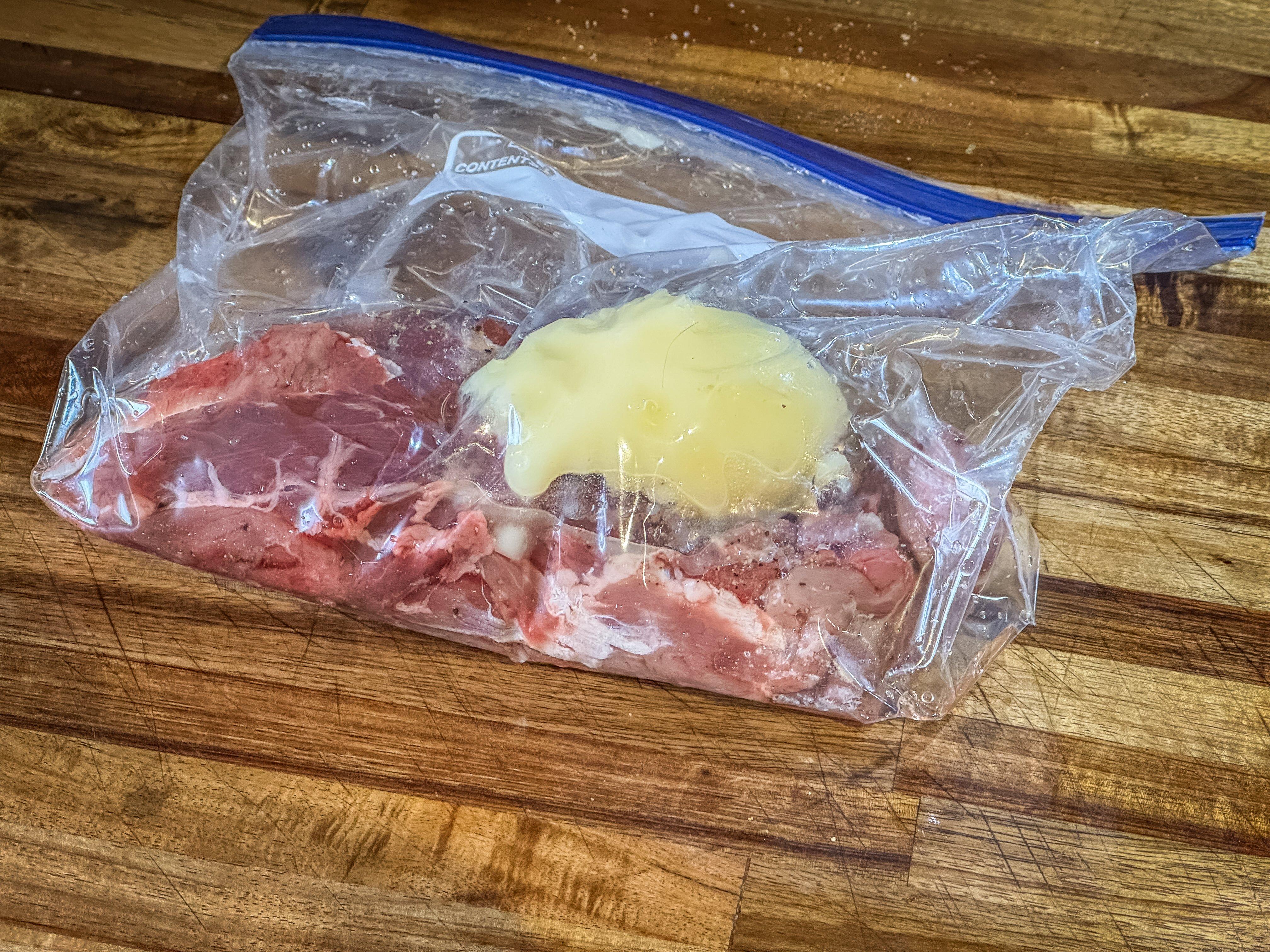
You can vacuum seal the meat or just use a food safe zip top freezer bag.
Most home sous vide units use a pot or other container of some sort to hold the water bath. You can also buy all-in-one units that have a built in chamber for the water, but those take up a lot of counter space.
Don’t Miss: VENISON STEAK TIPS AND NOODLES WITH MUSHROOM GRAVY
I use a stock pot for my sous vide cooking. Clamp the unit onto the side of the pot and fill to the indicated level on your unit using hot water. You can use cold, it just takes a lot longer for the water to come to temperature if you do. Set the unit and your desired finished temperature and turn it on. You will see the water start to circulate inside the pot. The temperature will display on the unit surface. Once it reaches your set temp, you are ready to cook.
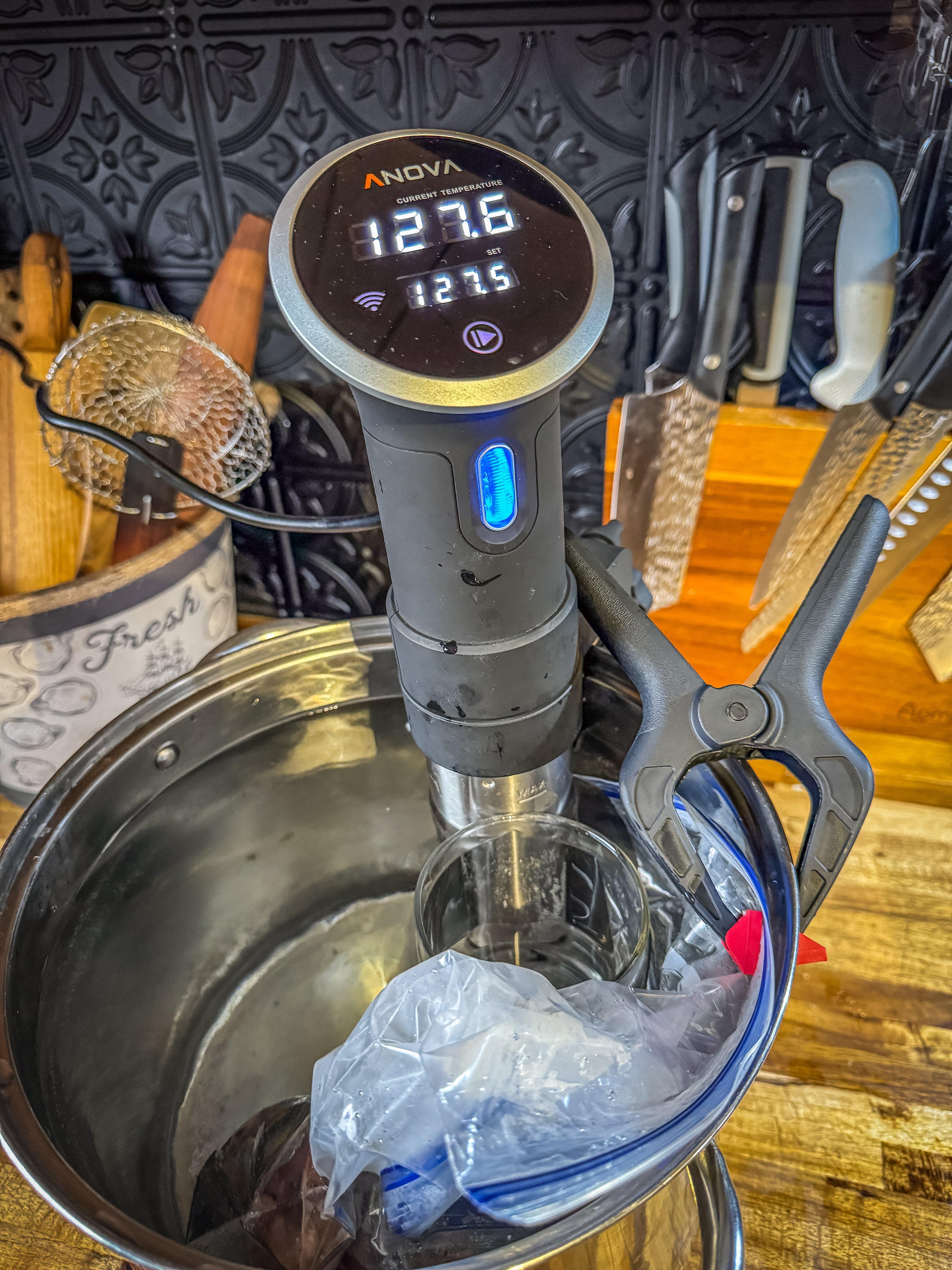
Set the sous vide unit at your desired doneness temperature.
Simply place the lightly seasoned meat into your bag of choice. Add the beef tallow or your fat of choice. You can also add fresh herbs like a sprig of rosemary or some thyme at this step, if desired. Seal the bag tightly and then submerge it in the water bath. If your bag wants to float, simply weight it down with a heat proof cup or plate.
Don’t Miss: CRISPY FRIED DEER HEART BREAKFAST BISCUITS
That’s it. You are cooking. Now go do something else for two or three hours. Since the water never gets above your set temperature, the meat won’t either. All the while, the low heat is breaking down the connective tissue, making the meat tender.
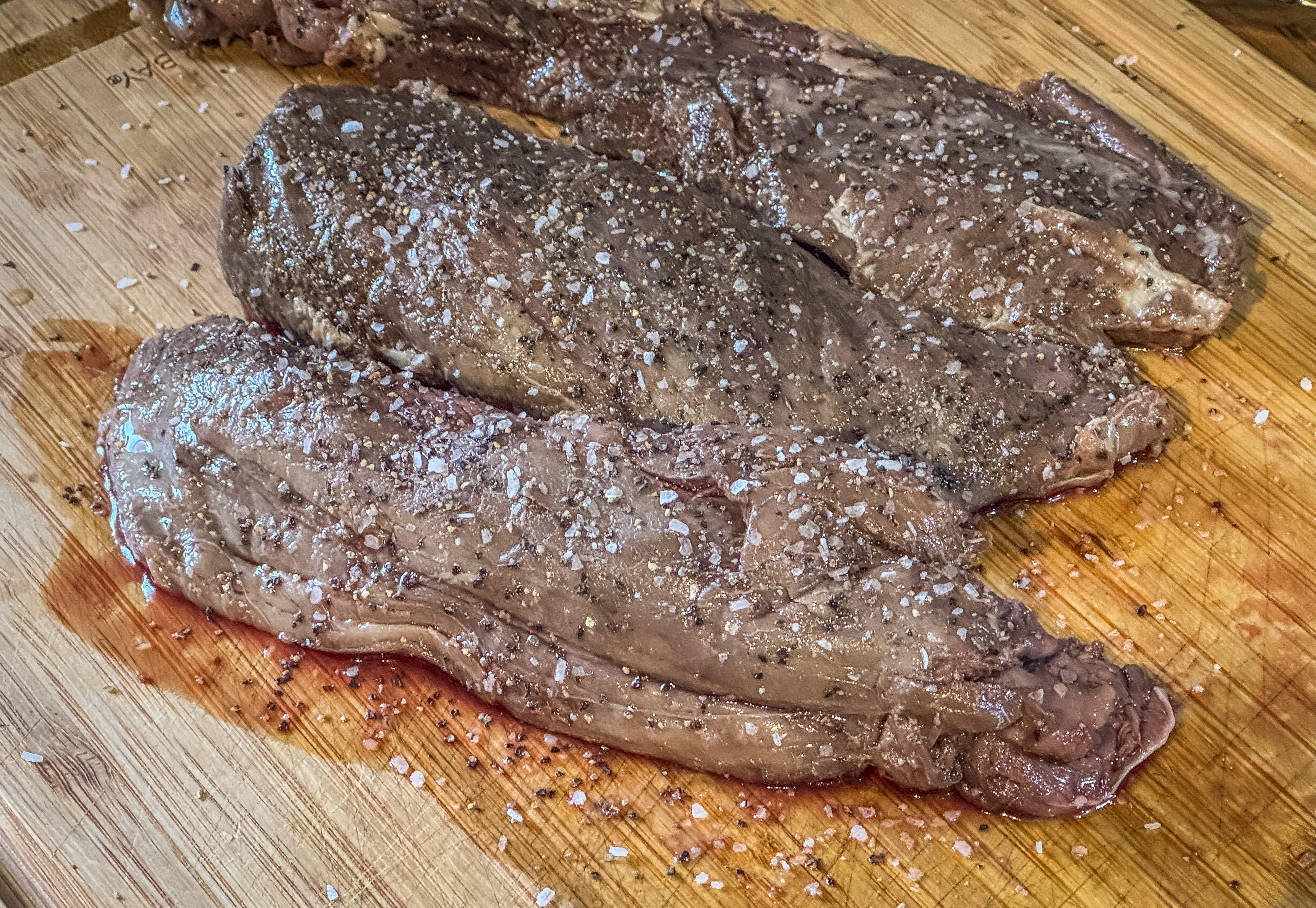
Lightly season again before browning the meat surface.
Once the tenderloin has cooked, remove it from the bag. Pat dry with a paper towel and season lightly again. Heat additional tallow in your skillet and sear the tenderloin to a nice brown. Slice before serving.
This recipe is also a great way to cook the narrow end of a backstrap that might be too skinny to cut into steaks.
Ingredients
2-4 venison tenderloins or backstrap sections
1 tablespoon beef tallow plus more for searing
Realtree APX or other all purpose steak rub
author at Timber 2 Table recipes