
An unusual way to cook quail over an open fire might just turn into one of your favorite way to serve the popular game bird
Fire Roasted Glazed Quail
20 Min
Prep Time
60 Min
Cook Time
Medium
Difficulty
At a recent Realtree and Crown Royal event, I was tasked with cooking several wild game dishes for a group of media members that were, by and large, new to wild game. Here’s the catch. We were cooking each dish over an open fire. We cooked a few of the classics, bacon wrapped dove poppers, grilled venison backstrap sliced and served on crispy toast crostini with a sweet and savory sauce, even a wild turkey stir fry, but the most challenging dish to cook turned out to be the quail.
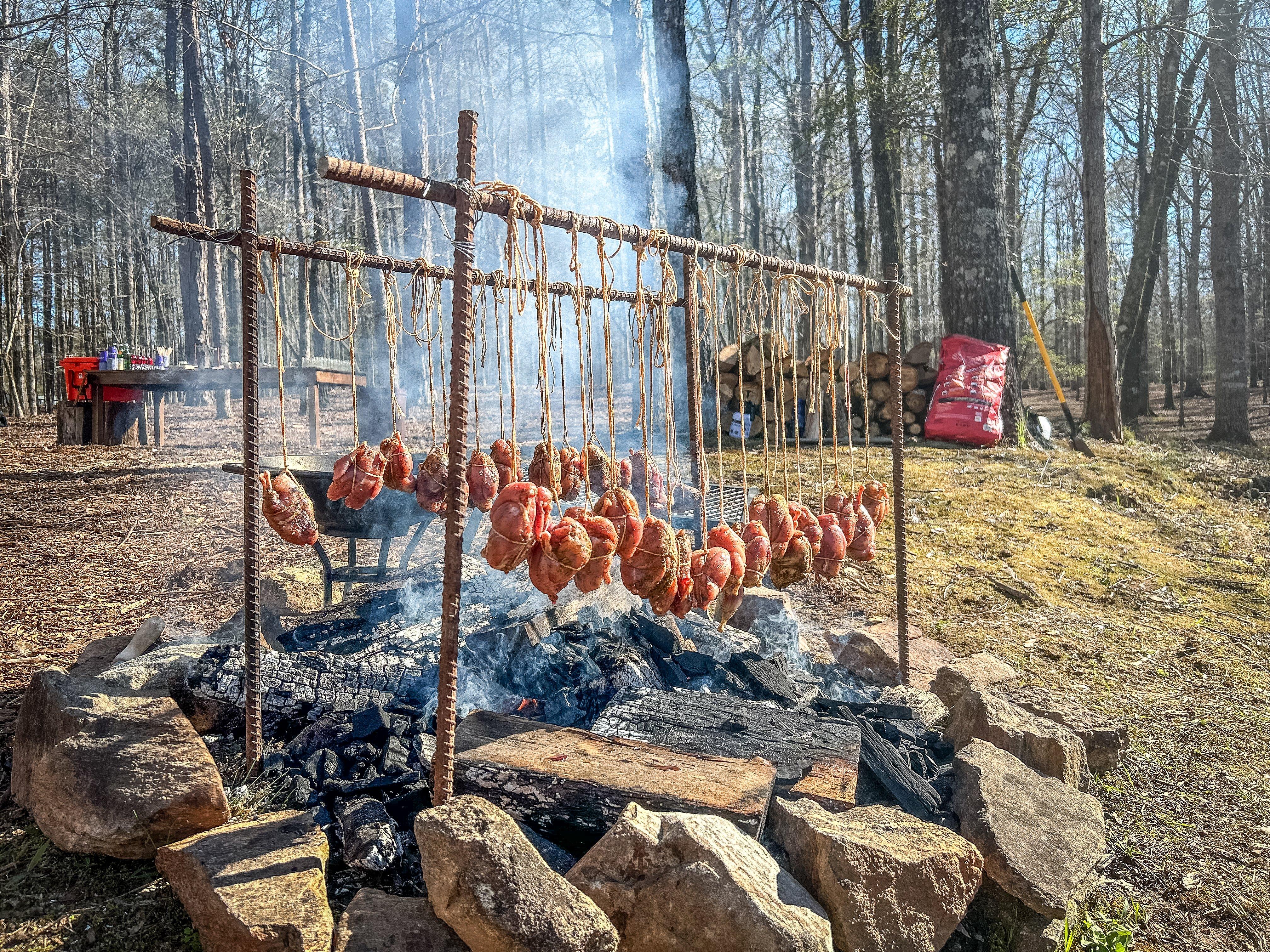
While quail often get fried, roasted over an open fire is one of my favorite ways to cook this popular game bird. Images by author
Mention quail and most hunters immediately picture a plate of fried crispy golden goodness. I’ll admit, I do love fried quail, but frying quail for that many folks over an open fire would be difficult at best. Instead, we fire roasted whole quail over a bed of coals, glazing them as they cooked with a citrus based sauce.
To accomplish that, we built a framework of rebar over the fire bed. Each quail was trussed with butcher’s twine with a long tag end to suspend the quail from the metal frame.
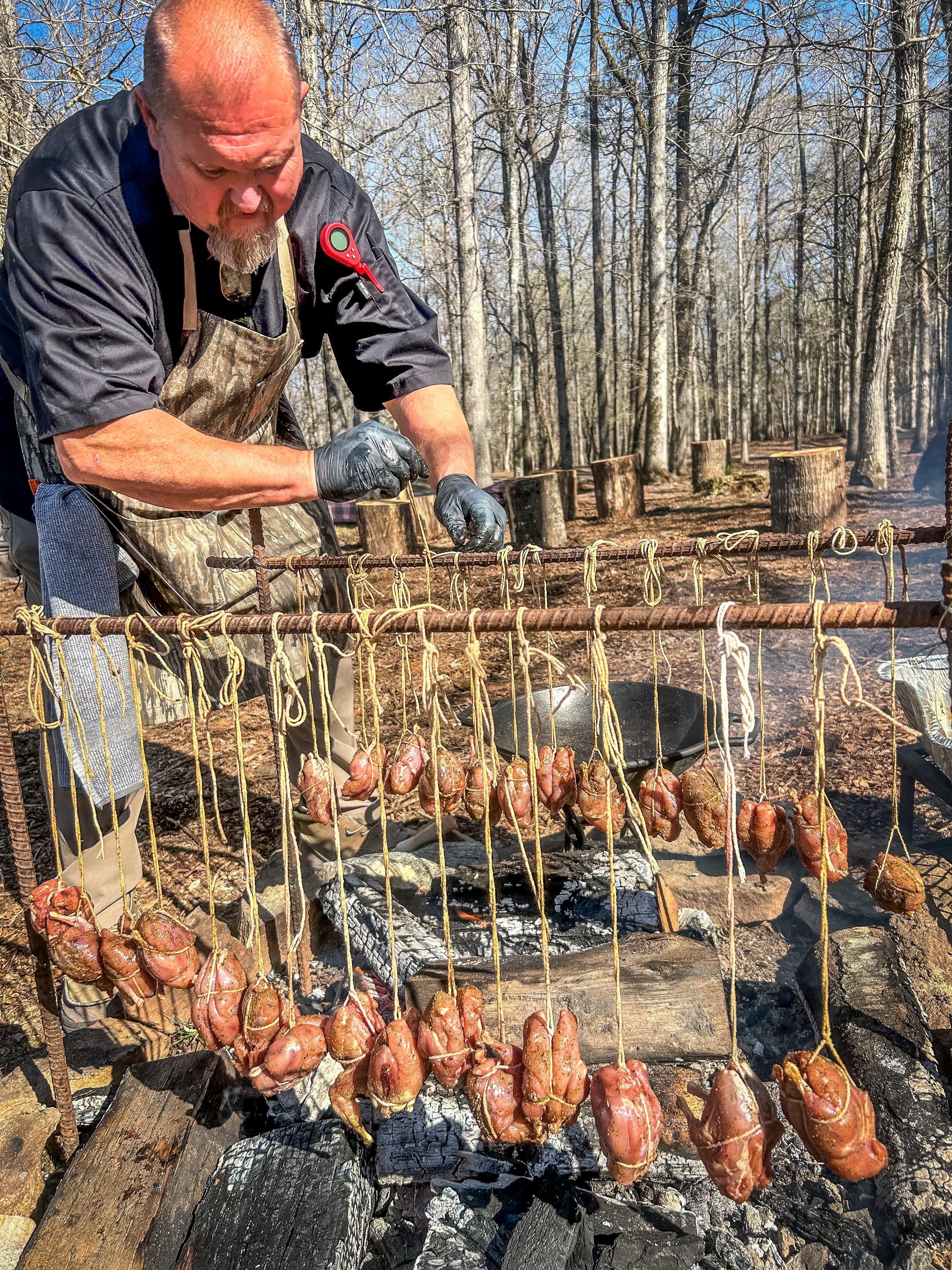
Truss the quail with butcher’s twine and hang them from a support structure over the fire.
Here’s a tip anytime you are cooking something suspended by cotton butcher’s twine. Keep a spray bottle of water on hand and give the strings a spritz from time to time while you cook to keep them from drying out and burning.
The quail for this one can be skin-on or skinless, your choice. Both have pros and cons. Skin on adds a ton of flavor and helps to keep the meat from drying out. Skin off is less likely to burn and is easier to prep if you don’t have time to pluck several quail. The cooking times and method are about the same for either style.
To truss the quail, start with about six feet of butcher’s twine. Double it up. Loop the looped end of the string around the legs and the body of the quail, tying to secure. Leave the long tag ends for suspending the quail from the framework.
If you want to try this recipe, but don’t want to build a fire and a metal frame, you can cook it on a grill by suspending the quail from an upper cooking shelf.
Season the quail with your favorite blend. I used a simple salt/pepper/garlic rub.
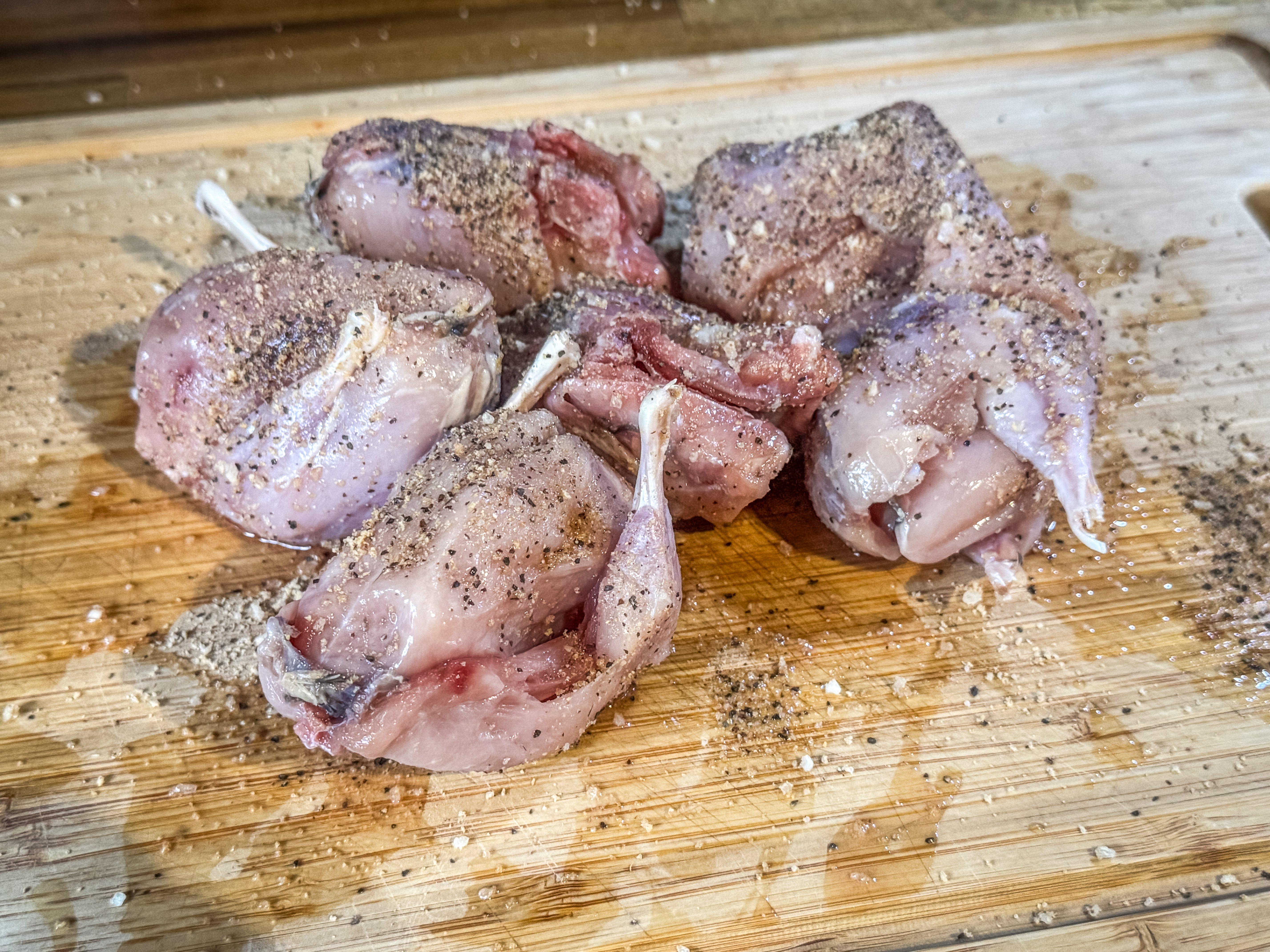
Season the quail with a simple salt/pepper/garlic blend.
Before suspending the quail one the fire, build your glazing sauce. In a medium saucepan, blend all the sauce ingredients. Bring to a boil. Reduce the heat to a simmer and cook the sauce for ten to fifteen minutes or until it thickens slightly.
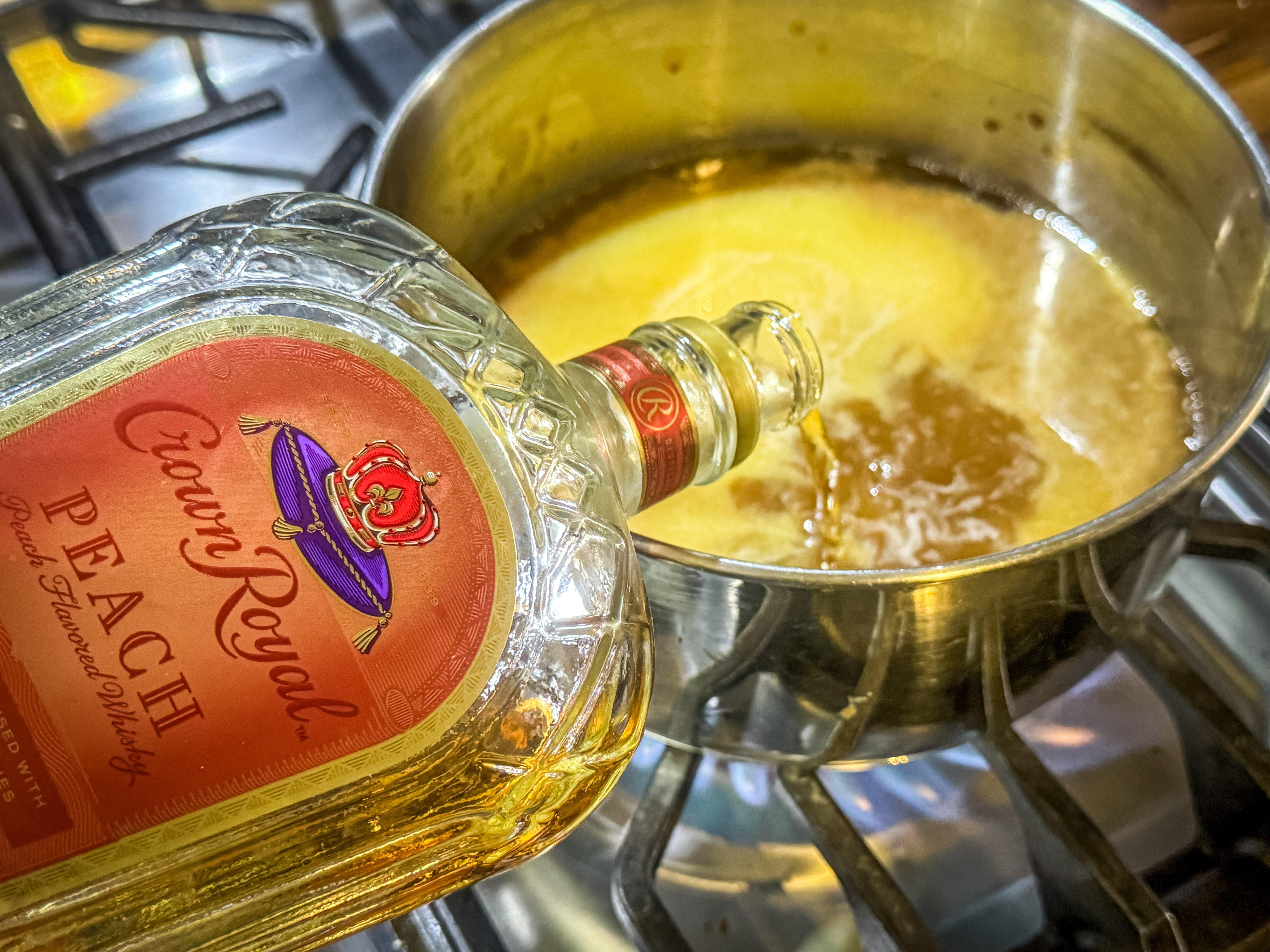
Make the glaze in a saucepan.
Suspend the quail over the fire. The beauty of the string system is that you can raise or lower the quail, depending on the temperature of your coal bed. I start with about 12 inches of space and go up or down, depending on fire temp. You want the quail to lightly sizzle as it cooks. Every ten minutes or so, use a brush to apply a thin layer of glaze.
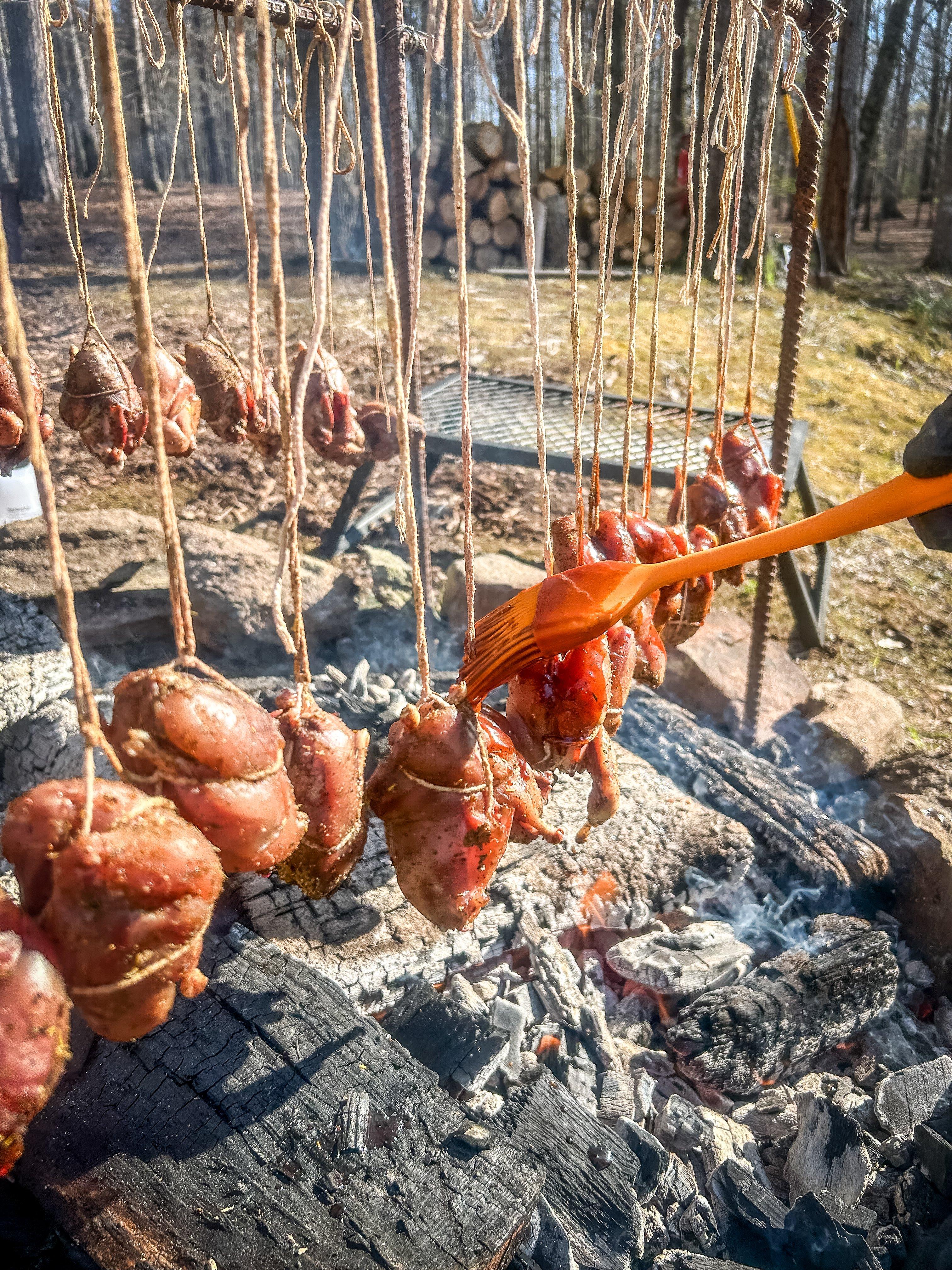
Glaze the quail every few minutes over the fire.
The sauce will become tacky over the open coals, giving you a good base to hold the next layer.
Monitor the temperature with a digital thermometer. Start checking after about 25 minutes of cook time. You are shooting for around 150 degrees in the thickest part of the meat.
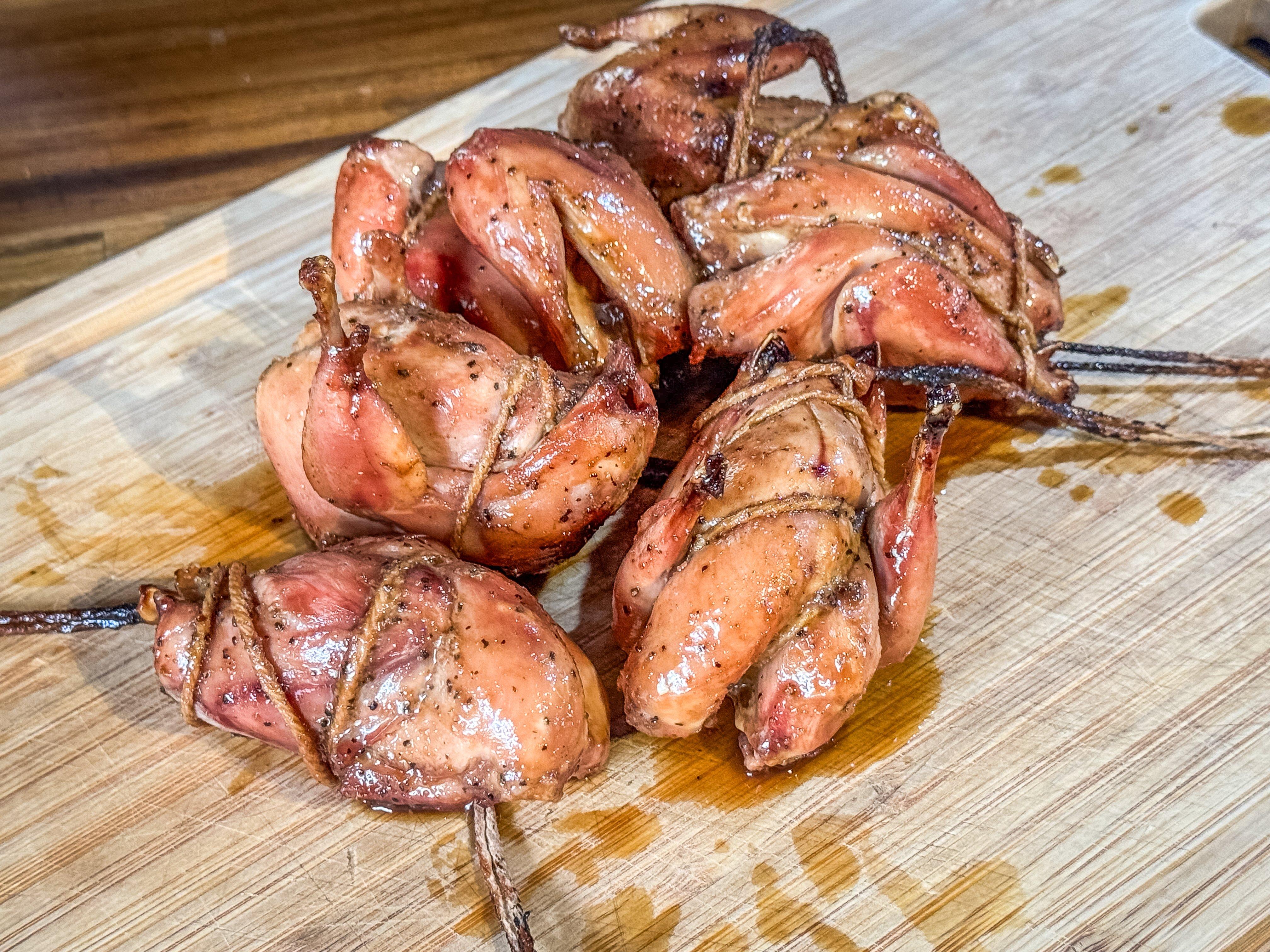
Clip the strings and move the quail to a cutting board to remove the twine.
Once your birds are to temp, use a knife or a pair of scissors to cut the strings. Drop the quail into a pan and let them rest for five to ten minutes. Go ahead and remove the strings before serving.
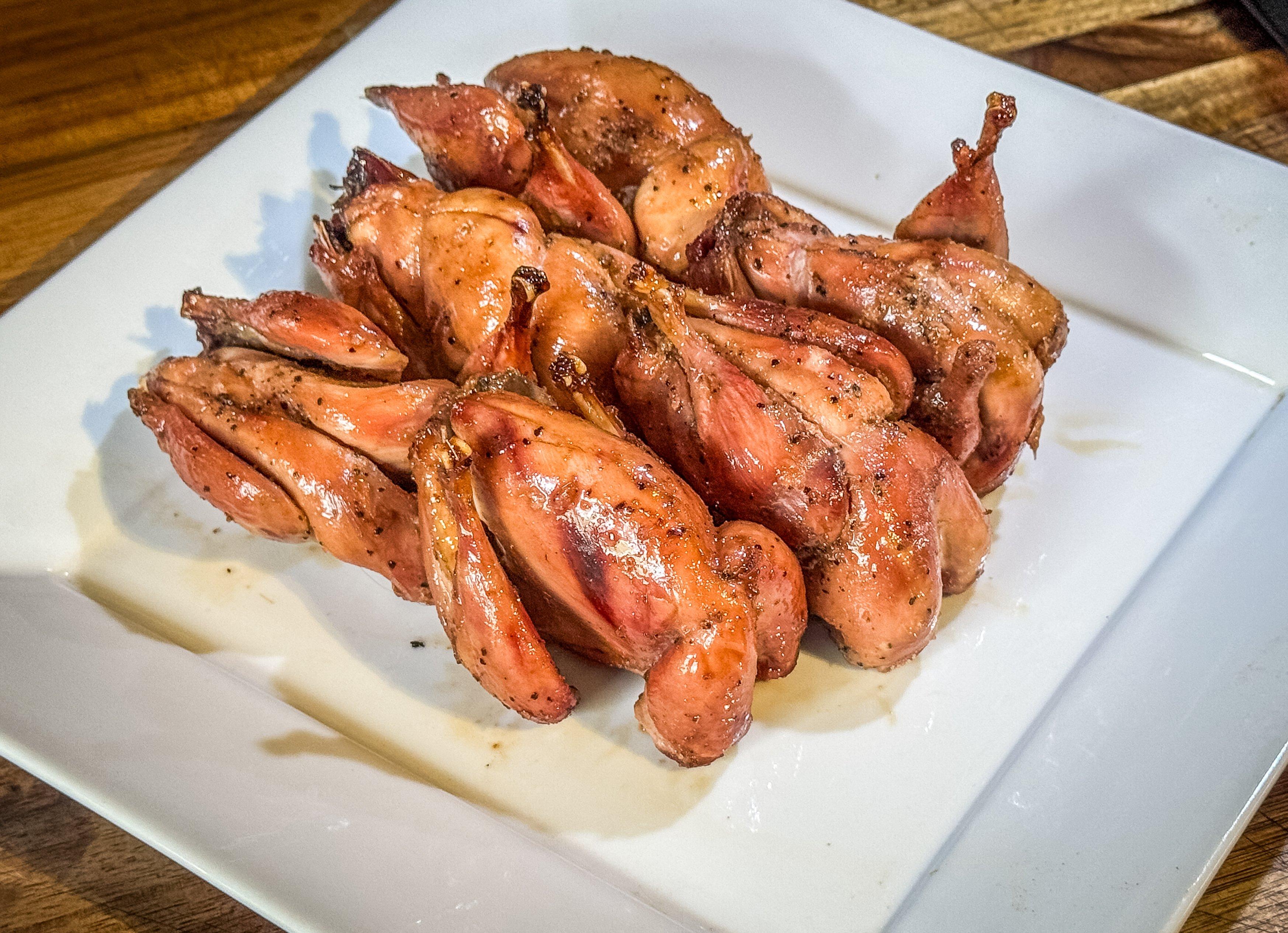
Figure one to two quail per guest, one as an appetizer or two as a main course.
Don’t Miss: TEXAS STYLE VENISON CHILI
author at Timber 2 Table recipes