
These fragrant wild plants are growing right now and they make an outstanding addition to a buttermilk biscuit
Ramp Cheddar Biscuits
20 Min
Prep Time
20 Min
Cook Time
3-5
Servings
Medium
Difficulty
Ah, the sounds of spring. Birds calling, turkeys gobbling, fish biting, and people arguing about ramps. Should they be dug or cut? Are they even good to eat? Should you pick all you find or just take a few leaves from each plant?

Wild ramps can be found across most of the eastern U.S. in late April and early May and they make a savory, herbal addition to many recipes. Images by C. Waters
What are ramps? They are wild leaks native to the eastern U.S. Think of a mix of green onion and garlic flavors. They grow in wooded areas, often in damp creek bottoms. In some areas, namely the northern and southern parts of their range, they may only grow in isolated patches, but in many areas, they sprout in great numbers. For ramp lovers, the Appalachian Mountains are Mecca, with many areas producing vast carpets of the pungent plant in April and May. Ramps feature a bright green pair of leaves, 6-8 inches tall, with reddish stems and a white bulb. As with all wild plants, if you aren't an experienced forager, find one to go with until you know what you are looking for and where to find it.
Don’t Miss: RAMP AND MOREL MUSHROOM RAVIOLI WITH RAMP COMPOUND BUTTER
Here’s the issue with harvesting ramps. They are slow growers. Even if you limit your harvest to 25% of the standing crop, some studies have shown that it takes decades to build back to pre-harvest numbers. With everyone out searching for the prized edible plant, that means an area could be wiped out pretty quickly if over harvested.
While the bulb part of the plant is tasty, like a mild garlic clove, digging the entire plant means that particular plant will never reproduce. Instead, take a lesson from Native Americans who knew how to sustain their ramp harvests by only picking one or two leaves from each plant, leaving the bulk of the leaves and the main bulb behind to continue growing.

The ramp leaves make a savory addition to pastries like these biscuits.
Once you have a mess of ramps, what do you do with them? Good friend and avid hunter and wild plant forager Christina Waters likes to incorporate them into dishes like these Ramp Cheddar Biscuits. She shared her recipe with Timber-2-Table readers.
Preheat oven to 450.
Whisk flour, sugar, baking soda, baking powder and salt in a large bowl. Add cold butter slices and lard and cut into flour with a pastry cutter until the mixture is crumbly and the fat is evenly distributed.
Stir in ramps and cheddar, and then add the buttermilk. Mix to a shaggy dough.
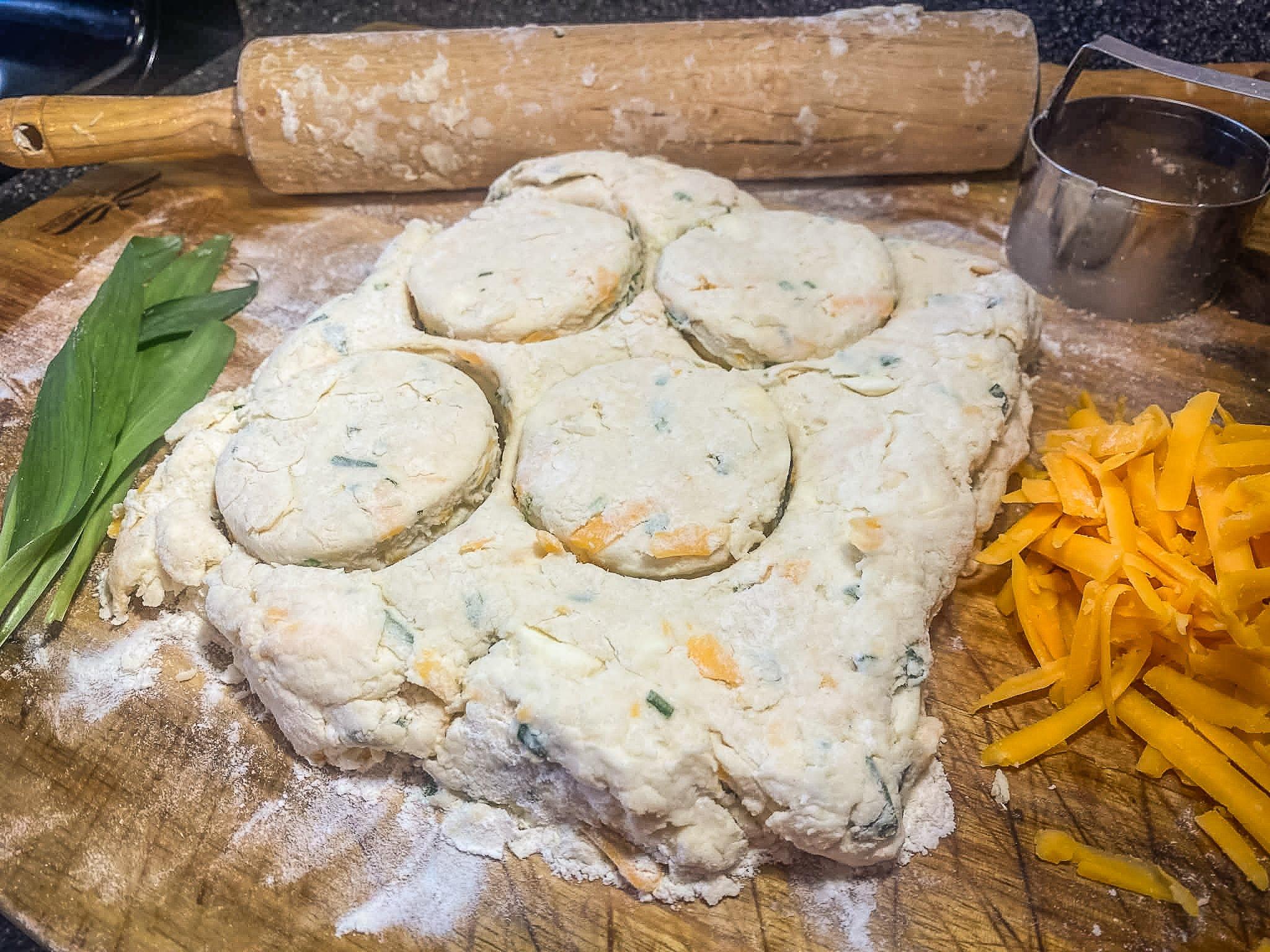
Mix the dough and turn it onto a floured surface.
Turn dough onto a flour surface and pat to make a rectangle. Fold the rectangle in thirds and flatten back to a rectangle. This makes flaky layers in the finished biscuits. Repeat the folding process 2-3 times.
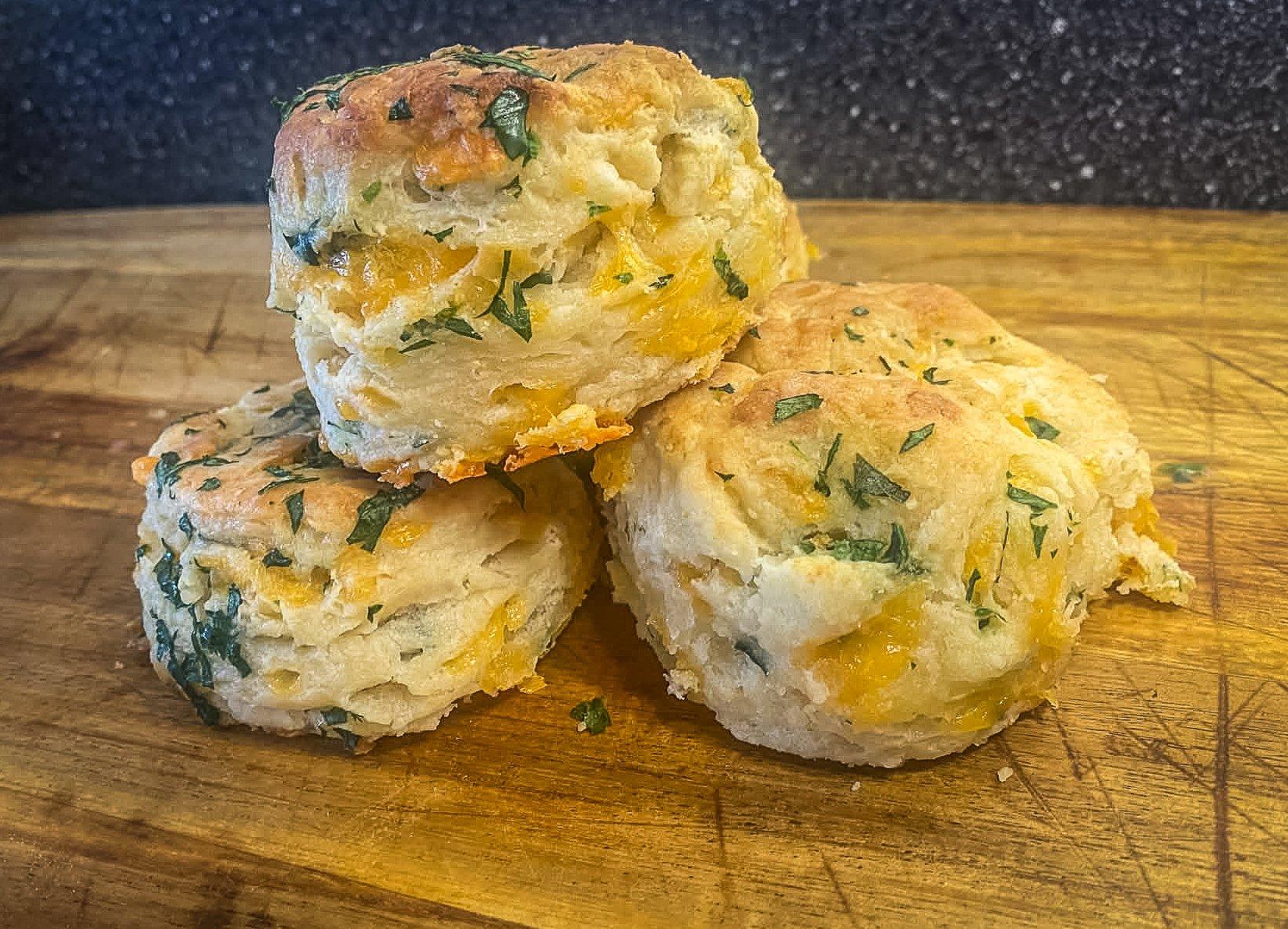
Folding the dough several times results in a biscuit with flaky layers.
Roll dough to 1/2 - 1 inch thick and cut with biscuit cutter. Transfer biscuits to a lightly greased or buttered cast iron skillet.
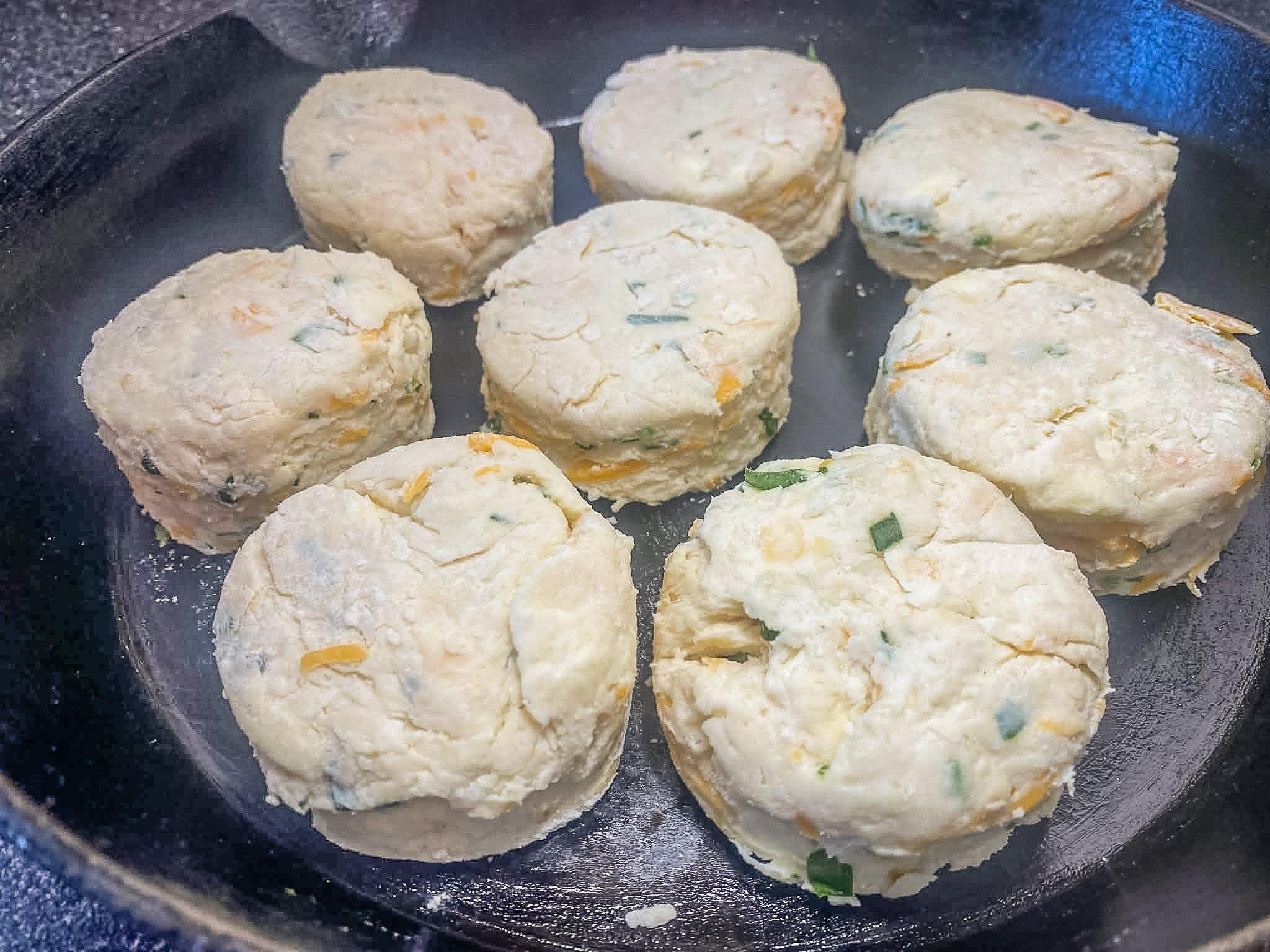
Transfer the biscuits to a lightly greased skillet or pan.
Bake for 12-15 minutes.

Bake to a golden brown and brush with the topping.
While baking melt 3 tbsp salted butter and mix in chopped ramps and parsley. Once biscuits are golden brown remove them from the oven and brush with mixture just before serving.
Don’t miss: PEACH WHISKEY BBQ SAUCE GRILLED WILD TURKEY
Ingredients
Biscuits:
2 cups all-purpose flour
1 teaspoon sugar
1 tablespoon baking powder
1/4 teaspoon baking soda
1 teaspoon salt
3 tablespoons unsalted butter (chilled and cut into small slices)
3 tablespoons lard
1 cup cold buttermilk
1/4 cup chopped ramp leaves
1 cup fresh grated cheddar cheese
Topping:
3 tbsp salted butter (melted)
1 tablespoon finely chopped ramp leaves
1 teaspoon chopped parsley

author at Timber 2 Table recipes