
Try adding smoky sausage, crispy garlic, and gooey cheese to your next batch of grilled oysters
Smoky Pig Grilled Oysters
20 Min
Prep Time
15 Min
Cook Time
4-6
Servings
Easy, Medium
Difficulty
I first saw the Apalachicola Bay more than 20 years ago. My wife and I pulled up on a bright, sunny day, seeking an escape from the hustle of Panama City Beach. What we found was a quaint little fishing town and a bay so full of home-built wooden oyster boats that you could nearly walk across it going from one boat to another without getting wet. We now spend most of our winters in the area. The watermen (and women) hand tong the oysters, so there’s no mechanical dredging to destroy the beds and scar the bottom of the Bay. If you have never seen oysters harvested this way, it is a thing of beauty, and backbreaking work if you ever try it yourself.
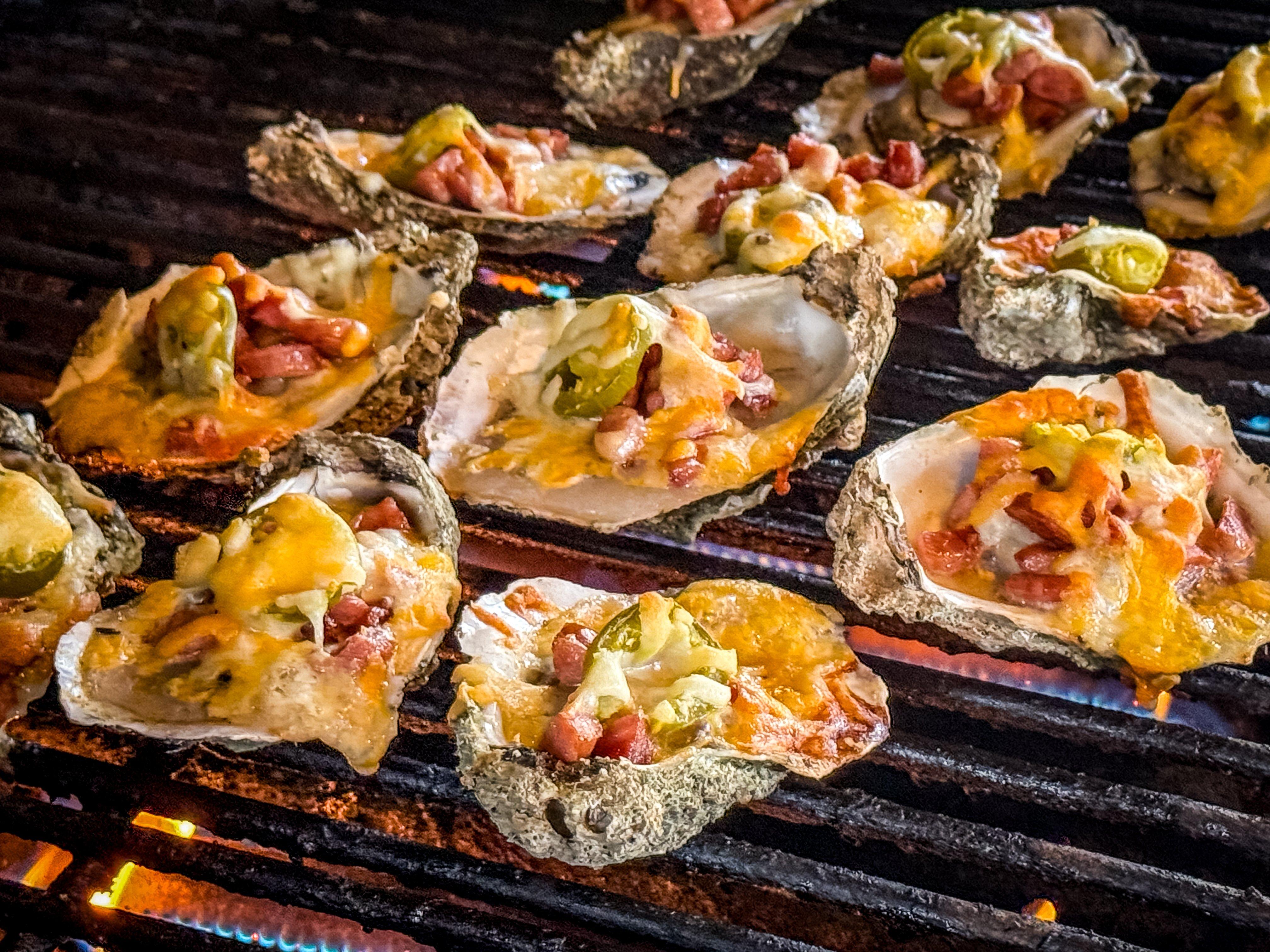
Fresh oysters from the Apalachicola Bay are among the best in the world. Images by author
The tongs are like a giant version of the hinged salad tongs you might have in your kitchen. The opposing wire baskets on the business end of the long wooden handles vary in width from 16 up to about 24 inches. The watermen drop the tongs down into the shallow water, holding the wooden handles in each hand while they open and close the basket at the end by spreading and bringing the handles back together. The opposing wire baskets at the bottom gather the oysters, holding them as the entire shooting match is brought to the surface and dumped onto the deck of the boat, where the clusters of oysters are broken apart with a heavy tool.
Oysters of correct size get dropped in the bag, while small oysters and pieces of shell get tossed back overboard. Oystering has been a way of life in the area for generations. Once you taste one of the briny prizes from the shallow water, you will realize why. I’ve eaten oysters from many areas, but I still come back to Apalach for my favorites.
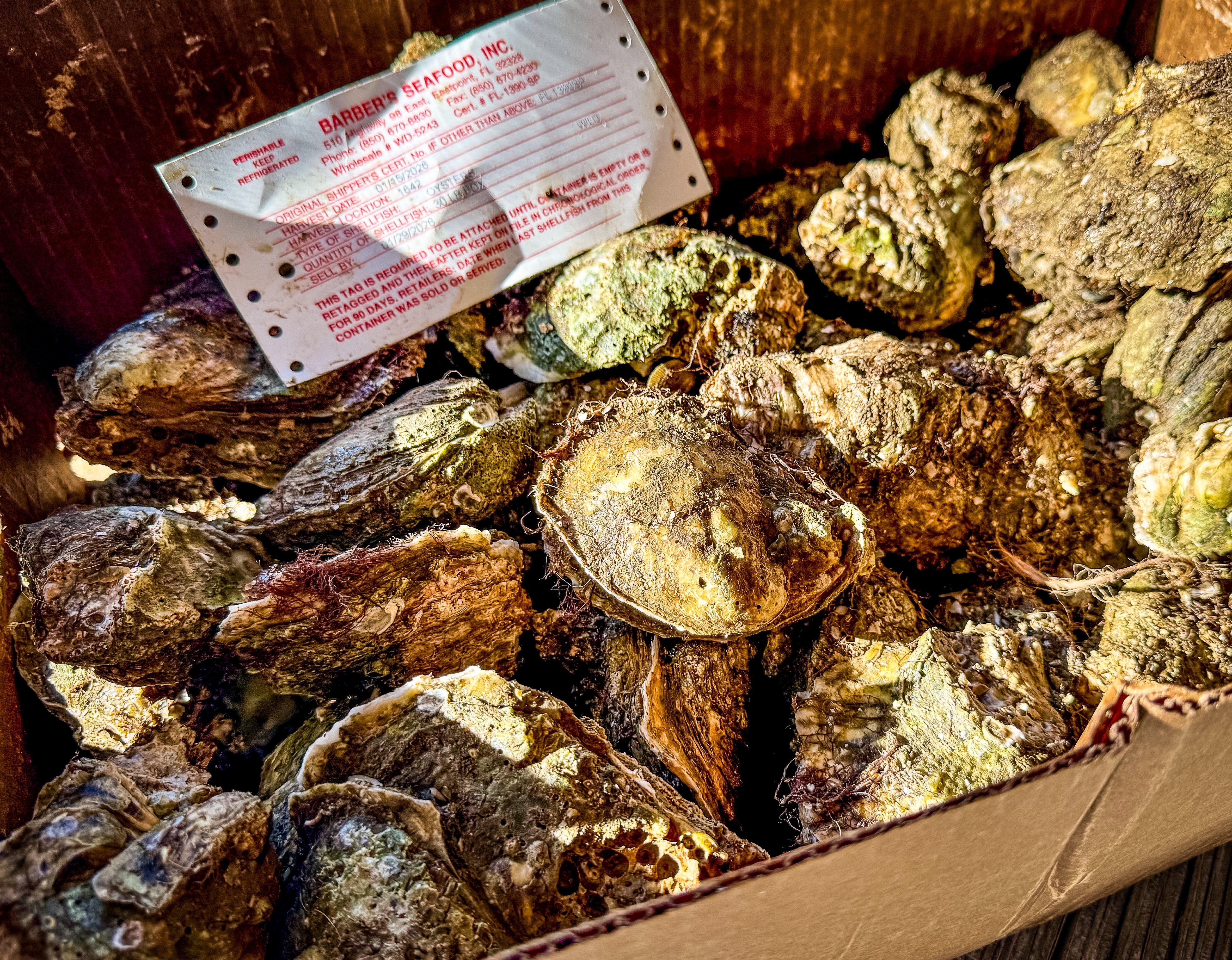
After a five-year moratorium on wild harvest, the Bay is once again open for a limited season.
About five years ago, the Bay was closed to wild oyster harvesting. After decades, even centuries, of sustained oyster harvesting, something had changed. The oysters weren’t growing and reproducing like they always had. Biologists point to several reasons, including less fresh water flowing down from Georgia, causing an increase in salinity and allowing more saltwater oyster predators like black drum to roam the bay. When the BP oil spill happened, restrictions on harvest size and limits were loosened in anticipation of the oil reaching the bay. The oil never made it that far north, but the heavy harvest further weakened the oyster population.
After the five-year moratorium on wild harvest, this January saw the first limited open season in a while. The oysters have bounced back well. They were plump, juicy and full of flavor, just like everyone remembered. We were there to enjoy it, eating several raw off the half-shell and cooking up a bushel or two.
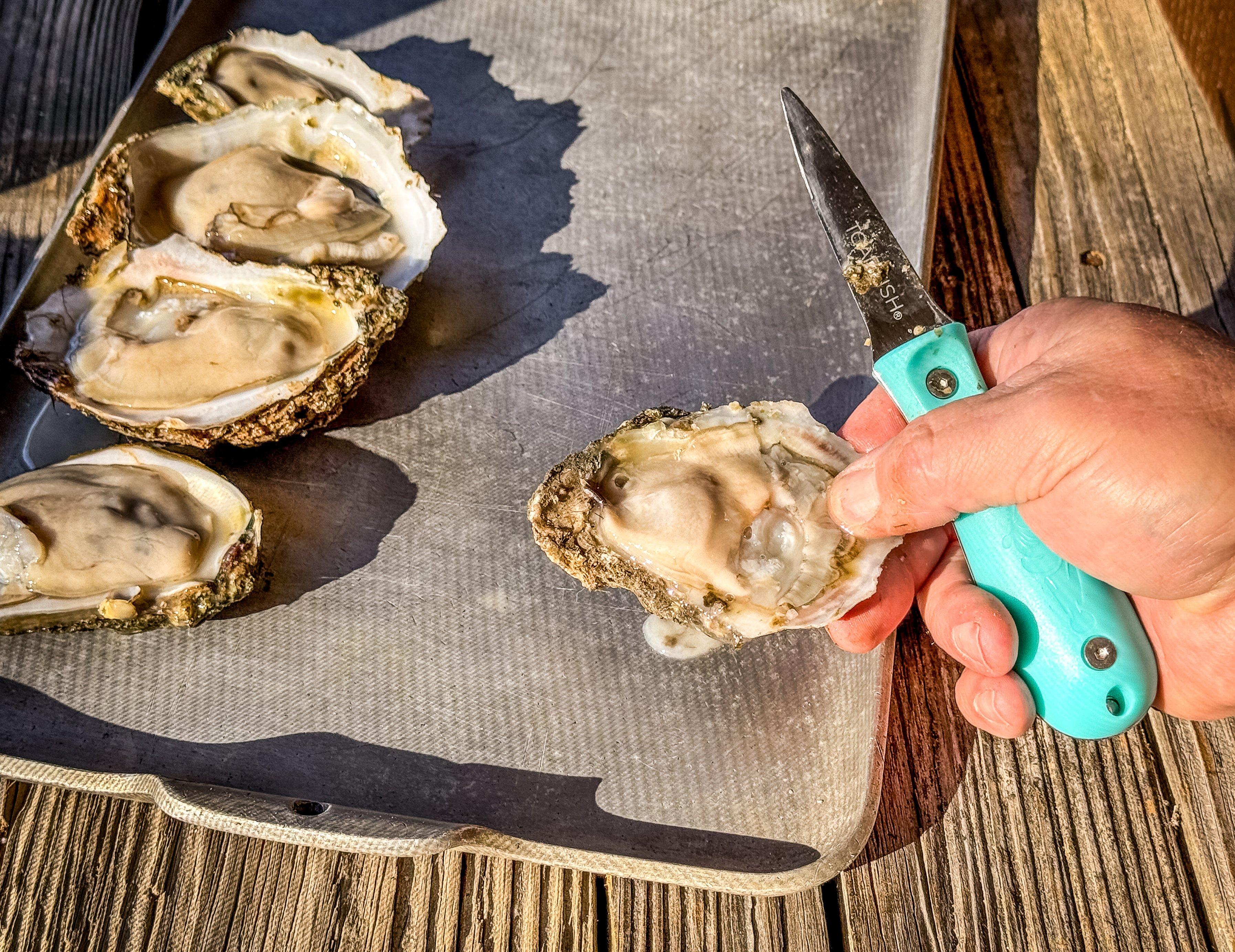
The fresh oysters are plump and full of flavor.
This recipe is a favorite that I serve to people who have never tried oysters or who don’t count them as a favorite by themselves. The extra fillings add flavor to the cooked oysters and make them go farther as a meal than they would by themselves.
Start with fresh oysters. Ours came out the bay just a day or two before we ate them. My favorite oyster knife is made by Toadfish. The handle fits my hand well and the blade is perfect for working into tight joints, but it still has plenty of backbone for prying open even heavy shells.
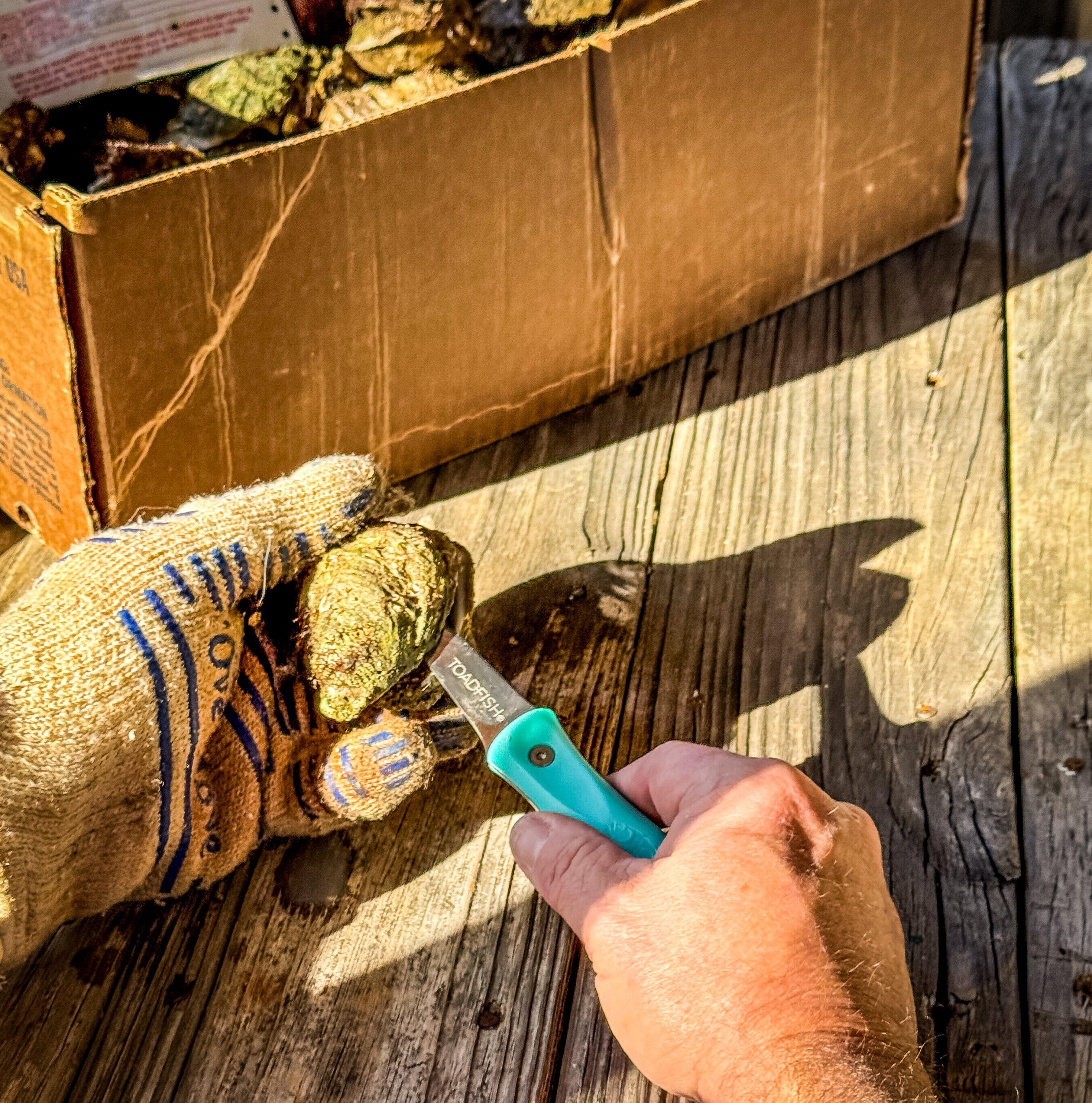
A quality oyster knife makes opening the bi-valves easy.
I like to wear a cotton glove on my off hand to help keep a firm grip on the oyster shell.
Open the oysters and place the bottom shells holding the oyster and as much of the brine as possible on a tray or sheet pan.
Place the opened oysters on a tray or shallow pan.
Before opening the oysters, dice up some of your favorite smoked sausage and sautee it until it is cooked through and crispy around the edges. While the sausage cooks, melt a stick of butter in a sauce pan over medium heat. When the butter starts to bubble, dump in three to four cloves of garlic that you have peeled and finely diced. Cook, stirring frequently, until the garlic browns and gets crispy, but don’t let it burn or it will get bitter. Once the garlic has browned and the sausage cooked, remove them from the heat.
Top each raw oyster with a dash of Crystal hot sauce and a shake of JO #1 Seasoning blend. Add a bit of garlic with some browned butter and a spoonful of sausage. Top with a slice of jalapeño pepper and sprinkle of grated cheese.
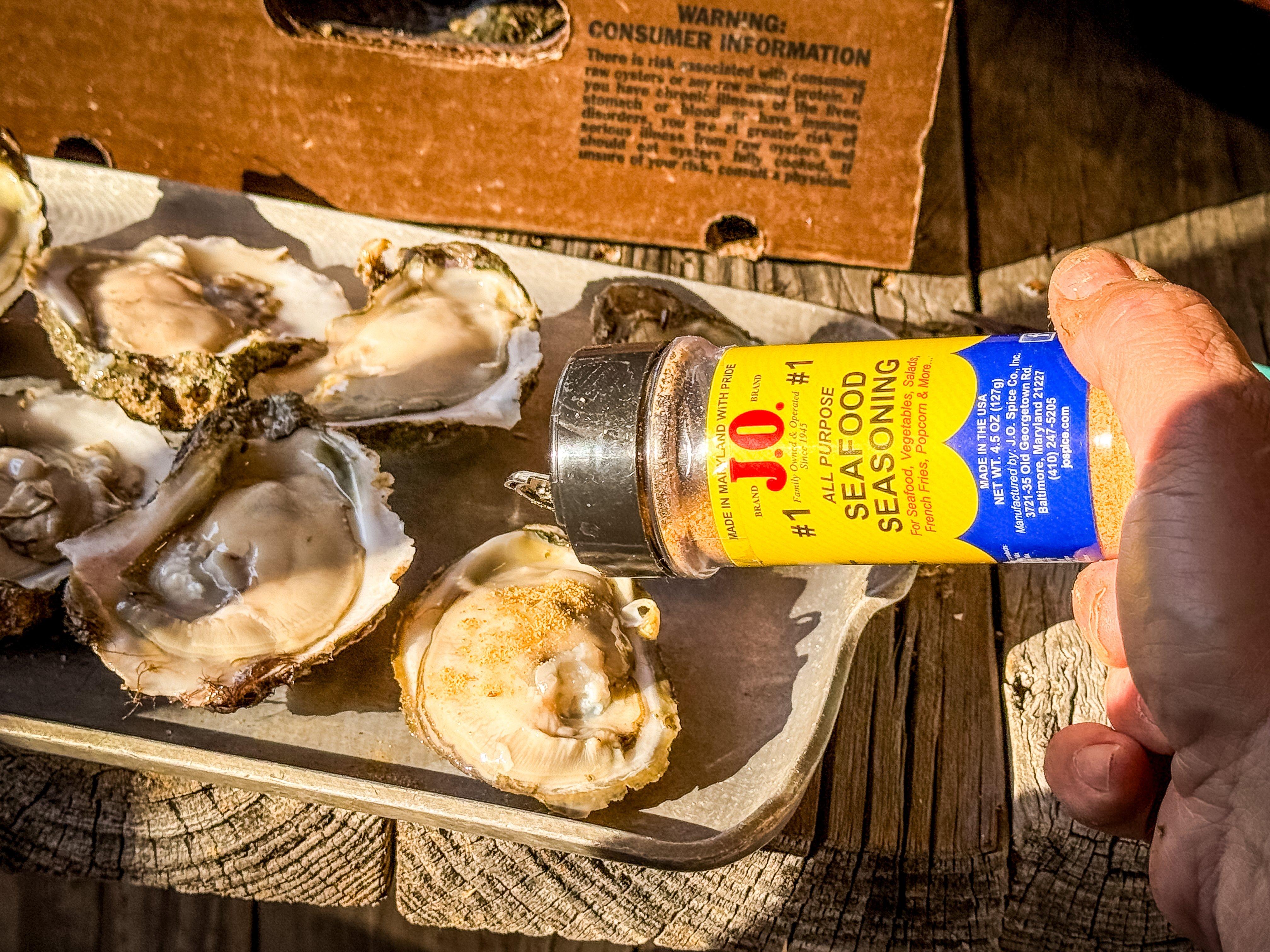
Hit the oysters with a dash of hot sauce and a shake of JO #1.
Place the oysters on a hot grill, taking care not to dump the toppings. Grill until the brine starts to bubble and the oyster cooks through.
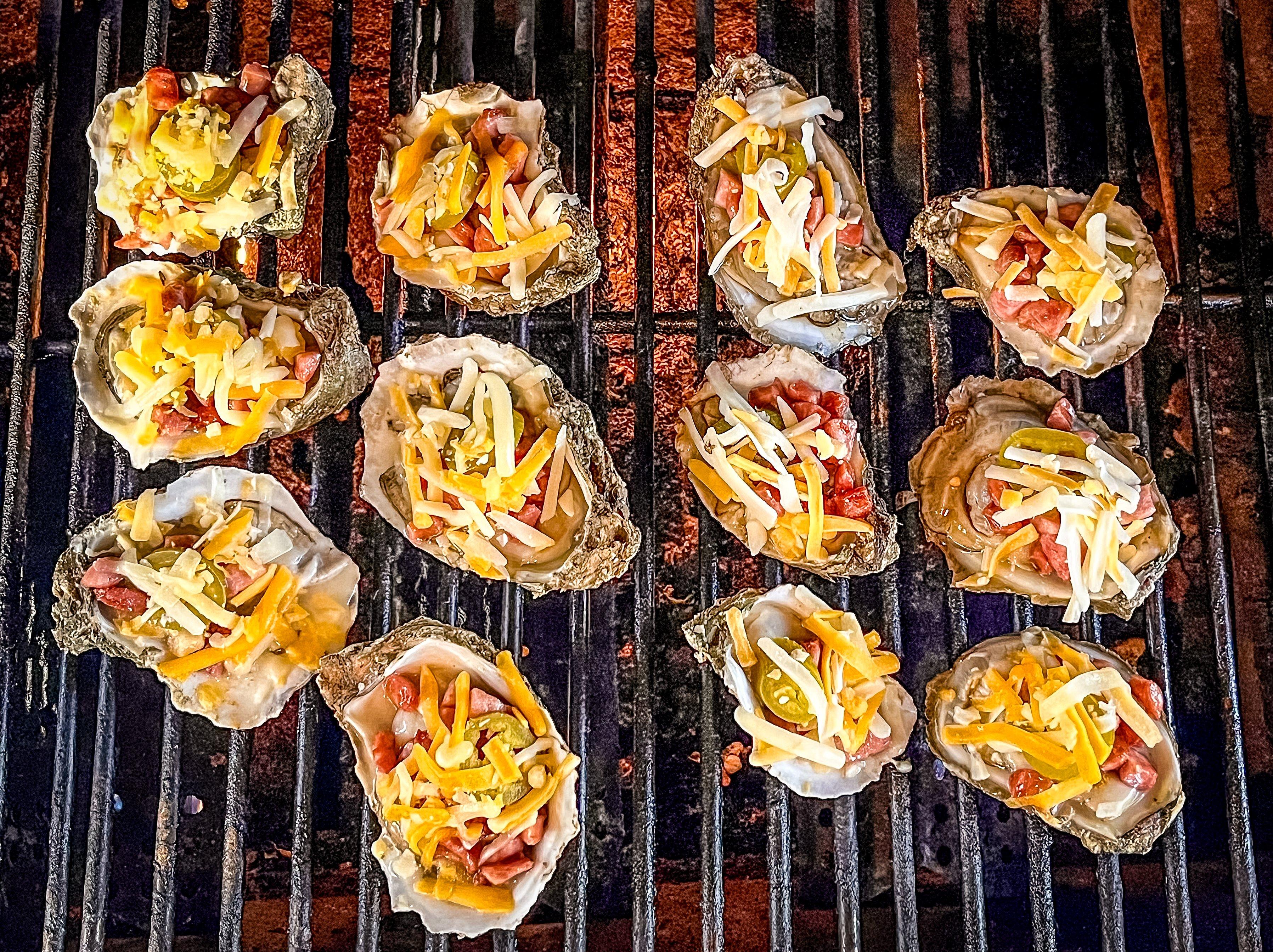
Carefully place the oysters onto a hot grill.
These took about 12-14 minutes. Once the oyster is cooked and the cheese melted, remove the oysters from the grill and serve immediately while they are still hot.
Ingredients
2 dozen fresh oysters
8 ounces smoked sausage, diced and cooked
1 stick of butter
4 cloves garlic, finely chopped
2 cups shredded cheese
sliced jalapeno peppers
Crystal brand hot sauce
JO #1 Seasoning

author at Timber 2 Table recipes