
Use your sous vide cooker to make this fork tender venison roast that comes to the table at a nice medium-rare
Garlic Butter Venison Sirloin Tip
20 Min
Prep Time
420 Min
Cook Time
6-8
Servings
Medium
Difficulty
The sirloin tip might be better known to most hunters as the “football roast” due to its shape. The roast is located at the back of the hindquarter, above the shank, and it carries a ton of flavor. It also provides a lot of the power behind a deer’s impressive speed and jumping ability, making it one of the tougher muscles on the animal.
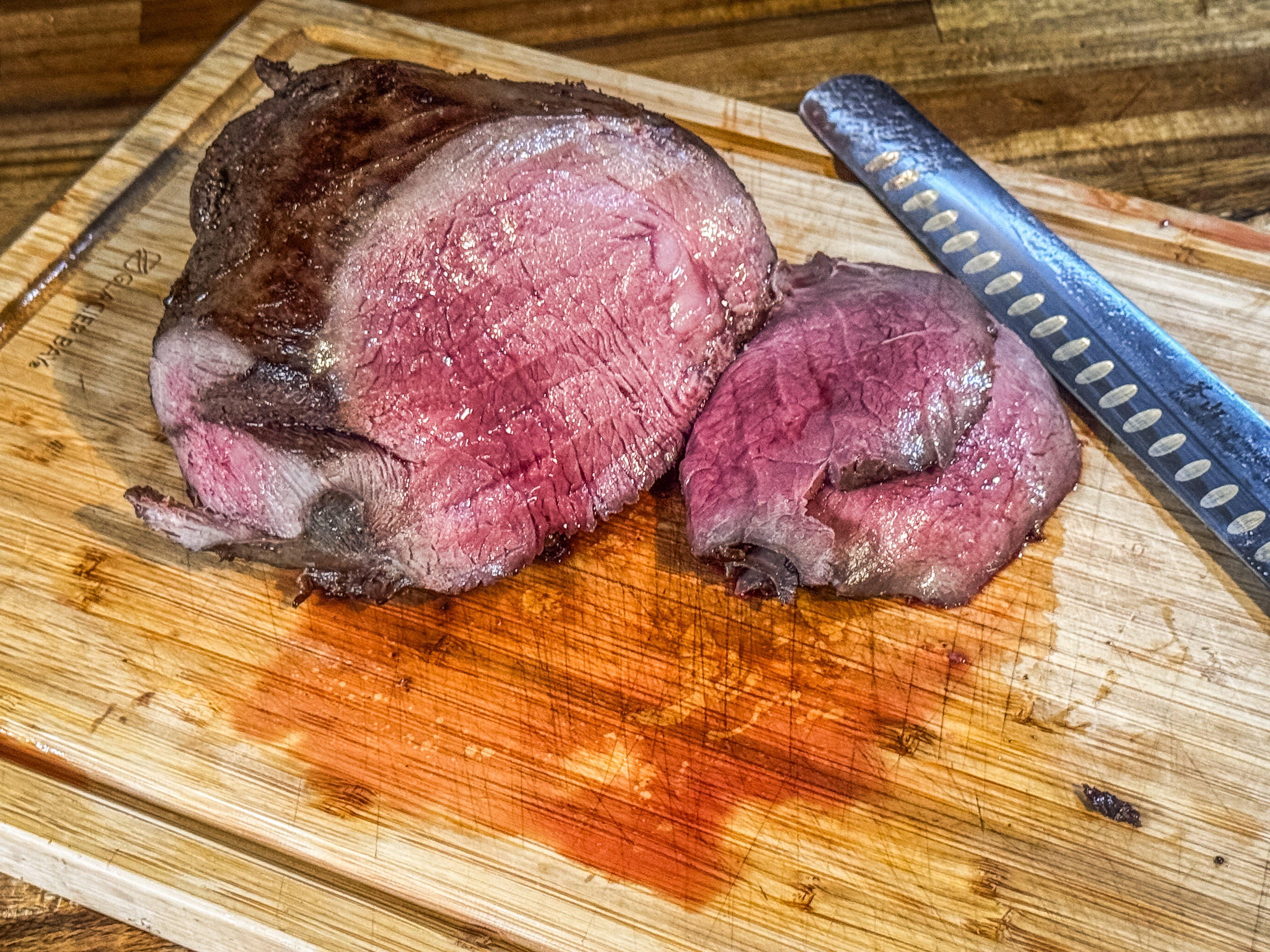
Sous vide cooking allows you to turn a normally tough roast into a fork tender slice that is still a nice rare to medium-rare. Images by author
You can slowly cook it at low temperatures by braising in the oven or in the slow cooker, and it breaks down into a nice, tender meal. But sous vide cooking allows you to make a football roast tender but still keep it a nice medium rare for slicing.
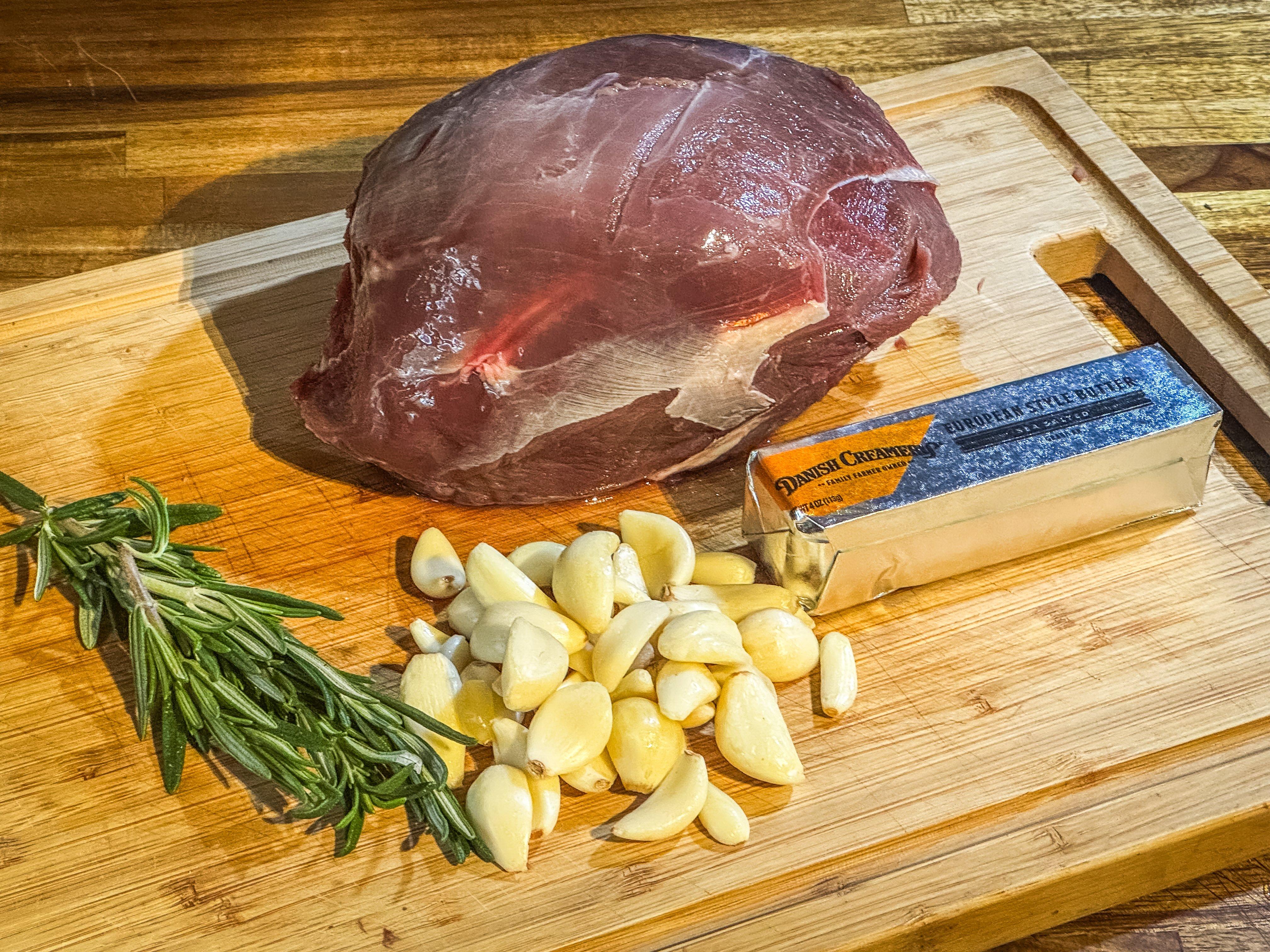
The sirloin tip or “football roast” is the perfect shape for slicing, but it can be chewy if not cooked long enough.
This cooking method seals the food inside a vacuum seal or zip top bag, then cooks it, submerged in water, at a constant temp. Because the water never goes above the set temperature, you can cook food for long periods of time to tenderize without overcooking. For me, 129 degrees is just about perfect on a venison roast. This one cooks for about 6 hours, plenty of time to make the meat tender.
While that meat is slowly cooking, it is a great time to introduce some added flavor. On this one, that flavor comes from fresh rosemary, good butter, and 30-40 cloves of garlic. You read that right: 30-40 cloves. Don’t worry, because the cloves cook whole, the garlic flavor won’t overpower the venison. The garlic won’t go to waste after it is cooked, either, because it goes into a tasty pan sauce. As the garlic slowly cooks along with the meat, it will get soft and tender and a little bit sweet, like roasted garlic does.
Start by lightly seasoning the roast with salt and pepper. Don’t get carried away, you will re-season before the second part of the cooking process. Add the roast, a few whole sprigs of fresh rosemary, and 30-40 peeled, whole cloves of garlic.
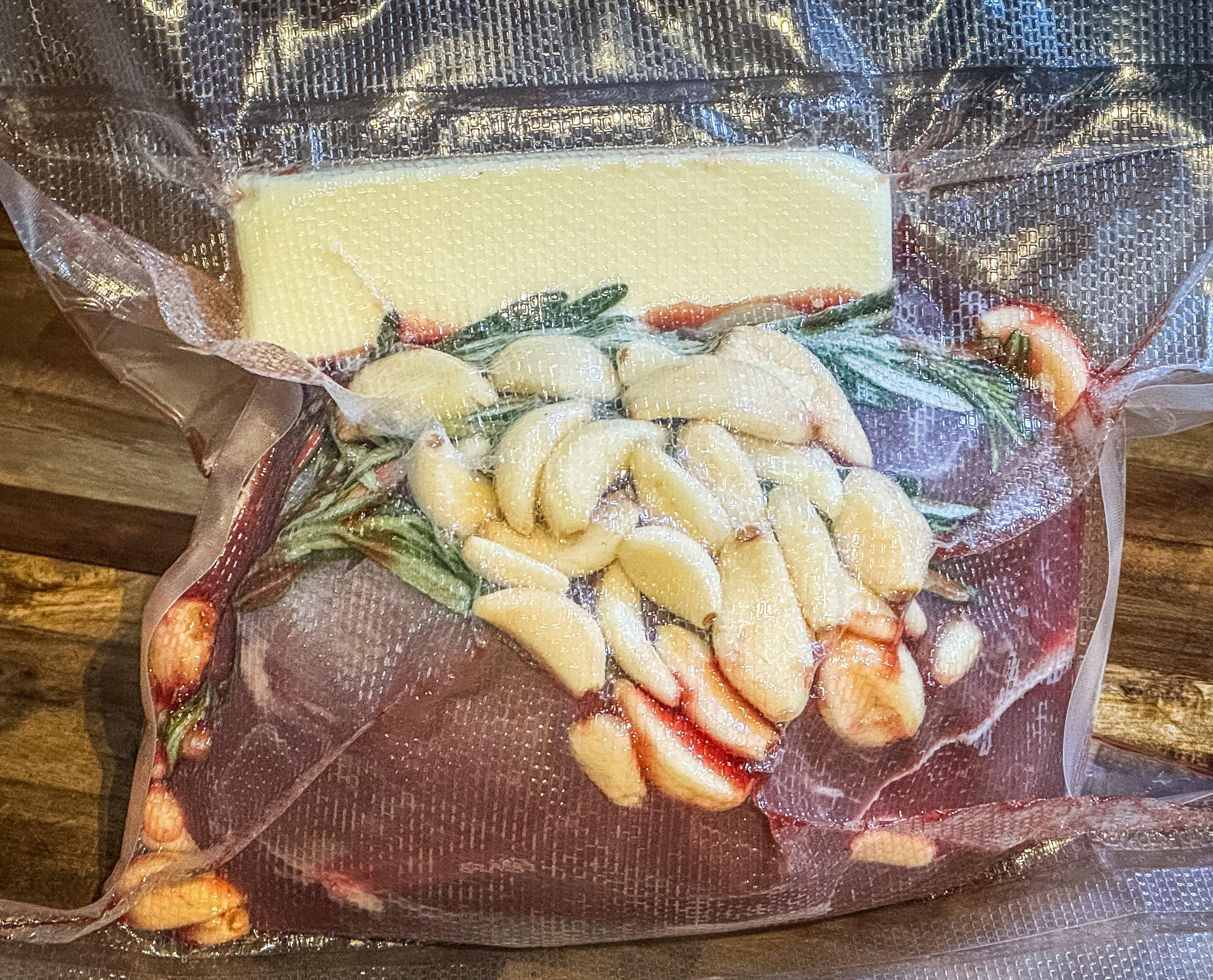
Vacuum seal the venison, butter, garlic and fresh herbs before cooking.
Now vacuum seal everything up. I like to put a double seal on my packages when sous vide cooking, just to make sure no water gets inside during the long cooking process.
Set your sous vide at your desired temperature, anywhere from 125 to 140, depending on your doneness preference. Submerge the bag in the hot water. If your package wants to float, weigh it down with a glass dish or ceramic plate or saucer. Now let it cook from 6-8 hours. Time really isn’t important because it won’t go above your set temperature.
The one downfall of sous vide cooking is that the exterior of the meat doesn’t caramelize like it would in a high heat cooking process. We get around that by doing a quick sear in either a hot skillet or on a high temperature grill. You don’t want to cook it during this process, just brown the surface for flavor and a better appearance.
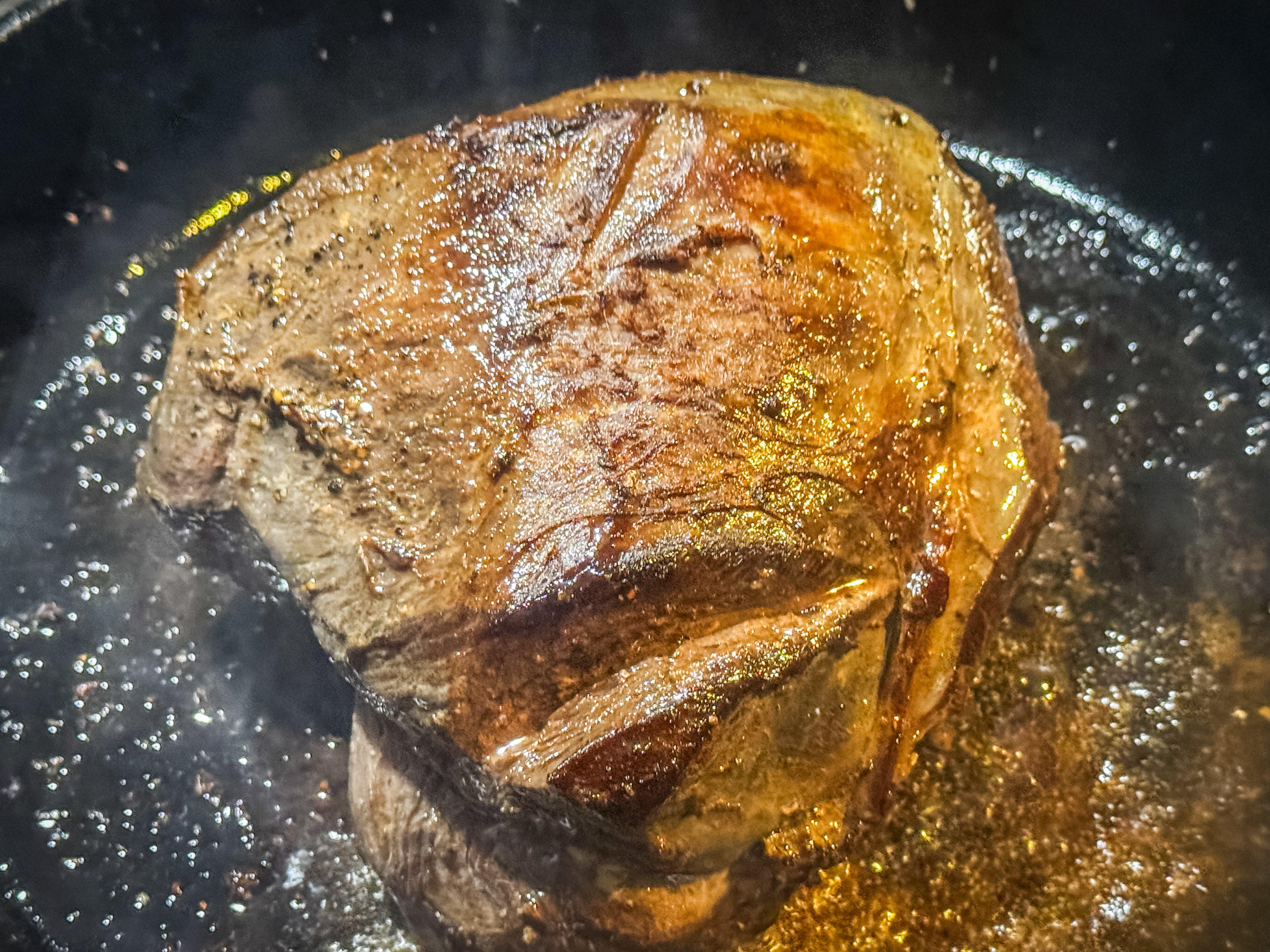
Sear the roast in hot fat or oil to brown the surface.
When you remove the roast from the water bath, carefully cut open the vacuum bag. Reach in with tongs and remove the roast. Pour the cooking liquid and garlic into a bowl or measuring cup. Use a spoon to remove the garlic to a cutting board. Use the flat side of a knife or a tenderizing mallet to smash the cooked cloves. Reserve those.
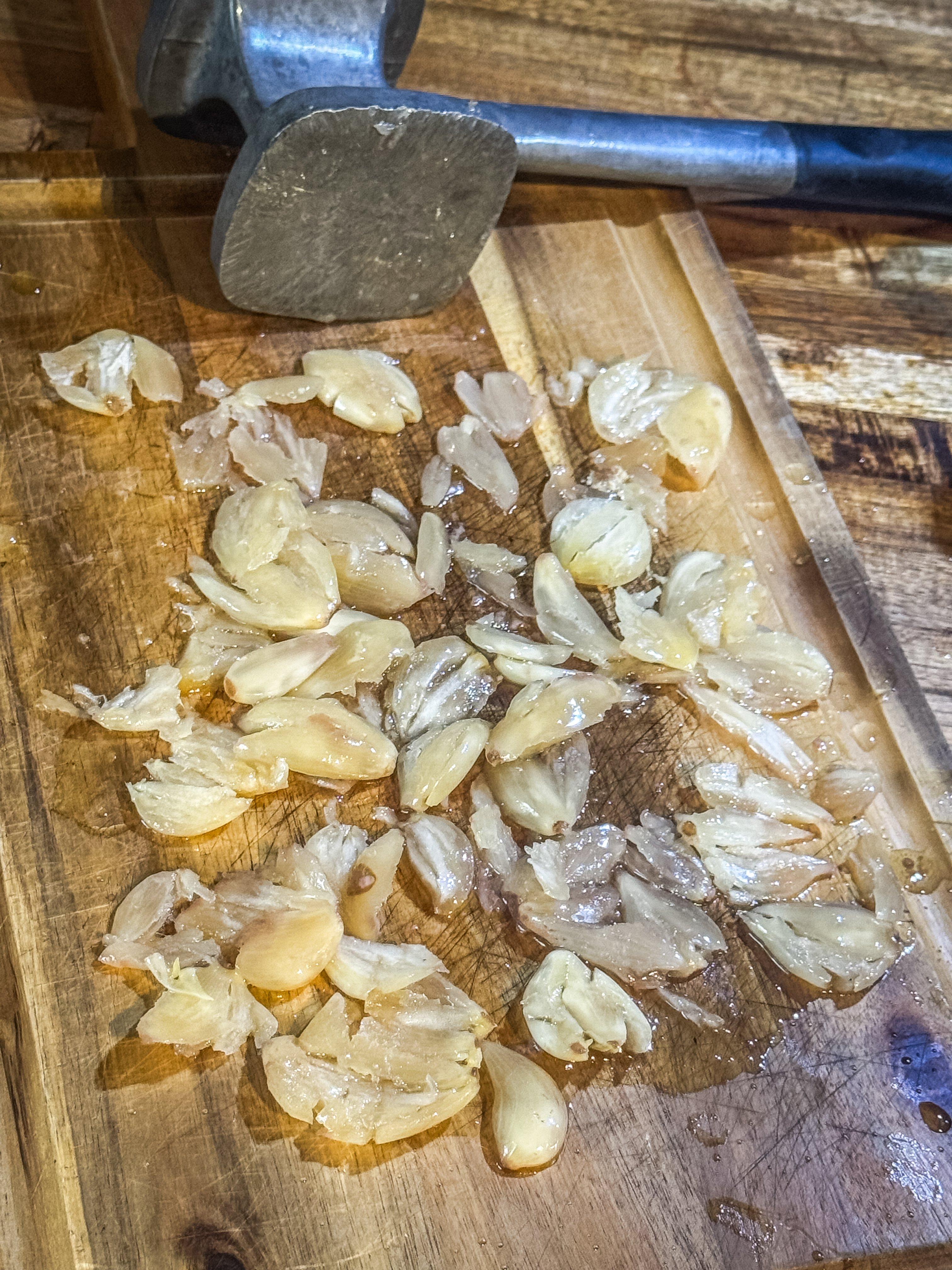
Smash the cooked garlic.
To a large skillet over medium high heat, add a tablespoon or two of oil or beef tallow. Heat until the oil starts to smoke. While the skillet heats, season the roast with salt and pepper. Sear the roast on all sides, turning every 20-30 seconds. Remember, the meat is fully cooked at this point, you just want to get good color on the surface. Once the roast has browned, move it to a cutting board to rest while you make the pan sauce. Reduce the heat on the skillet to medium. Add the second stick of butter. Pour in a couple tablespoons of the reserved cooking liquid. Add the smashed garlic. Simmer until the garlic breaks down and the sauce thickens a bit.
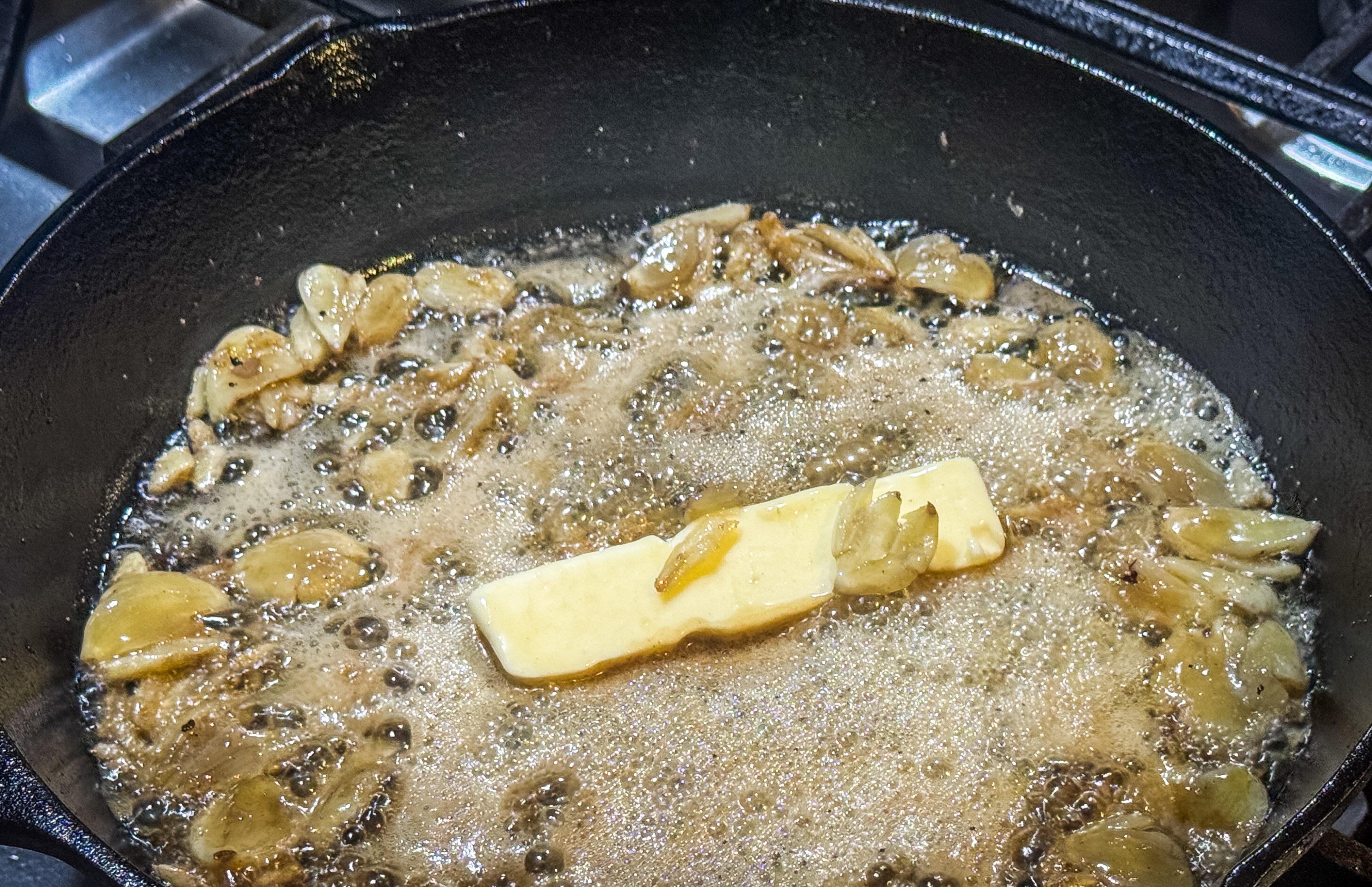
Sauté the smashed garlic in butter to make a pan sauce.
Slice the roast thinly, against the grain. Plate the slices and pour over the pan sauce.
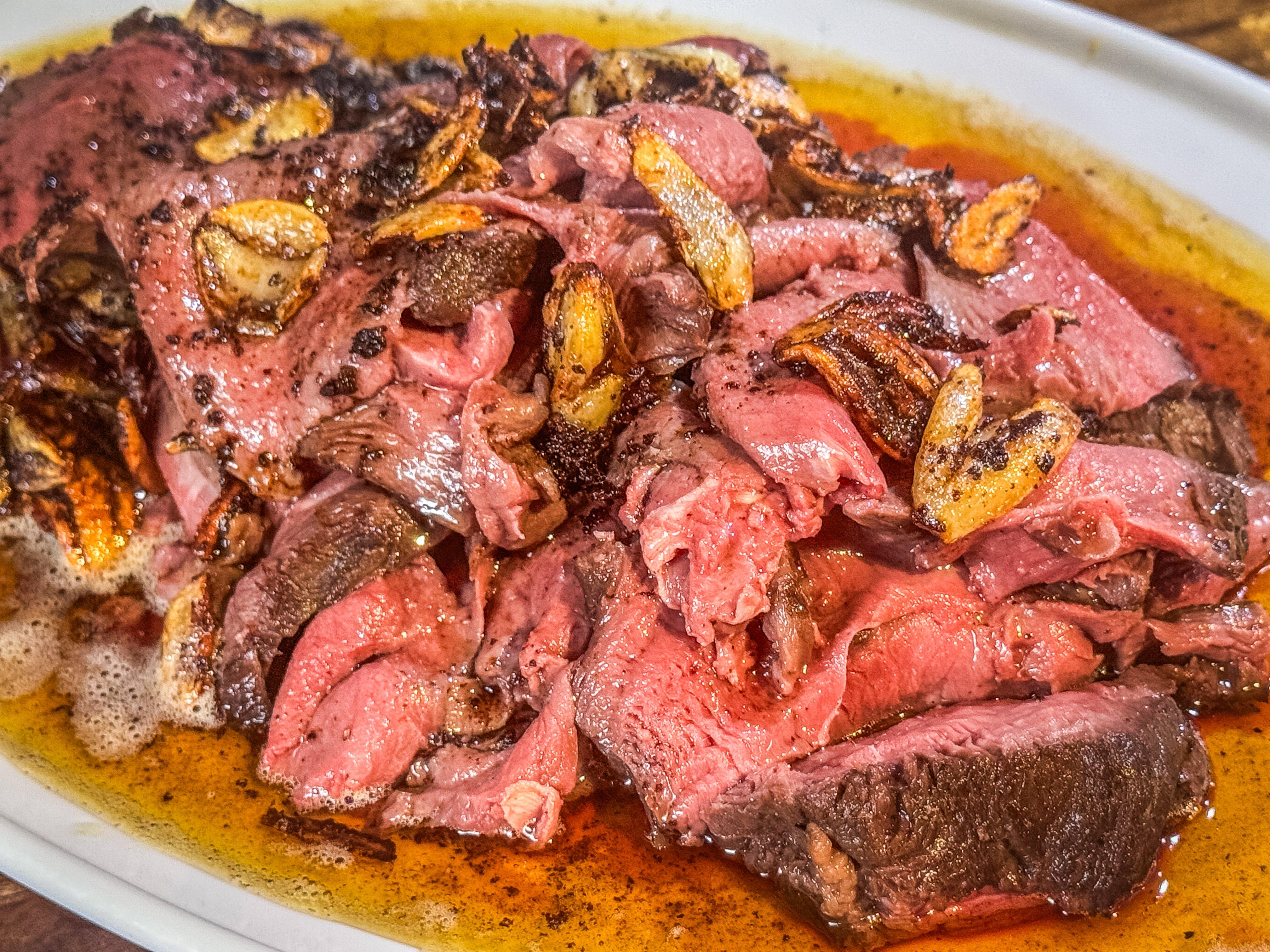
Slice the meat thinly against the grain, then drizzle over the garlic butter pan sauce.
This is a big roast so there might be leftovers. They work great when gently reheated and piled high on fresh bread or a nice bun for lunch the next day. Try topping with cheese and a smear of horseradish sauce.
Don’t Miss: VENISON BISTEC ENCEBOLLADO
Ingredients
1 sirloin tip “football roast”
2 sticks butter
30-40 whole garlic cloves, peeled
3-4 sprigs fresh rosemary
2 tablespoons beef tallow or oil
author at Timber 2 Table recipes