
Now is the time to turn those wild grapes growing in your woods into a tart and delicious jelly
How to Make Wild Grape Jelly
60 Min
Prep Time
30 Min
Cook Time
Easy, Medium
Difficulty
If you’re in the woods much this time of year, you might notice wild grape vines drooping from trees and fencerows. Look closely and you’ll probably see clusters of wild grapes hanging from them. There are around 20 varieties of wild grapes across the country, so no matter where you reside, you can probably find some in your area.
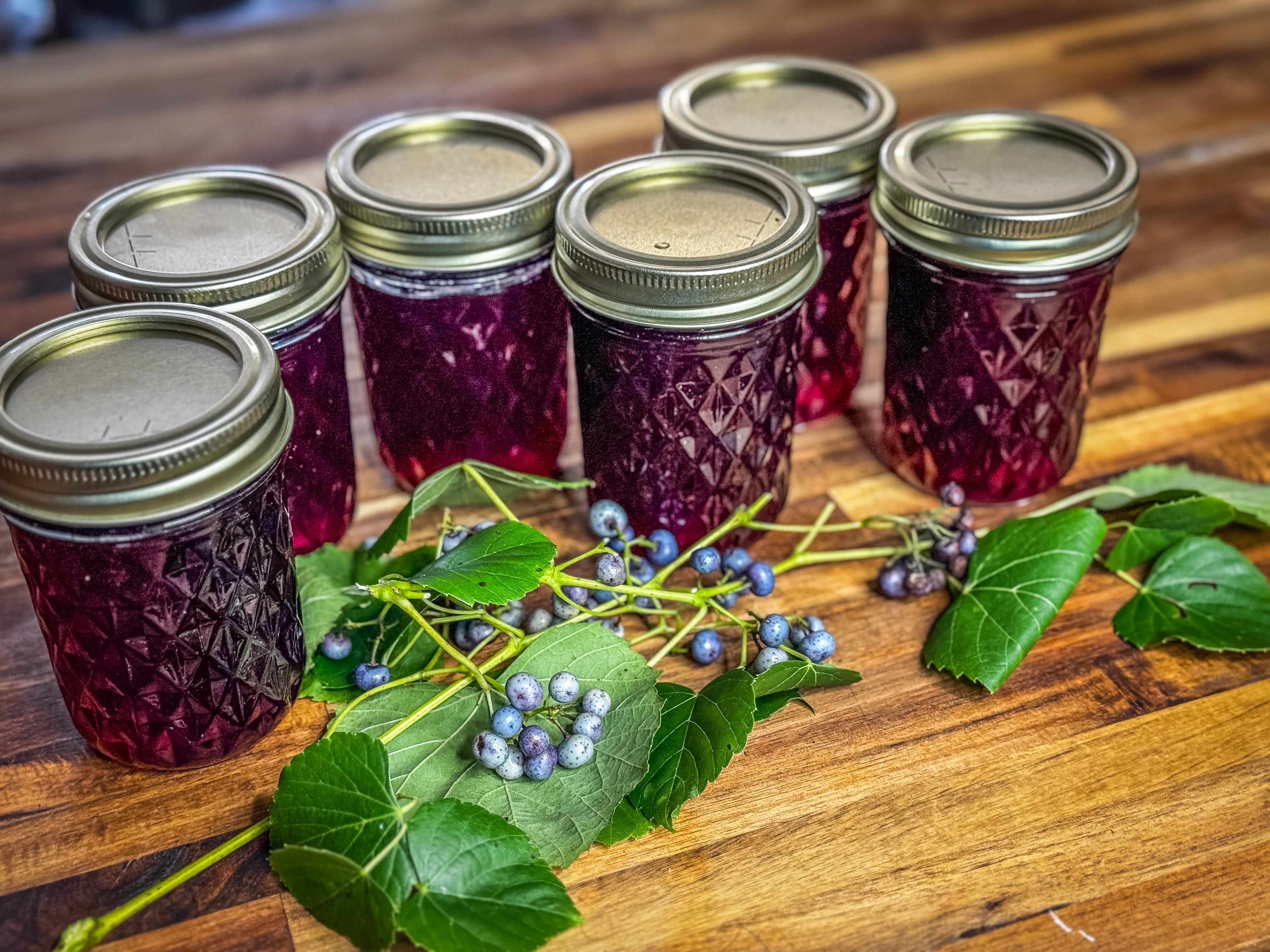
Wild grapes grow all over the country and this is the time of year to pick enough for a batch of homemade jelly. Images by author
While most of them are small, tart and full of seeds, not great for snacking, they make exceptional jelly. As with all wild foraged foods, if you aren’t completely familiar with edible plants in your area, find someone who is to mentor you. If you can’t find anyone, get at least two good guide books for your region and cross check every plant you find before consuming. Luckily, the classic scaly vine and distinctive grape leaf shape make wild grapes one of the easier plants to identify.
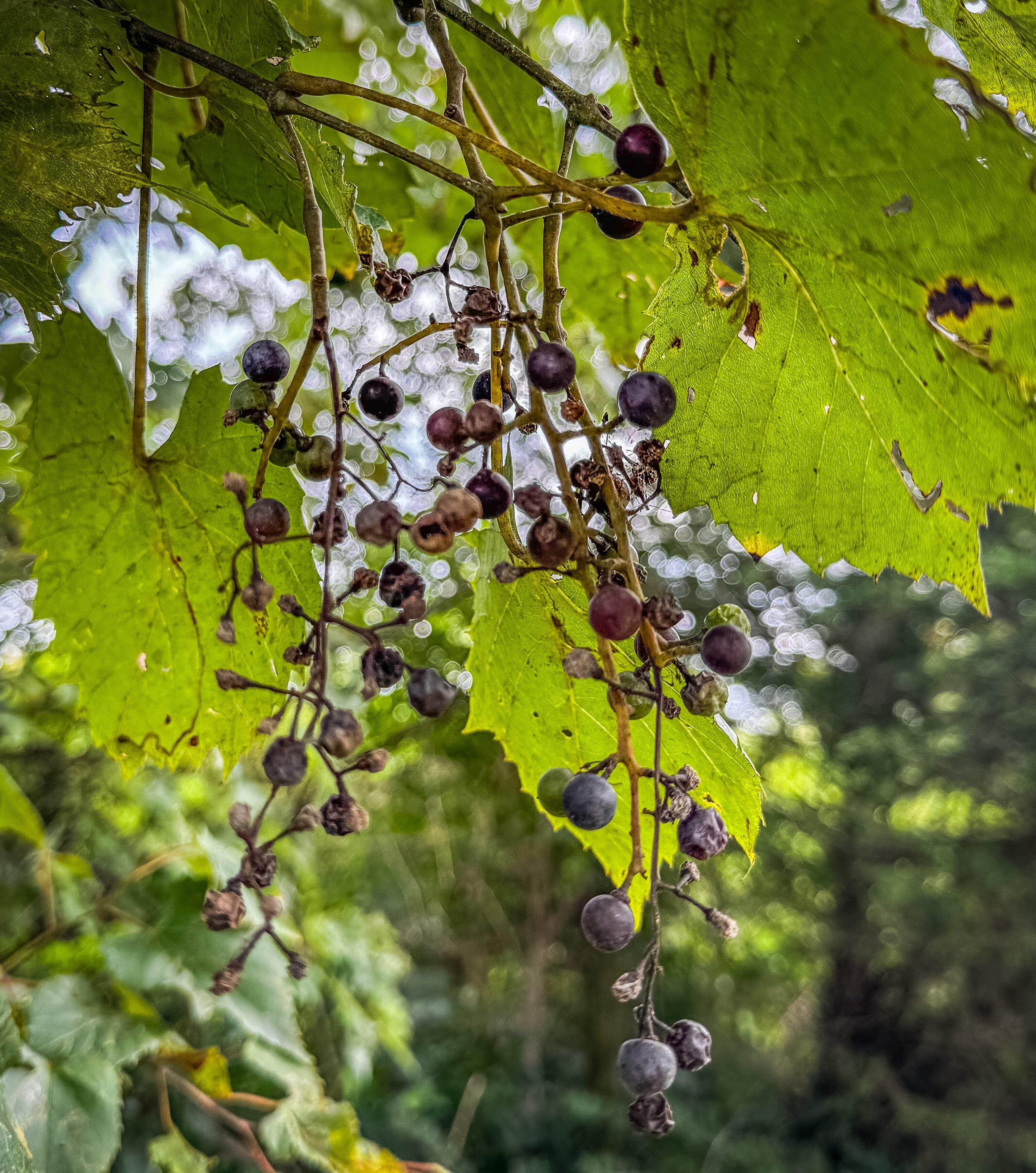
Always double check wild edibles, but grapes are pretty easy to identify.
Once you notice clusters of wild grapes, watch them closely. As soon as they get ripe, birds and other animals will flock to them. What looked like a cornucopia of ripening fruit one day might be completely barren two days later.
When you do find ripe grapes, pick them by the cluster. Don’t worry if a few of the grapes are still green. It won’t affect the flavor of the jelly and the green grapes actually contain additional natural pectin, helping the jelly to set.
I like to remove most of the stems after I get back to the house before using the grapes. For me, extra stems add a bit of bitterness to the jelly. Others say they can’t tell the difference in jelly made with stems vs. without, so maybe try it both ways and see which you prefer. I do admit, picking that many tiny grapes from the stems can be a tedious task.
You will need about 4 pounds of fruit for this recipe. You can pick a day or two in advance, or over a few days if you are searching different areas. Just store the picked grapes in a bag in the refrigerator until you are ready to use them.
You will need two days for this recipe. Wild grapes contain tartrate crystals, which are crystals of tartaric acid. Centuries ago, all grapes contained these crystals, but they have been bred out of most domestic varieties these days. The crystals dissolve in warm liquid as you cook the grapes, then reform at room temperature or when chilled. Some say that eating enough of these crystals can cause gastric irritation. For me, it's just a texture thing. Jelly made with tartrate crystals gets gritty in the refrigerator.
Luckily, it's easy to remove the tartrate from the juice before the jelly making process. Simply juice the grapes one day, put the juice in a jar or container, and refrigerate overnight. The crystals reform in the cold liquid and sink to the bottom. Before making the jelly, filter the cold juice through a double layer of cheesecloth, taking care to leave as many of the solid crystals as possible in the bottom of the jar.
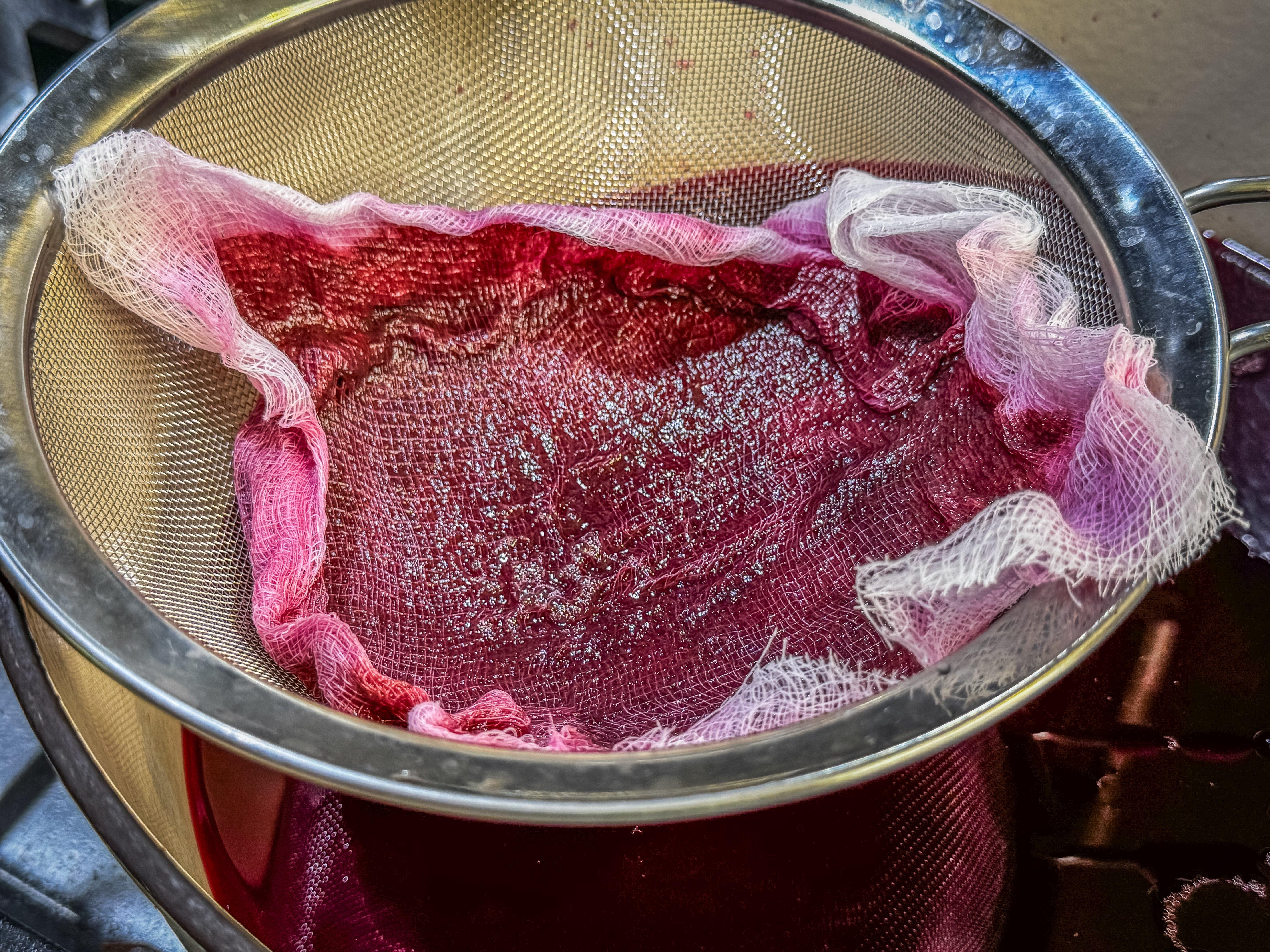
Filter the chilled juice through a few layers of cheesecloth to remove the annoying crystals that form when chilled.
You will need a few tools for this one. First is jars; I use half-pints, but any clean canning jar will work. Next is fresh new lids. You can reuse the bands on a canning jar, but discard used lids and always use new when canning. A thermometer is handy for monitoring temperature. Finally, you will need some cheesecloth, both for straining out the seeds and skin and for the above mentioned crystals. A few other tools like jar tongs for lifting hot jars and wide mouth canning funnels help speed the task, but aren’t crucial.
To start, clean the grapes well under running water. I do mine in small batches so I’m sure any debris and critters are washed away.
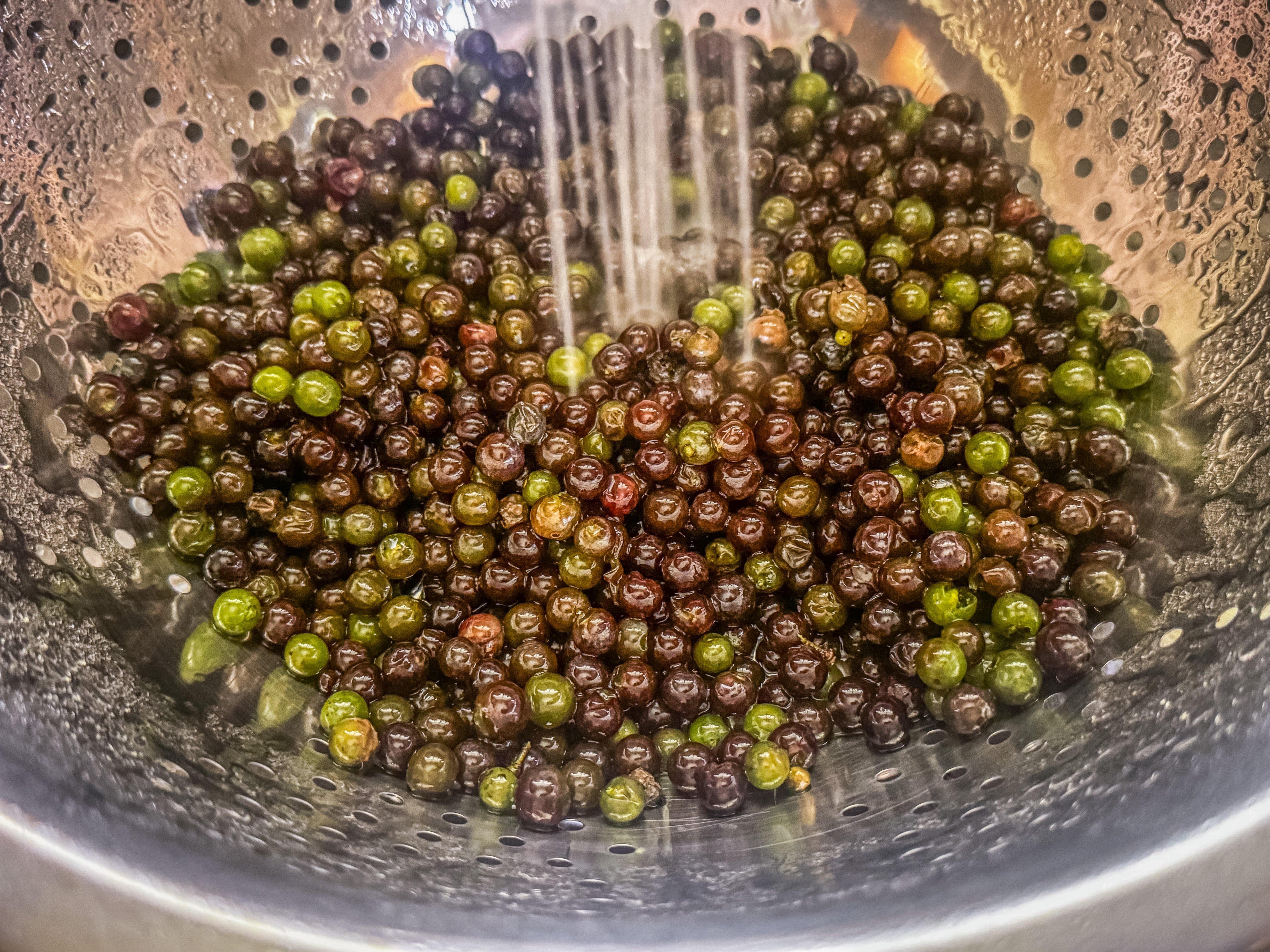
Rinse the grapes well under cold water. Don’t worry if you have a few green grapes in the mix.
Place the cleaned grapes in a large pot. Add about ½ cup of water and bring the mixture to a simmer. Simmer for 20-30 minutes, never bringing the grapes to a full boil. Once the grapes have simmered and softened, use something flat to smash them in the pan. I use the bottom of a rocks glass, but anything flat will work. Smash the grapes well, making sure they are all well pulverized. Cover the pot, turn off the heat, and let the grapes steep for 20-30 minutes.
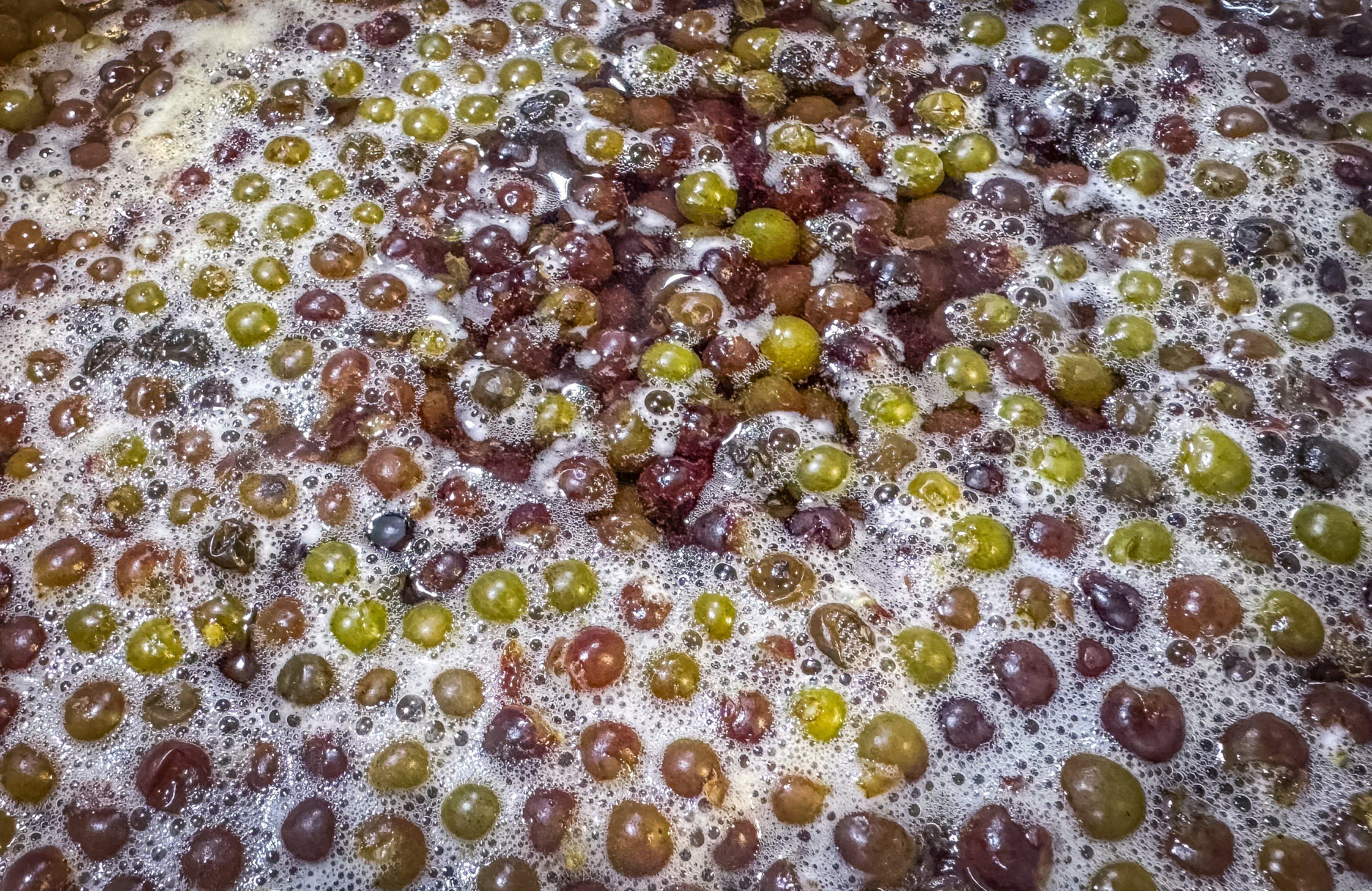
Simmer the grapes in a bit of water.
You only need the juice to make jelly. To filter the juice from the seeds, skin and pulp, place a strainer over a clean container and line it with two to three layers of cheesecloth. Carefully pour the smashed grape pulp into the cheesecloth lined strainer. Press the juice through the cheesecloth.
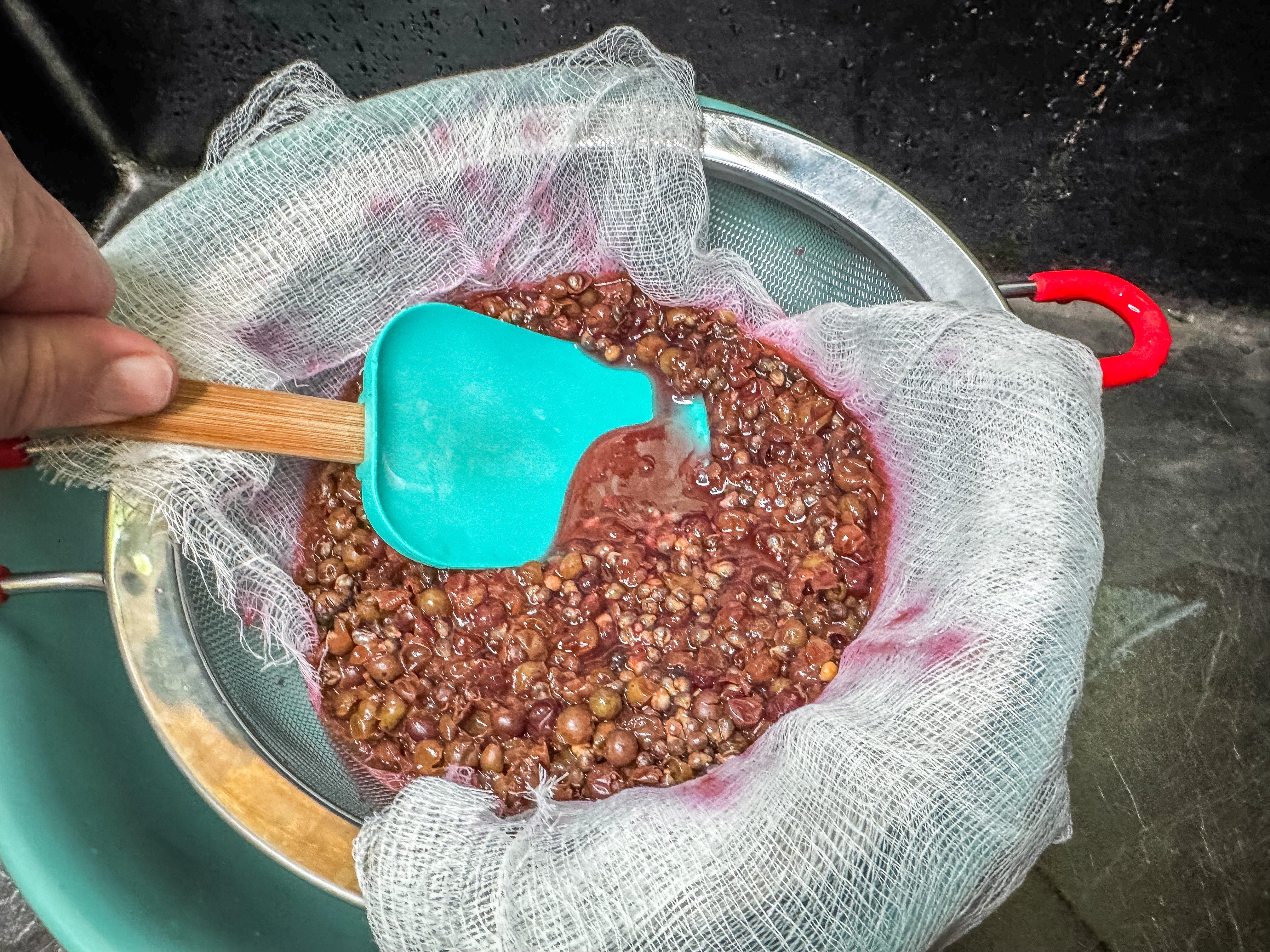
Press the simmered grapes through cheesecloth to filter out the skins, pulp and seeds.
Once you have pressed all you can, gather the corners of the cheesecloth and bring them together to form a bag around the remaining pulp. Squeeze the bag to force out any remaining juice. You can do this in batches to make it easier to handle.
Pour the strained juice into a quart jar. You will need four cups of juice for this recipe. If you don’t quite have four cups, simply top the jar off with 100% grape juice from the market.
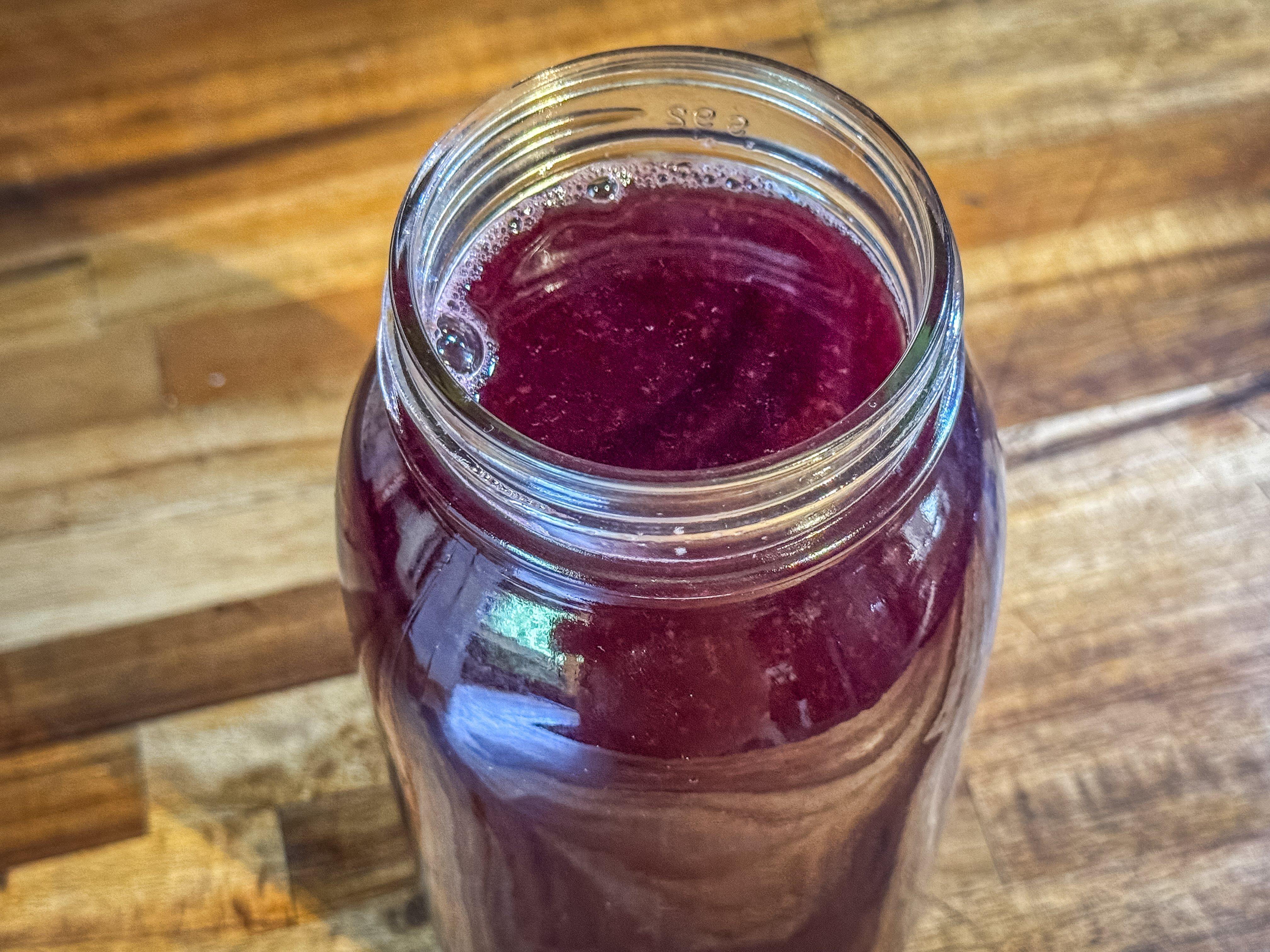
Add the strained juice to a quart jar and chill overnight.
Refrigerate the juice overnight. The next day, strain the cold juice through a doubled cheesecloth to remove the crystals.
Add the strained juice to a large pot on medium-high heat. Go ahead and stick a plate or metal dish into the freezer now. You will need it chilled later in the process for checking jell. Make sure your jars are clean and you have the correct number of lids and rings. I usually run my jars through the dishwasher before using them to can.
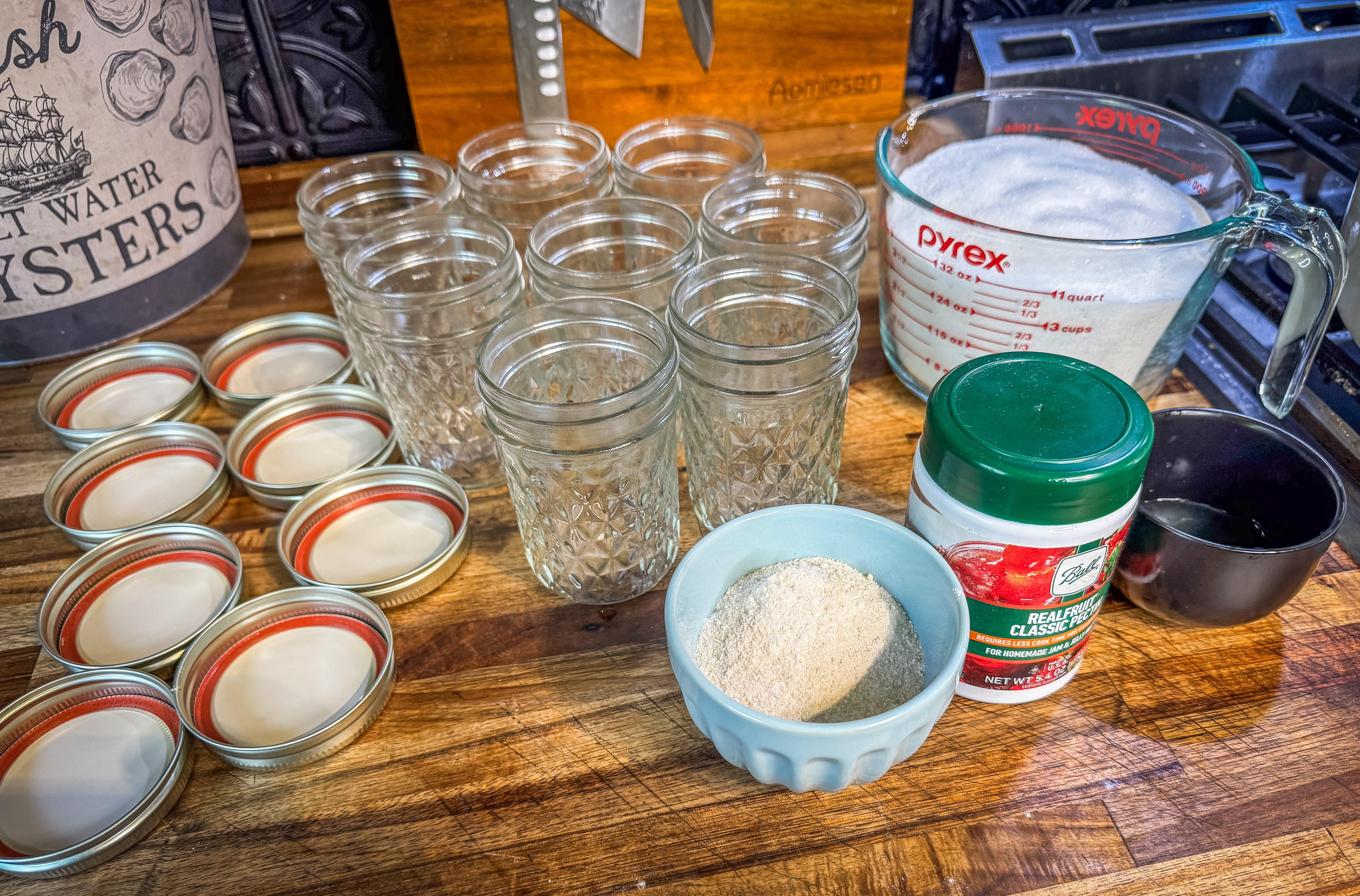
Clean your jars, rings and new lids before adding the jelly.
While the juice begins to heat, add the pectin, along with the butter if you are using it to control foaming. As the juice starts to simmer, stir in the sugar. Bring the mixture to a rolling boil, keeping it there and whisking constantly to blend ingredients. Use a slotted spoon to skim off any accumulating foam.
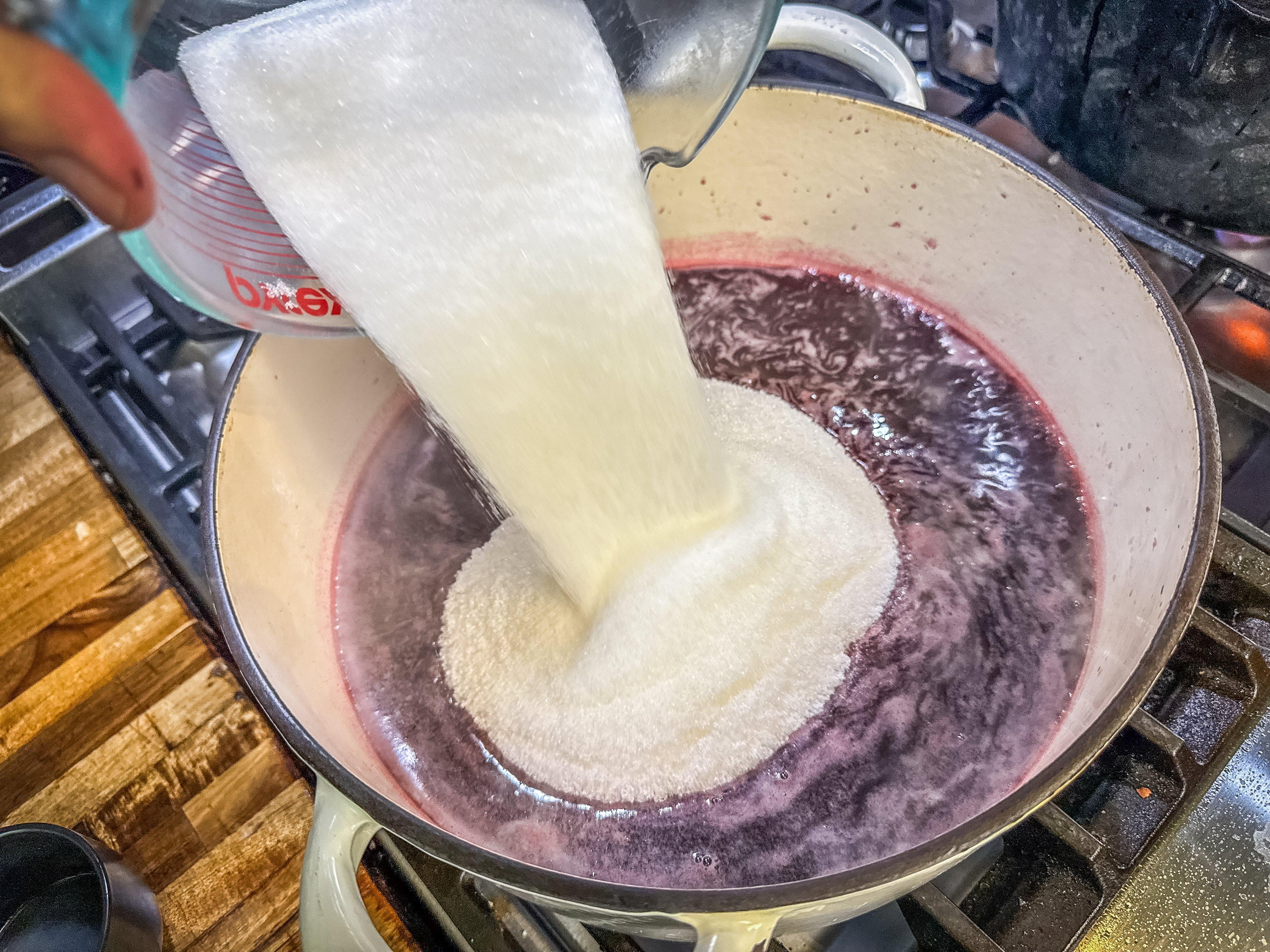
Add the sugar, fruit pectin, lemon juice and butter to the grape juice and bring the mixture to a boil.
Bring out your chilled plate or dish. Monitor the temperature with a candy or digital thermometer. Once the jelly hits and maintains 220 degrees, dip up a spoonful and drip it onto the cold plate. If the jelly clings to the spoon and what drips onto the cold plate jells and holds its shape, it is ready to jar. Watch this step closely. As soon as your sample sheets off the spoon, remove the pot from the heat. You can overcook pectin jelly and cause it not to set.
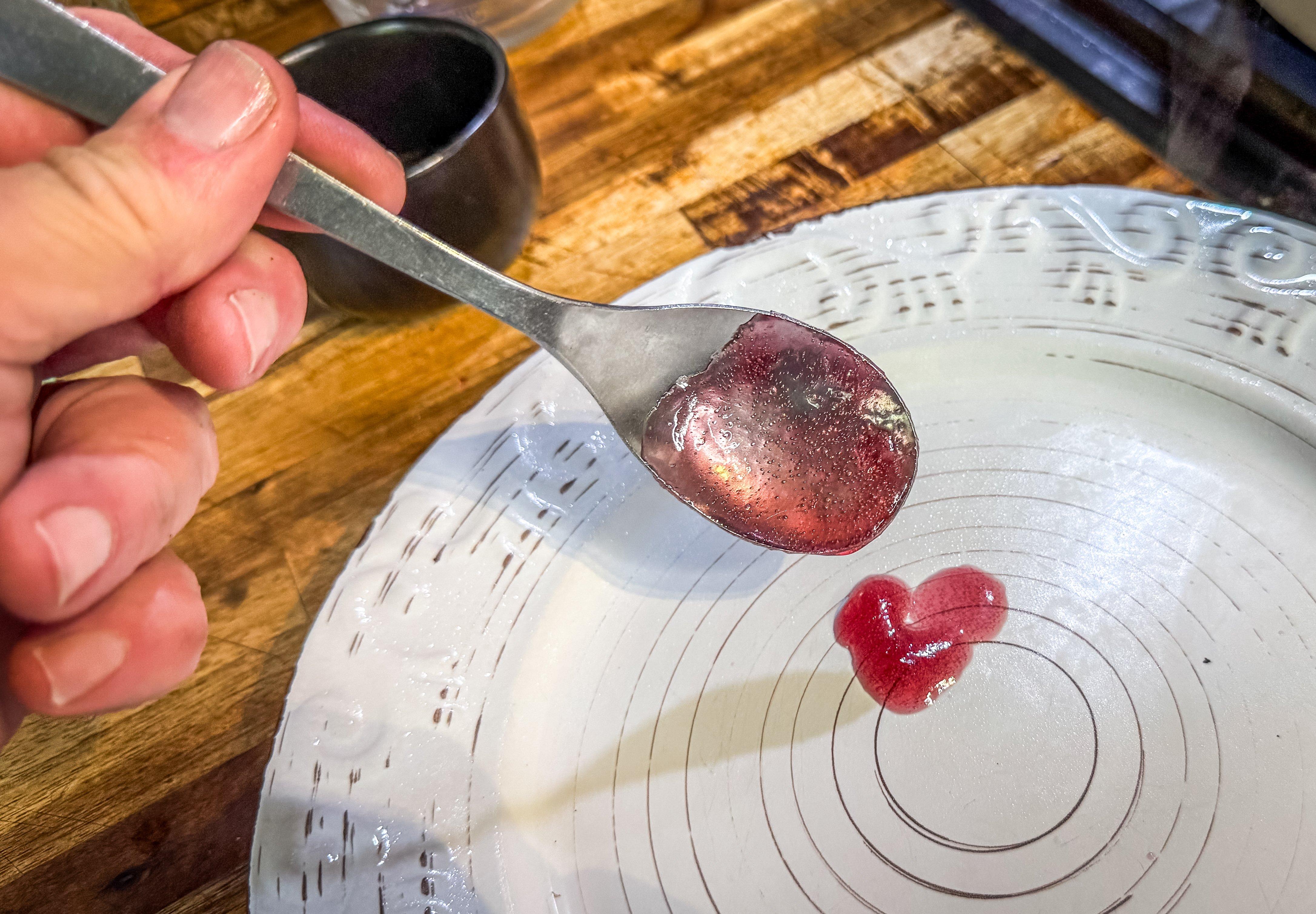
Once the jelly reaches 220 degrees, check to see if it sheets on a spoon and sets on a chilled plate.
Carefully use a ladle or spouted measuring cup to dip the hot jelly (when I say hot, I mean skin-blistering hot. Be careful on this step and keep small children clear of the area) into clean jars.
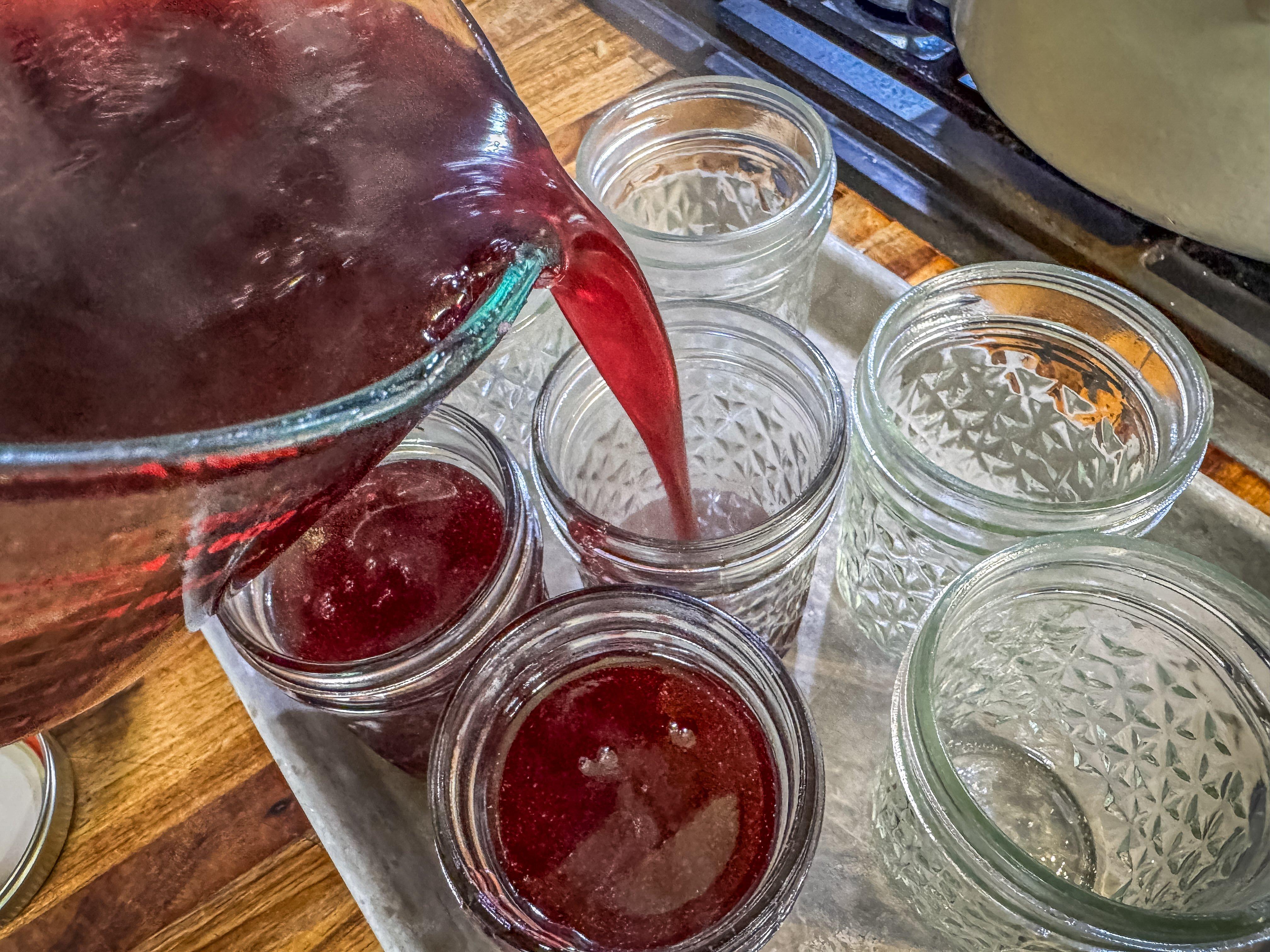
Carefully transfer the jelly to the clean jars.
Once all of the jars have been filled, carefully and thoroughly clean the rims with a damp cloth. Residue on the jar rims is the number one cause of canning jars not sealing. After the rims have been wiped clean, place on a lid and screw a ring on hand tight.
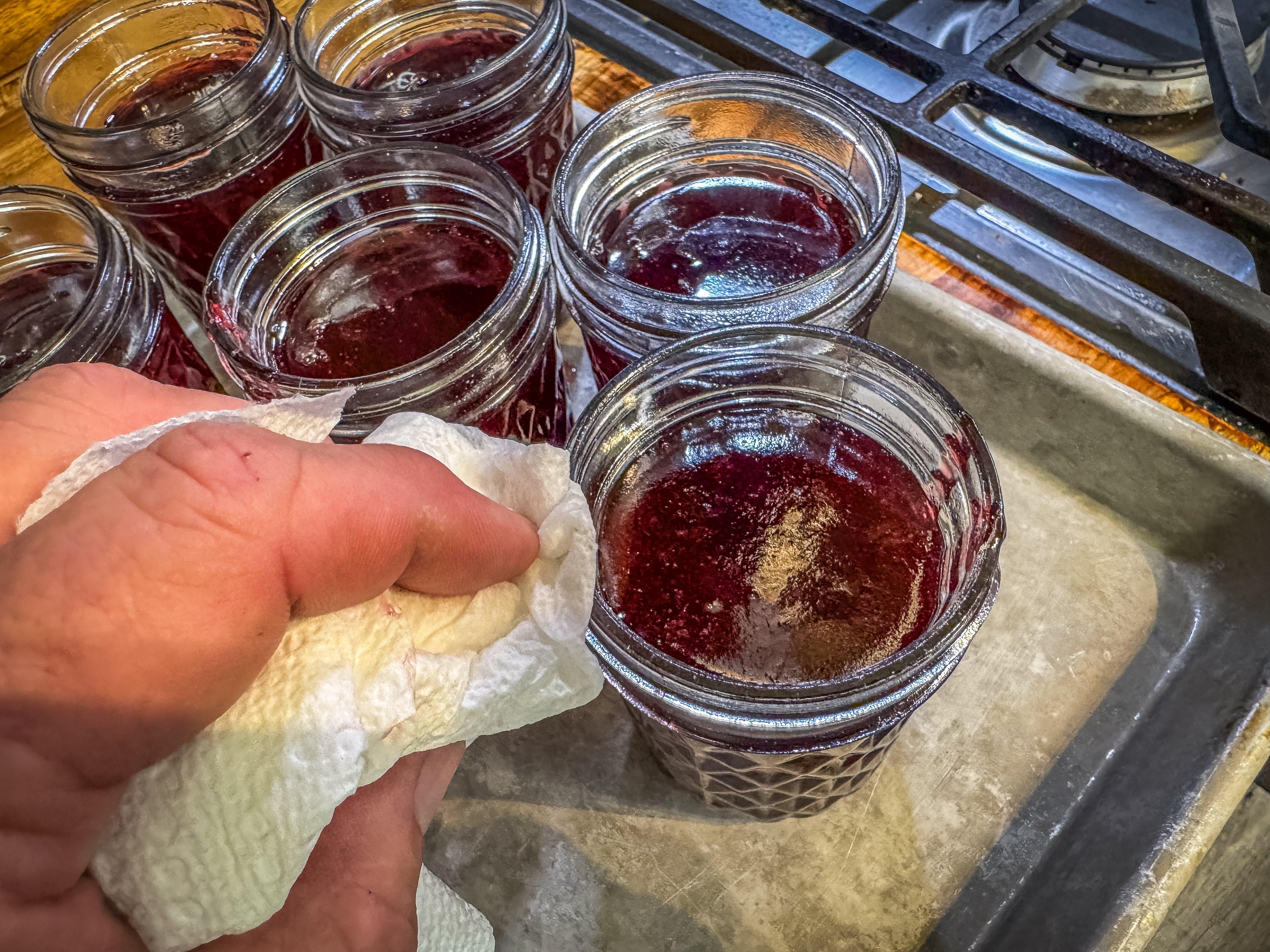
Clean the jar rims with a damp cloth before sealing.
You can store your jelly in the refrigerator or freezer at this point. In the fridge it will last a week or two, and up to a couple months in the freezer. But, to make the jelly shelf stable, you need to water bath can it. Fill a large pot with enough water to fully cover the jars. Add the jars to the water bath, making sure they are covered at least an inch or two with water. Place the lid on the pot and bring the water to a full boil. Boil for 10 minutes, slightly longer at high elevation.
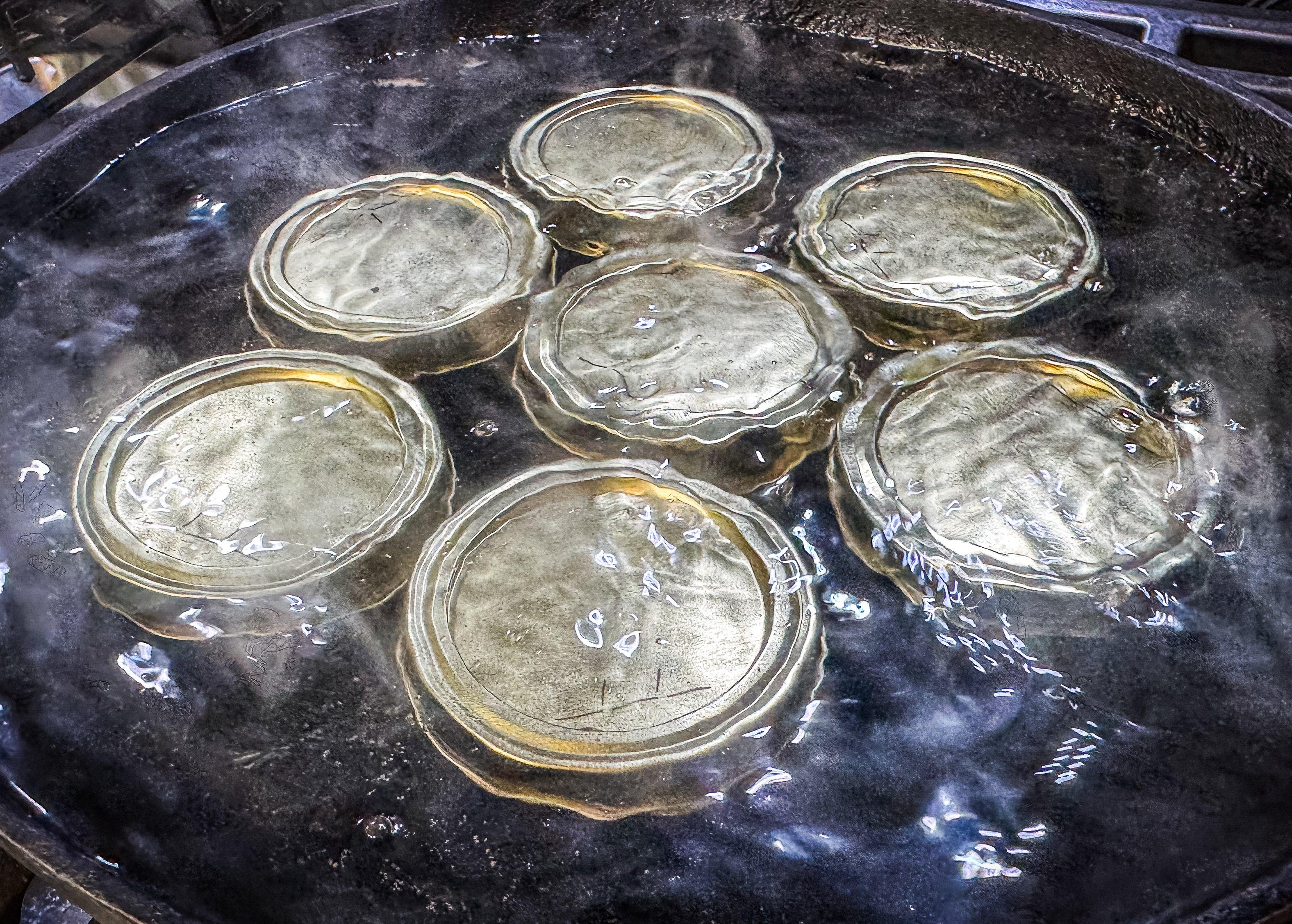
Boil the sealed jars for a full 10 minutes to fully seal the jars.
Turn off the heat and allow the jars to cool slightly, at least 10 minutes or so. Transfer the jars to a clean kitchen towel lined spot on the counter. This is where a jar lifter comes in handy.
Leave the jars undisturbed for 12 to 24 hours, then check the seals by pressing the center of each lid. If it doesn’t flex, the jar is sealed and shelf-stable for 12 to 18 months. You should be able to hear the jars ping as they seal. Refrigerate any unsealed jars and use them within a couple of weeks, and refrigerate all jars after opening.
Wild grape jelly blows store-bought grape jelly out of the water when it comes to flavor. Try it on biscuits, toast, PB&J sandwiches, and on anything else where you enjoy grape jelly.
Don’t Miss: PAN SEARED BACKSTRAP AU POIVRE
Ingredients
4-5 pounds wild grapes
4 cups white granulated sugar
6 Tablespoons bulk fruit pectin or 1 box, like Sure Jell
1 teaspoon lemon juice
½ teaspoon butter (optional, prevents foaming)

author at Timber 2 Table recipes