Flooded Cornfields Creating Controversy Among Some Waterfowlers
Posted 2026-01-23 by
Louisiana Senator John Kennedy has called on the U.S. Fish and Wildlife Service to study what he called "legal baiting" for ducks
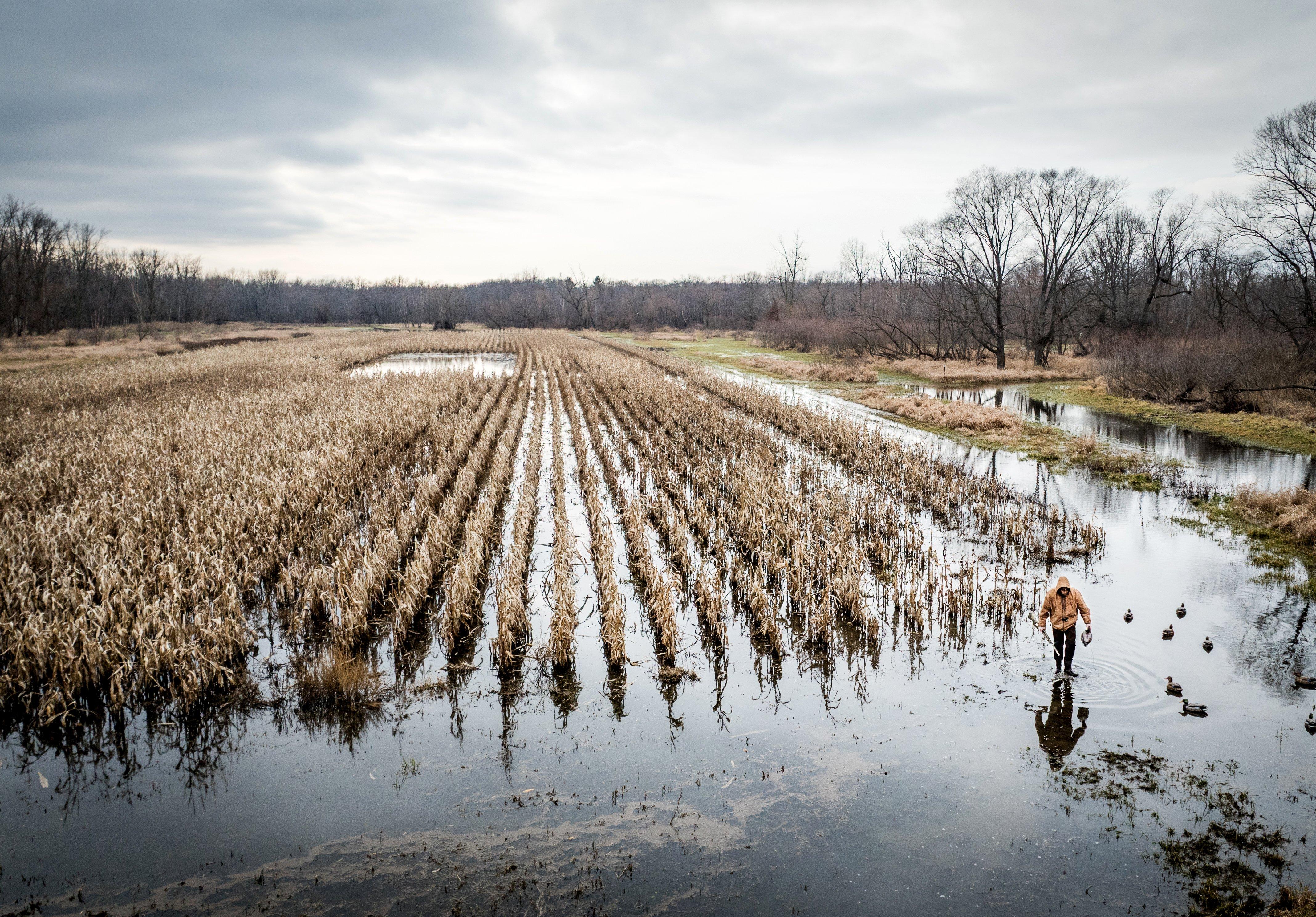
A Louisiana senator is asking the USFWS to study the effects of legally flooded cornfields on duck migrations. Photo by Bill Konway.
Sen. John Kennedy (R-La.) created a stir among waterfowlers when he called upon the U.S. Fish and Wildlife Service to study the impact of what he called unfair “legal baiting” on North America’s duck migration.
In a Jan. 7 letter written to USFWS Director Brian Nesvik and mentioned in a recent press release on kennedy.senate.gov, Kennedy said the practice of flooding cornfields to attract waterfowl is negatively affecting mallard harvest in Southern communities, especially those in Louisiana. He said policy changes in the 1990s, which opened the door to more widespread cornfield flooding, has resulted in a massive downturn of Louisiana’s mallard harvest.
“In 1998, Congress enacted the Migratory Bird Treaty Reform Act, which repealed the strict liability standard that previously governed federal waterfowl baiting violations. In 1999, USFWS . . . removed the enforcement mechanism that previously restricted the growth of hunting over intentionally flooded standing crops, particularly corn. As a result, Louisiana has witnessed a significant decline in annual waterfowl migration since the late 1990s,” Kennedy wrote in the letter.
But policy experts assert that hunting waterfowl in flooded standing crops has been legal and widely practiced without citation since at least 1973. Instead, the Migratory Bird Treat Reform Act actually removed the strict liability standard that made it more difficult to cite hunters who were unaware they were hunting baited areas and established more severe punishments for intentionally placing bait.
Don’t Miss: Duck Carcasses Illegally Dumped in Oklahoma Trash Dumpster
Kennedy’s letter states that Louisiana’s mallard harvest has dropped 95% from 1999 through 2021, which is more than any other state in the Mississippi Flyway. In contrast, Missouri’s mallard count rose from 280,000 in 1999 to 550,000 in 2016, which some believe indicates that mallards are concentrating and stopping in regions where the manual flooding of corn has become widespread.
“Unlike rice, which requires flooding as part of its natural growth cycle, there is no agronomical justification for flooding corn,” Kennedy wrote. “Put simply, the intentional flooding of standing crops has enabled an unsportsmanlike practice, weakened long-standing protections for migratory birds, and adversely impacted waterfowl populations in Louisiana.”
Many waterfowl hunters and biologists are strongly at odds with Kennedy’s message, claiming that habitat loss, weather changes, and hunting pressure have more to do with the decline in quality hunting. The mallard harvest in particular has declined across the Mississippi Flyway since 1999, according to USFWS stats, and Louisiana still has the highest overall duck harvest of any state in the flyway. Waterfowl biologists acknowledge that migration patterns are changing, but many factors have likely contributed to the shift.
Justin Martin, general manager of Duck Commander and a Louisiana native, weighed in with his opinion on the topic via a recent Facebook post. He wrote that he was one of the few hunters from Louisiana who doesn’t have a problem with the cornfields, but that he has a problem with government overreach on private land.
“If we ban corn, does rice go too?” he wrote. “What about (Japanese) millet? What a about fertilized moist soil? What about improved bottomland hardwood forests? Where exactly does the line get drawn? Does the act of adding water where it wouldn’t otherwise constitute a form of baiting?”
Martin wrote that he fears the “powers that be” will try to do all they can to remove access to ducks and duck hunting.
On the other hand, he said he’d love to see no row crops grown on public lands. “I would love to see NWRs and WMAs go to fully restoring the land they acquired in the name of conservation.”