5 Reasons Chanterelles Are Better Than Morel Mushrooms
Posted 2025-08-06 by
Both mushrooms easy to identify and taste delicious, but the summertime chanterelle gets my nod as the best one
When most folks think of wild mushrooms, they think of morels. Heck, there are even festivals devoted to the tasty fungi, which grows in the early spring, right around the beginning of turkey season in many areas. But if you ask me, when it comes to wild mushrooms, chanterelles are even better.
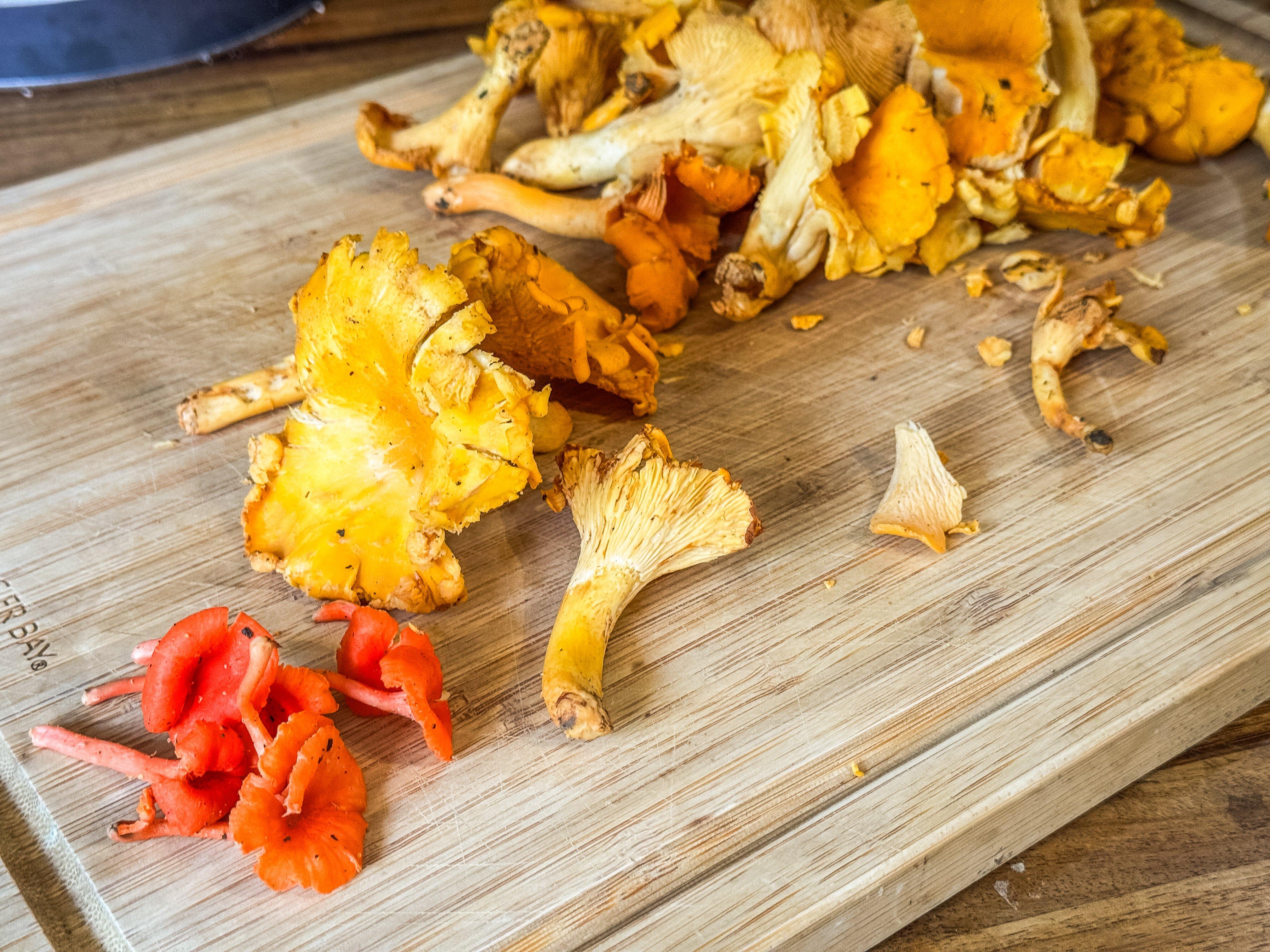
Chanterelles are my favorite type of wild mushroom. Image by author
Don’t get me wrong, I love morel mushrooms and I never turn down an opportunity to search for them in the spring or eat them with fried turkey nuggets or a plate full of crappie fillets. Still, I think chanterelles, which grow in the summertime, are even better. Here’s why.
- Flavor
While the morel is excellent, the flavor is pretty mild, taking on more of the spice and batter flavor that can sometimes overpower the taste of the actual mushroom. Chanterelles have a deeper, fruitier, earthy flavor that stands up well to multiple cooking methods.
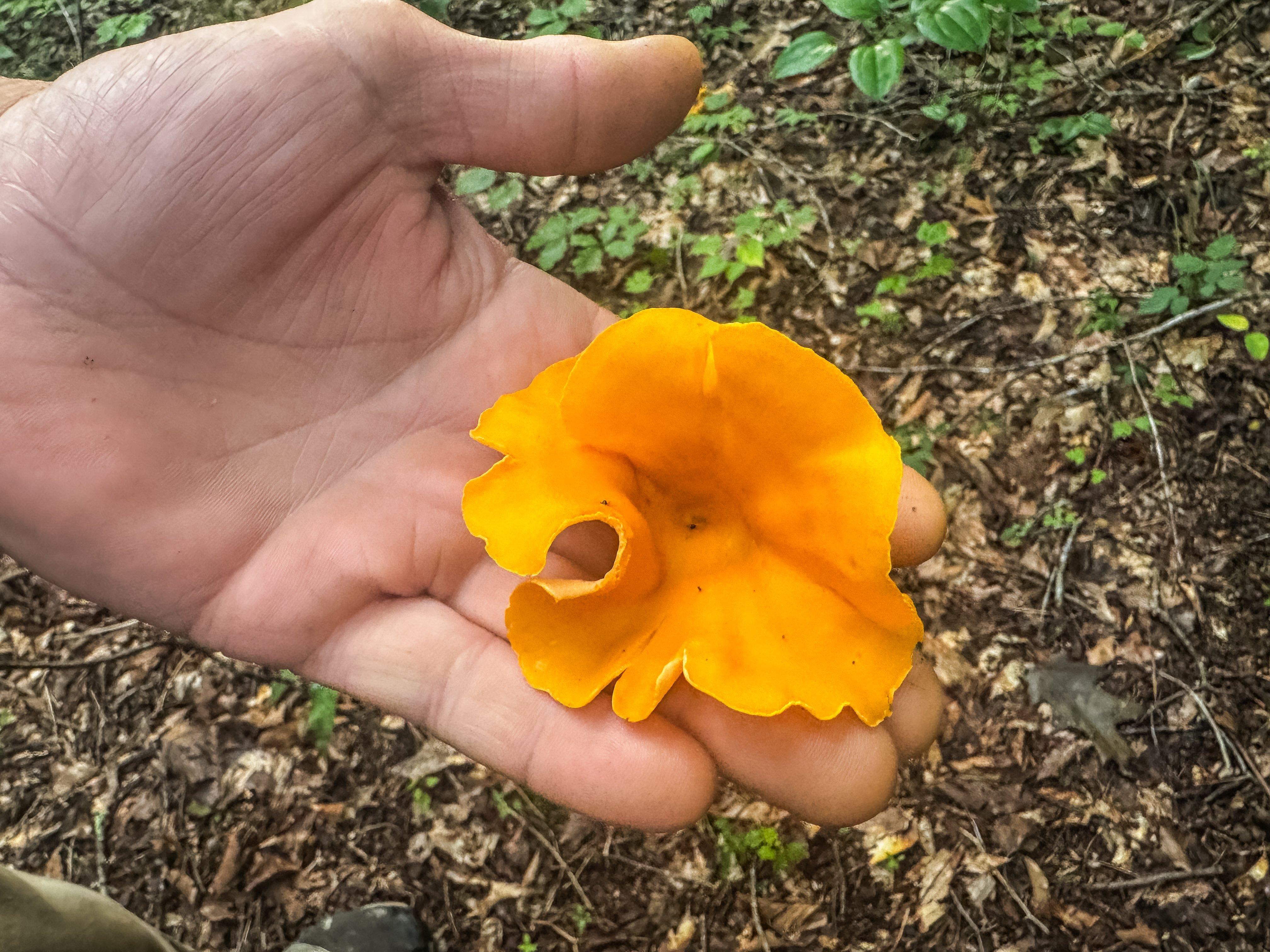
Wild chanterelles are full of flavor. Image by author
- Easier to Find
Realtree doesn’t pay me to design camo patterns, but I believe a pattern that looks like a morel mushroom would blend right in to the forest floor. I’ve walked past morels before and not seen them until I returned down the same path. One time, I sat next to a tree in the pre-dawn hours while I chatted back and forth with a roosted gobbler. I’d been there for almost an hour when I set my slate call and striker down beside my leg to wait for the longbeard to finally head my way. Only then did I notice a morel mushroom sprouting from the leaf litter next to me. A quick scan of the area turned up several more. I’d been sitting in the middle of a pretty good mess of mushrooms and hadn’t even noticed.
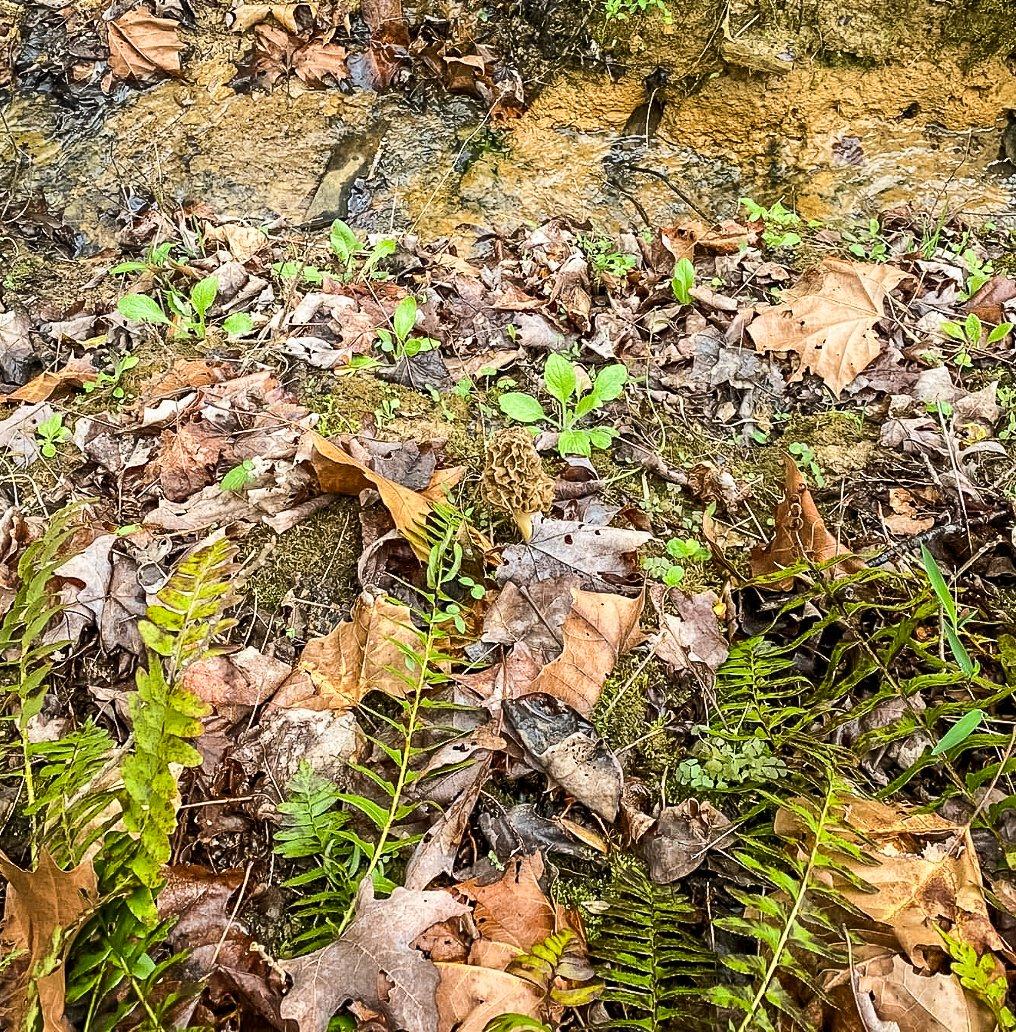
Morels are nature’s perfect camo. You can walk right by some and not see them. Image by C. Waters
Chanterelles, on the other hand, practically jump out at you. Their bright yellow, red, orange, or apricot colors stand out against the dull brown leaf litter. I’ve spotted stands of chanterelles from as far as 75 yards away as I strolled through the summer woods.
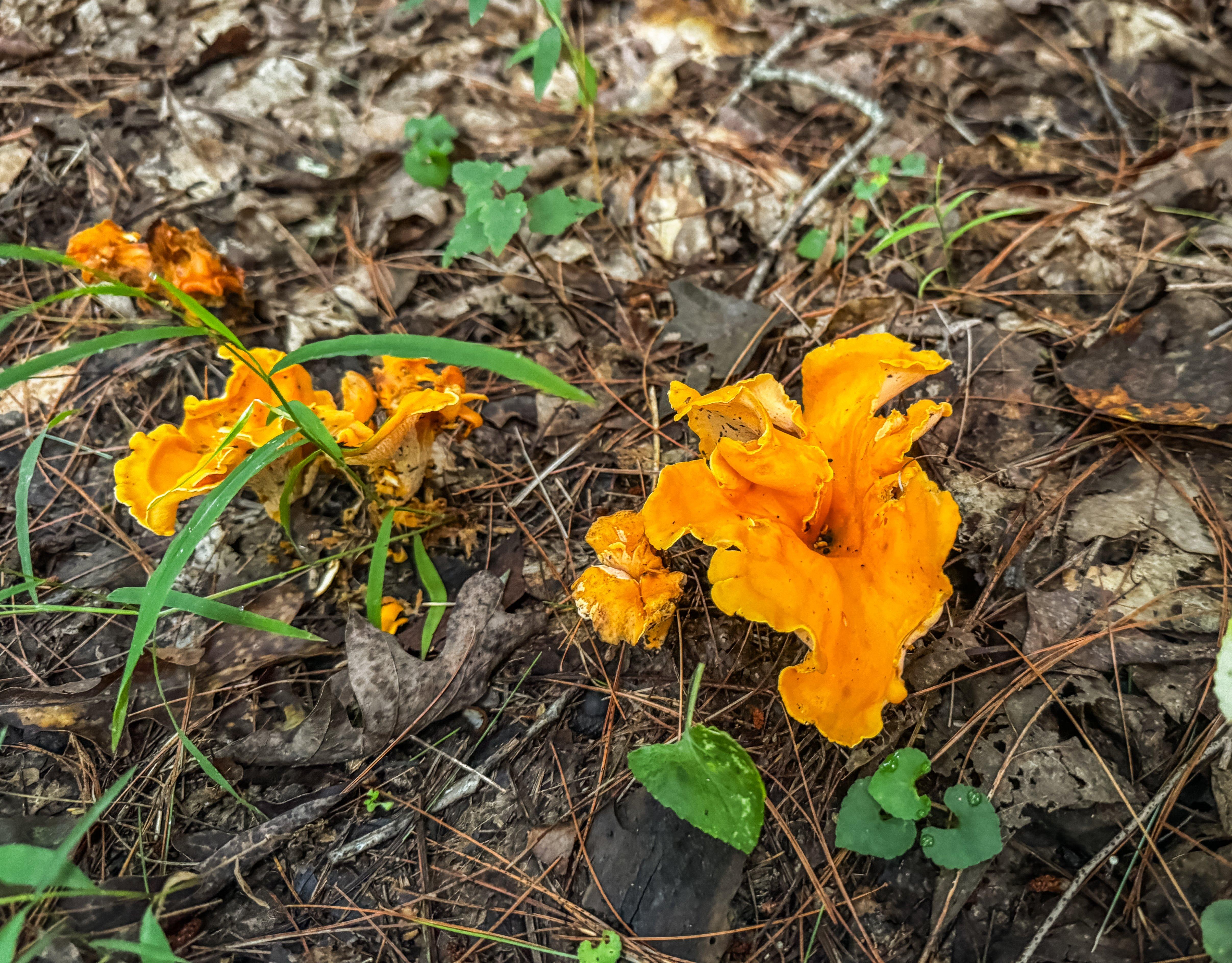
Chanterelles are bright yellow or orange, colors that jump out of the woods, making them easy to spot from a distance. Image by author
Another great thing about chanterelles is their habit of growing in mass. Find one and you might just fill a pillow case-full without walking far.
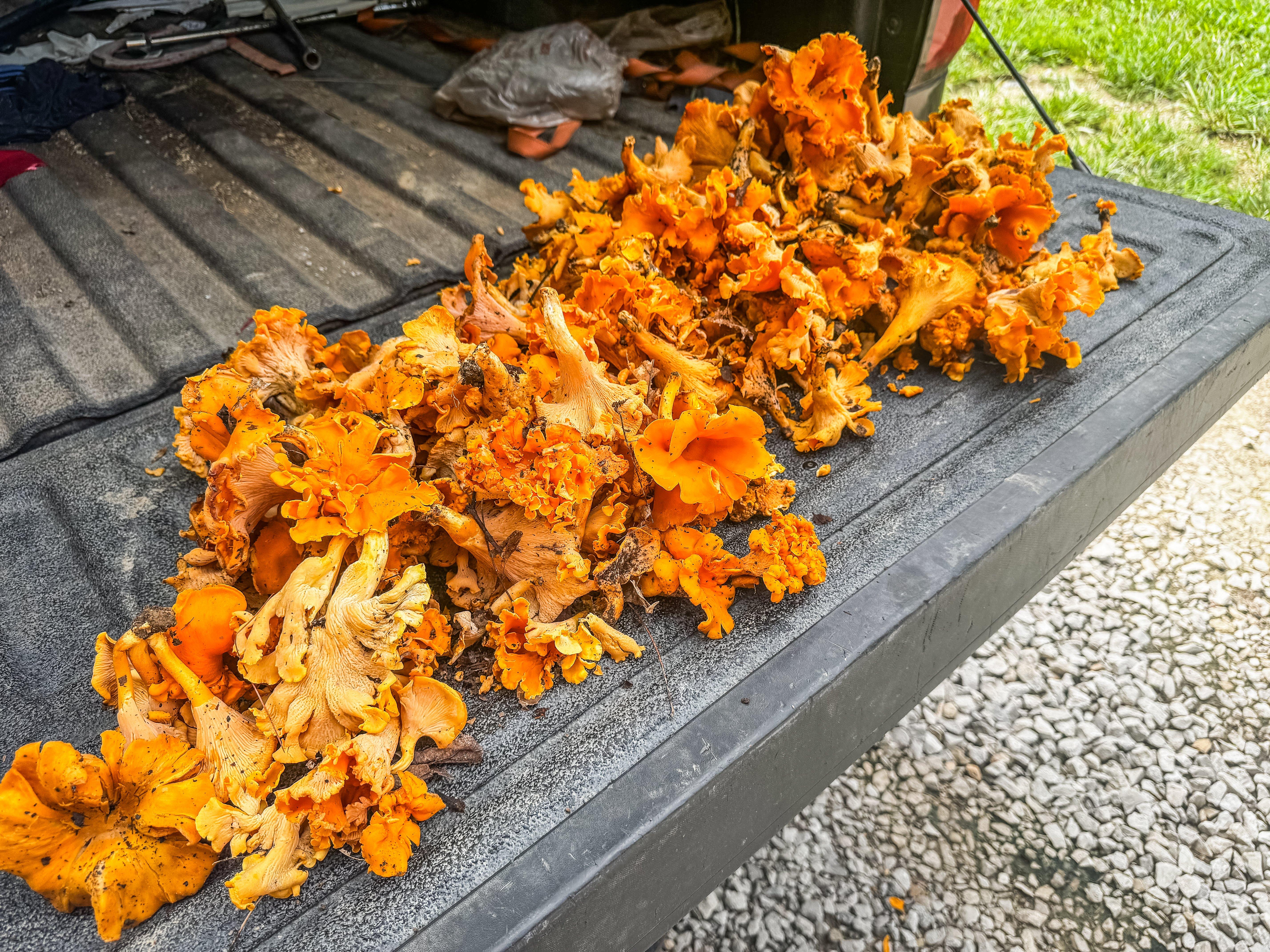
Chanterelles tend to grow in groups. Find one and there will likely be others nearby. Image by author
Don’t Miss: THE BEST WAY TO COOK CHANTERELLE MUSHROOMS
- Identification
Both types of mushroom are easy to identify and distinguish from toxic look-alike species. The toxic jack-o-lantern mushroom looks similar to a chanterelle, but is nonetheless still easy to identify. While the chanterelle can be orange, it usually isn’t as deeply colored as the jack-o-lantern.
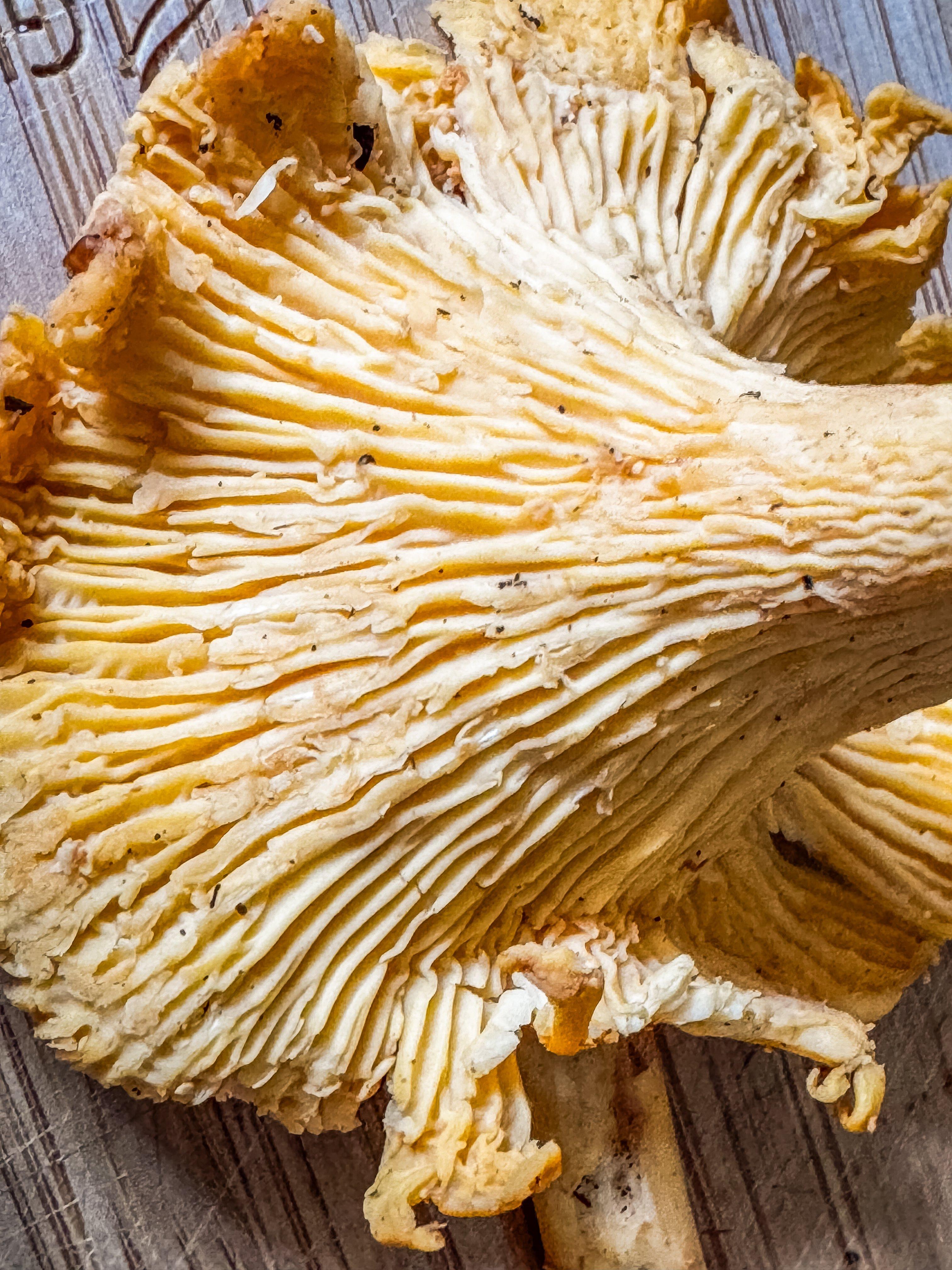
Chanterelles have ribs along the underside of the cap, not gills. Image by author
Additionally, chanterelles have shallow ribs along the underside where jack-o-lanterns have true gills. If you pull apart the stem of a chanterelle, the interior will be white and have the texture of string cheese.
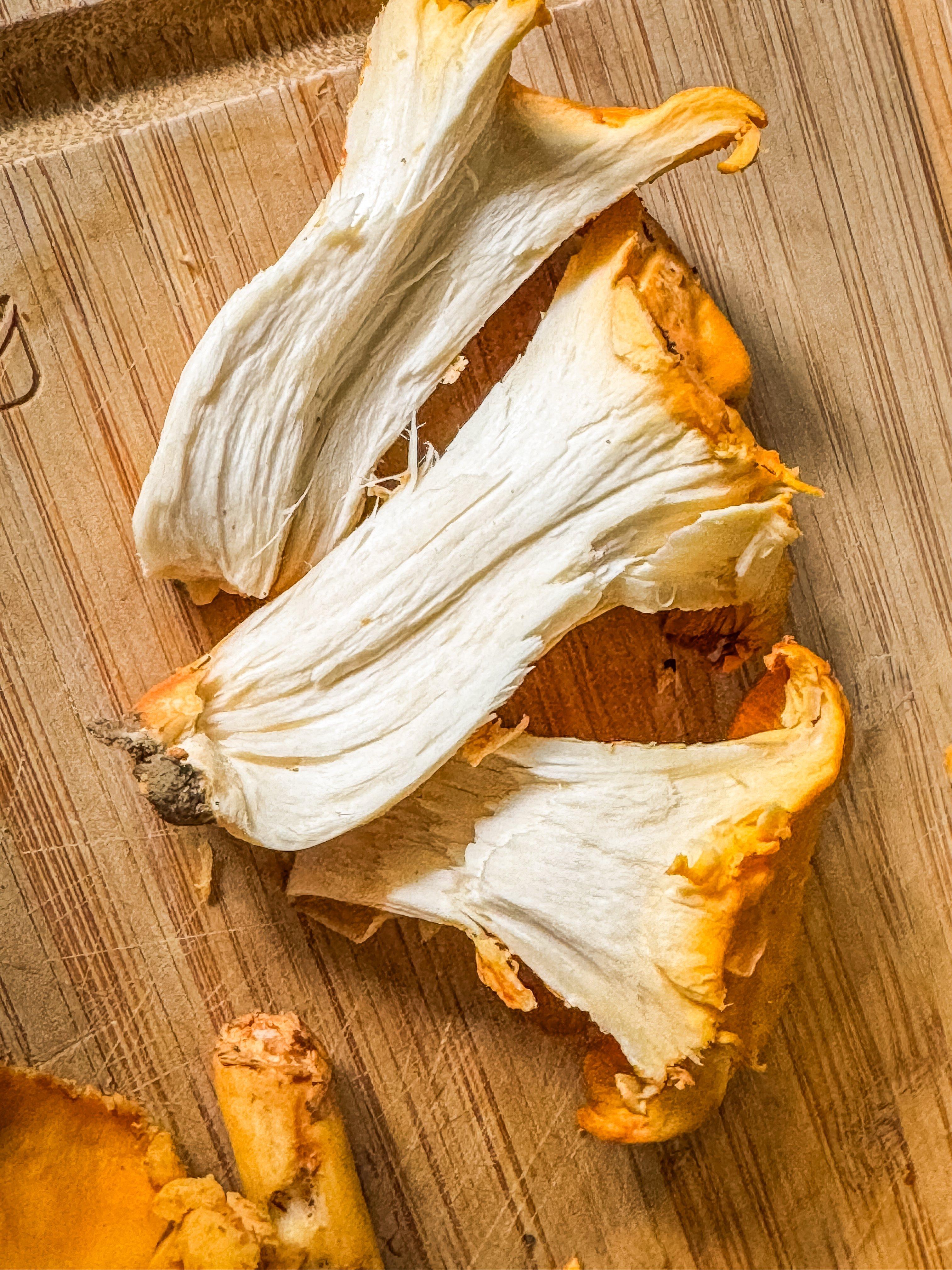
The interior of a chanterelle will be white and stringy. Image by author
The interior of the jack-o-lantern will be the same orange color as the exterior. Finally, chanterelles have a fruity odor that is missing from their toxic look alike. Chanterelles tend to grow directly from the forest floor, usually as singles but sometimes in small clumps of two to three. Jack-o-lanterns tend to grow directly on trees or decaying wood, often in large clumps.
Don’t Miss: HOW TO SHOOT A LIMIT OF DOVES WITH ONE BOX OF SHELLS
For morels, the main look alike to be avoided is the false morel. False morels usually sprout later in the season than true morels. If you split the stem of a true morel, it will be hollow inside. If you split a false morel, it will have a solid interior. Additionally, the head of the false morel is clearly separate from the stem while the true morels don’t have that separation.
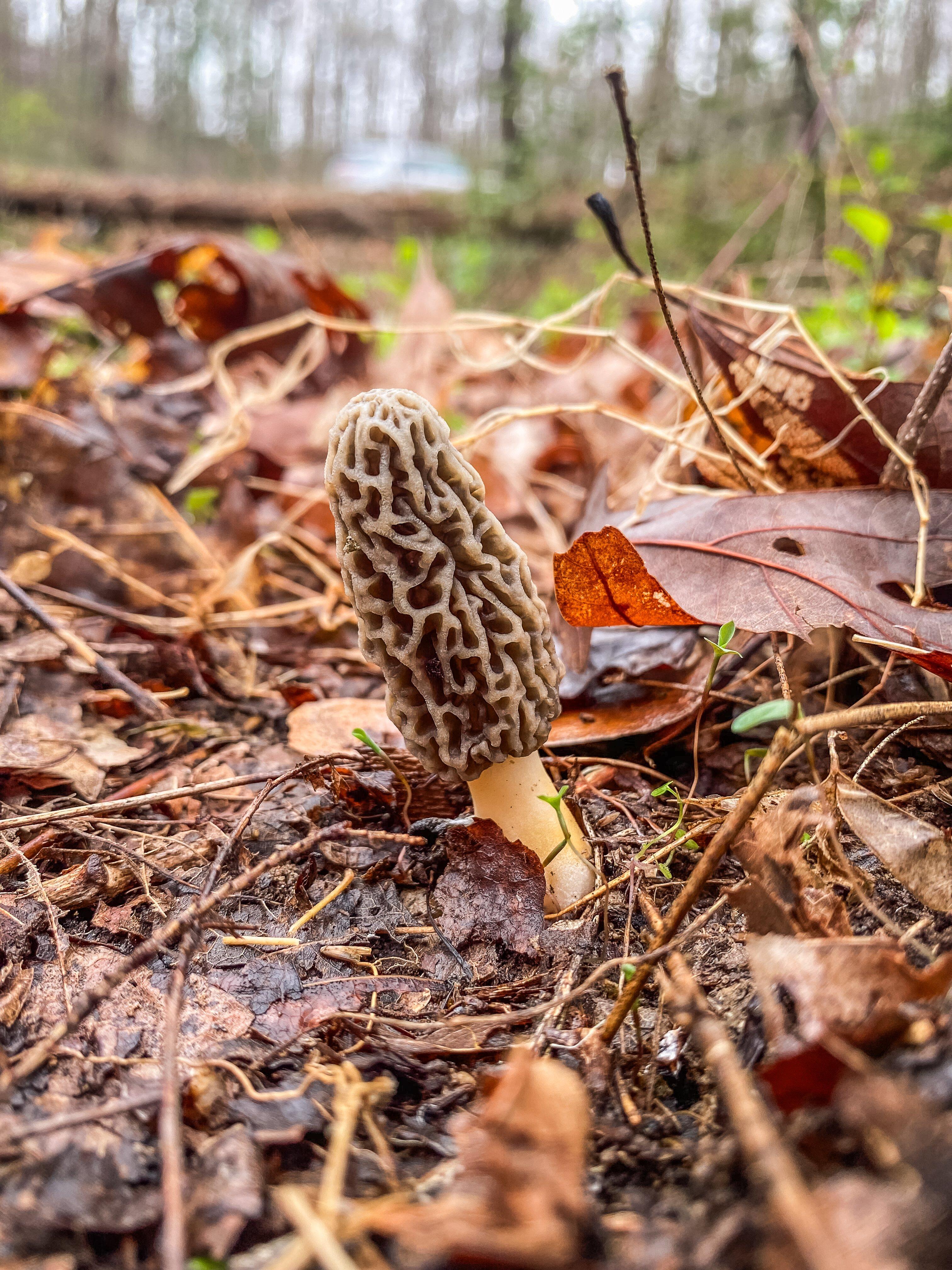
True morels are hollow and the head and stem grow as one. Image by C Waters
While both mushrooms are easy to identify once you know what you are looking for, wild mushrooms are nothing to take lightly. Some will make you deathly ill, others will kill you. Always learn from an experienced forager who is familiar with the mushrooms in your area. Farmer’s markets are great places to find a mentor because they often sell wild foraged mushrooms there. If you can’t find an experienced mushroom tutor, get yourself at least two mushroom identification books. Cross reference any mushrooms you find with each book, making sure there is no questionable feature on or about your mushroom before you pick it. If there is any doubt, don’t eat it.
- Range
While you might find the occasional morel in the lower South or West, the primary range for the mushroom stretches from the upper South throughout the Northeast and a few places in Europe (the mountain ranges in Ireland and the Appalachians were once connected before the continents separated. Mushrooms go way back).
The range for the chanterelle is pretty much any warm spot on the planet, including all of North America. While species might vary, if it is warm enough to walk in the woods, chances are good that there will be some sort of chanterelle growing there during the summer.
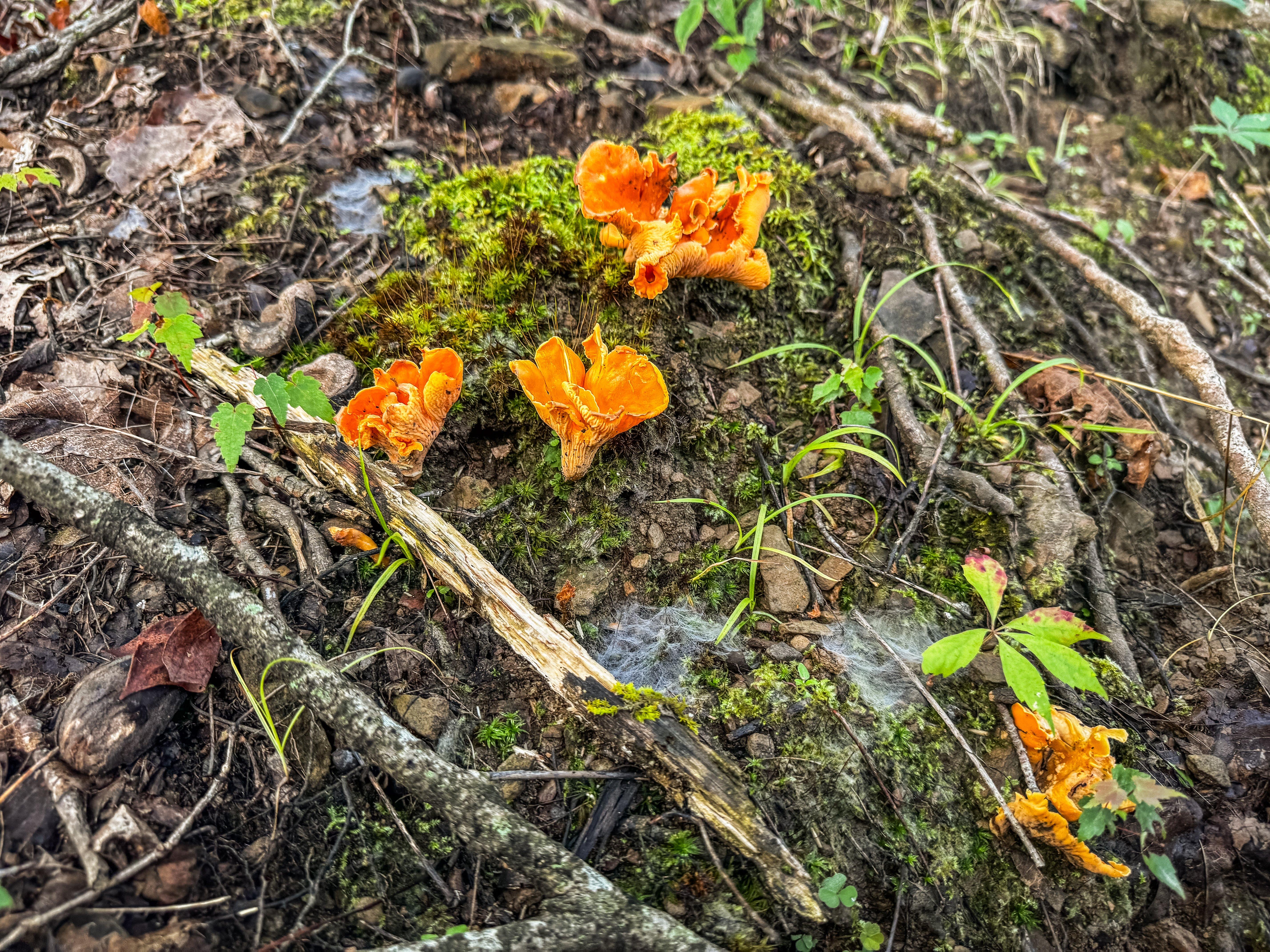
Chanterelles grow over most of the United States. Image by author
- Timing
Morels sprout for a fairly short time during the spring. Where I am in the upper South, that time usually coincides with turkey season. While I’m in the woods almost every day around that time period, my mind is on longbeards more than mushrooms. I usually stumble upon a morel or two while I’m hunting, but I rarely have time to specifically search for mushrooms that time of year.
Chanterelles, on the other hand, grow throughout the late spring and summer. I’ve found them as early as May and as late as September. I’ve found fresh chanterelles after a rain while turkey hunting and early whitetail deer hunting later that fall in the same year. That gives a lot more opportunity to get out and search.
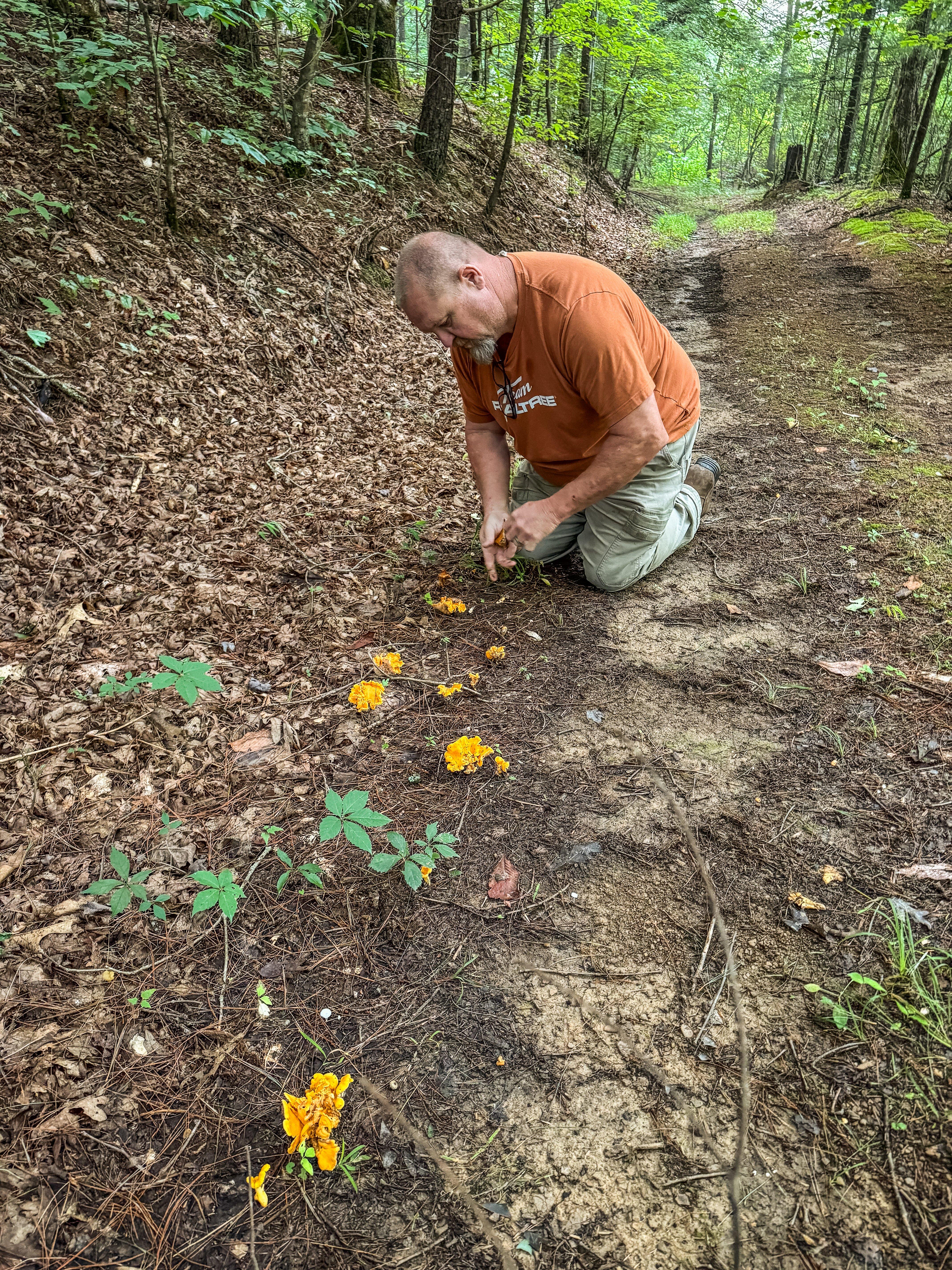
For much of the country, chanterelles can be found from late May through early September. Image by Bill Konway
If you’ve made it this far, you might agree or you might be shaking your head and mumbling that I’ve lost my mind. Truthfully, this was mostly in fun. Both mushrooms are fabulous additions to any meal and I’d never turn either down. Maybe it boils down to how badly I suck at finding morels. While others go out each spring and come back with buckets full, I can search the same areas and barely find enough to fill my cap, and that’s if I’m lucky. But even a poor mushroom hunter like myself can spot the bright yellow beacon of a chanterelle from a long bow shot away.
For much of the country, now is prime time for chanterelles. Get out and find some yourself. Let me know which one you like the most.
Don’t Miss: EARLY 2025 DUCK NUMBERS LOOK MIXED