How to Find the Best Turkey Hunting Setups
Posted 2026-04-16 by
Location is critical when yelping to a gobbler. Learn how to identify the top spots to lure birds within range
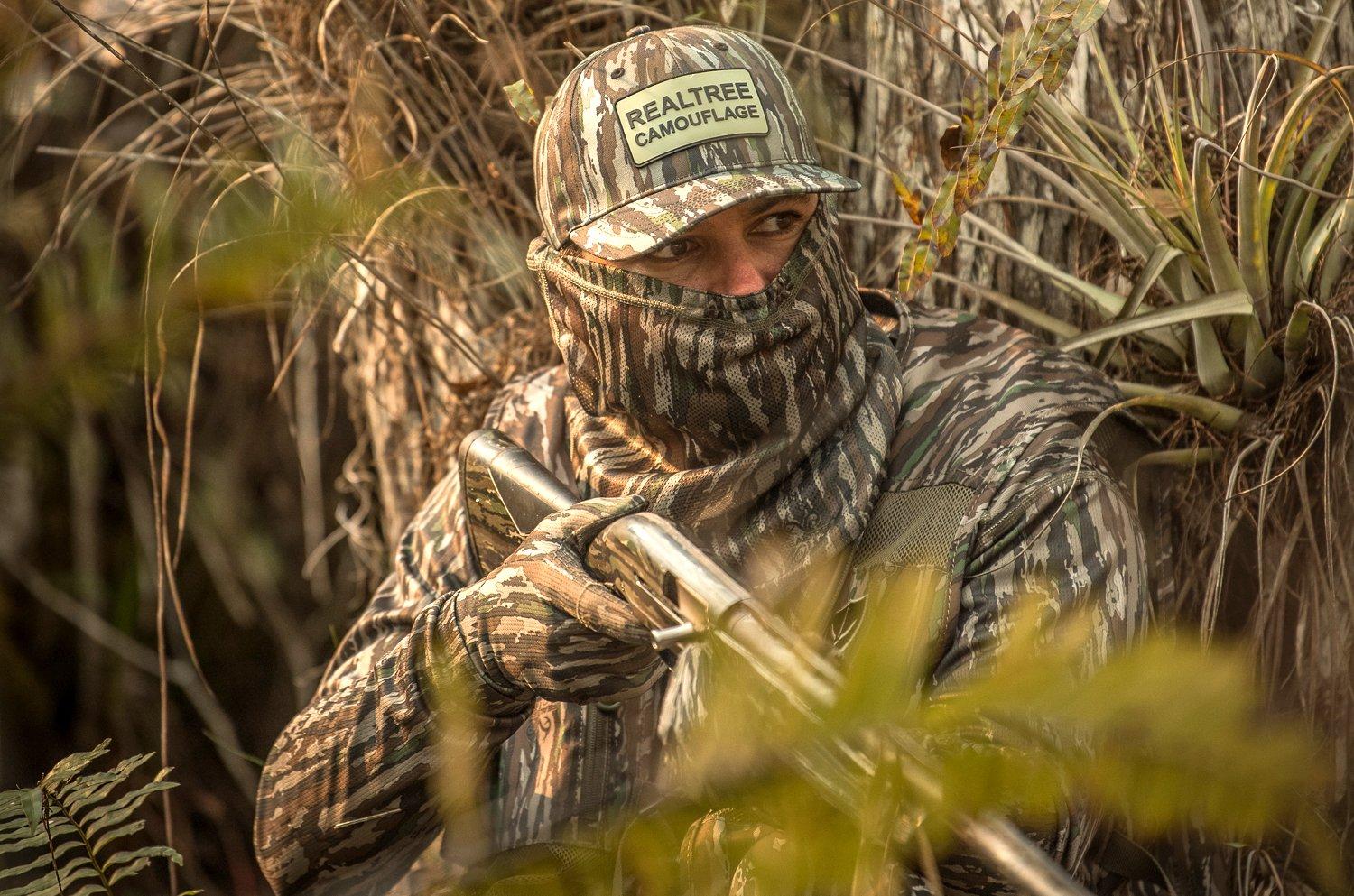
Avoid setting up at spots choked with brush or undergrowth, and try to sit in the shade. Photo by Bill Konway.
Advice from yesteryear still resonates today in the turkey woods, and one old saw rings particularly true: If you sit down wrong on a turkey, you’re already beat.
Poor setups have doomed more potentially great turkey hunts than any other limiting factor. Your planning, calling, and woodsmanship might be spot-on, but if you set up where a gobbler doesn’t want to go, you’ll usually lose the game.
The solution, of course, is to identify good setups for specific situations — spots that maximize your chances of enticing a gobbler sure-kill close. Sometimes, that’s easy and obvious. But in many scenarios, the answer is nuanced. Try these tips to make sure you plant your butt cushion in the right spot this spring.
Don’t Miss: Strange But True Turkey Hunting Tales
GENERAL RULES
In this day of pop-up blinds, the simple act of setting up has become somewhat lost. It’s not as simple as just snuggling against some cover.
First, find a tree or other cover that’s at least as wide as your back. That’s important for safety and to obscure your outline. If possible, remove brush and leaf clutter from around the spot, and clear any close brambles or saplings that can impede movement or shooting lanes. Don’t sit at a spot surrounded by brush or similarly thick cover, but avoid areas that are in the wide open, too (we’ll get to that in a bit). Whenever possible, sit in the shade or with the sun at your side or back.
Here’s where most people goof up: Don’t sit square against the tree, directly facing your decoy or the spot where you think a gobbler might appear. Assuming you’re right-handed, cheat your body to the right so that your left shoulder and leg are facing that spot, while your body and right leg are at about a 30-degree angle to the right. This lets you move to cover a shot at tough angles to the right or left. Simply facing forward prohibits you from twisting right to make a difficult shot.
Conventional wisdom also holds that it’s wise to set up at spots a turkey can access easily — logging roads or open oak flats, for example — and that you should not set up with barriers between you and the bird, including fences, creeks or wetlands. Honestly, the latter consideration is a bit overblown, as a gobbler will cross a fence or fly over a creek if he’s hot enough. Yes, make it easy for him to approach, but don’t fret if a little barbed wire or some water is in his way.
Don’t Miss: The Best 20-Gauge Turkey Loads of 2026
TIMBER SETUPS
In the woods, reading the terrain and foliage is critically important. The biggest mistake hunters make in the timber is setting up so they — and the turkey — have a wide-open view for long distances. This leads to the graveyard gobbler syndrome. If you were walking past a graveyard one night and a voice from some unseen entity whispered for you to come closer, you would likely run away. The same holds true with turkeys. They instinctively know when they should see the source of calling — that is, a hen. If they only see open space or something suspicious, they’ll hang up or spook.
Counteract this by making a gobbler in timber search for you. Set up so there’s some visual impediment between you and the turkey so the bird must seek the unseen calling source. These might include a bend in a logging road, a slight terrain rise, a patch of gooseberry bushes — whatever. Set up within good range of that — ideally 25 to 35 yards. When the searching turkey pops into the open and knows it should see the source of calling, it will usually raise its head and look. If you’re set up correctly, you can shoot the bird the moment it appears.
One final note: You might say that decoys could solve the ghost gobbler problem in timber. That works sometimes, if you set them up on logging roads or other similarly open spots. In my experience, though, decoys set up amongst the trees seem to spook turkeys pretty consistently.
FIELD SETUPS
Open pastures and ag fields present different challenges. Unless you’re hunting country with enough roll in the terrain, you’re often left looking at wide-open spaces that give turkeys the advantage. Obviously, decoys are a huge boost in such situations, as they provide visual reassurance to your calling.
Don’t Miss: Turkey Hunting the Evening Shift
In field situations, I have two considerations. First, where do birds typically enter and exit the field, and what other areas of the field do they favor? If turkeys consistently act in the same manner, I’ll hedge my bets and set up as close as possible to the hotspot, whether that’s a cattle gate, a logging road entrance or a low spot hidden from the road. If their movements are more random, I’ll consider where they might best see a decoy — like a high point that juts into a pasture — and set up there for maximum visibility. Either way, I try to avoid setting up right on the field edge, preferring to get at least some cover by sitting a few yards into the woods, with my decoys about 25 yards away in the field.
If you’re hunting field birds without a decoy, you’ll have to play the curiosity game. Set up sufficiently deep in the woods so turkeys can’t see the source of the calling. Curiosity might prompt them to come close and check things out.