Should You Ditch The Peep Sight on Your Bow?
Posted 2026-09-15 by
A peep sight is great, until a nice buck is broadside at last light and you can't see through the aperture
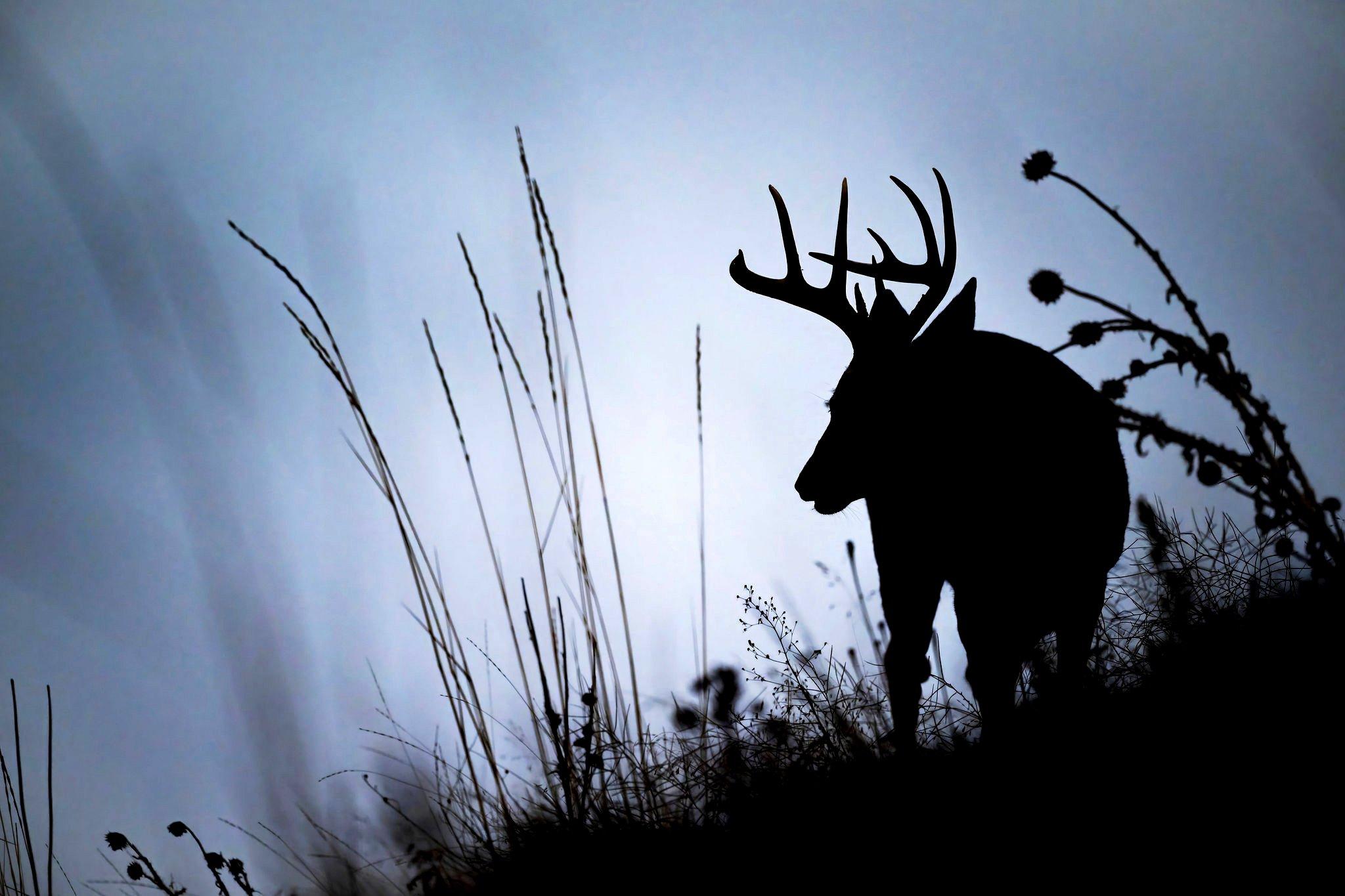
Whitetails move best in low light and sometimes, even though you can see your deer and it’s legal to shoot, it can be difficult to see through a peep sight. Image by John Hafner
Have you ever been caught with a deer standing in your best shooting lane with five minutes of legal light left, but couldn’t see clearly through your peep sight to take an ethical shot? I have, especially when hunting in the timber or from a ground blind. My low-light vision certainly isn’t as good as it once was, either, now that I’m in my mid-40s.
But even if you have eagle eyes, you’ve probably drawn your bow at some point and noticed that your peep was twisted just enough that you couldn’t see through it clearly. Perhaps you even give your peep a slight twist before hooking into your D-loop, or even rotate the D-loop itself to ensure the peep aligns at full draw.
Don’t Miss: Realtree Celebrates 40 Years with Long Live Real Documentary
I’ve used peep sights on my hunting bows for decades, like most hunters. But as a kid, I learned to shoot a bow using only a kisser button on the string to establish a repeatable anchor point. I hunted with setups like that quite effectively into my early 20s, too. In fact, I only switched to a peep after buddies at the bow shop made fun of my kisser button and told me I was doing everything wrong.
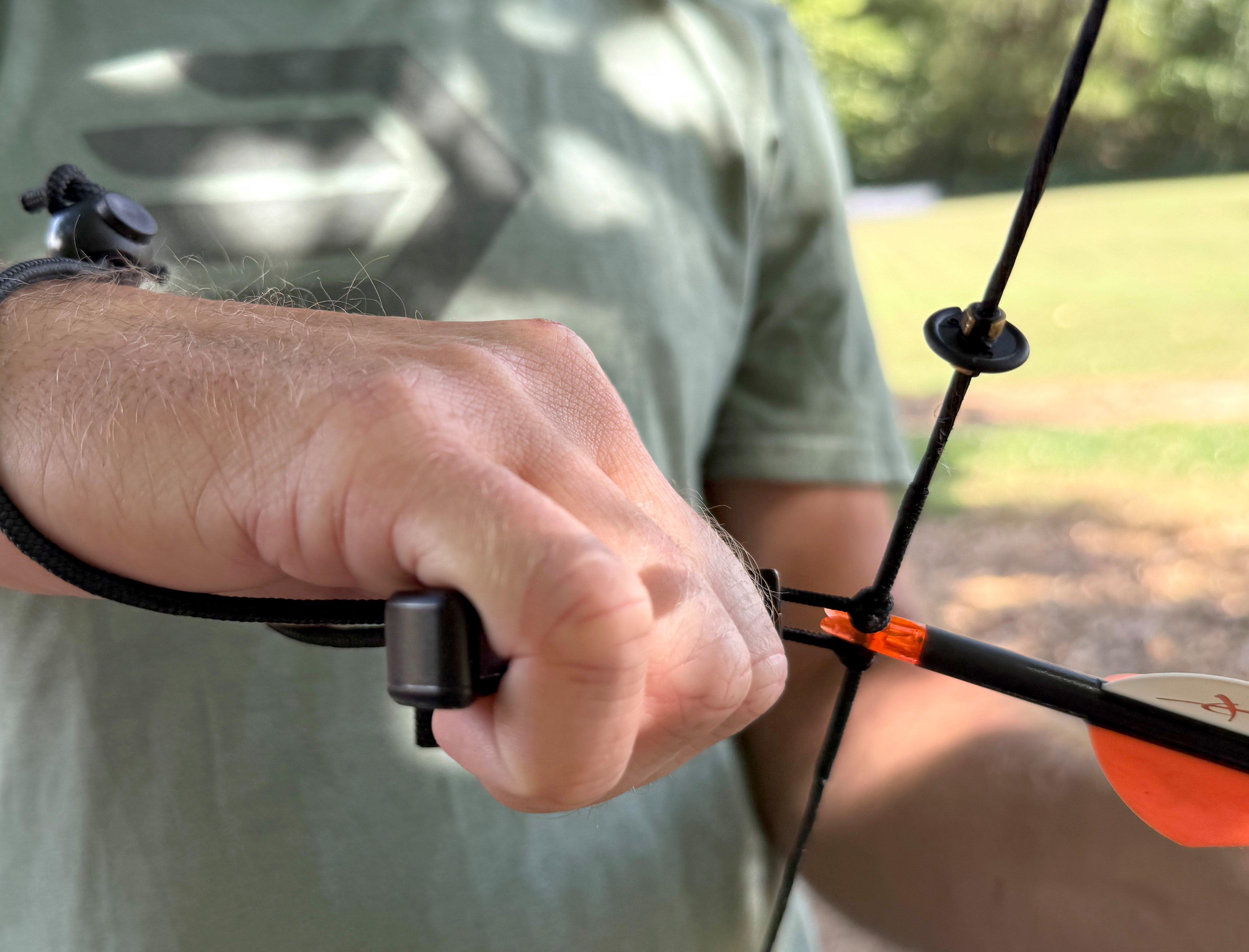
Kisser buttons are old-school, and although many archers use them for a secondary anchor point, few use them without a peep sight. Author image
No doubt, the best archers almost universally use peep sights, and for good reason. Centering a pin in a peep is a precise and intuitive aiming method, akin to the back sight on a rifle. “The peep makes a longer focal plane, and two points of reference,” says Travis “T-Bone” Turner, former ASA world champion shooter and the go-to archery guru for pretty much everyone associated with Team Realtree. “I’m obsessed with accuracy, and the peep sight gives you a definite advantage at longer distances. In competition, shooting a 3/16-inch peep, you can even put your pin on the left- or right-hand side of the hole when you’re aiming and see that you’ll hit left or right.”
But in the woods, peep sights have downsides. First, it’s tough to see through them in low lighting. And though today’s bow strings are better than ever, they can still stretch, particularly after being subjected to the elements over the course of a long season. String stretch causes peep sights to misalign, which can become very problematic. Realigning a peep sight or even installing a new one is pretty easy, but it generally requires a bow press.
BACK TO BASICS
A kisser button is aptly named because it’s placed against your lips at full draw, as if you’re kissing it with the corner of your mouth. But it could also stand for K.I.S.S. — Keep It Simple, Stupid — because it is simply a physical reference on the bowstring for reaching a consistent anchor point. I haven’t personally used nose buttons, but they essentially do the same thing. Plenty of hunters (including T-Bone) use a kisser or nose button in conjunction with a peep sight. But relatively few use a kisser as standalone anchor point, at least these days.
Don’t Miss: Video | Realtree’s 40th Anniversary Archery Competition
This past spring, I was setting up a new Mathews Arc 30 and making a personal change from an index-finger release to a thumb-button release. I started that process with a couple weeks of blind-bale shooting, just to get used to the sequence, and in doing that I noticed the solid, consistent contact I had, using the thumb button, between my hand and jaw and the string on my nose. I liked it.
On a whim, I decided to add a kisser button right between them, for a third anchor reference. When I closed my eyes, drew my bow, and settled the button at the corner of my mouth, it was like shaking hands with an old friend, stirring muscle memory that had been buried for nearly 30 years. I could draw my bow and know instantly — purely by feel — if I was anchored correctly or not.
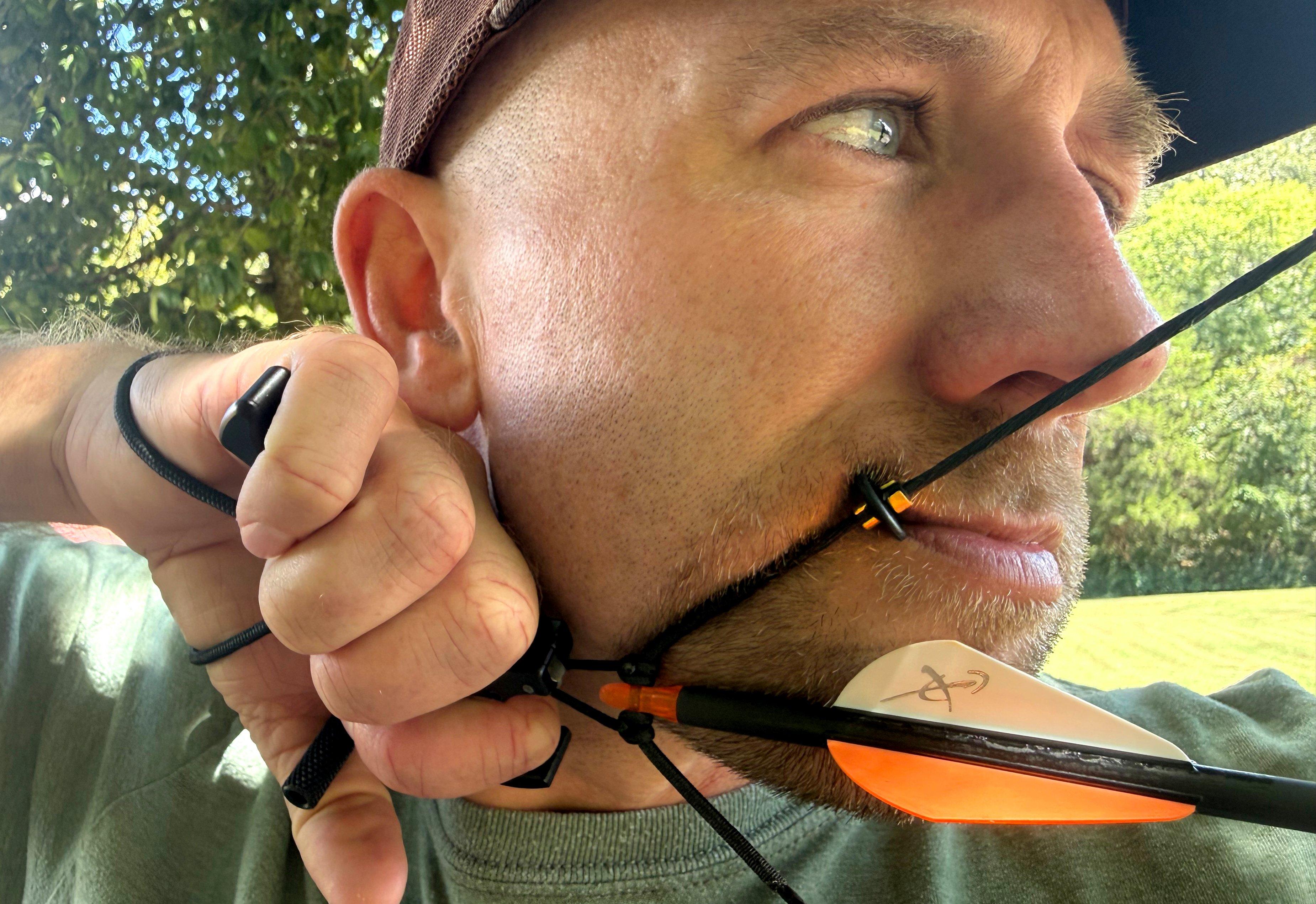
A three-point anchoring system with a knuckle on the jawline, kisser on the mouth, and string on the nose is repeatable — and it works in all lighting conditions. Author image
Initially, I planned to add a peep sight as well, but the more I shot the setup, I realized that I was shooting just fine without one — plus I had a nice, unobstructed view of my sight housing and pins. Maybe my long-range accuracy could’ve been better, but I’m not much of a long-range shooter anyway. Inside 40 yards — where I do all of my whitetail shooting — I was as confident as I’ve been in years.
Bow season opened in Kentucky a couple weekends ago, and I climbed into one of my favorite doe stands on the second morning. Daylight had just broken, and I spotted a deer slipping through the greenery below me. A quick check through my binocular confirmed it was a young doe, last year’s model, and would no doubt be a tender specimen if grilled to medium rare.
I eased my bow off the EZ Hanger, but the woods were still pretty dark, particularly with all the summer canopy intact. Seeing through a peep sight would’ve been a struggle. But I turned on my sight light to the lowest setting, and when the doe stepped into a good lane at 27 yards, I drew. The kisser button naturally landed where I wanted it, and I could see the entire deer and my sight pins, unobstructed. I aimed and squeezed the release, and a new deer season started with a perfect heart shot and great confidence in my “new” old-fashioned system.
Don’t Miss: How Often Should Your Replace Crossbow Strings?
T-Bone, an avid southern bowhunter himself, chuckled at my story. “I have both a peep sight and a kisser button on my bowstrings, and back in the day I would practice shooting ‘around’ my peep in low light, just to be ready for those types of opportunities,” he said. “At close range, you can certainly shoot well enough without a peep sight to be lethal on deer. In fact, if you just want to be a stone-cold deer killer — the type who’s putting his corn piles close and stacking up 15 does in a season — there’s a lot to be said for losing the peep and shooting a straight kisser button.”
I’m not suggesting that you totally ditch your peep sight, too. I still have a secondary bow, a Bowtech Proven 34, that I have set up with both a peep and a kisser, and I shoot that one often in local 3D tournaments. But over and again, for hunting, I keep gravitating toward the Mathews rigged with the kisser button only. It seems to be working pretty well, as similar setups did years ago. And the truth is, I’ve always been the sort who enjoys putting my corn piles close and filling all my doe tags.

For long-range accuracy, a peep sight still rules. But if you’re after a pure whitetail hunting tool and will keep shots relatively close, there’s a lot to be said for simplifying to a kisser button. John Hafner image
PEEP VS. KISSER: PROS AND CONS
Peep Sight Pros
-Better precision, especially at longer distances
-Easy to learn for new shooters
-Versatile and fast. Once you know your preferred peep height, new strings or new bows are easy to set up quickly
Peep Sight Cons
-String twisting can bring them out of alignment
-Can be difficult to see through in low light
-A bow press is usually required to install a peep sight or make major adjustments
Kisser Button Pros
-Creates a fast anchor point that relies on touch instead of sight
-Is unaffected in low light
-Won’t twist out of alignment
-Can be placed on the string with serving or nocking buttons without a press, meaning field fixes are easy
Kisser Button Cons
-Not as precise as a peep sight at longer ranges for most shooters
-Shooters must maintain consistent pressure against the string and kisser (lean or press too hard, and shots will fly off course)
-Can be tricky to anchor properly on steeply angled shots
-Slight loss of speed from the button’s drag on the string