2026 Midwest Deer Season Forecast
Posted 2026-08-10 by
America’s Heartland provides some of the nation’s finest whitetail hunting, and this year is shaping up to be a good one in most of the region
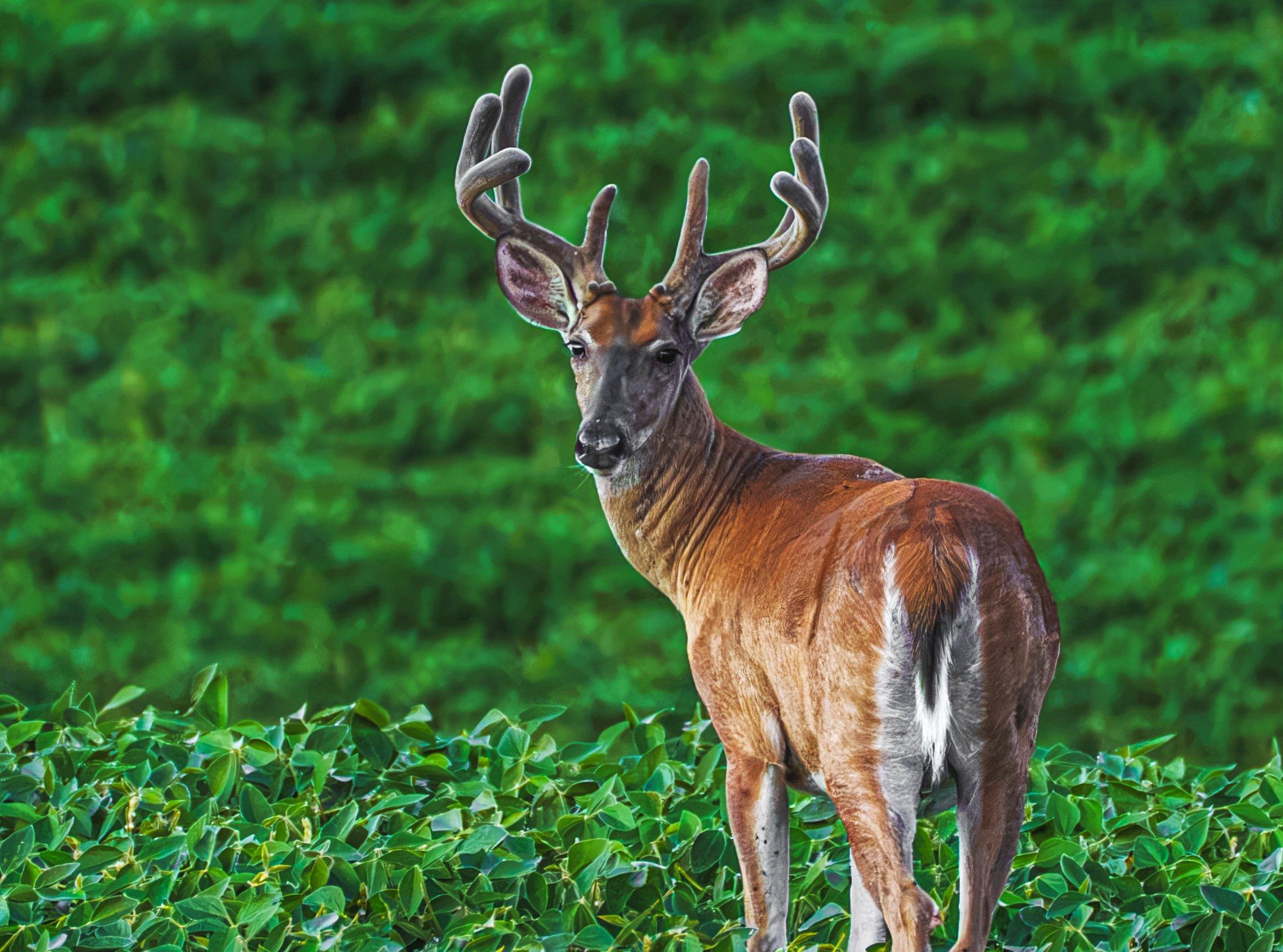
With exceptional nutrition and top-notch habitat, even diseases and winter mortality cannot dethrone the Midwest as North America’s top region for deer numbers and huge bucks. Realtree image
Scores of deer hunters annually hit the Midwestern whitetail woods hoping to encounter a record-class buck, and it’s because North America’s Heartland produces lots of them. Although herds are down in some areas due to disease and winter-related mortality, there are still plenty of deer to go around. There will be some giants killed in the Midwest this season, same as every season.
The Midwest’s earliest openers are just around the corner, and if you’re planning to hunt this hallowed region in 2026, scroll to the state(s) you’ll be hunting for a quick bird’s-eye view of what you can expect in Antler Nation.
Don’t Miss: The Best Days to Deer Hunt in 2026
Illinois
Although the consensus among Land of Lincoln deer hunters is that the state’s world-class-buck heyday is in the rearview, you can’t argue with the ongoing frequency of record-book entries. Illinois firearms seasons are during the waning rut when all-day deer movement is slowing down, which protects many bucks that would certainly be susceptible to a peak-rut season. But the timing still generally gives gun hunters great experiences. While the Illinois DNR doesn’t manage specifically for trophy bucks, landowners and lessees do a fairly good job with selective buck harvest, allowing a good share of bucks to reach maturity. The buck harvest has remained fairly consistent in recent years. If you’re hunting on public land during the archery, gun or muzzleloader seasons, expect to have some company, but don’t be discouraged, as forward-thinking hunters can carve out a productive DIY hunt.
Indiana
If you’ve paid attention to the Bucks of Indiana Facebook page and/or Realtree’s Rack Report, you might be wondering if Indiana is the new Illinois; the state has been pumping out monster bucks left and right across all seasons. Anywhere in the state can be good, but the northwestern and southeastern counties best represent the Boone and Crockett Club’s entries. Archery tags are over the counter, and bowhunters enjoy three straight months of bowhunting. Being a one-buck state makes a big difference in the trophy potential, as hunters tend to harvest selectively. The downside? The state has a small percentage of public land. But the Indiana DNR offers ample resources on its website for DIY hunters. Hunters who put in their time on public or private land stand a solid chance of encountering an outstanding buck. Be sure to consider reserved hunts in the future for an even higher quality hunt.
Iowa
The saving graces for Iowa’s notoriety as the nation’s big-buck Mecca are the quota draw tags and a one-buck limit for nonresidents. It takes several preference points to draw most zones, especially for the archery hunt. Although public lands are sparse in most zones, just about any public parcel, large or small, can potentially produce a slammer buck. According to the Iowa DNR Deer & Turkey Harvest Report, Clayton County recorded the highest antlered buck harvest in the state in 2024 and 2025, followed by Allamakee County. The 2025 counts were just slightly less than in 2024 for those counties. Reports from the Iowa DNR indicate that herd numbers have reduced by more than 50 percent in the last 20 years in the state’s northwest corner. Thus, some changes have been implemented in an effort to protect against further decline.
Kansas
Kansas deer are no strangers to diseases, and so numbers have fluctuated recently. It is a popular state for nonresident deer hunters, and getting a tag is usually an every-other-year ordeal. Public lands, especially those with classic riparian habitats, can be busy all November, while scrubby, brushy habitats are typically subjected to lower hunter pressure, at least preceding the popular pheasant opener. And the pressure is relative; Kansas has fewer population centers than states immediately to the east and lots of rural ground. The Boone and Crockett Club’s Kansas entries are spread across the state, meaning just about anywhere can be productive. Eastern counties have the most suitable habitat and higher deer numbers, which attracts more hunters. Western counties have lower numbers and less pressure, which can be equally attractive to those seeking solitude. Tags are pricey, but hunters consistently crank out some bruiser bucks, which is why the Sunflower State has remained a top destination for so many years. All said, hunters who hold a 2026 Kansas deer tag can anticipate a solid hunt.
Michigan
Unfortunately, Michigan whitetails have been subjected to severe winters and related mortality during three of the last five years, which is somewhat concerning. Perhaps it’s why the muzzleloader season was reduced from 10 days to just three for 2026. But Michigan hunters have kept the state’s deer harvest within the top three in the nation, meaning there are still plenty of deer to hunt, though densities vary greatly by region. Another plus is that Michigan provides DIY hunters room to roam on its expansive state and national forests, not to mention several other angles of public access, including DNR lands and HAP lands. Michigan is on the bottom shelf in terms of record-book potential when compared to other Midwestern states, but it still has nearly 350 Booner bucks in the book. While 170-plus-inch bucks aren’t common, it isn’t a bad place to try your hand at bucks in the 120-140 class, especially during the archery season.
Minnesota
Prime rut dates coincide with Minnesota’s firearms season, which provides hunters outstanding opportunities to capitalize on rutting bucks. Minnesota offers substantial habitat diversity, from its southwestern prairies to its vast big woods up north. Rich soils and sound habitat make the Driftless Area a hunter favorite, though hunting pressure can be heavy at times given its notoriety and proximity to the Twin Cities. Minnesota is a fairly regular contributor to Realtree’s Rack Report, and with nearly 1,400 bucks in the Boone and Crockett Club’s record book, it’s a state to consider hunting in 2026.
Missouri
Missouri currently claims number eight on the Boone and Crockett Club’s top-10 list. Excellent genetics, rich nutrition and top-shelf habitats are largely to thank. Nonresident hunters are now limited to one buck per season, a legislative move that will likely improve buck age structure to some extent. Jason Isabelle with the Missouri Dept. of Conservation noted that the Show Me State has fabulous public-land hunting with plenty of acreage well spread out across the state. Northern Missouri has the most record-book entries, largely due to Iowa-like habitat. The Ozarks have tons of acreage, but generally lower-scoring bucks due to a general lack of agriculture. A peak-rut rifle season is advantageous for firearms hunters.
Nebraska
For many years, Cornhusker State whitetails were raked over pretty hard due to inexpensive nonresident tags and a two-buck limit. Fortunately, Nebraska’s Game & Parks Commission recognized the impact of over-harvesting in conjunction with disease and winter mortality, and it reduced tag numbers and adjusted tag allocation to give the deer a break. Due to its rural nature, some Nebraska bucks grow old and big, but limited public lands can be subjected to hunter crowding, making for a challenging hunt. Major riparian habitat typically has the most whitetails but also the most hunting pressure, while the remote Sandhills have low deer densities but the potential for a real wall-hanger and fewer hunters. Given the recent tag changes and barring any significant mortality, Nebraska could get back to a grade A in Antler Nation within two or three years.
North Dakota
Once teeming with whitetails and mule deer, some regions of North Dakota look pretty grim in the aftermath of the devastating winter of 2022-23 and significant EHD mortality in the years preceding the brutal winter. The herd is rebounding, but numbers are nowhere near what they were pre-2022. If you head for the Peace Garden State, be willing to cover lots of different public and PLOTS (Private Land Open to Sportsmen) parcels, and you could uncover pockets of deer and even some solid bucks, thanks to very limited firearms tags. In 2025, North Dakota produced a handful of Rack Report stories, proving that diligence goes a long way. North Dakota’s unposted (landowners can physically or electronically post their ground) private land can be accessed, providing more opportunities to find deer. Of course, it’s still best to contact the landowner first.
Ohio
Few states produce record-class bucks like Ohio. Year after year, Ohio is ol’ faithful for Realtree’s Rack Report. From clean typicals to jaw-dropping non-typicals, the class of bucks the Buckeye State is producing will floor most hunters. Public lands are in short supply, and because the word has been out for several years, you can count on seeing other hunters on a DIY hunt. Deer tags are sold over the counter, which is attractive, but for the best chance of finding an Ohio monarch, be prepared to pay an outfitter or get a lease. Several counties in the southeastern part of the state were slammed hard by EHD mortality in 2025, claiming a reported 9,281 deer, though the disease likely killed many more animals that were not reported. Affected counties could provide tough hunting this fall, but counties affected little or not at all should be in great shape and be full of quality bucks.
South Dakota
If you like the prairies and big bucks, South Dakota isn’t a bad place to try your whitetail luck. Certain tags are valid for a whitetail or mule deer, which makes for a pretty cool hunt. Other than private-land-only permits or leftover permits following the draws, nonresidents must draw tags to hunt. Expect to have some preference points in order to draw. The state has lots of open habitat but also some broken country along the Missouri River and in the Badlands. The Black Hills have thousands upon thousands of Forest Service acres open to public hunting. The Hills used to be filthy with whitetails, but numbers are down, which is also the case in many of the prairie units. Still, hardworking hunters usually find deer to hunt, including some good ones. Some units are loaded with public access, while it’s slim pickings in others. Most areas are conducive to glassing, so while riparian areas and the Black Hills can provide great treestand hunting, don’t be afraid to spot and stalk whitetails. Be sure to brush up on CWD-related regulations governing transportation of harvested deer.
Wisconsin
Lastly, we land on my home state. The numbers don’t lie; the Badger State is number one in record-book bucks, and it has been for a long time. Of course, many of those bucks are harvested on private land in highly managed regions of the state. The deer harvest was down slightly in 2025, but so were tag sales. Northern Wisconsin provides lots of public access, but lower deer densities and wolf problems. The agricultural regions have generally good to great deer numbers, though the buck-to-doe ratio is out of check based on my observations and those of other reputable hunters. Gun season is also smack-dab in the middle of the rut, which puts lots of bucks on their feet while hunters are toting long-range weapons. It makes for a fun hunt, but enables significant young-buck harvest. Big bucks can be had on public land, but catching one moving in the daylight is a tall order given the hunting pressure. All things considered, Wisconsin is a great deer-hunting state with lots of opportunities.
Don’t Miss: The 5 Best Bullet Styles for Deer Hunting