5 Things to Consider When Shopping for New Whitetail Binos
Posted 2025-09-01 by
If you’re in the market for new binoculars, look for a pair that checks these boxes
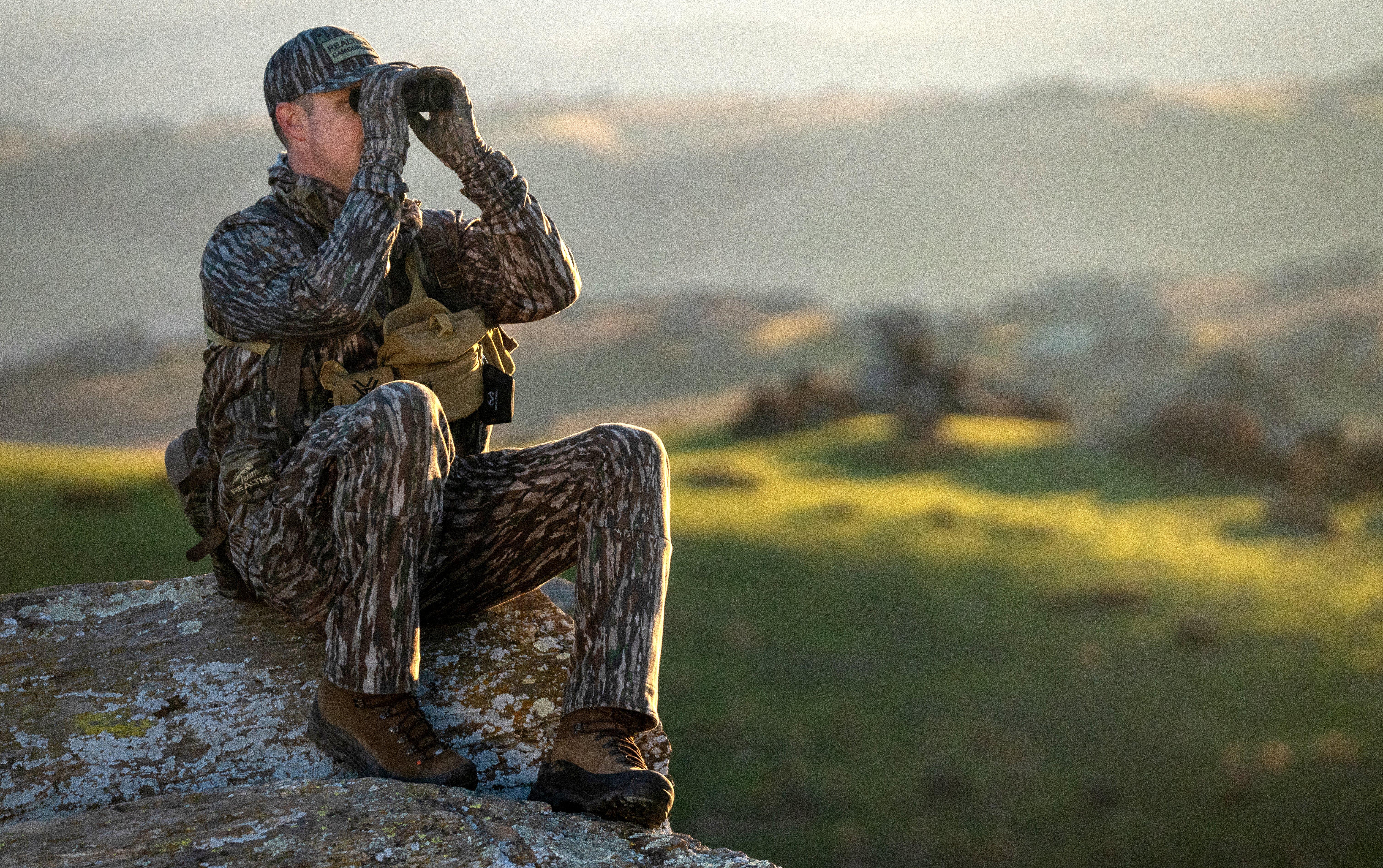
A few key details can make one pair of binos stand head and shoulders above the next. Realtree image
Daylight was fading when the sound of water sloshing in a creek about 80 yards away caught my attention. I stood and grabbed my bow from its hanger, straining to identify the source of the commotion. Suddenly, I saw a buck approaching, but given the dense tree canopy overhead, I couldn’t tell what he was. I raised my binoculars, which revealed a no-brainer buck.
I lowered my binoculars, and when the buck stopped broadside 30 yards away, I got him with a perfect double-lung arrow. I owe that successful hunt to a quality pair of binoculars because without them, I wouldn’t have been able to tell if the buck was a shooter or not.
Whether you’re a trophy hunter or a meat hunter, good binos can significantly enhance your deer-hunting experience. If you’re looking to buy your first pair or upgrade your existing ones, here are some features to brush up on before heading to the sporting goods store.
MAGNIFICATION
In the whitetail woods, more magnification isn’t always better. Consider your hunting style and the settings where you hunt most. In the timber, visibility is often limited to 100 yards or less. Eight-power magnification is generally a great fit in such settings.
If you hunt in mixed habitat where you’re sometimes in the timber and sometimes in areas with longer visibility, it’s hard to beat 10x magnification. It’s arguably the most versatile, and it’s what I’ve carried for years from Florida to Idaho.
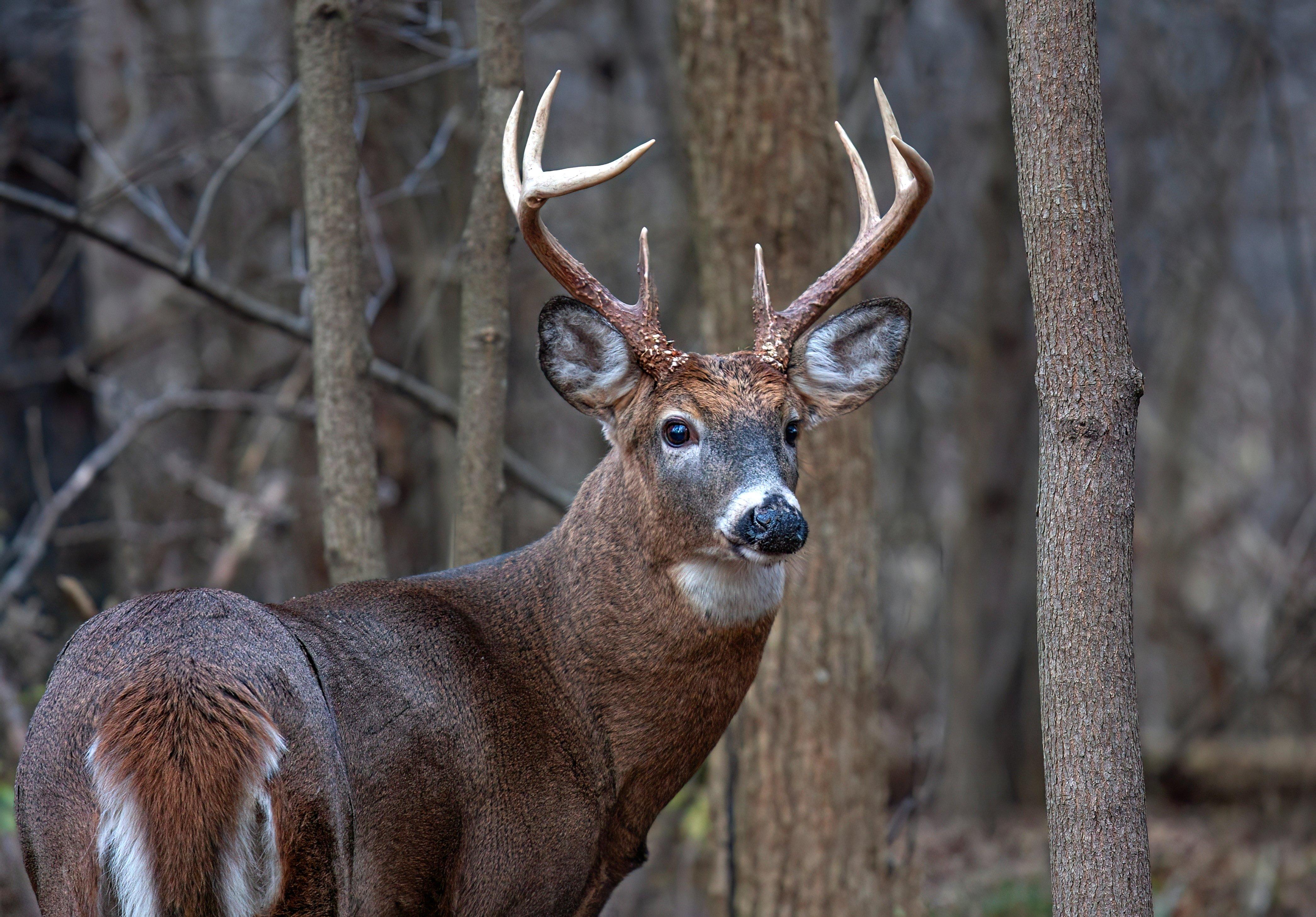
In the timber with limited visibility, you don’t need tons of magnification. You do need excellent light transmission, though, to ensure you can identify animals during the beginning and waning moments of daylight. Photo by Jim Cumming
For long-distance glassing — up to and beyond a mile — more magnification is better. I found this to be true during an Arizona Coues deer hunt. If you hunt whitetails out west, binos with 12x or even 18x magnification will help you pick apart challenging slopes or wide-open plains and identify animals you wouldn’t see with 8x or 10x magnification. Keep in mind that the more magnification your binos have, the shakier your sight picture will be. This will make glassing more tedious. That’s where a good, solid tripod makes the difference.
OBJECTIVE LENS DIAMETER
The objective lens diameter is the number that appears after the magnification. In other words, 8x36mm binoculars have a 36mm objective lens diameter. While binoculars with sub-30mm objective lenses are handier to carry and perform well in broad daylight, their weak spot is in dim lighting. The larger the objective lens diameter, the better the light transmission will be. Most hunters find that carrying binoculars with 50mm or larger objective lenses is cumbersome; they’re bulky and heavy. These are generally better suited for being fixed to a tripod for glassing Western whitetails, as I mentioned earlier.
DON’T MISS: 9 Technologies That Really Improved Compound Bows
Most deer hunters settle on a happy medium. For some, a 32mm objective lens is the most convenient and budget-friendly option, but the 42mm objective lens is arguably the most versatile. Most 42mm models are significantly lighter in mass than 50mm models, yet they offer superior light transmission compared to 32mm and smaller models. But, if you hunt in swampy areas or locations with dense overhead canopy where darkness creeps in earlier than in more open settings, 50mm is worth the money and additional size/weight.
OPTICAL SYSTEM
The optical system is responsible for delivering color, resolution and sharpness while cutting chromatic aberration (color distortion or a rainbow effect). The system consists of an optical lens (the part you look through), prisms, a focusing lens, and an objective lens. Quality glass and components ensure a top-notch image, which helps you to distinguish fine details, such as an antler glimmer or ear twitch, even in varied lighting.
Some budget-friendly binos skimp on the optical system, which makes glassing less enjoyable. In general, you get what you pay for, but you don’t have to go broke to get binoculars with a quality optical system. Pay attention to specs and features when sorting through affordable binoculars. My new Vortex Crossfire 10x42 binos, for example, feature an HD optical system, yet they retail for a modest $229.99 — affordable for most hunters.
LENS COATINGS
Speaking of specs and features, you’re likely to see the words “coated lenses” or “multi-coated lenses.” Lens coatings are designed to reduce glare and light loss, produce brighter, sharper images, and improve color quality. Online sources indicate that “coated” refers to air-to-glass lens surfaces that have at least one anti-reflective coating, while “multi-coated” lenses have multiple anti-reflective coatings, which are even more effective. Some high-end binoculars have dielectric-coated prisms, which enhance color and make images more vivid.
ROOF PRISMS
Located internally along the optical path, prisms are responsible for reflecting the image to your eye. Think of them as mirrors. The Porro prism is said to be superior in low light. But due to its shape, it requires a fairly sizable binocular chassis. Dach or roof prisms have a more in-line shape and can easily tuck into compact binoculars that are suitable for hunting. The downside to roof prisms is light loss, but manufacturers typically add coatings to minimize it.
DON‘T MISS: What Makes a Deer’s Sense of Smell So Powerful?
A FEW MORE THINGS
As we wrap up, I want to touch on one more attribute to look for in binoculars. We all know that great deer hunting unfolds on days when it is snowy, drizzling rain, or foggy. Optics can fail in these conditions unless they’re designed not to. Manufacturers that advertise optics as “fogproof” and “waterproof” typically use nitrogen gas purging and O-ring seals on the optics. This is essential if you find yourself in crummy conditions.
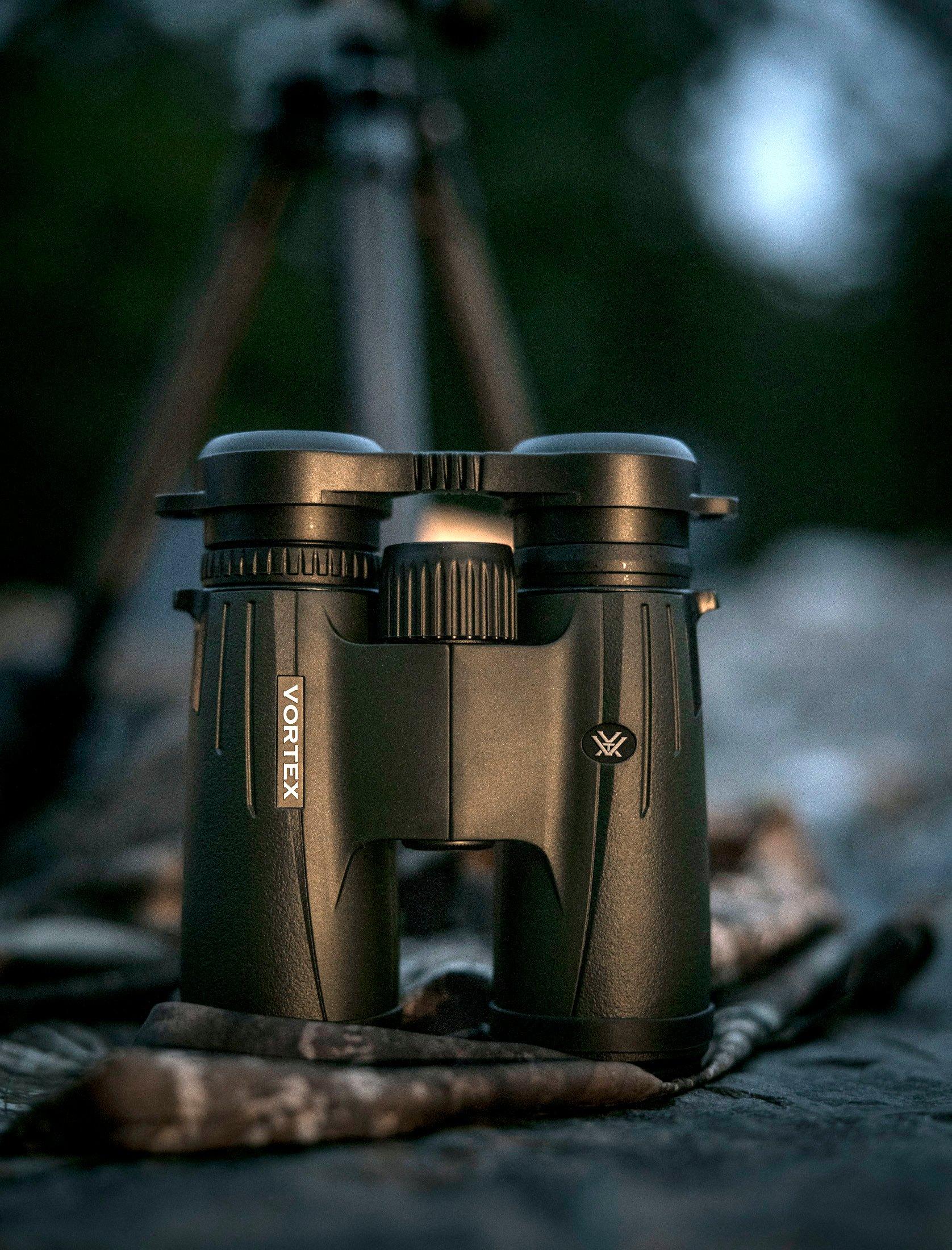
With optics, you typically get what you pay for. That said, Vortex Optics has some fine options that check the important boxes without draining your bank account. Realtree image
Earlier, I mentioned that you get what you pay for. Before you take out a home equity loan to buy new binoculars, though, I can assure you that there is a bridge between quality and affordability. If you’re into American-made products, then the Vortex Crossfire is the bridge. It checks all of the boxes we’ve discussed here, plus a few more that we didn’t. It even comes with Vortex’s GlassPak Binocular Harness as an added value. Additionally, the Crossfire is available in four different configurations to suit various hunting styles and settings.
Check Out Our Latest Camo Pattern: Realtree APX
I believe you’ll be hard-pressed to find a better quality or more versatile pair of binoculars for the money, and that comes from years of hunting with different optics. However, you’ll need to compare and contrast several options and decide for yourself. To that end, happy bino shopping!