
9 Technologies That Really Improved Compound Bows
Posted 2025-08-28 by
Some archery innovations from years past were groundbreaking for their time, and they paved the way for today’s astounding designs
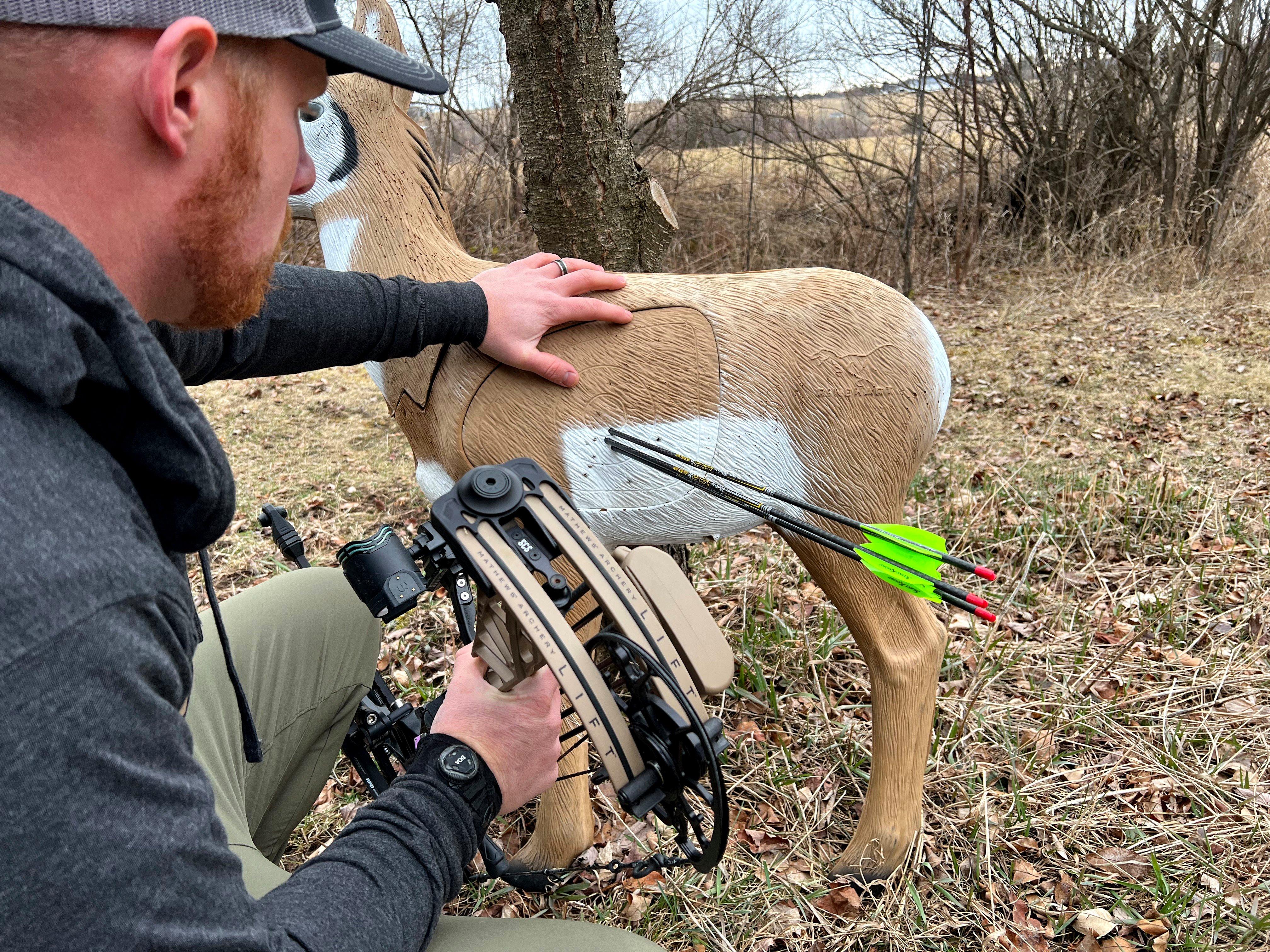
Compound bow technology has seen incredible advances during the past 25 years. Photo by Darron McDougal.
I got my first legitimate compound bow more than 25 years ago, and I can’t count how many bows I’ve owned since, nor do I remember every one of them. However, I remember that first one. It was an XI Omega Explorer. XI no longer produces bows, and bow technology has changed drastically since then.
Speaking of bow technology, let’s run through a quick list of what I consider to be some of the most game-changing technologies — past and present — in the compound-bow space.
Don’t Miss: The 2025 Western Deer Season Forecast
PARALLEL LIMBS
Early compound bow designs, especially those with shorter axle-to-axle lengths, had short risers and long, straight limbs. Mathews Archery introduced Parallel Limb Technology, and in time, risers gradually became longer and limbs shorter and more parallel. That solved two things.
First, straighter limbs generate more vibrations and hand shock because they flex back and forth rather than up and down at the shot. Parallel limbs substantially reduce shock and vibrations. Second, lengthening the riser yields a more stable bow that’s easier to aim and more accurate to shoot.
THE SOLOCAM
The single-cam bow, introduced in 1992, was another Mathews win. Previous bows had wheels, and some had two cams. Wheels were slower and less efficient, and two-cam designs posed synchronization problems, particularly given that bowstrings were prone to considerable stretching at the time. The Mathews-pioneered Solocam was the answer, at least for many years. Mathews no longer manufactures single-cam bows because it found ways to maximize speed, efficiency and timing synchronization in a two-cam design, as have other manufacturers.
Don’t Miss: What Makes a Deer’s Sense of Smell So Powerful?
ROLLER GUARD
Ball bearings reduce friction, and when bows began featuring roller cable guards in lieu of standard cable guards, they immediately drew more smoothly. The first design I recall was launched on the Mathews Legacy in 2002. Most bows today still use rollers, meaning the technology has weathered 23 years and is still going strong.
BOWSTRING SUPPRESSION
Mathews was the first company I recall to roll out what were called string suppressors, also on the Legacy in 2002. These mounted to the limbs, and the bowstring slapped them at the shot to minimize bowstring buzz. It worked OK, but most of the bowstring’s motion is at the nock point, so companies began using rods outfitted with rubber cushions attached to the riser beneath the grip. The placement was more effective in thwarting the vibrations.
INTEGRATED CAM TUNING
Bowtech was the first manufacturer to introduce a built-in tuning system with its DeadLock Cam System. It allows the cams to push left or right on the axle with a simple adjustment that doesn’t require a bow press. Previously, you had to use spacers of various sizes to move the cam left or right, which was cumbersome and required a bow press.
Many other bow companies (Elite, Mathews and Martin, for example) have followed suit and introduced their own renditions of user-friendly integrated cam tuning. Prime arguably has the most unique take on beating cam lean with its InLine Technology, which brings the bowstring and cables into alignment during the draw cycle to balance the cam and yield a true arrow.
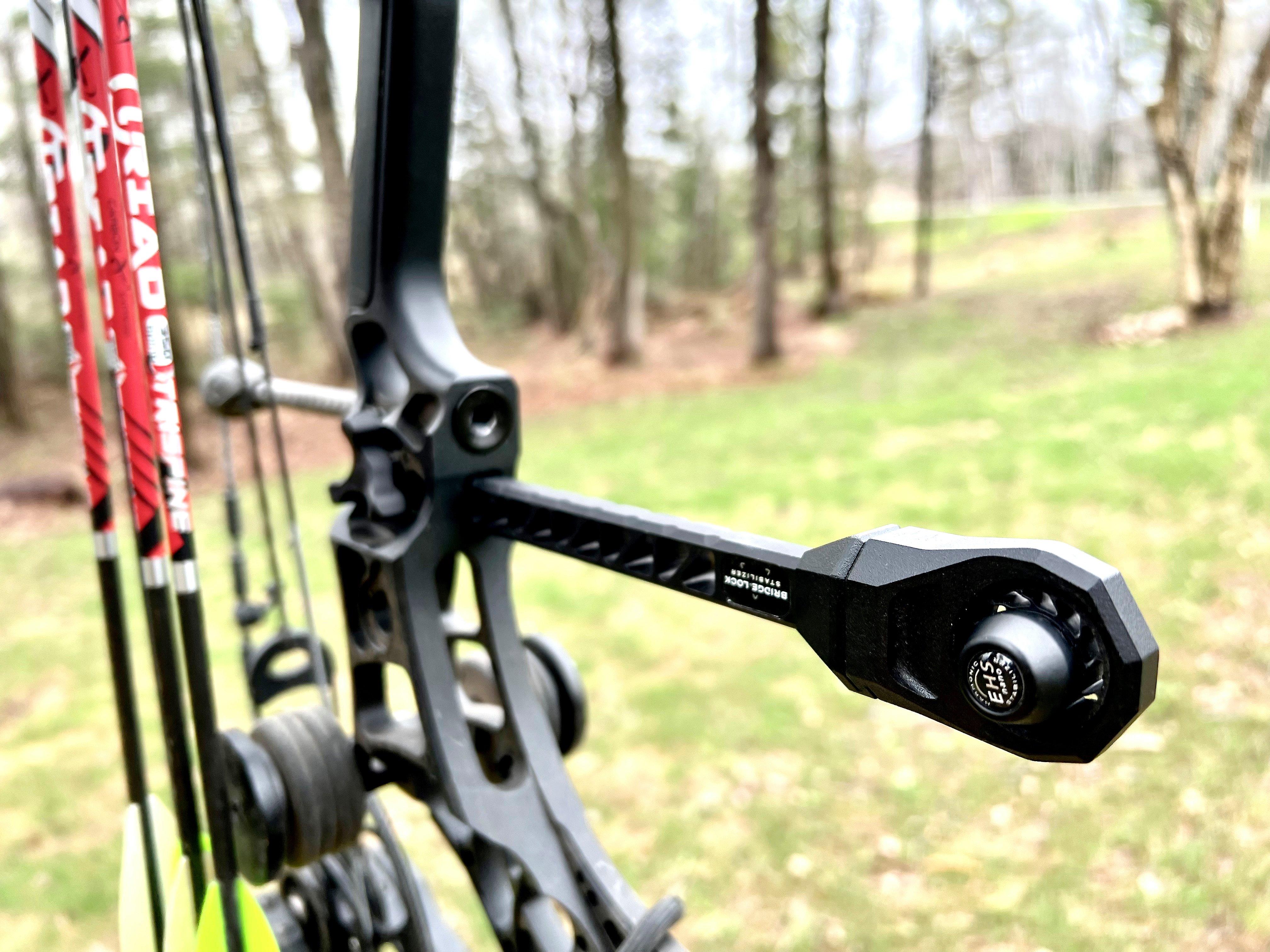
Integrated accessory mounts improve the bow’s balance. Photo by Darron McDougal.
CUSTOMIZABLE DRAW CYCLE
Bowtech’s PowerShift Technology, launched in 2013 or 2014, allowed the shooter to choose between three draw cycles to achieve smoothness, speed or a happy medium of the two. Bowtech now calls it FlipDisc, allowing the shooter to simply remove the modules and flip them to achieve a different draw cycle. It’s like having two bows in one. Elite has a similar offering via draw modules that yield different draw cycles.
SPLIT LIMBS
Split limbs were on and off when they first hit the market. Hoyt had the first ones I can remember. Most other manufacturers produced solid-limb bows. Given that solid-limb bows are hardly a thing anymore, I’d say this one has cemented itself in as the standard. Most split-limb bows today have wide, thick limbs, which help balance the load and avert twisting, which was common with skinny, solid-limb designs.
INTEGRATED ACCESSORY MOUNTS
Bows used to be awkward when accessorized, which explains why lots of bowhunters would remove their quiver when shooting. Today, most high-end bows have integrated accessory mounts for sights and rests. These eliminate the need for mounting brackets, and the accessories are mounted in line with the center of the riser. The net? The bow, when accessorized, is lighter and balanced better.
Check Out Our Latest Camo Pattern: Realtree APX
CARBON AND MAGNESIUM
For years, machined aluminum was the chief riser material. Eventually, along came carbon risers — High Country and Hoyt were the earliest companies on the bandwagon, if memory serves. And now, magnesium is making a huge wave in the bow world. Manufacturers say it is stronger than aluminum and lighter than carbon, while producing less hand shock and vibrations.
CONCLUSION
I don’t know about you, but I find it amusing to look back and see how far bow technology has advanced. I’m sure our bowhunting fathers would laugh and shake their heads at all of the edges that today’s bows give us. To that end, I wonder what the next 20 years will bring.