6 Facts You Should Know About EHD
Posted 2025-08-14 by
This deadly deer disease is the talk of the hunting community, but how well do you understand it?
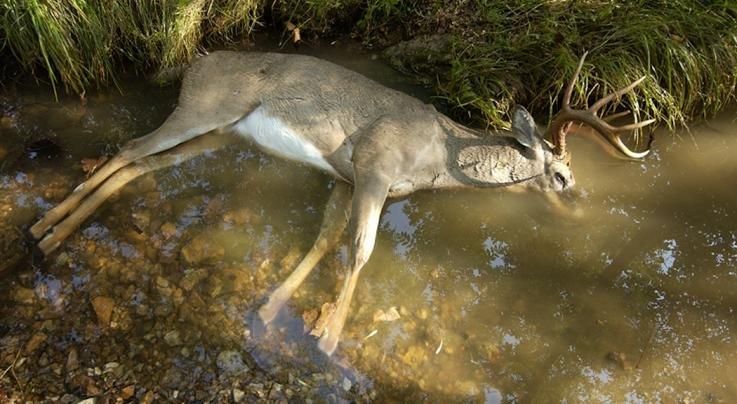
EHD annually strikes whitetail populations during summer and early fall. It can last up to two weeks after the first frost. Photo courtesy of Missouri Dept. of Conservation.
As I scouted a South Dakota creek bottom in 2011, the stench was overwhelming. I followed my nose to the decaying corpse of a nice 8-point buck. A little farther down the creek, I found a 140-class 10-pointer dead and rotting in the creek. Epizootic hemorrhagic disease had claimed both bucks.
EHD annually affects whitetails to some extent across the United States. Sometimes, cases are sporadic, and other times, the disease can wipe out a high percentage of a region’s whitetail population. Regardless, here are some quick facts you should know about EHD.
1. WHAT IS EHD?
EHD is a viral disease that affects cattle, deer and sheep, per the University of Tennessee. The Southeast Cooperative Wildlife Disease Study said it also affects elk, bighorn sheep and pronghorns.
DON’T MISS: 5 Tips for Glassing Mule Deer
EHD has become a big topic during the past two decades, so is it new? Not exactly, but it historically didn’t produce the mortality rates it does now. Kip Adams of the National Deer Association wrote, “Incidences of hemorrhagic disease were few and far between prior to 2000. That has changed dramatically in the new century, with EHD and bluetongue viruses appearing in new regions, especially farther north, and new strains of the viruses being discovered.”
Adams also detailed that the country’s first case was reported in New Jersey in 1955. He also wrote that cases have been confirmed in more than 40 states and Canada.
2. HOW DO DEER GET IT?
All reputable sources say animals contract EHD through biting midges (small flies). Unlike CWD, EHD is not spreadable between animals, according to the Cornell Wildlife Health Lab. It said, “Transmission occurs when a female Culicoides midge picks up the virus from the blood of an infected host and then transmits it by biting another host.”
DON’T MISS: The 2025 Midwest Deer Season Forecast
EHD affects deer populations the most during summer and early fall, when fly populations are highest. Often, midges are the most prevalent where deer drink, especially in the mud ring around stagnant waterholes and pond dams.
3. WHAT ARE THE INFECTION SIGNS?
When a deer is bitten and infected, it might exhibit various signs. Cornell’s College of Veterinary Medicine said the symptoms of infected deer begin about five to 10 days after infection. They include fever, edema, and a swollen head, neck, tongue and eyelids. If you observe a deer that appears sick or depressed and tolerates your presence, it could have EHD.
4. WHAT HAPPENS TO AN EHD-INFECTED DEER?
In his article, Adams explained that there are three levels of the disease: peracute, acute and chronic. The first two have high mortality rates. Adams noted that animals with the peracute form can die within one to three days, and that animals with the acute form can potentially last a few more days, but usually still die. Deer can survive chronic EHD, but impending “growth interruptions on the hooves” follow. On the other hand, survival has the byproduct of immunity. Adam even wrote, “Does may pass temporary immunity to their fawns through their milk.”
Why are sick or deceased deer often found in or next to water? The fever. The Cornell Wildlife Health Lab said deer seek water for relief from the high fever. I once had the displeasure of finding a trophy Iowa buck dying on a river bank. He was soaked and had obviously used the last of his energy to emerge from the water to avoid drowning. He was breathing but otherwise not moving. I’ll never forget that disturbing encounter.
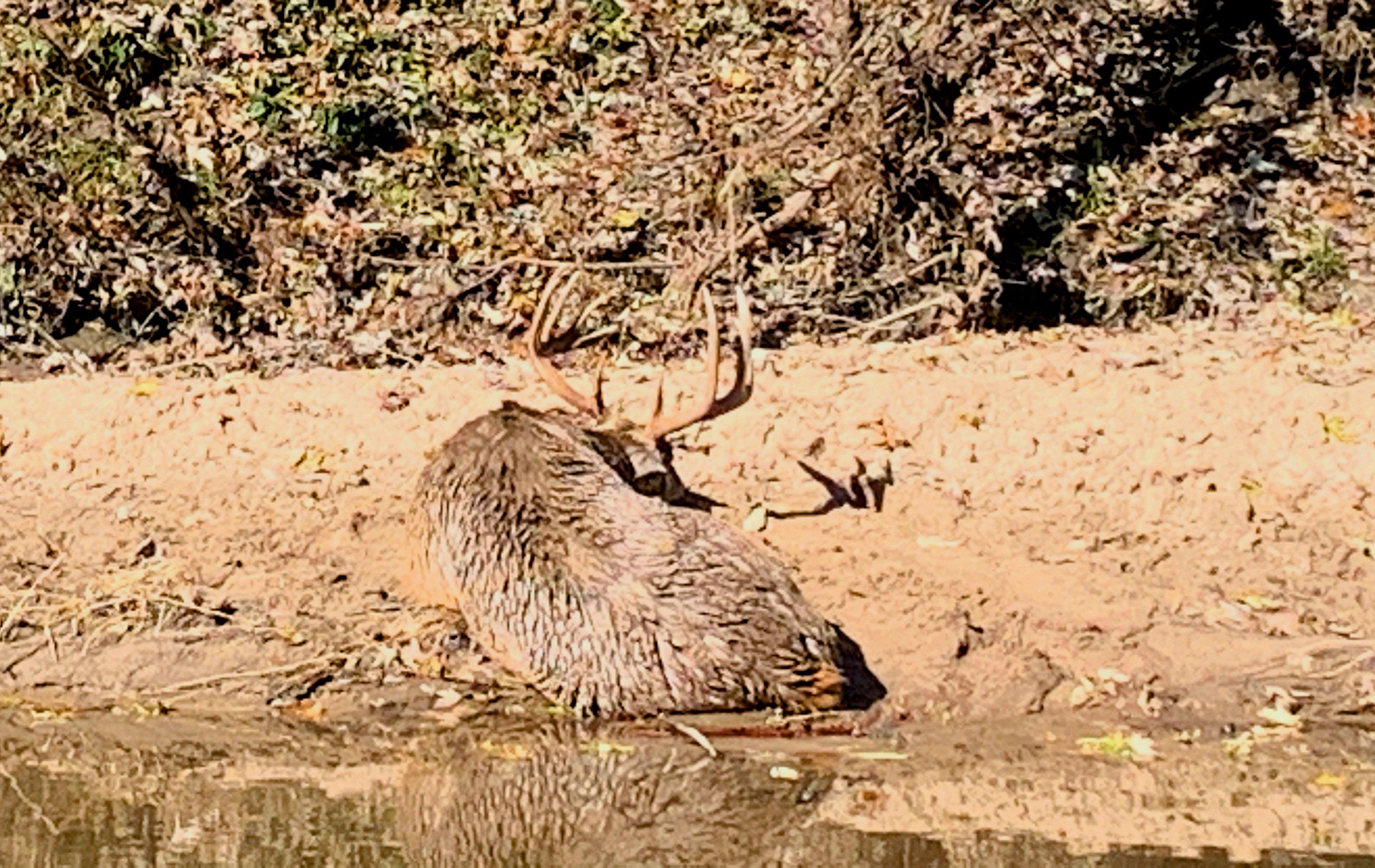
The author found this mature EHD-afflicted buck taking his last breaths along an Iowa river bank. Photo courtesy of Darron McDougal.
Cornell’s Wildlife Health Lab also noted that large outbreaks can occur. An example it provided on a fact sheet included the lower Hudson Valley outbreak in 2020. Mortality from that event was estimated to have claimed 1,500 deer.
5. DOES IT AFFECT ALL DEER OR JUST BUCKS?
On social media and hunting media, we often see mature bucks rotting in or next to a creek or other water source. The bucks get lots of attention because there is a greater sense of loss about a buck that a hunter planned to pursue in fall. However, EHD affects all genders and ages of deer.
6. WHEN DOES IT END, AND CAN IT BE PREVENTED?
Again, summer and early fall are when mortality rates are highest because of high populations of biting midges. According to Cornell, the midges and viruses are killed within two weeks after freezing conditions, ending the current transmission cycle.
Check Out Our Latest Camo Pattern: Realtree APX
Are there measures that can prevent it? The short answer is no. However, there is a way to mitigate it at small water sources. A new product called EHD-fense consists of three components that treat a small water source, improving the water quality and thwarting the midge population. So, you can manage EHD to an extent on your property, but you can’t control what your neighbors do or don’t do with their water sources.
For more information on EHD, click here.