9 Essential Tools for Bowhunters
Posted 2026-06-19 by
For general maintenance or on-the-fly fixes, make sure to have these gadgets in your archery kit
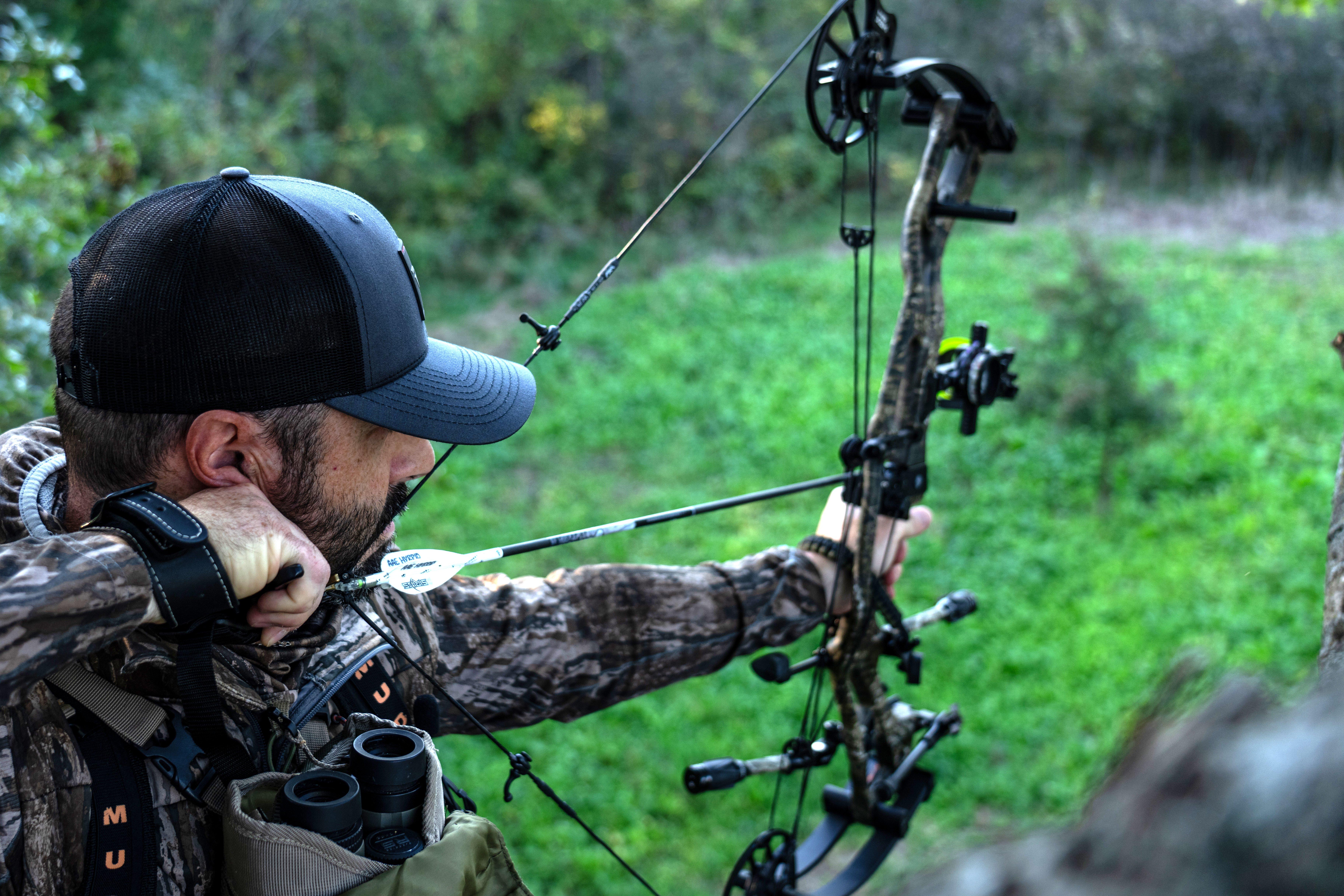
Most bowhunters can learn to tackle small fixes on their own with some basic, fairly inexpensive tools. Realtree image.
Most of us know that bowhunting equipment is complex. One of the coolest aspects of archery and bowhunting is that we all have various skill levels. Some folks understand all equipment ins and outs and tackle all or most of their own bow work. Others leave it to the local bow shop. The beauty is that you don’t necessarily have to understand all of the technicalities to find bowhunting success.
That said, even if you’re a greenhorn or an intermediate archer, there are merits to handling at least some basic tasks on your own. And this list includes some of the tools it takes to get started.
BOW SCALE
Knowing your bow’s draw weight can be helpful, especially if you plan to increase or decrease it because of strength training, injury or changing seasons (think cold late-season weather and bulky apparel). A good bow scale, such as a handheld one from Last Chance Archery, takes up minimal space and can help you track your draw-weight adjustments.
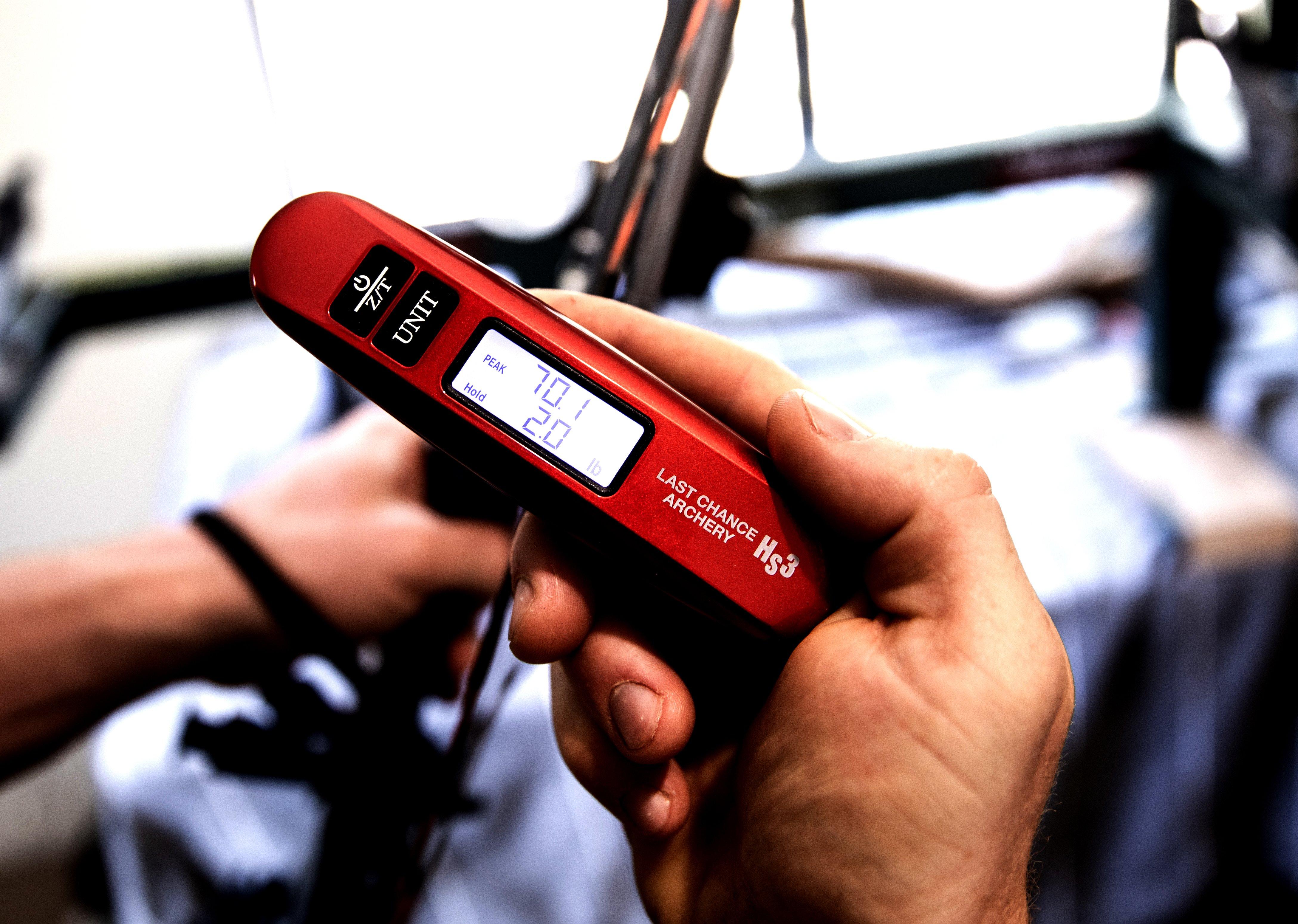
If you make regular draw-weight adjustments because of training, an injury or changing seasons, keep a handheld bow scale in your archery kit. Image by Becca McDougal.
HEX WRENCHES
Speaking of adjustments, the standard tool for almost everything archery, from release-aid sensitivity to draw-weight adjustments, is the hex wrench. There are significant variations in the wrench sizes required for various tasks, so having a large set and a small set makes sense. Be sure to replace worn wrenches, as using worn, sloppy-fitting models can mar and strip the heads of your hardware, which can substantially alter your ability to loosen or tighten it in the future.
DON’T MISS: How to Choose the Best Boots for Western Hunting
GRAIN SCALE
Archers looking to achieve the best downrange accuracy should always check grain-weight consistency on an arrow grain scale. Arrows that weigh within a couple of grains of each other will group the tightest. Scaling every arrow and point/broadhead can help you identify and weed out inconsistencies that would otherwise rob accuracy.
LIGHTER
A bowstring serving or peep-sight tie-ins can fray or unravel. Failing to address them can lead to larger problems. In some cases, it’s best to have a new serving or tie-in installed, but if it’s just a loose end that you want to prevent from worsening, singeing it with a flame can yield a quick fix.
Warning: Approaching your bowstring with a flame can be dangerous, as the bowstring fibers can melt and become damaged and unsafe. Always keep the flame above the loose end that you are trying to singe, and carefully lower the flame until the bottom of it begins melting the intended loose end. Never light the serving on fire. Simply melt it, and be prepared to tap it out if it unintentionally ignites. Never attempt this indoors with blowing air or outdoors during windy conditions, as the flame becomes far too unpredictable.
SERVING THREAD
Serving thread is a standard archery kit must-have. If a peep tie-in comes loose, the serving thread allows you to re-tie it. If you find that your fall-away rest cord is slipping on the cable and affecting your rest’s timing, you can re-tie it onto the cable.
DON’T MISS: Should You Tune Your Own Bow
NOCK WRENCH
Some arrow nocks can be twisted by hand with your thumb and finger, but some don’t turn as easily. Don’t crank on stubborn nocks with pliers, as this can damage or break them. Use a winged plastic nock tool to twist them.
FLETCHING JIG
If you shoot enough archery, you’ll have vanes or feathers peel off arrows. Or, you’ll likely put a notch in a vane while shooting groups. Whatever the case, even simple fletching damage can affect arrow flight. It’s a hassle to head for an archery shop to have a vane or two replaced. Fletching arrows isn’t rocket science. It just takes a jig, some glue, vanes or feathers, and a steady hand. The convenience of replacing vanes or completely re-fletching arrows on your own is astounding.
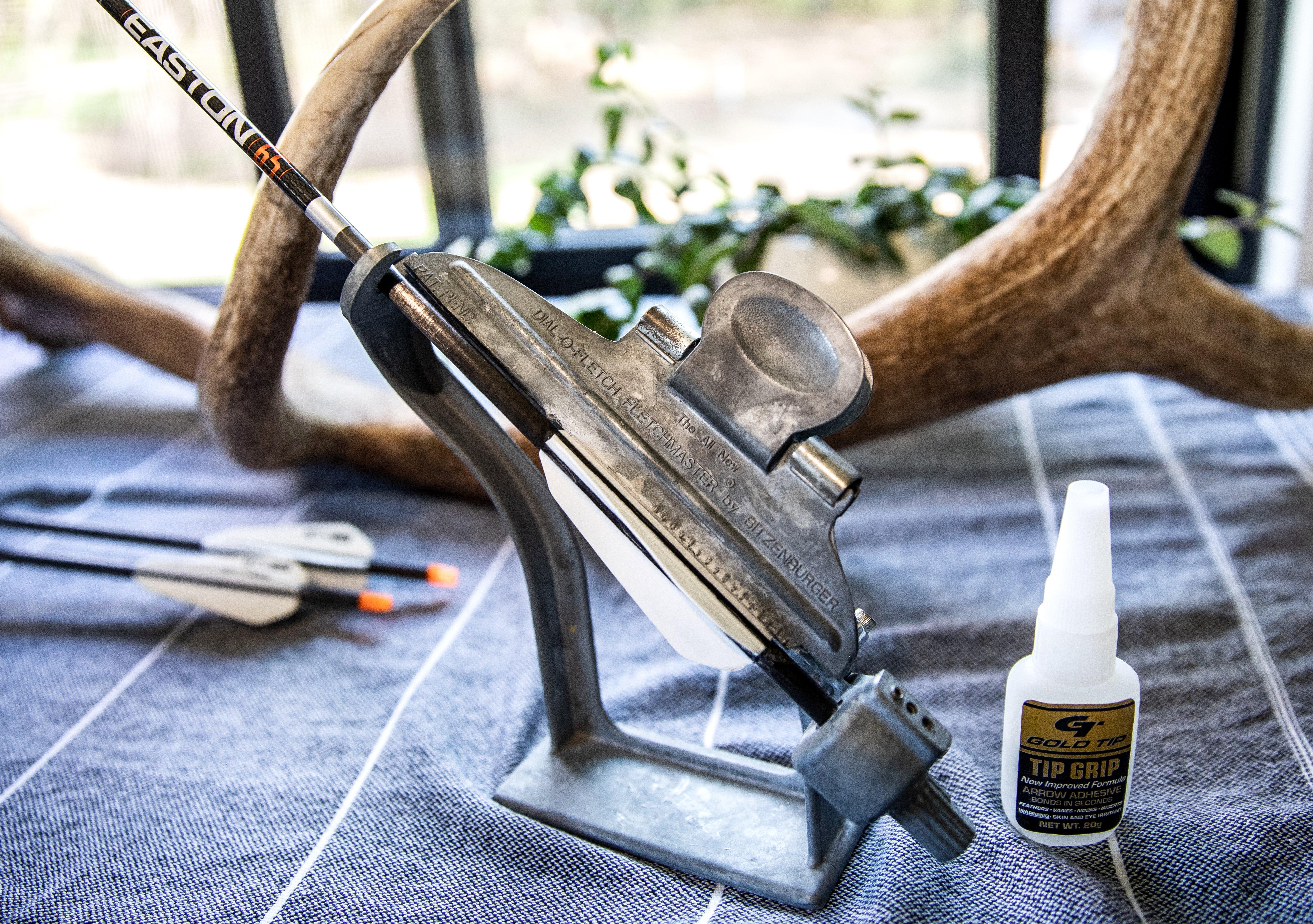
Learning to re-fletch your own arrows can save you the hassle of making trips to the bow shop, and it’s really not that hard to do. Image by Becca McDougal.
ARROW SPINNER
New archers might believe that carbon arrows are straight or broken. However, carbon arrows can exhibit major straightness discrepancies, which can hinder accuracy. And even straight arrows can become compromised with use, especially after missing a target or running one of them through a deer and into the ground. A straightness checker can help you identify wobbles, which indicate an arrow that isn’t straight.
Check Out Our Latest Camo Pattern: Realtree APX
BROADHEAD WRENCH
Installing broadheads into arrow inserts can be dangerous. It’s hard to snug them tightly enough without inadvertently slicing a hand, fingers or thumb. A broadhead wrench is a safer alternative. You still must practice care and caution, but a wrench designed for the broadhead you’re installing provides greater leverage while lowering the chance of an accident.