How Long Do Whitetails Live?
Posted 2026-06-01 by
Despite challenges from automobiles, predators, diseases and hunters, some deer are long-term survivors
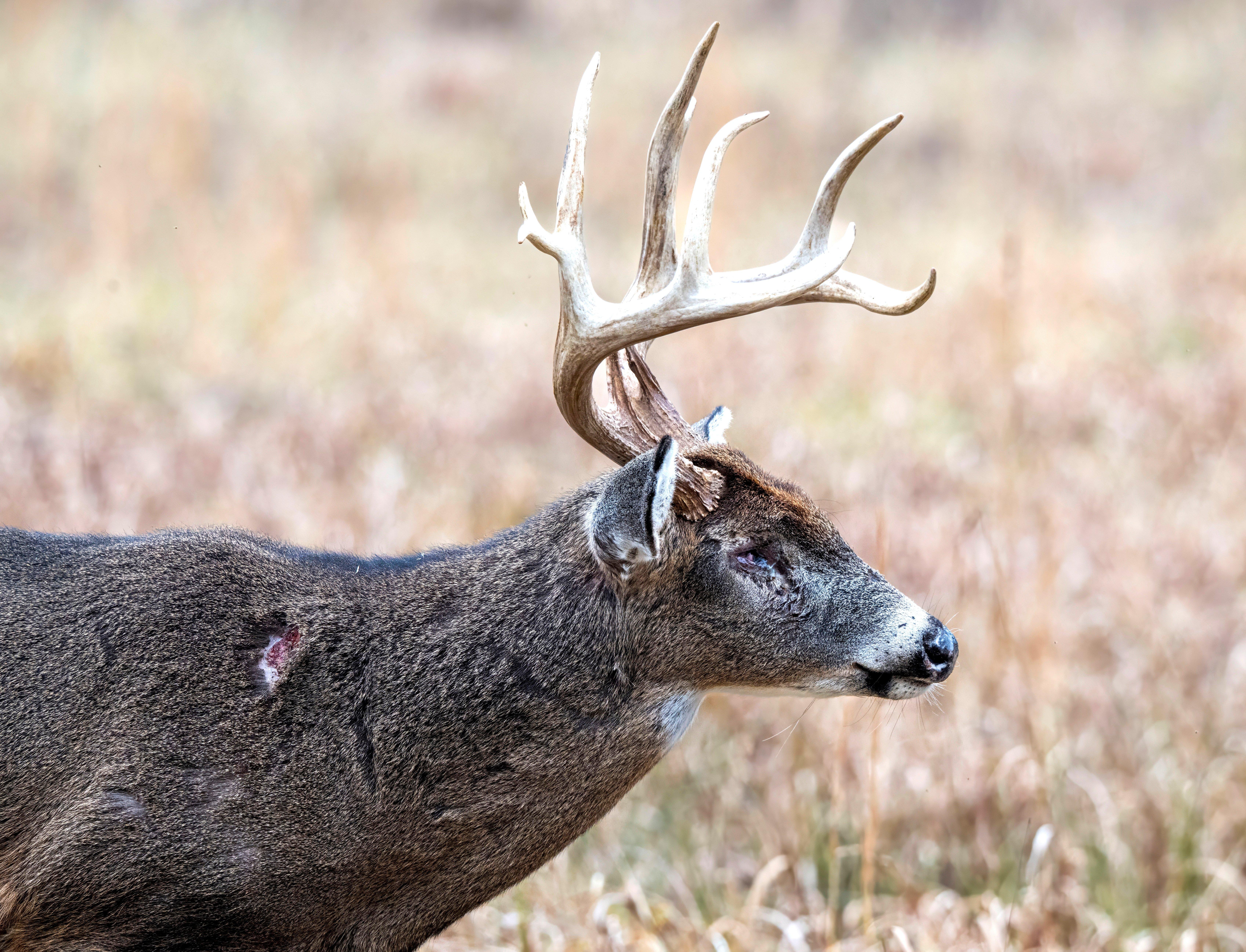
Some deer are resilient survivors. Image by Christopher J Barger
If you glance at a Michigan buck pole during the opening week of firearms season, it’s hard to believe that a deer could live longer than 4-1/2 years. But even in the country’s most heavily hunted regions — like Michigan or Pennsylvania — some deer slip through the cracks and occasionally get really old.
How old? We’ll get to that toward the end of the blog. First, let’s flesh out the topic of deer age.
AGING DEER
How do we know how old deer are? It’s easy with captive animals. Farm managers keep track of when a deer was born and each year thereafter. With wild whitetails, tooth wear of harvested deer can be somewhat indicative of age, but the exact age must be calculated via cementum annuli analysis. For that process, teeth can be sent to Matson’s Lab in Montana.
CAPTIVE DEER VERSUS WILD DEER
Captive deer — that is, those in high-fenced settings — have a much greater chance of becoming old than wild deer, and they commonly reach 10 years old or into their teens. Sometimes, they even hit 20 years old or older. Aside from disease or natural disasters, they have little to worry about.
Wild deer are another story. Kip Adams, of the National Deer Association, said that more than half of fawns face mortality before they’re recruited into the deer population. Most of that mortality is because of predation and vehicle collisions. Of course, they’re not in the clear after they’re recruited at 6 months old. Wild deer of all ages face mortality from multiple sources. Adams said hunters are the No. 1 mortality source, and then there are road kills, predators, and diseases.
DON’T MISS: How to Catch Bass With Swim Jigs
Given those points, how old deer get varies greatly across the whitetail’s range. In parts of Texas with the strictest management practices, deer are much more likely to become fully mature than in states such as Pennsylvania, where hunting pressure is higher and hunter selectivity is lower. Even so, wild whitetails, even in the country’s most pressured regions, can be survivors.
Case in point. Adams’s family farm is located in north-central Pennsylvania.
“Hunter pressure and harvest are very high in our area, and there are a lot of deer-related collisions, too,” he said. “It’s a hard place for a deer to make a living. That being said, we collect data from every deer we harvest. Several years ago, I bow-killed a doe that was visibly older than 5-1/2 years old based on tooth wear. Matson’s Lab’s cementum annuli analysis found that the animal was 13-1/2 years old. I couldn’t believe a doe could reach that age in an area like this.”
The next year, Adams’s daughter shot a doe that was 13-1/2. And the year after that, her younger brother shot a doe that was 14-1/2. That same year, the oldest man in the family’s deer camp harvested a doe that was cementum annuli aged at 15-1/2.
Check Out Our Latest Camo Pattern: Realtree APX
“As interesting as that is, it’s perhaps equally interesting that each of those does was lactating,” Adams said. “Some people misconceive that does quit bearing fawns once they get really old, but this proves that’s not true.”
DO IMMATURE BUCKS DOMINATE THE HARVEST?
“Hunters and wildlife agencies are doing a better job of aging deer than ever before,” Adams said. “The average age of bucks harvested today is higher than it has ever been in the last 100 years, which is really fun for hunting. Historically, the majority of bucks harvested were 1-1/2 years old. Today, only about one-quarter of bucks harvested are 1-1/2. According to the NDA’s most recent annual report, 46% of the bucks harvested were 3-1/2 years old or older, and 42% of the does harvested were 3-1/2 years old or older.”
DON’T MISS: Take a Western Camping Trip for Public-Land Turkeys
Adams and many other biologists and managers believe that a deer must be 5-1/2 years old or older to be fully mature. That’s the age at which a buck is likely to reach its full antler-growth potential. Of course, things such as nutrition and injuries can affect antler development from one year to the next, so it’s possible that a buck could grow even more inches of antler at 6-1/2 or 7-1/2. But the point is that property managers who aim to harvest only fully mature bucks must set the bar at 5-1/2 or older.
THE OLDEST (RECORDED) WHITETAIL EVER HARVESTED
With that being said, most deer are harvested or face mortality via other means by the time they are 4-1/2 years old. But like Adams’s anecdote about his Pennsylvania property, some deer can slip through the cracks and get older. Like really old. That brings us to perhaps the most interesting fact in this article.
What is the oldest recorded wild whitetail ever harvested? According to Matson’s Lab, it was a Louisiana doe that was cementum annuli aged at 22 years old. Let that sink in.
CONCLUSION
One final thought. If you have used the excuse, “If I don’t shoot it, someone else will to justify harvesting a young buck,” you could be wrong. Adams noted that two bucks harvested from his family’s farm in Pennsylvania were 8-1/2 years old. Remember: That area represents some of the most pressured ground in the country, and those bucks lived well beyond what most hunters would expect. If you truly want to harvest older deer, there is merit to rolling the dice and passing young deer.