How to Catch Bass with Swim Jigs
Posted 2026-05-12 by
These specialty lures let you quickly cover water, and nothing beats them for finding fish
When I was young, a swim jig wasn’t a thing. Don’t get me wrong; bass anglers had been catching fish by swimming jigs forever, but many of those strikes were pleasant surprises when winding in for another cast.
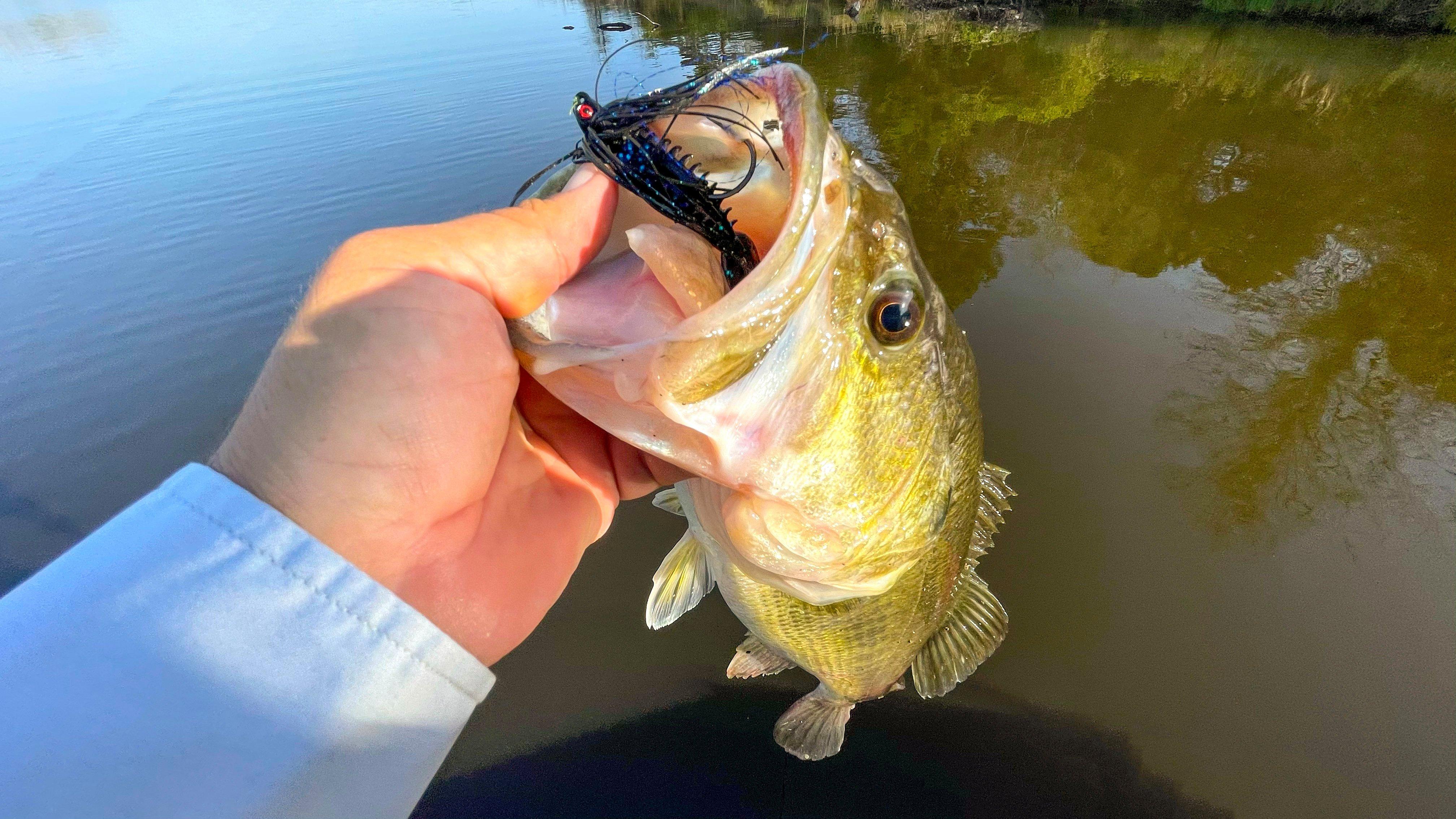
Although swim jig fishing didn’t become popular until the early 2000s, bass anglers would often catch fish while retrieving to cast to another spot. Images by Jason Sealock.
It wasn’t until the early 2000s that swim jigs became a viable lure category. With the expansion of organized tournaments to fisheries across the United States, regional secrets became mainstream, letting the cat out of the bag.
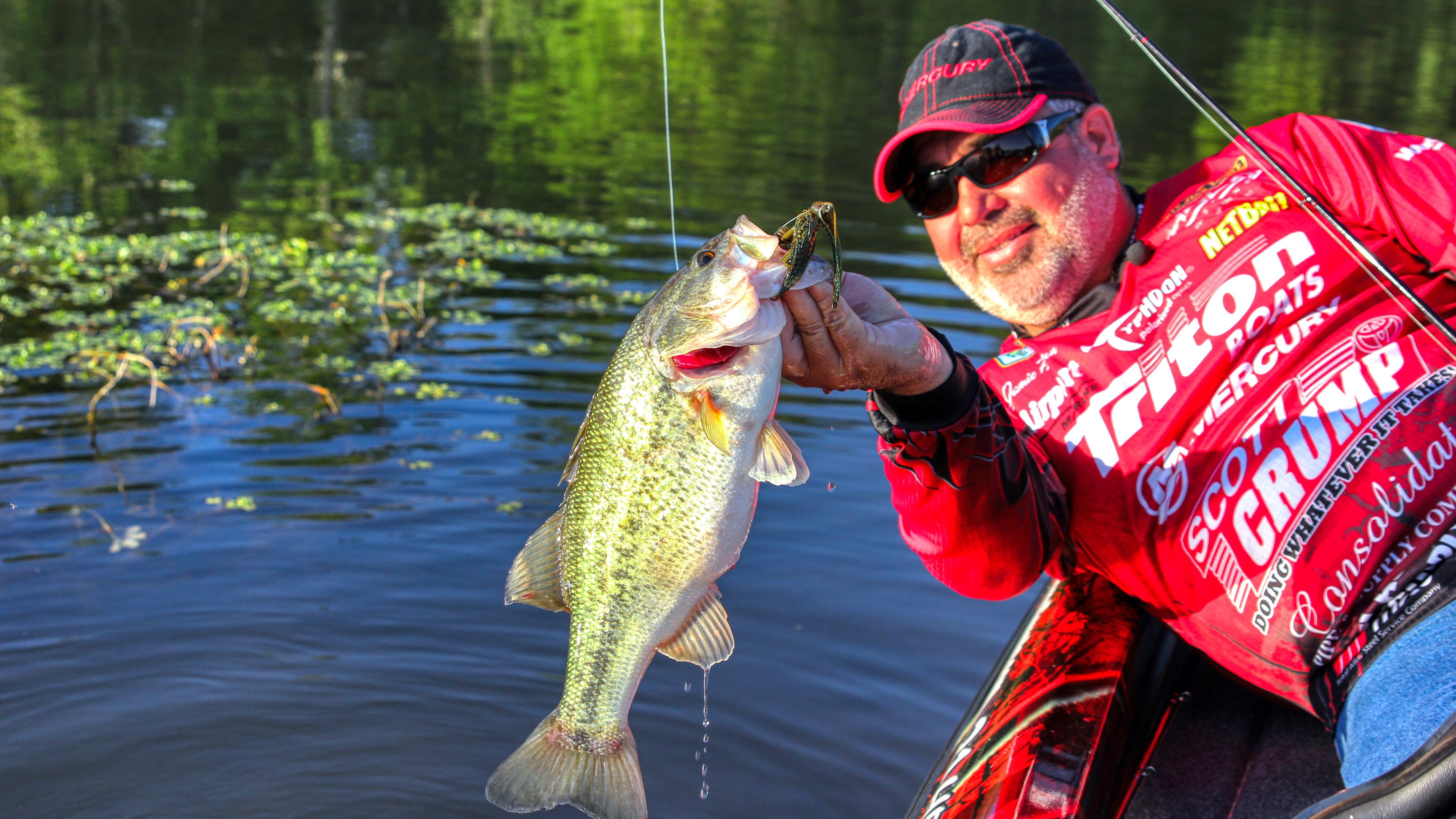
Swim-jig fishing popularity grew when organized tournaments spread across the nation.
Such was the case in the upper Midwest — specifically the plentiful bass fisheries of the Mississippi River, where locals had been perfecting swim jigs for decades. The lures look much like traditional flipping jigs but feature thinner, sharper hooks and contoured heads that slip through thick vegetation.
Swim jigs present a way to quickly cover water in such situations. Sure, flipping and frogging are great ways to catch bass in thick grass when you’ve located a school. But to find the fish, nothing beats a swim jig.
Don’t miss: THE BEST BASS BAITS FOR EVERY SEASON
IMPORTANT FEATURES
Critical components of a swim jig start at the head. Conical shape is imperative to allow the lure to navigate heavy cover. Bullet-shaped heads were the originals. Tweaking the idea further, manufacturers today make flat planing heads that let the lures get up and stay up, allowing them to slide through the slop. That also forbids any rolling of the lure.
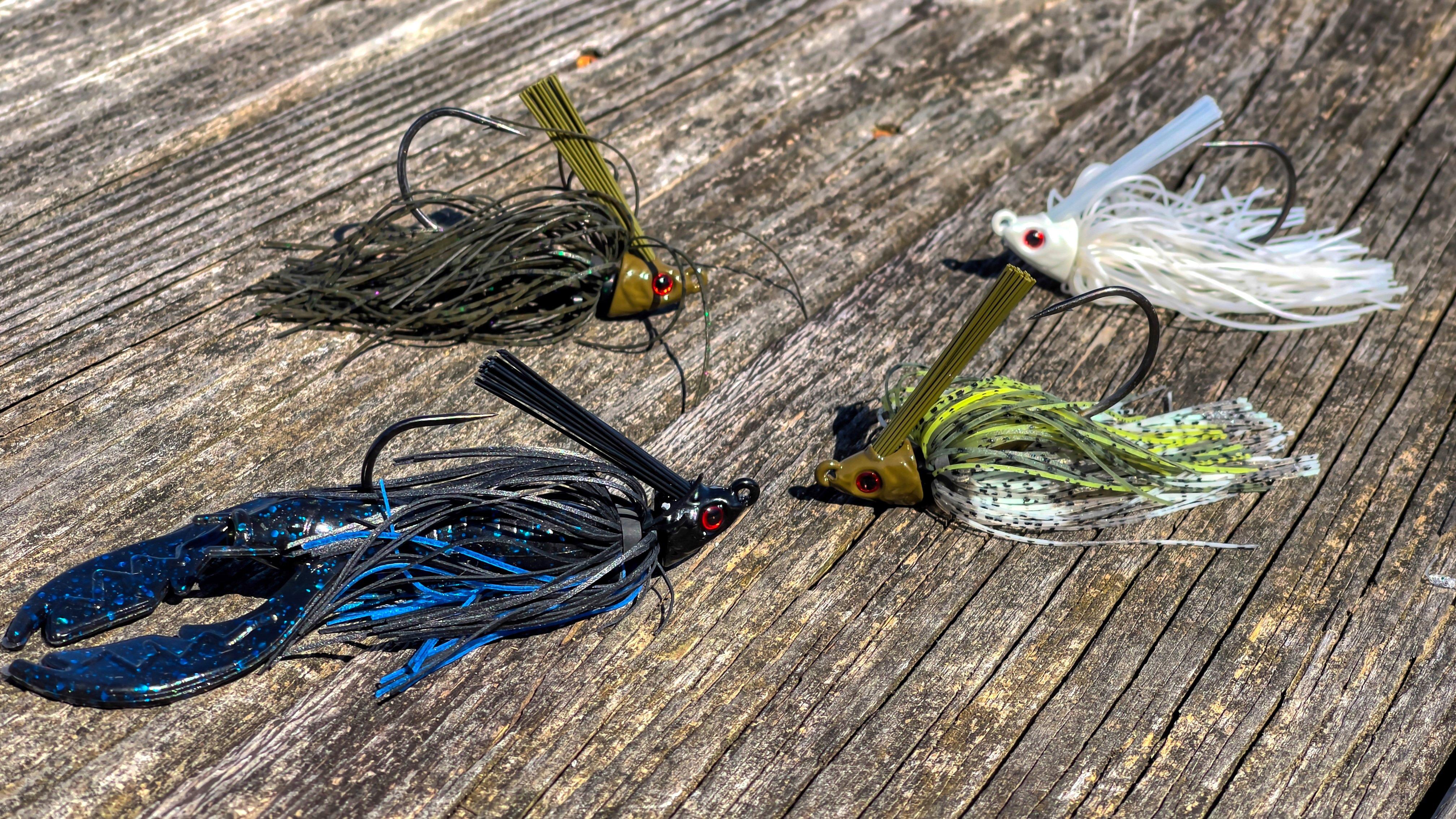
Today’s swim jigs feature flat heads to allow the jigs to glide through the water and weed guards to prevent snagging.
The head holds a weedguard, just like any other jig. The bristles are usually a bit softer and more sparse in a swim jig than lures used for flipping. Those features influence the lure’s weedlessness. For traditional grass fishing — say hydrilla, milfoil or slop — a soft weedguard performs well. But that lure will snag routinely in lily pads and cattails, so be advised. There, you’ll need a stiffer, bushier guard.
Regardless, the hook within a swim jig is critical. For starters, it has a flatter angle to the eye over a conventional flipping jig. Technically measured in degrees, swim jig hooks are about 30% flatter than those on most other jigs. Again, that aids the lure’s ability to swim flat throughout the water and resist snagging.
The hook must be stout but not overbearing. Early swim jigs featured very light, needle-sharp hooks that allowed for good penetration even at the end of a long cast. Today, however, hooks have been beefed up a bit, as almost all anglers use braided line for this technique. The no-stretch, brute strength of braid must be accounted for when choosing a jig hook.
This is not a flipping hook, however, and the major differences lies in the barb. If your swim jig features a giant guerrilla barb, it’s best to file it down a bit. That will ensure the hook point sets and stays regardless of how well a bass gets your lure.
Swim jig skirts are much like those on a traditional jig, though they’re often tied rather than held by a rubber collar. This adds for efficiency in heavy grass. And colors match baitfish and bluegills as much as craws. Remember, you’re presenting a lure swimming through the water-column like a fish, not scurrying along the bottom.
Finally, you’ll need to choose a trailer. Do so based on the cover and conditions listed here.
Don’t miss: 5 OLD-SCHOOL CRAPPIE FISHING TACTICS
BEST SWIM JIG SPOTS
Expansive grass flats: Covering large areas of submerged vegetation can be a needle-in-a-haystack affair. A swim jig, however, gives you a high-speed option. You’ll want a bait that offers a subtle approach. Water clarity is usually good around grass beds, and bass feed in brief periods. Key on a dark-colored lure with a streamlined trailer that glides gently without creating much lift. A swimmer rather than a flapper, so to speak. Craws work, but so do ribbon-tail worms and grubs. Think of this as an approach similar to using a spinnerbait, but more subtle and weedless.
Heavy slop: Here, you’ll want a bait that gets noticed and sheds the slimy stuff. You’ll find out quickly how weedless your lure is. Dark colors work best, and large, buoyant trailers make a scene. Avoid lots of flappers and legs, and stick to two kicking tails and a thick body, like a beaver bait. Glue it on with a dab of super glue. You’re sure to slap your lure on the surface a lot to move the gunk.
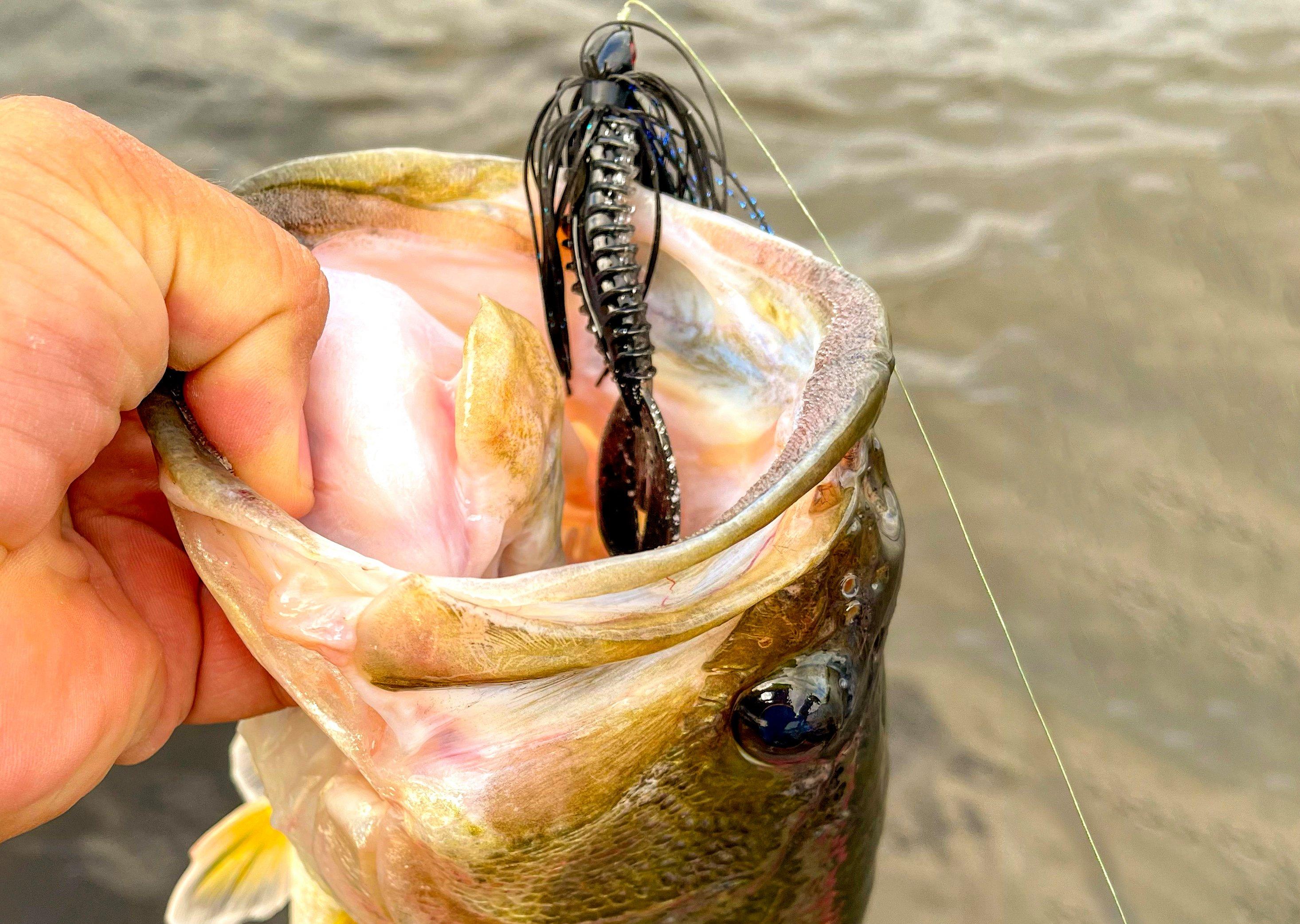
Dark colored jigs with buoyant trailers work best in heavy cover.
Current-swept banks: Here’s one option many people miss. In rivers with swift currents, swim jigs make a nice option to put a lure in a place bass don’t see many. Fish hard-swept banks with brush, and allow the lure to get way back in the undercuts and root jams. This is almost impossible with other lures but easy work for a swim jig. Try shad colors — whites and silvers — and pair with a single-tail grub. This technique works best in clear water and often requires multiple casts to get the bait in just the right spot. You’ll know when you do.
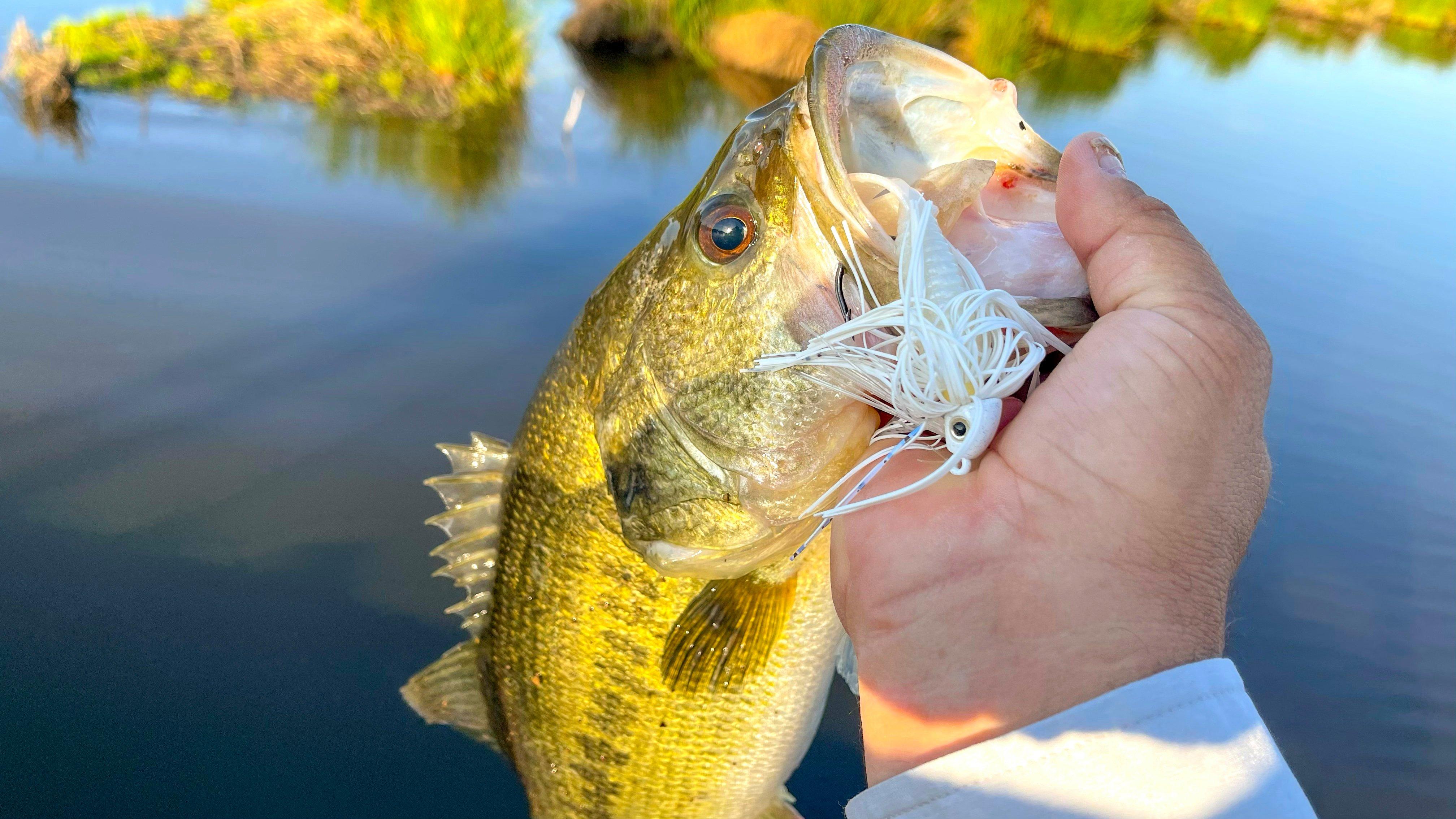
Lighter colors that mimic shad work well for probing current-swept banks.
Boat docks: Swim jigs are naturals around docks. They skip well — a vital trait for the technique — and offer a weedless approach around pilings and support posts. In stained water, use an obnoxious flapping trailer, and don’t hesitate to contrast the main color of the jig — say green pumpkin with chartreuse, matching a bluegill. Tone it down in clear water, and switch to a swimming trailer such as a small paddle-tail.
Don’t miss: THE 5 RULES OF SPRING CRAPPIE FISHING
Lily pad fields and gator grass: There is no better lure to fish this cover than a swim jig. The key here is to be sure you’ve got a stout weedguard and plenty of plastic trailers. Braided line is a no-brainer, but also be sure you’ve got a fairly long rod. This will let you steer the lure through the pads and avoid (some) of the cracks in the leaves where your bait will hang. Another tip is to use a pulsing retrieve. That triggers strikes but also helps the lure jump the cracks. Just about any trailer will work when fishing pads and gator weed, as the lure spend lots of time in and out of the water, imparting plenty of action. Strikes are ferocious, so be sure to give the fish a split second before setting the hook, much like fishing a frog.
UP YOUR SWIM GAME
Swim jigs are a specialty bait that fills a niche. Like most other lures of this sort, they excel when times are right and offer the best way to capitalize on a specific bite. This summer, don’t go shallow without an assortment of these lures. Your grass fishing game will instantly improve.
Don’t miss: WHEN, WHERE, AND HOW TO FISH SKIRTED BASS JIGS
?fmt=auto&qlt=default&fmt.webp.qlt=65&fmt.png.qlt=73&fmt.jp2.qlt=35&fmt.jpeg.qlt=60)